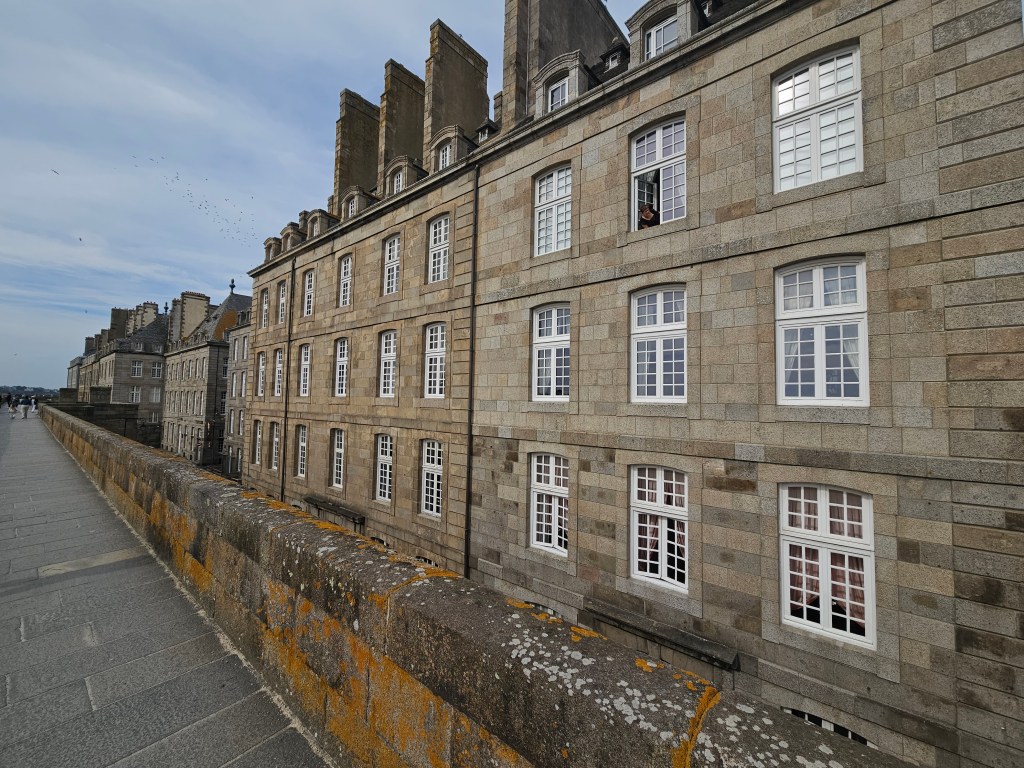
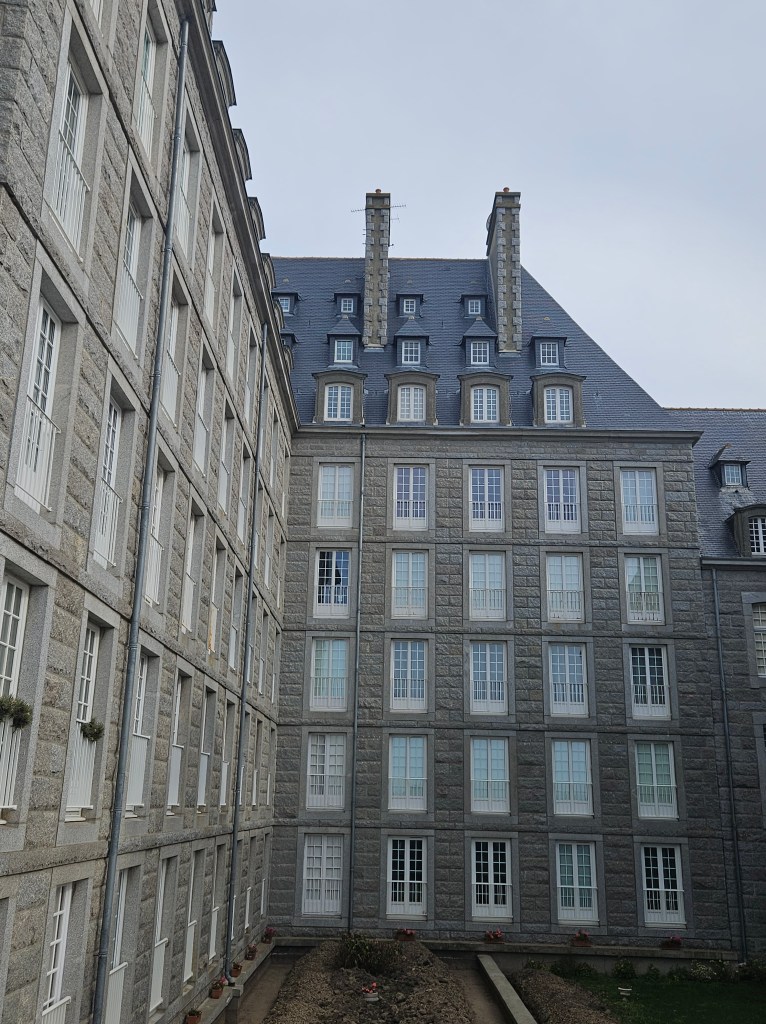
When I think of St. Malo, I remember the book, All the Light We Cannot See by Anthony Doerr, a WWII novel set mostly in St. Malo. Now I have images of St. Malo’s stately homes, its ramparts, and the miles of beach and ocean.
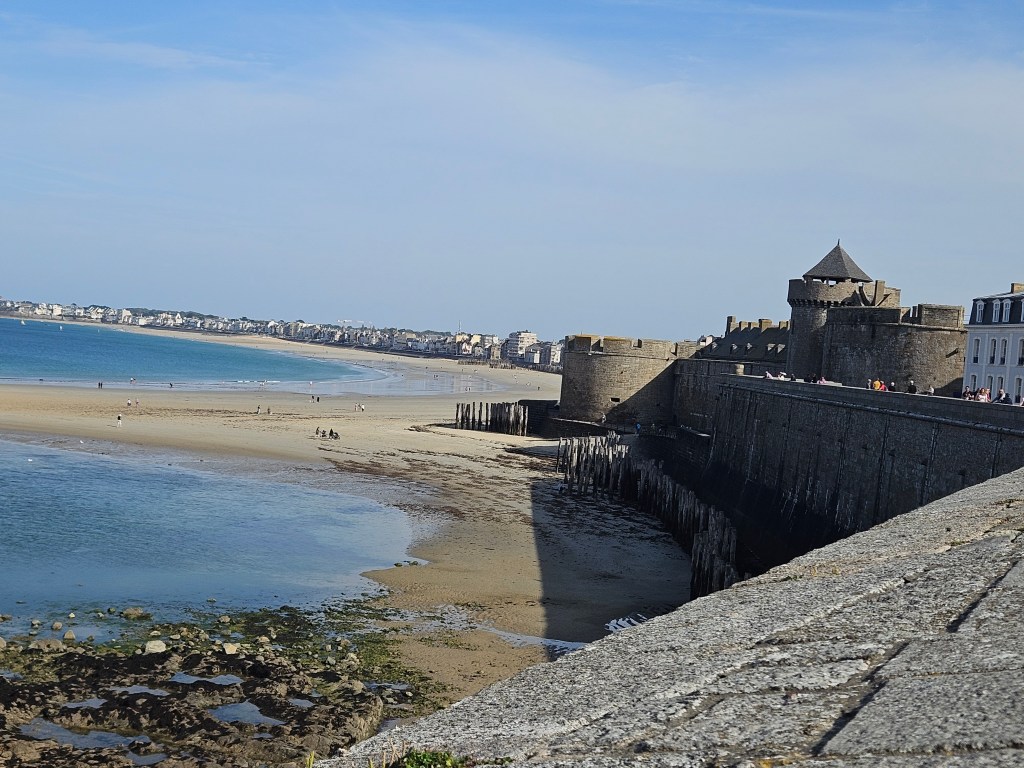
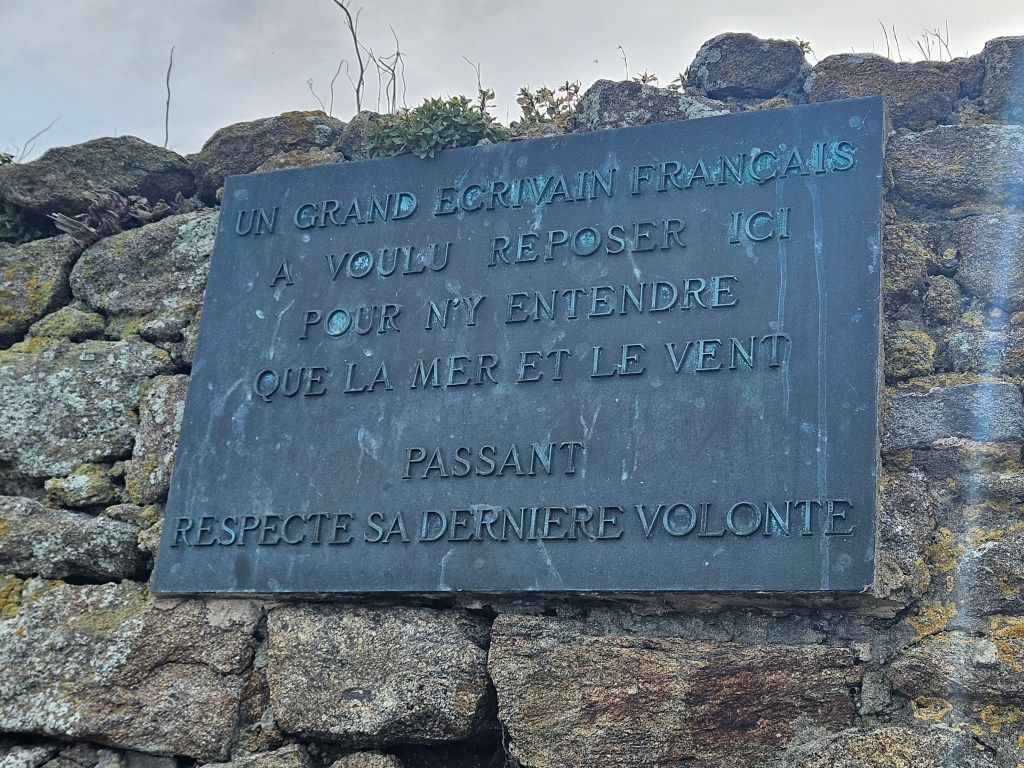
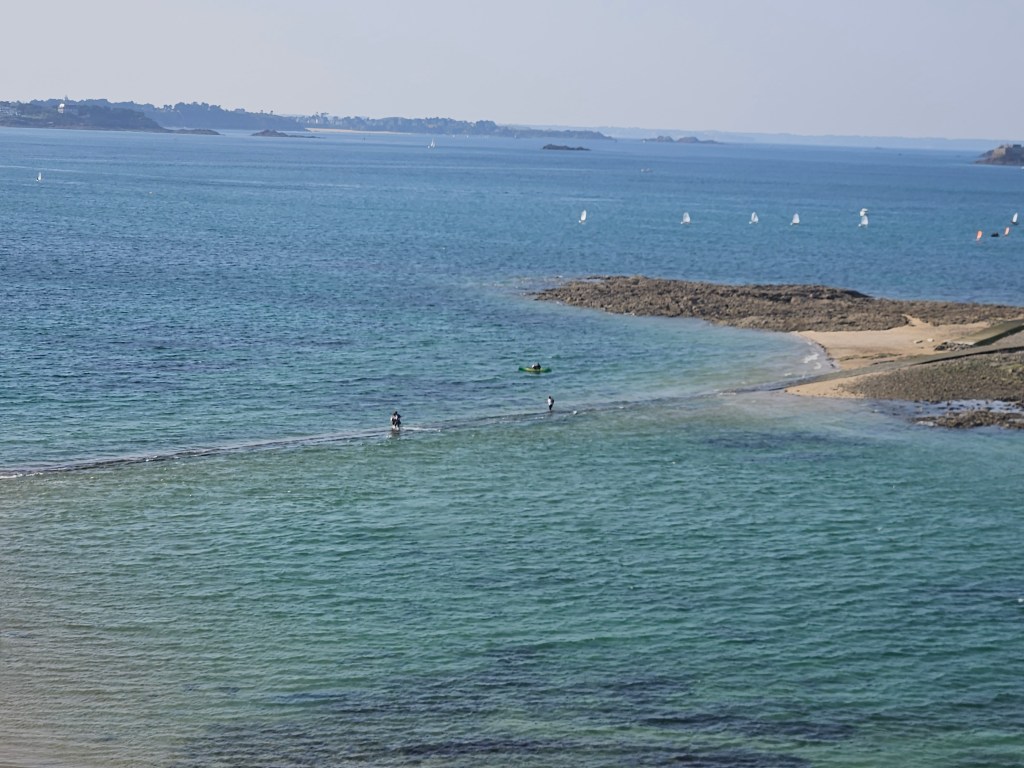
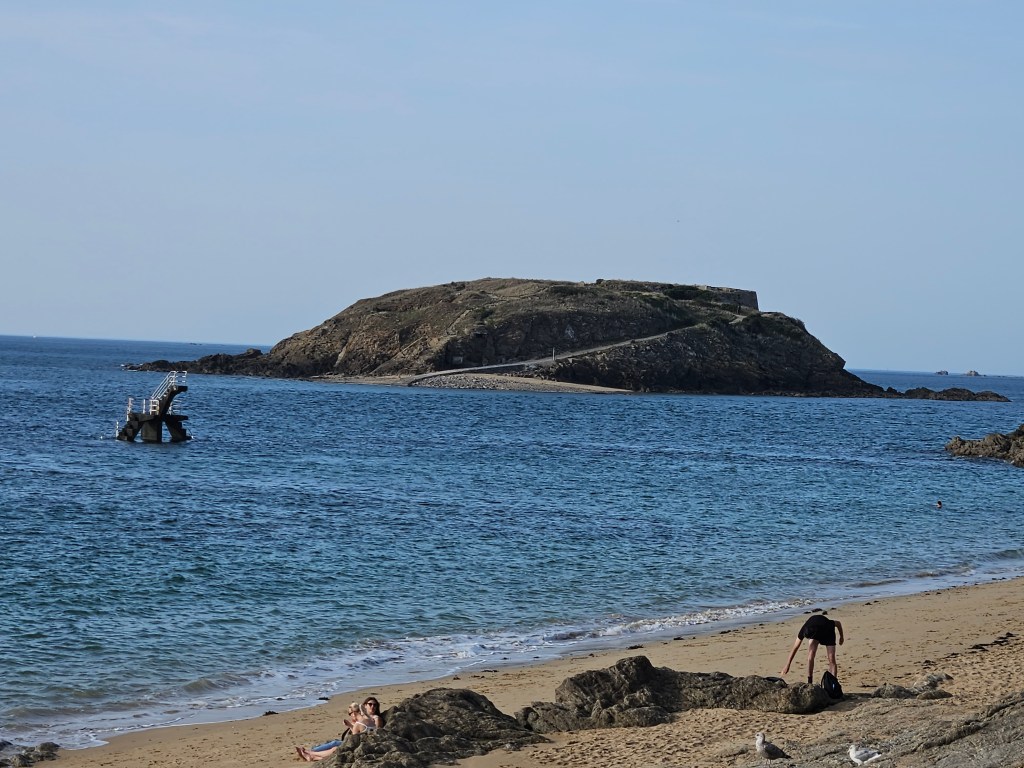
We arrived pretty close to the height of low tide, which was fortunate so that we could cross the causeway to Isle de Grand Bé, where the remains of the writer Chateaubriand lie.

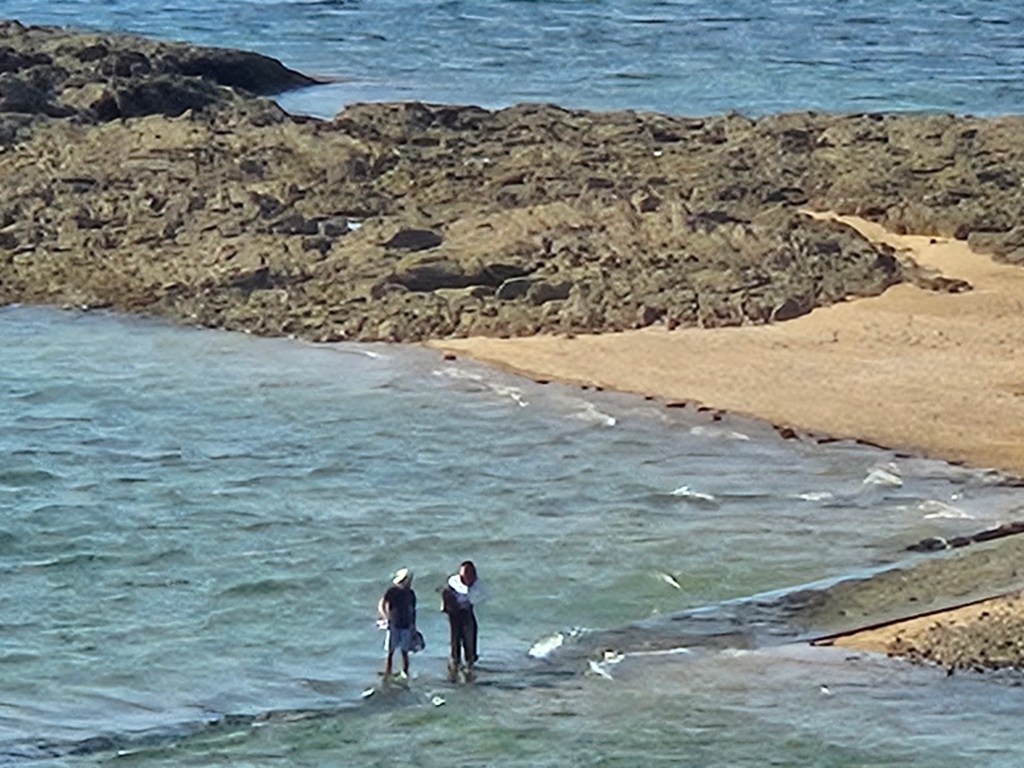
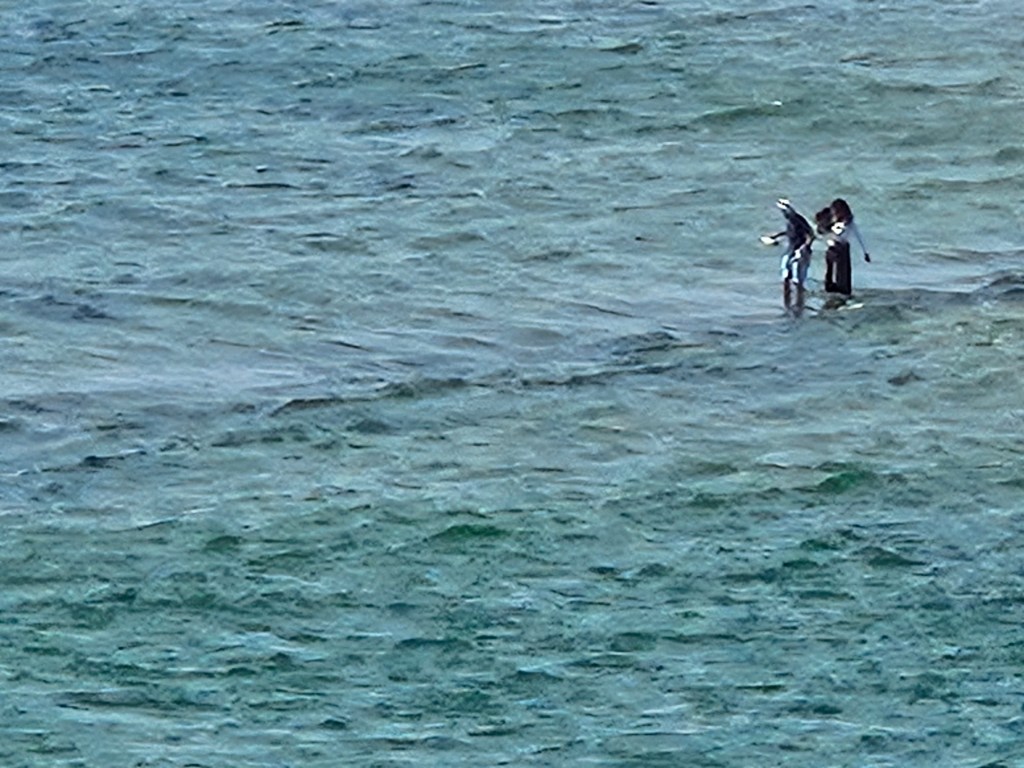
As the tide was coming in we didn’t dawdle too much on this island. The water was already coming up over the causeway on our return. About an hour later we saw a couple attempt to cross. They retreated back to the island. Would they wait for low tide again? They would be there until midnight or so. Would they call to be rescued?
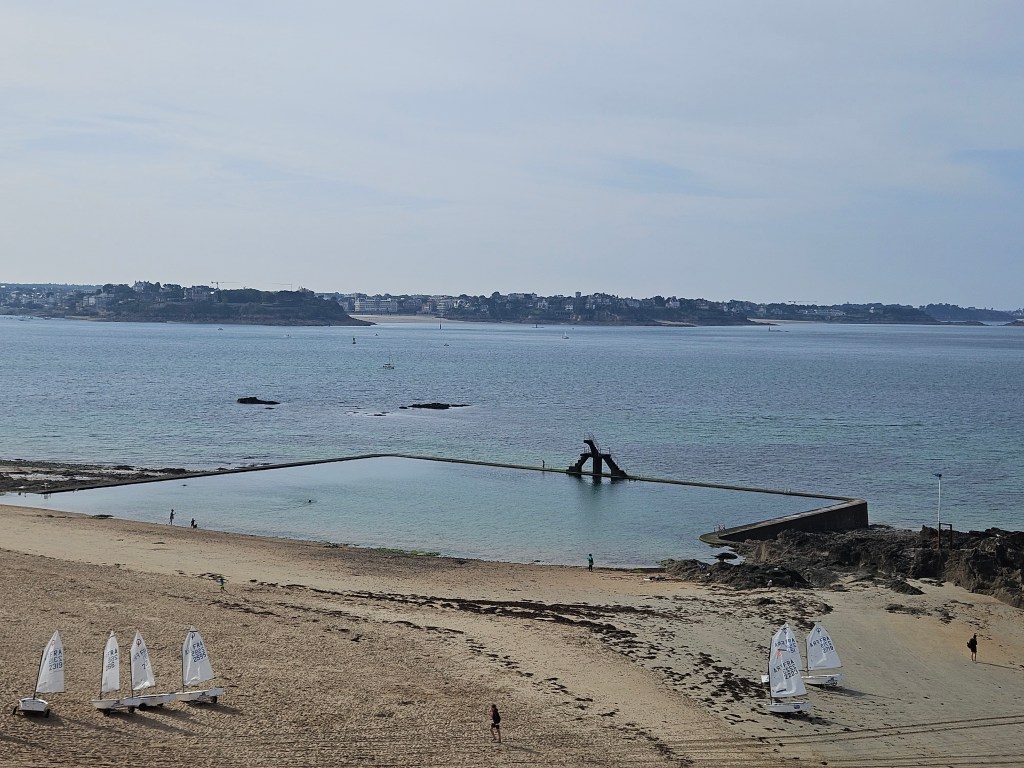
This beach has a sea pool with a diving board. Below you’ll see it at low tide and then at high tide. Actually, you won’t see it at high tide because the ocean covers it.
Bretagne is known for its buttery cookies, crêpes, galettes, and koing amman. Crêpes are sweet. Galettes are savory crêpes made with buckwheat, and koing amman are sickeningly good. They are light layers of buttery, sweet pastry. We split one and that was plenty.
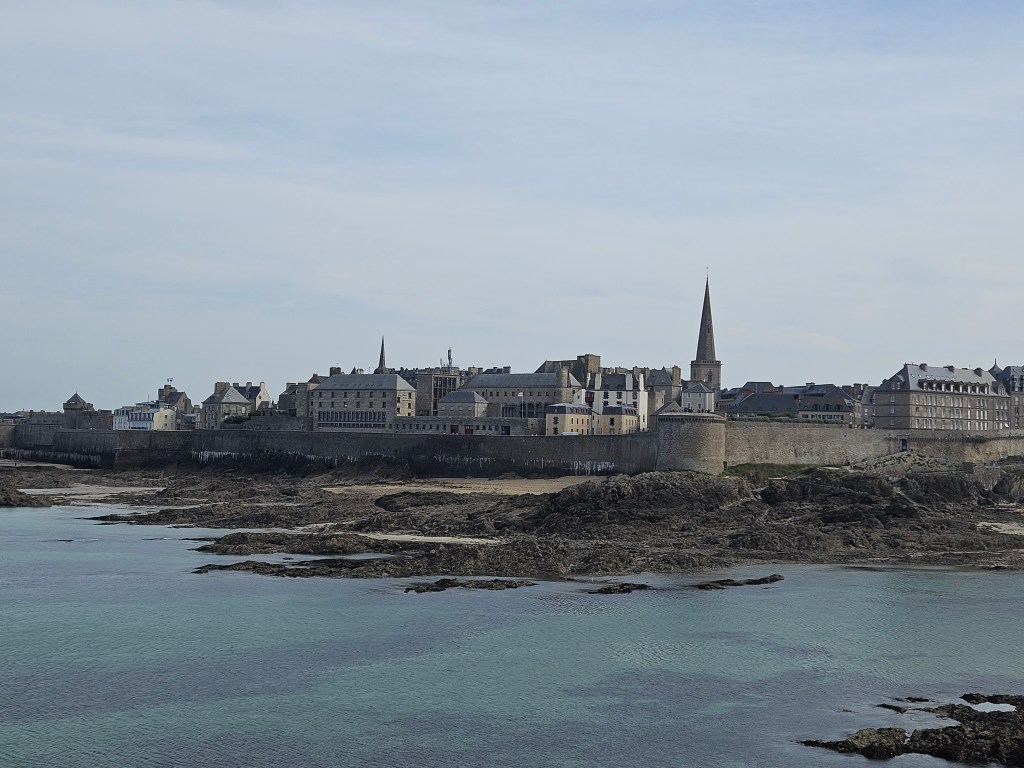
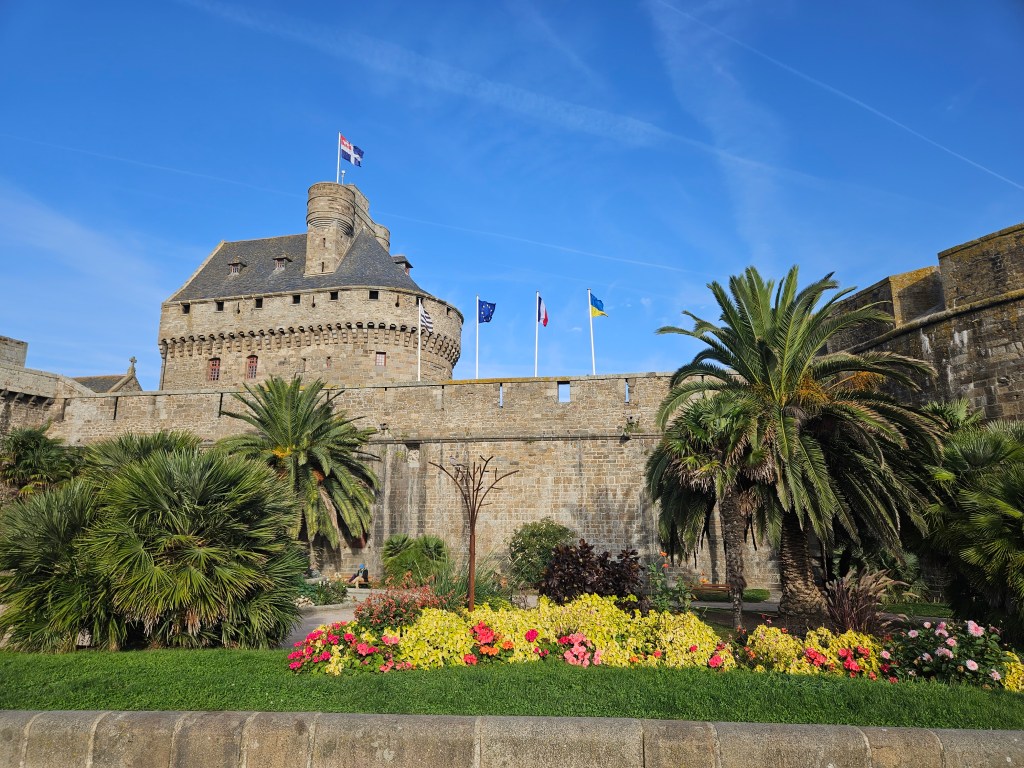
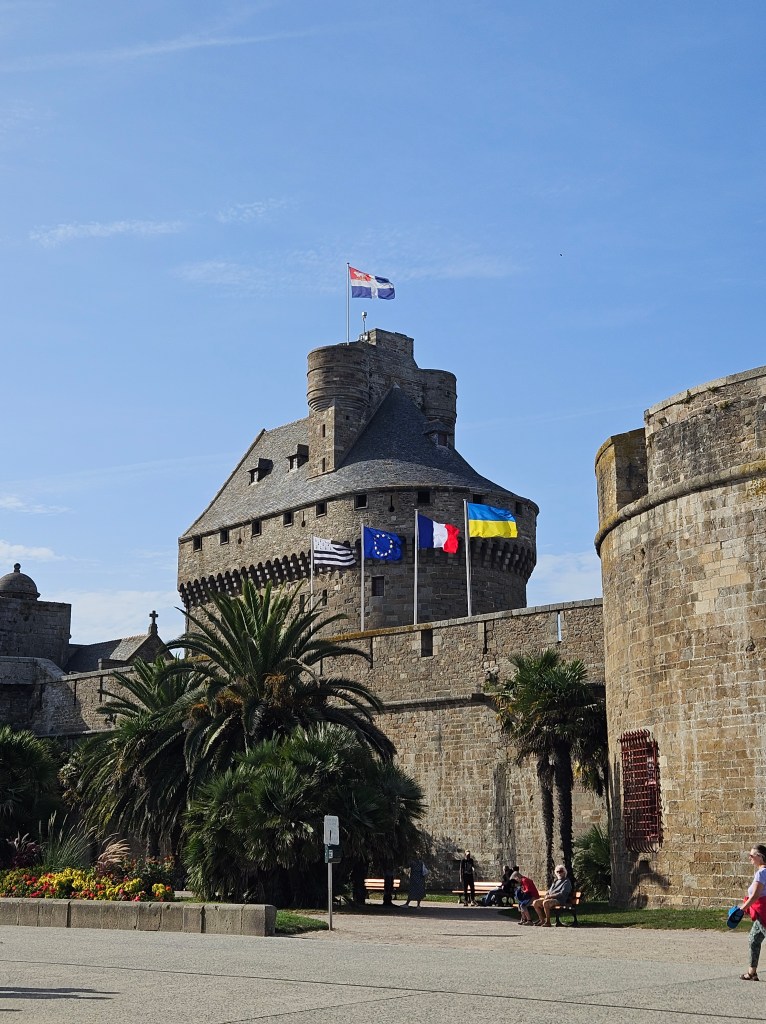
First views of St. Malo castle and ramparts. The castle currently houses the town hall.
I’ve been noticing many store windows with enlarged photographs of some cute critter’s face. Turns out it’s ermine, the allegorical aimal of the Dukes of Brittany, symbol of purity and loyalty. The photos are there while buildings are being remodeled.
Last thing while I think of it. Brittany has a long history of Celtic ancestry. Many street signs are in French as well as Celt. Some hundreds speak it regularly, and a movement has arisen to bring it more fully back. There are bilingual schools now. One of the railway lines has the name Breizh – Celt for Bretagne.
C’est tout pour au’jourd’hui. I may have one too many apostrophes there.
 Shared Illusions