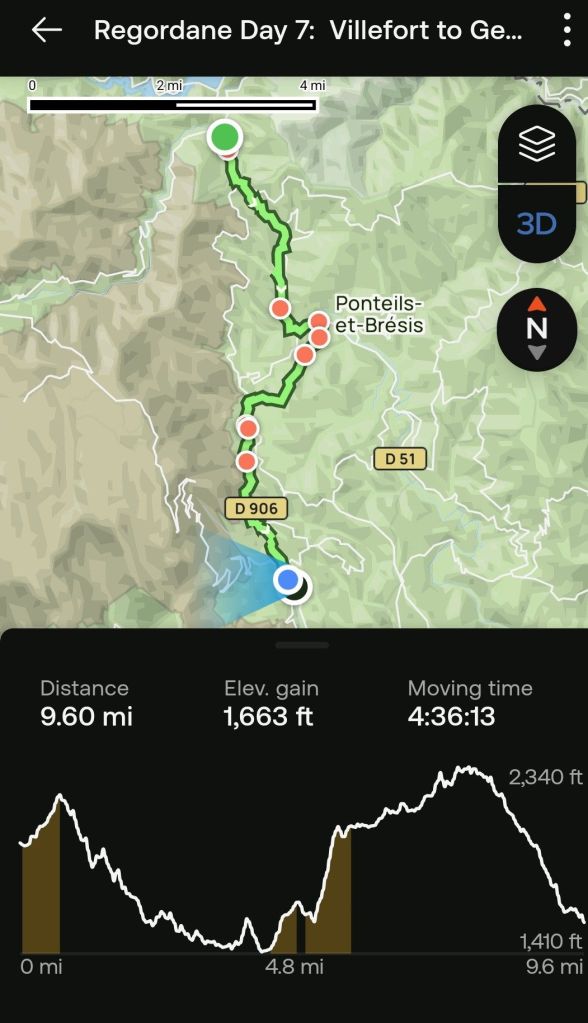
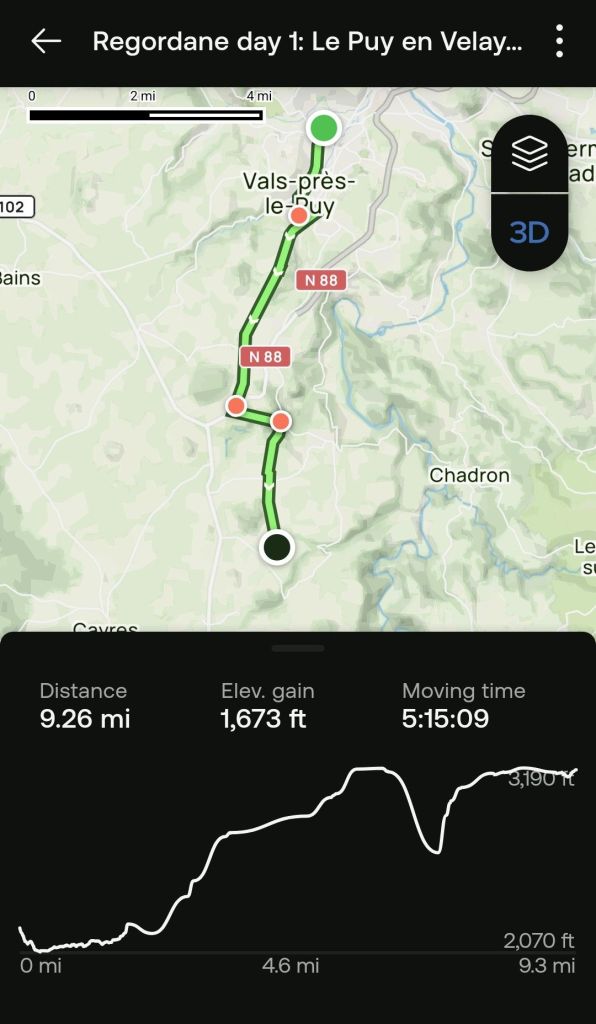
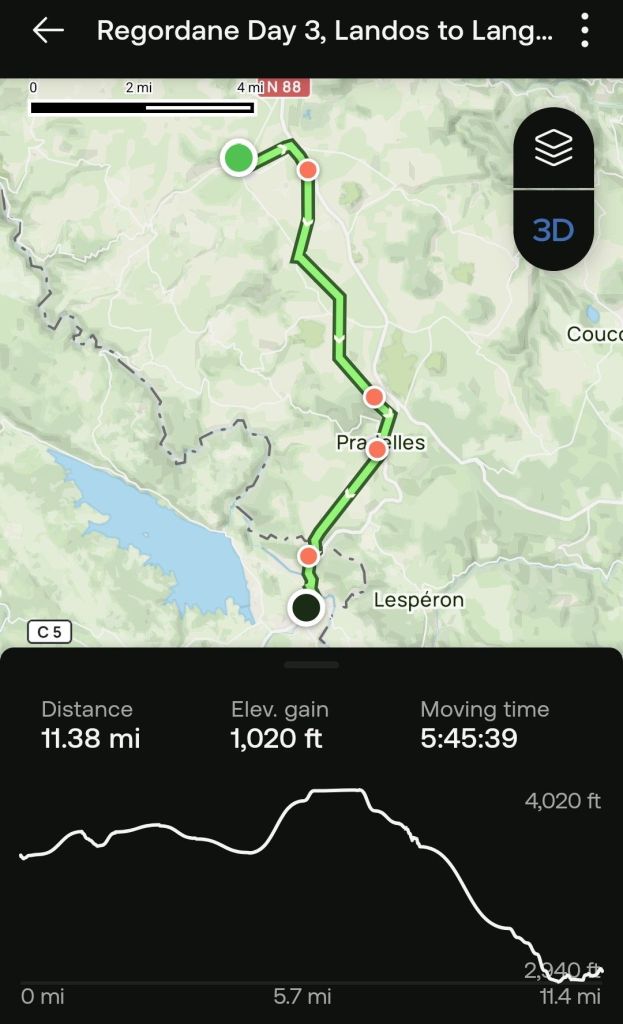
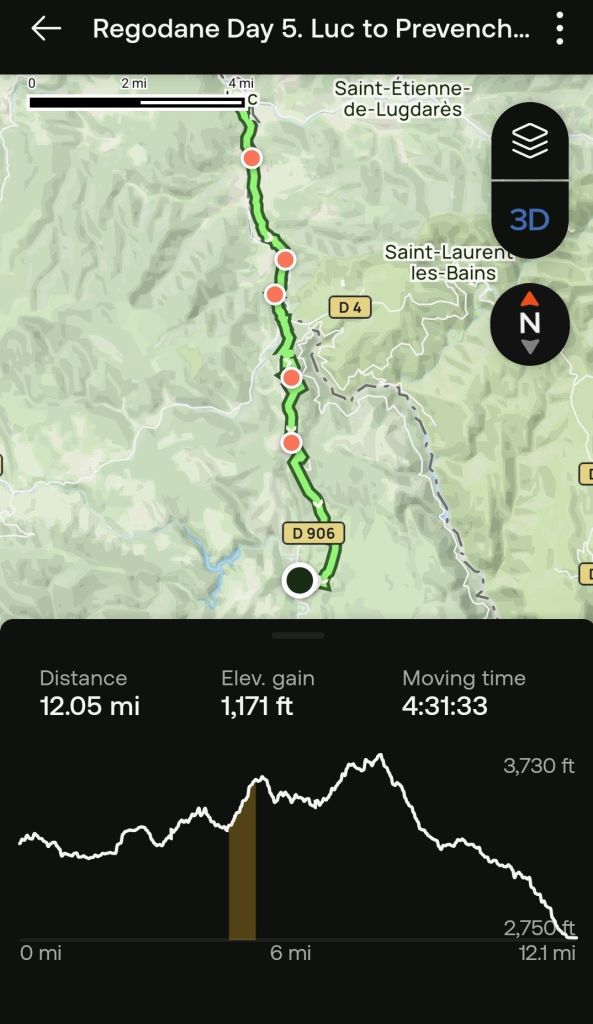
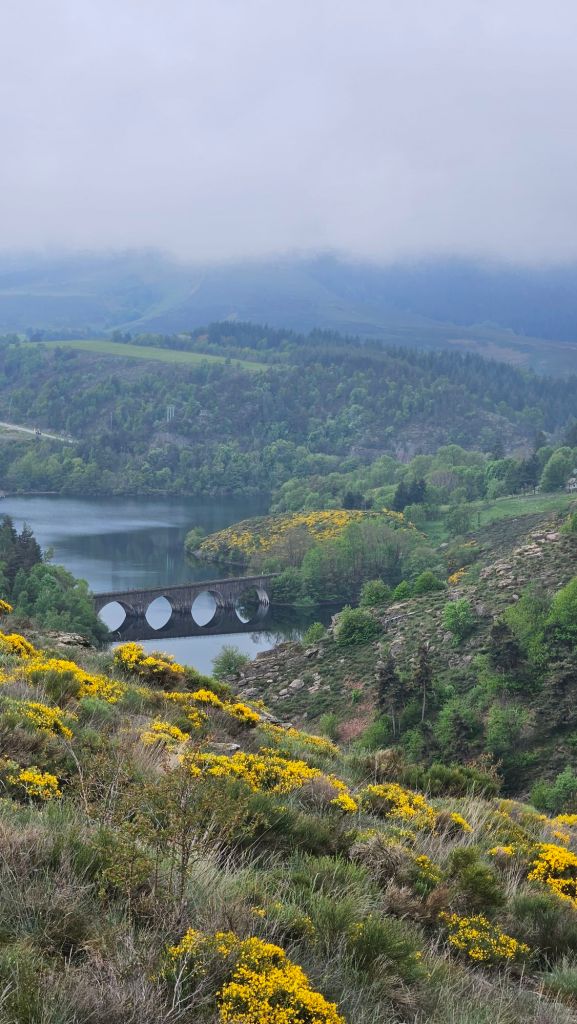
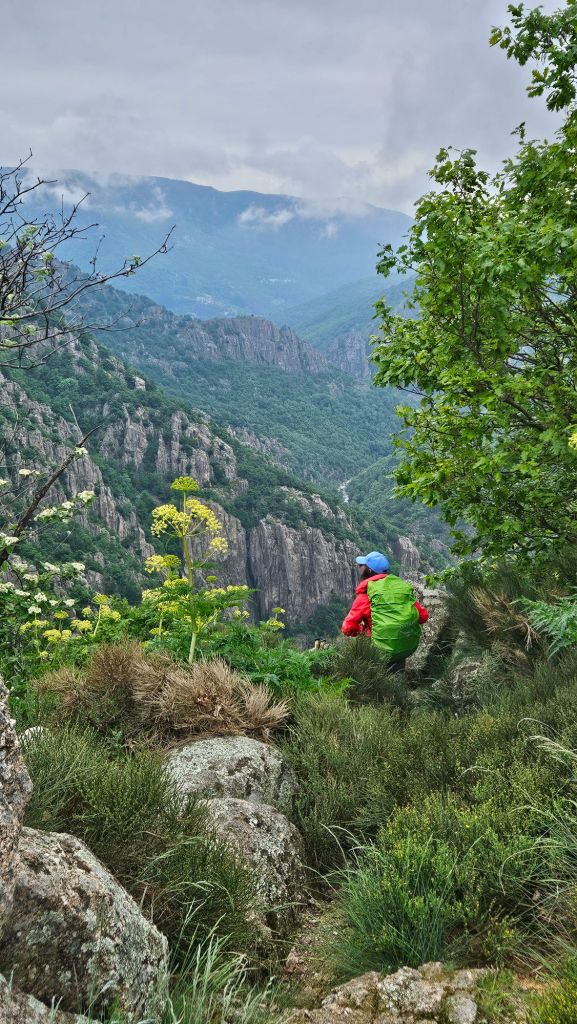
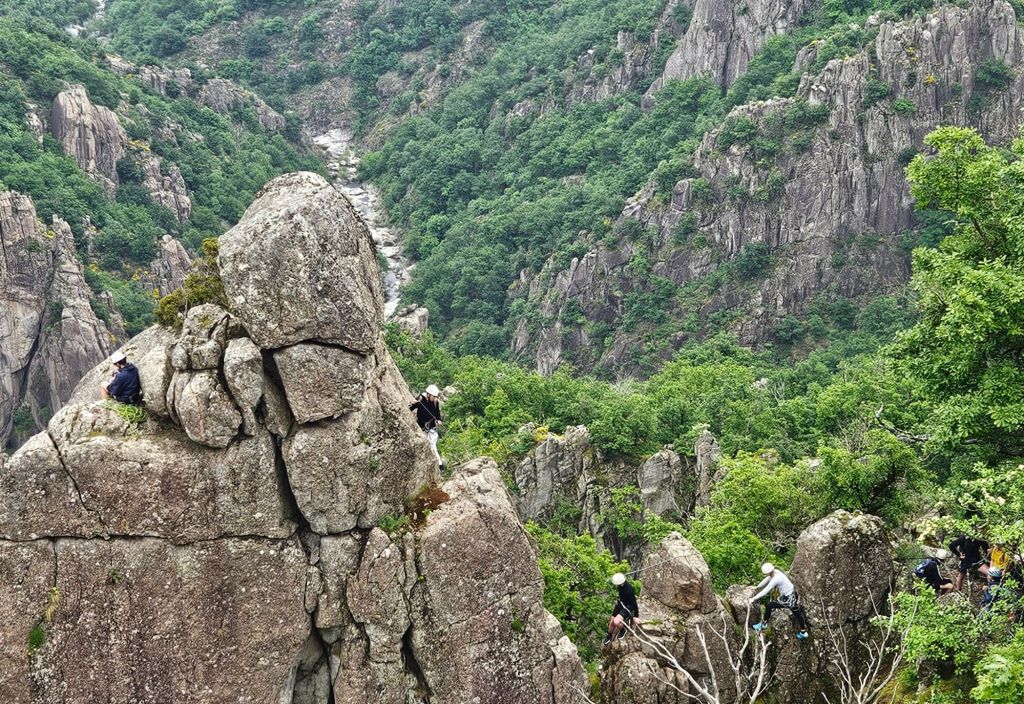
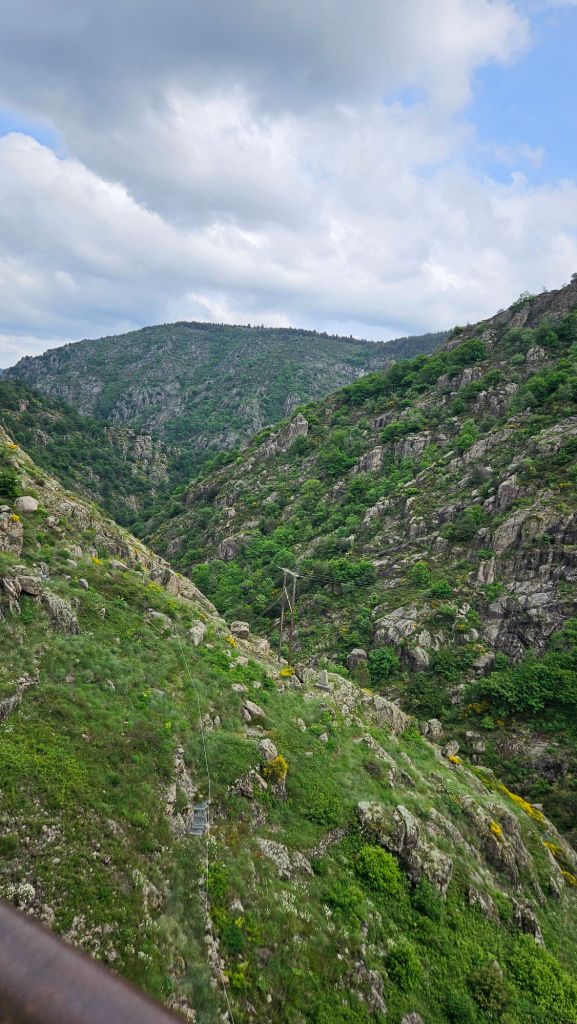
Today’s hike was fairly manageable, for the most part. However there were two sections that made me question either my own sanity or that of the people who chose the route for the GR700. These portions were extremely steep with loose rocks and basalt, still slippery from last night’s rain. The Alltrails app, which I have been using as a guide, indicated that some portions of those segments exceeded 50% incline (that means greater than 45 degrees).
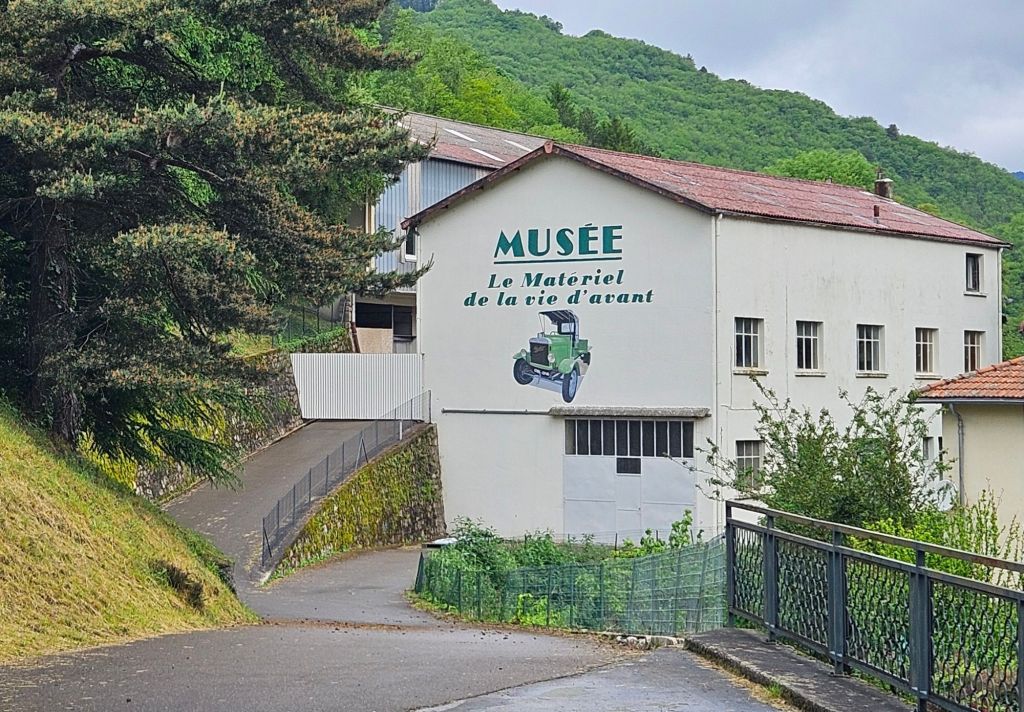
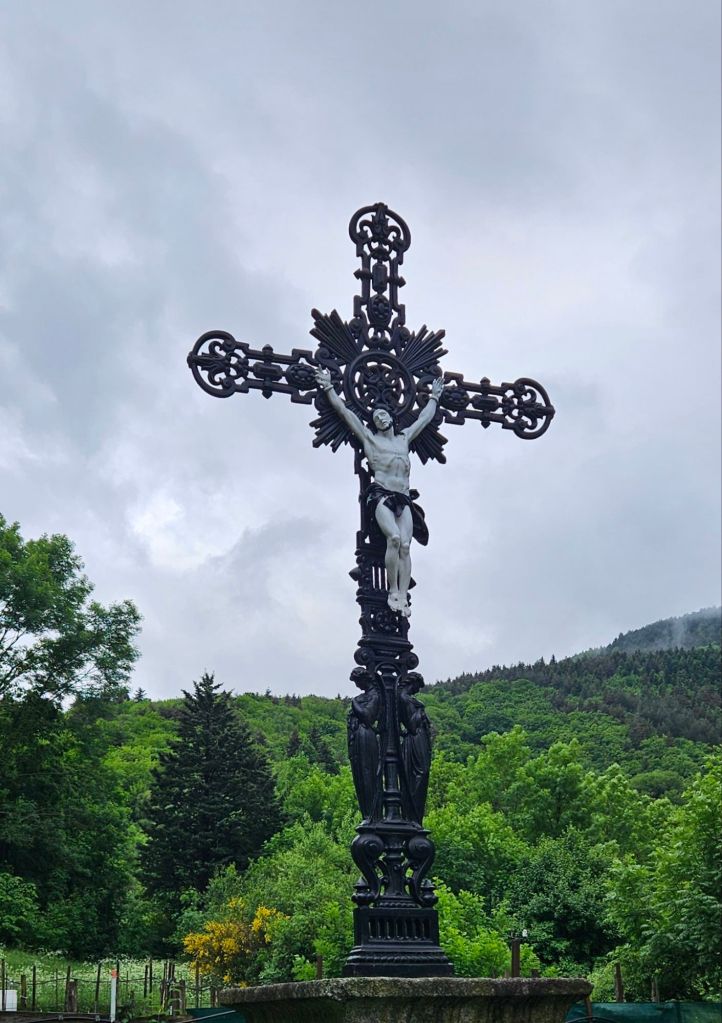
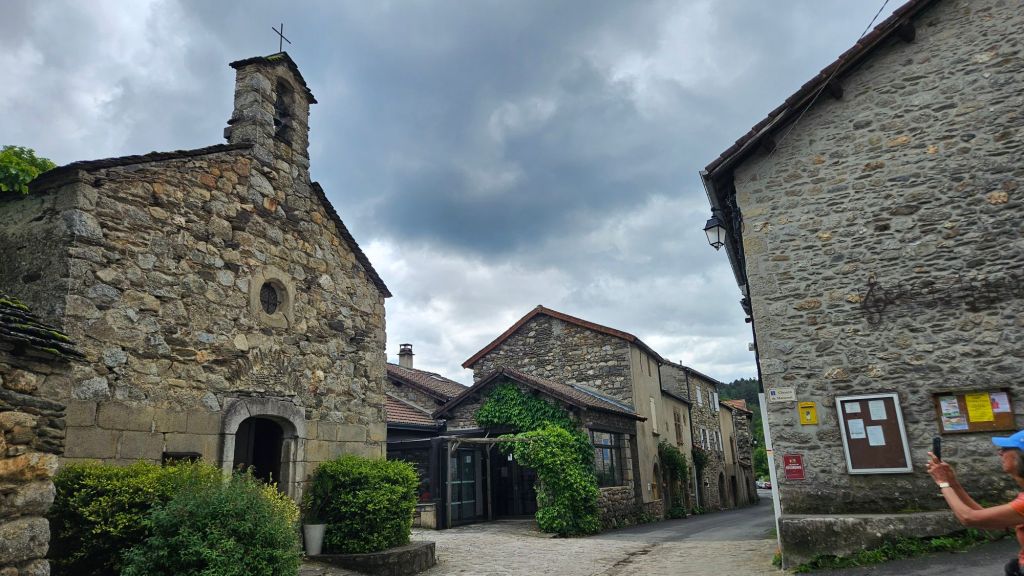
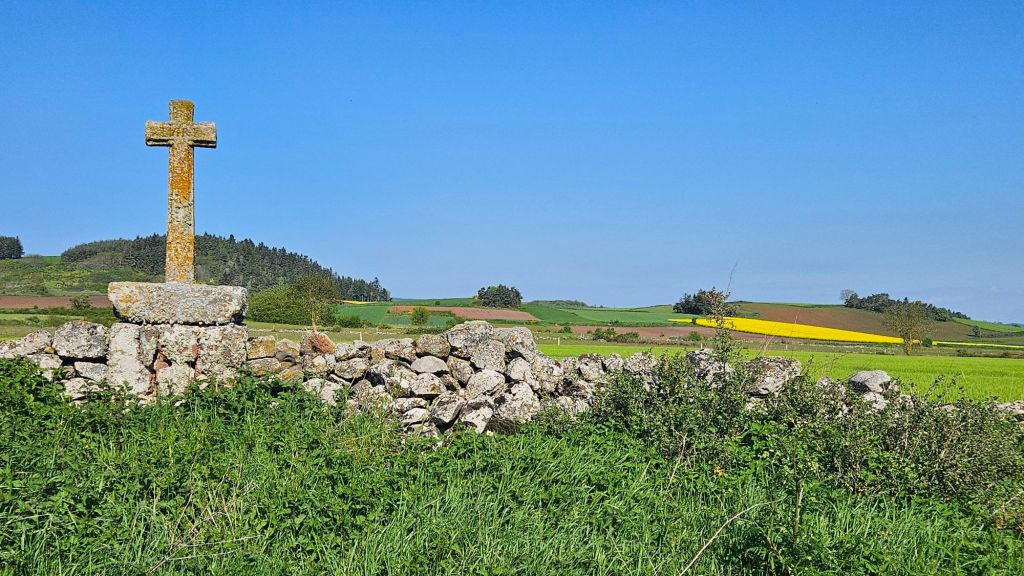
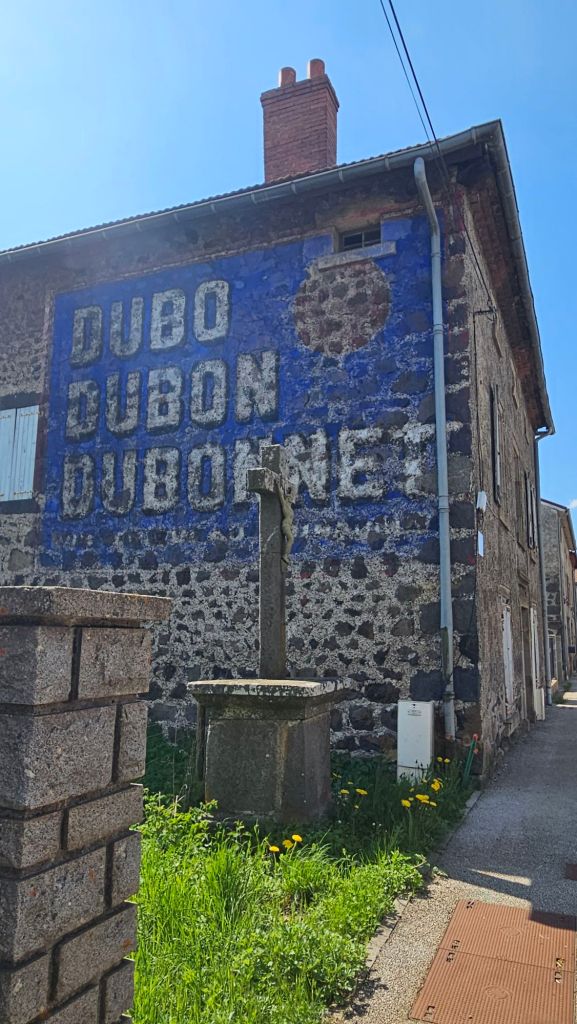
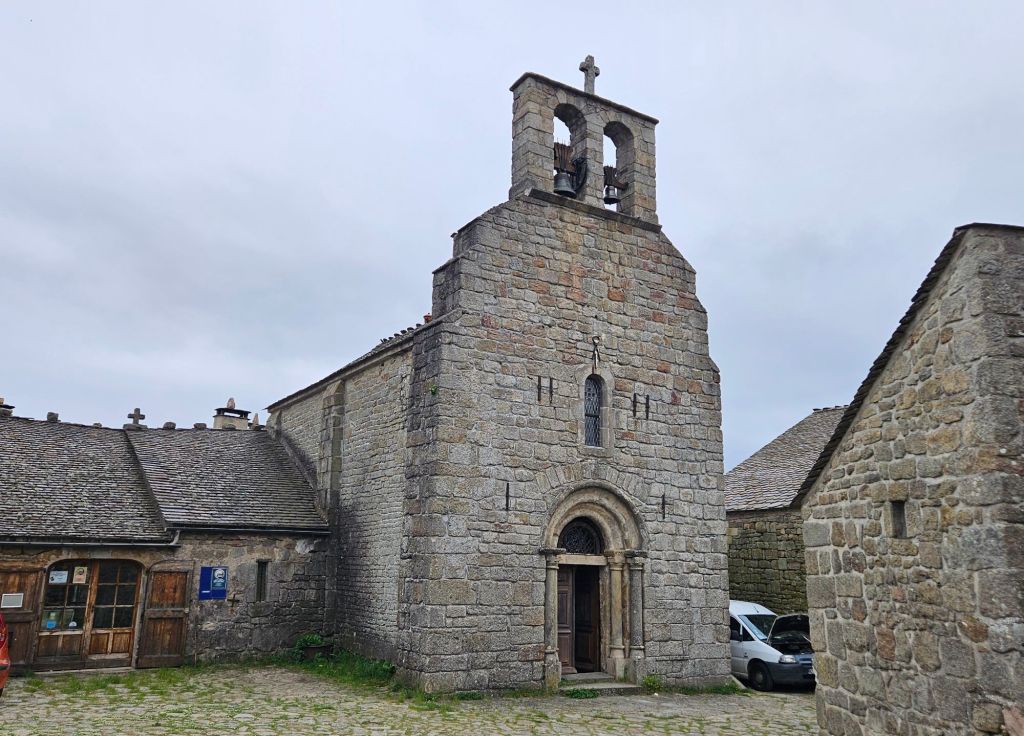
A museum for the materials of previous life. It was too early to visit. I had just recalled the phrase “don’t get your panties in a wringer” and we were wondering if kids today would know what a winger is. This museum showed up a few minutes later. These Crucifi (what actually is the plural form of crucifix?) Have made a great comeback since the Wars of Religion in the 16th century. During that time, strict believers in the first commandment destroyed all they child find. In Concoules where the locals still at that an anecdote from the towns last was the inspiration for Peter and the Wolf
Paula has been keeping up with the day to day of our current travels, and I have been remiss. Here is a little background on the hike we are taking.
The trail is called the Regodane, which is an old trading route dating to the Roman Empire. The route also is a was a popular pilgrimage route, the Chemin de Saint Gilles. The Chemin is roughly parallel with and frequently intersects with the Robert Louis Stevenson Trail.
The Regodone, also known as GR 700, starts in Le Puy-en-Velay and ends in Saint Gilles on the Mediterranean coast and is approximately 150 miles long.
Following is a quick summary of our hike so far, with limited commentary and a few photos.
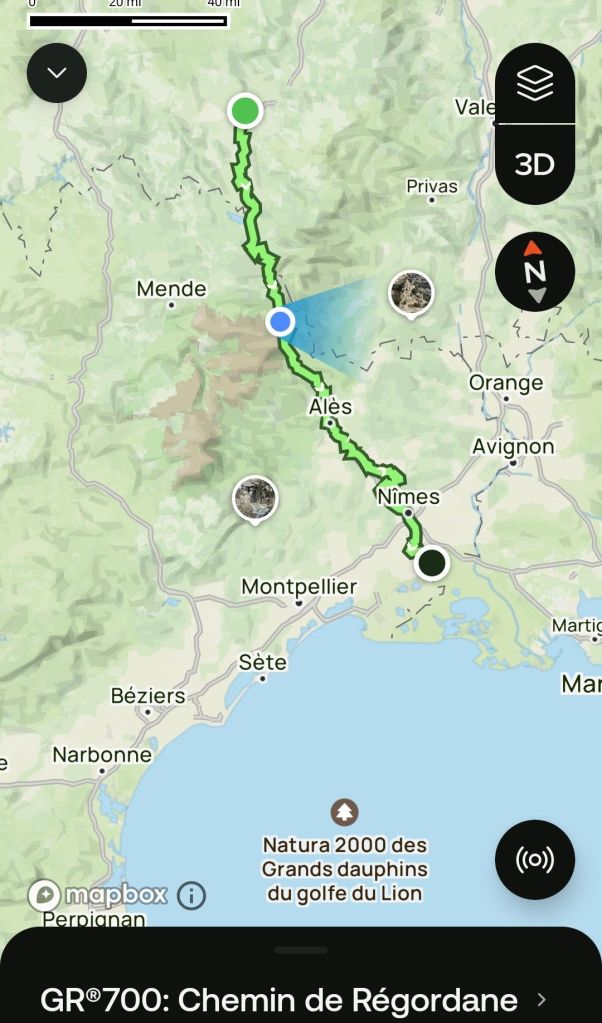
Trail Overview
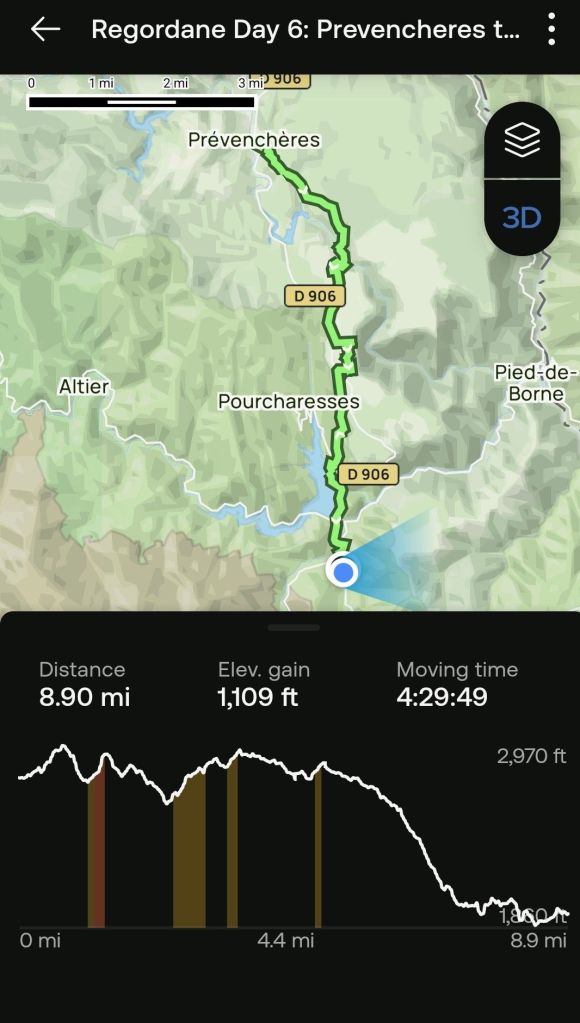
I am preparing this post in Villefort, which is located about where the blue dot shows in the map, approximately 60 miles from the start.
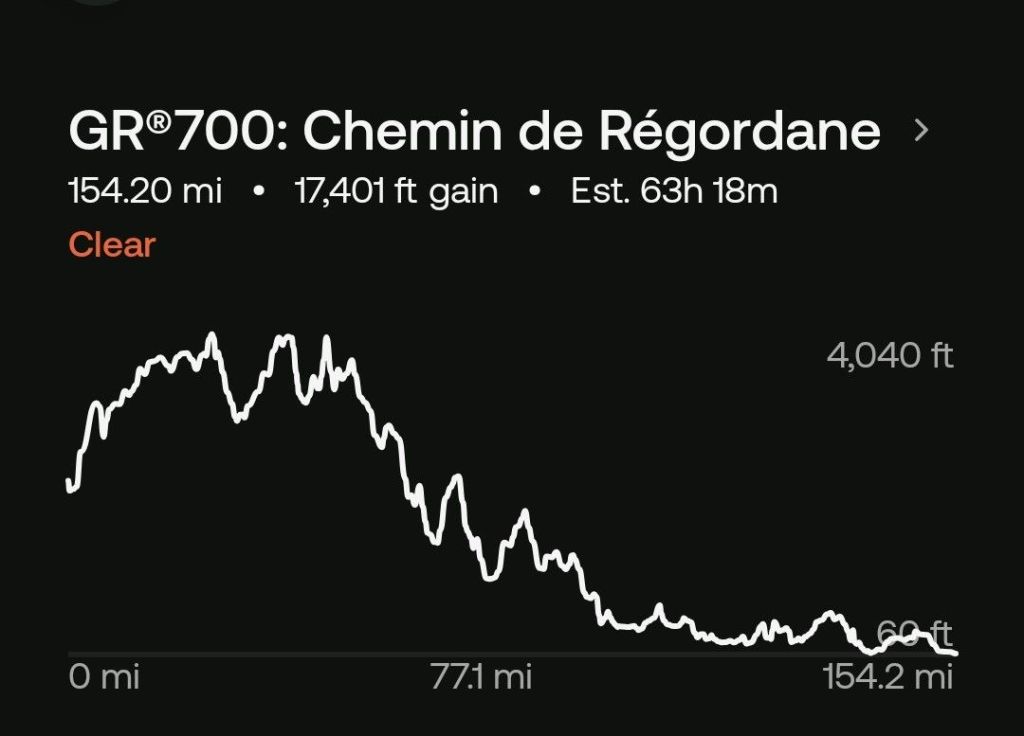
Trail Elevation Profile
The trail begins at 2100 feet in elevation, rises to 4000 feet, and ends at sea level. Saint Gilles was a seaport in the middle ages and is now several kilometers from the sea. Either they’ve moved the town or the sea level is not as high as it once was, equally implausible options given modern ways of thinking.
DAY 1
This day left me drained, and I collapsed into bed as soon as we arrived at our accommodations. I fought the urge to give up all day long. I can’t explain this condition since I had trained for months on tougher trails at higher elevations, carrying the same weight.
I took a course many years ago where we examined what could be universal human experiences. One of those was the experience of “enough.” Enough, not in the sense of “sufficient,” but on the sense of “no more.” One of the benefits of a a long hike is that you can reach the point where you’ve had enough physical effort, but you can not quit. What lies beyond enough? More lies, possibly.
Since that first day, we have had bigger challenges, but i did not have the fear of impending defeat as i did on day one.
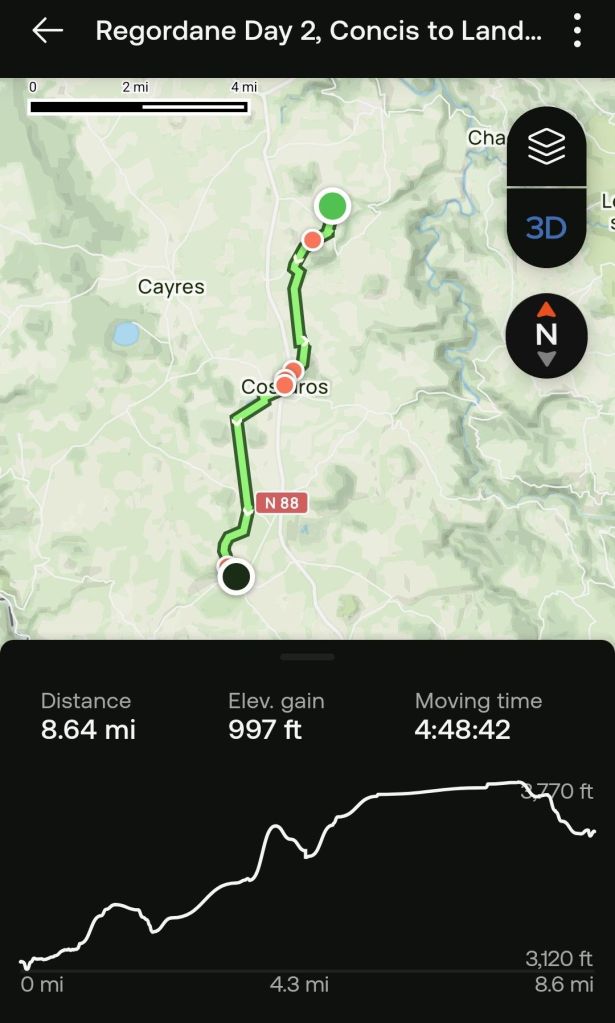
Day 2
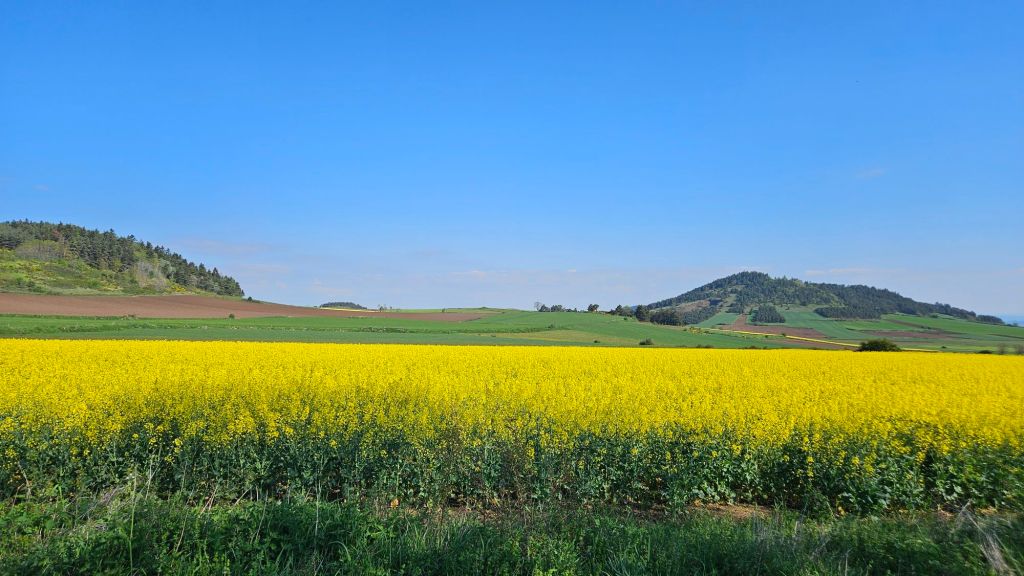
We continued to gain elevation but the day was much easier. I actually took photographs.
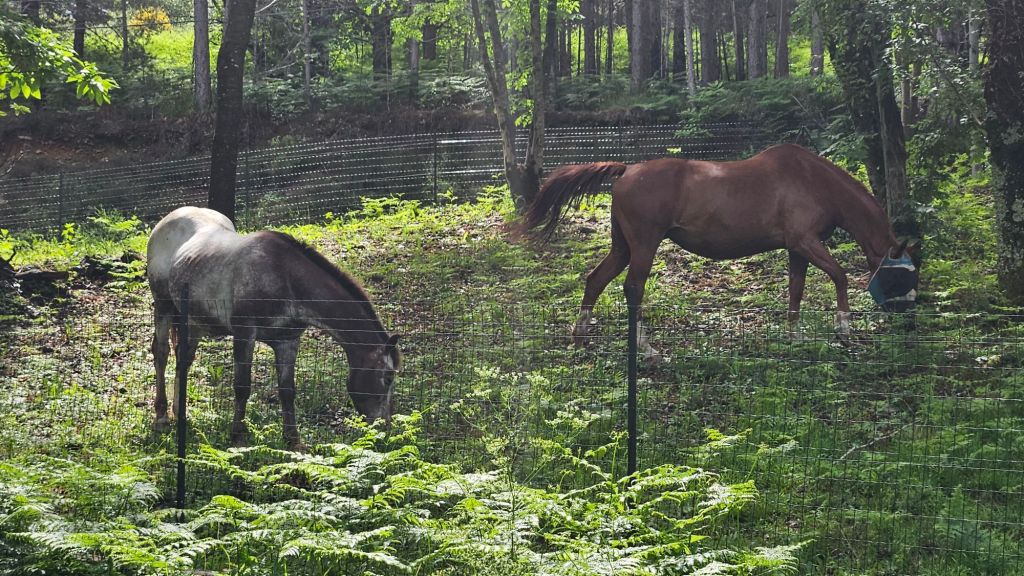
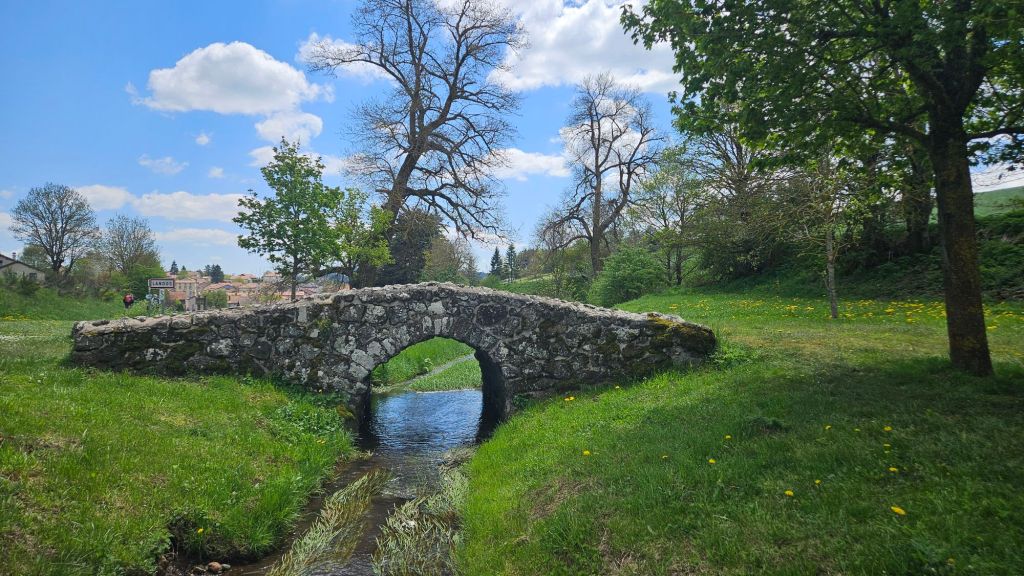
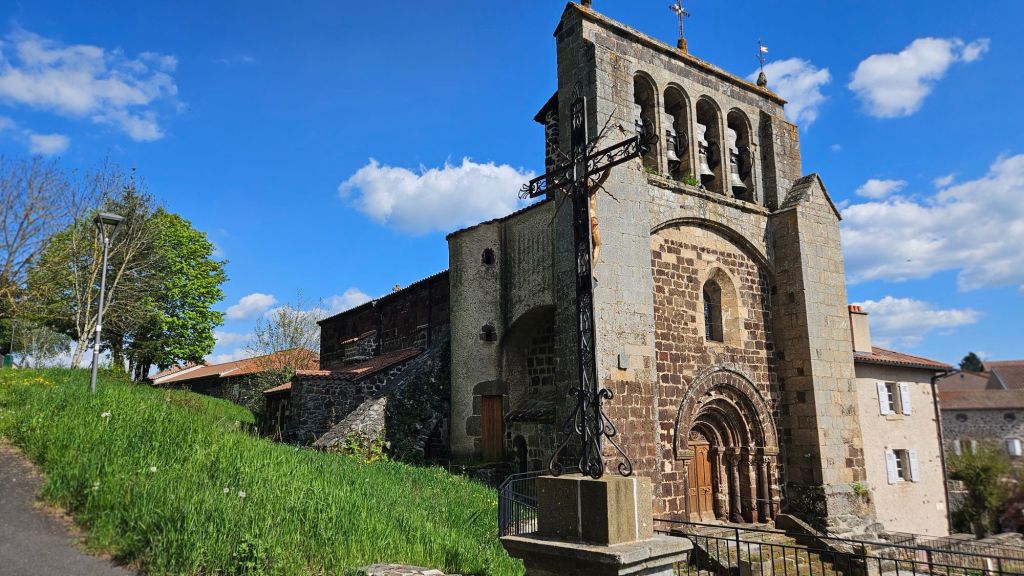
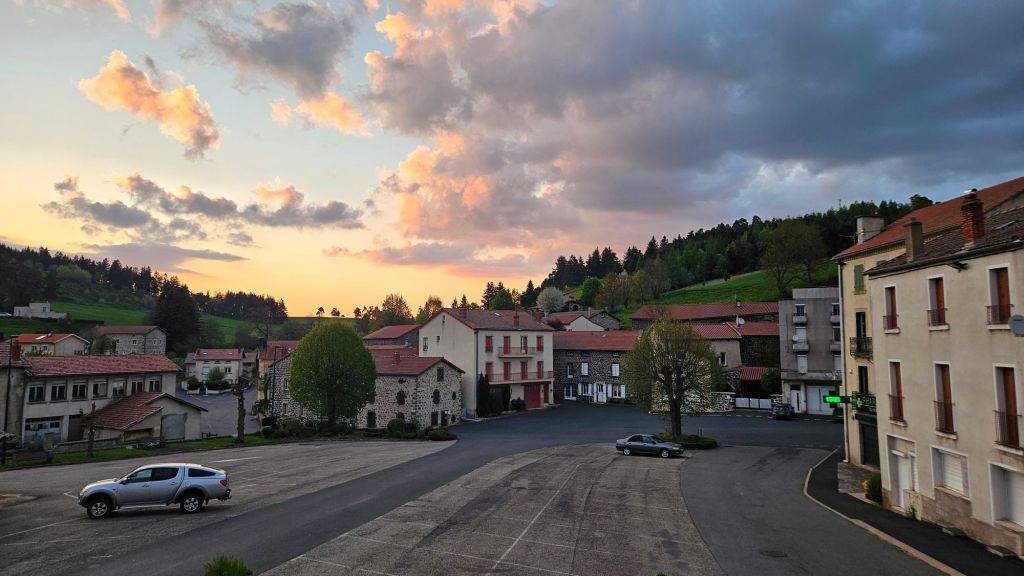
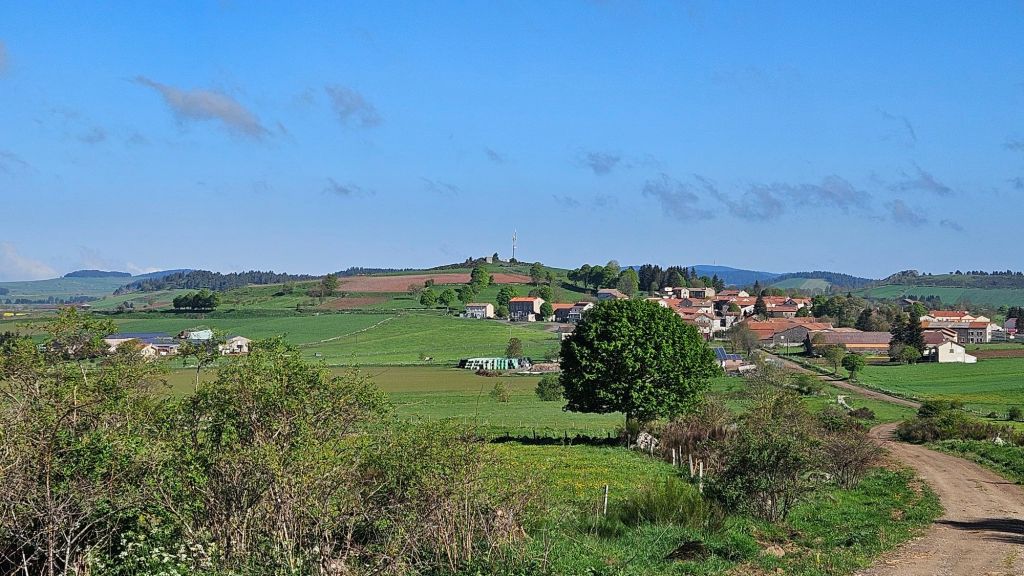
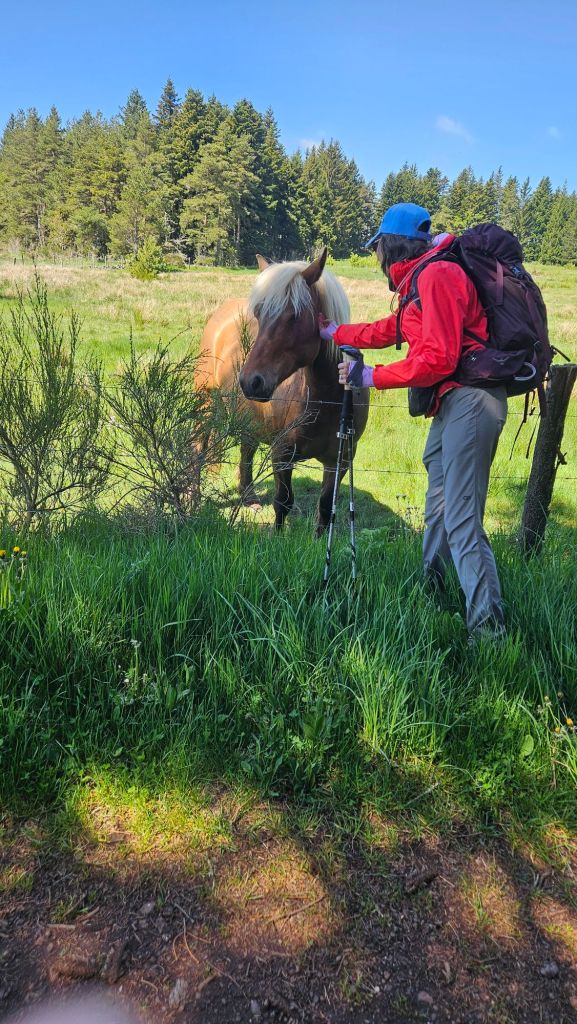
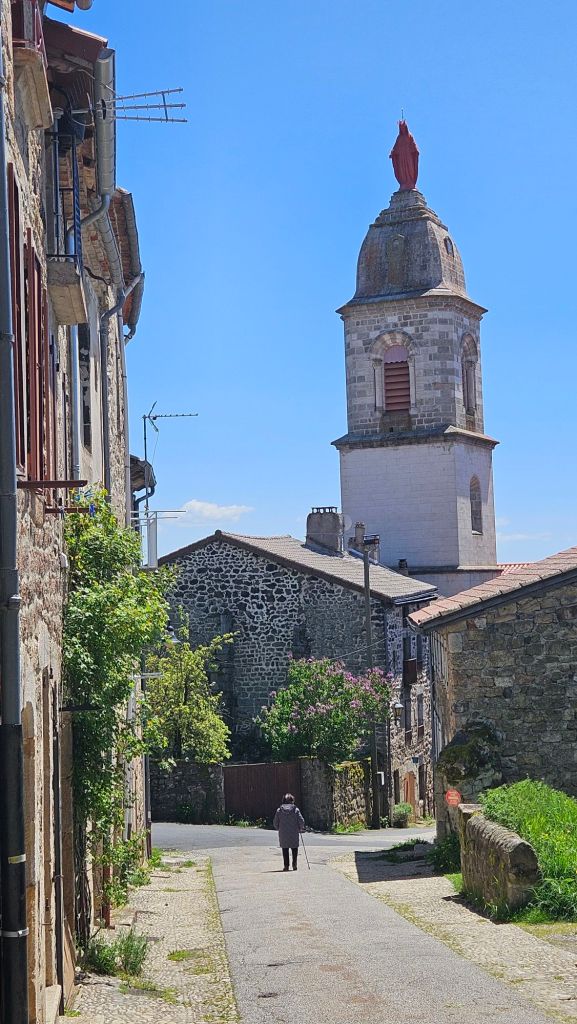
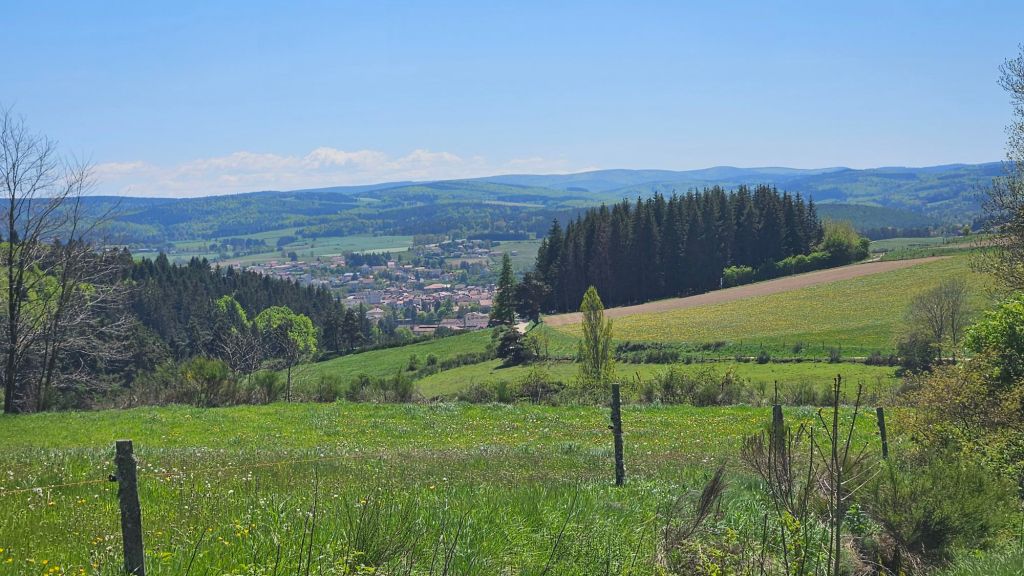
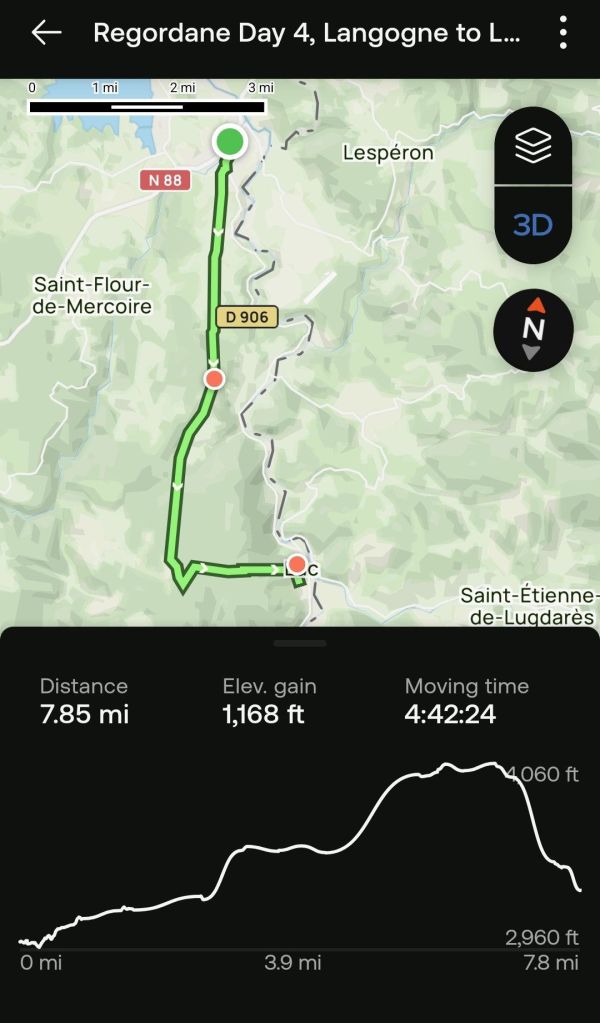
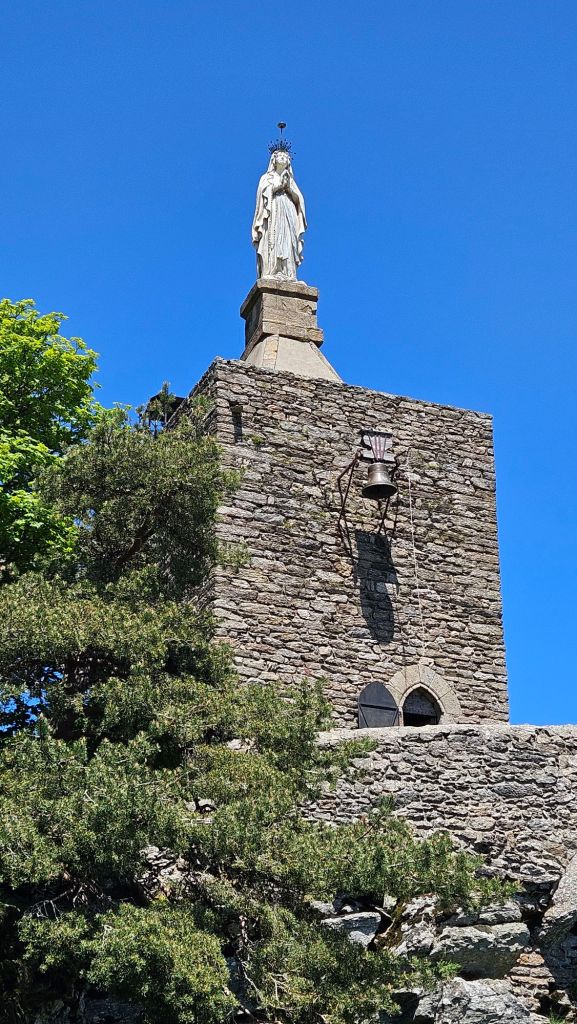
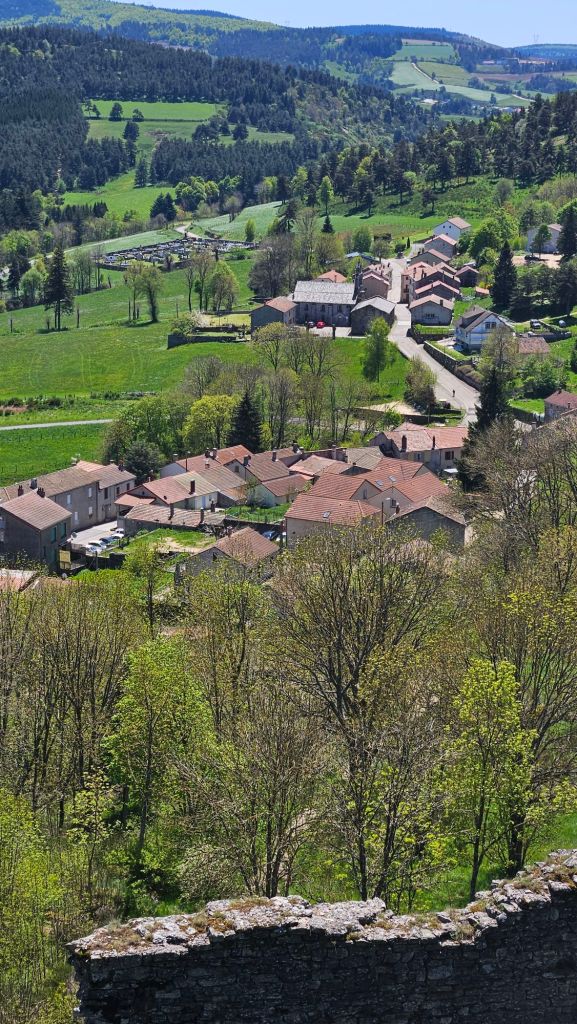
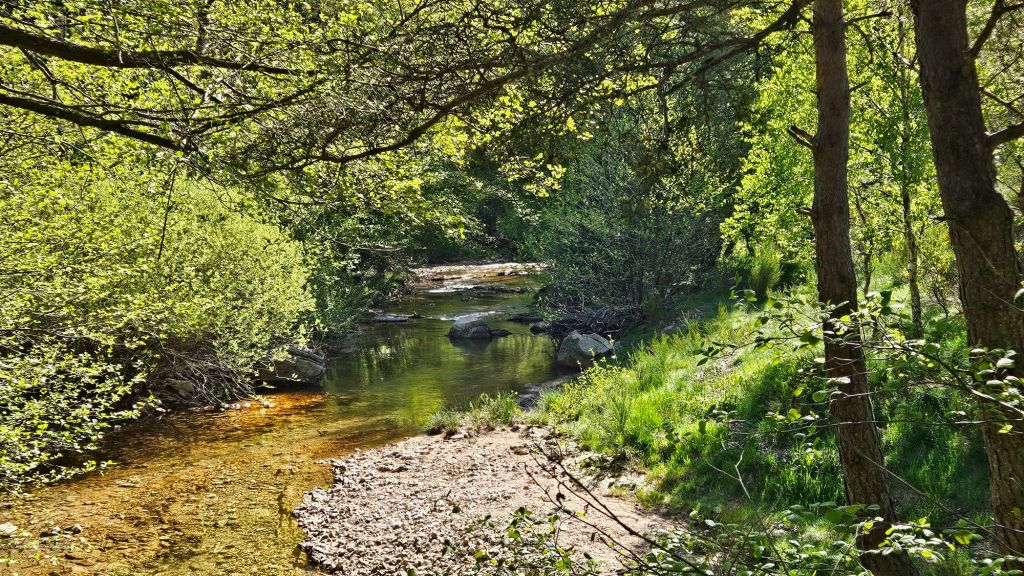
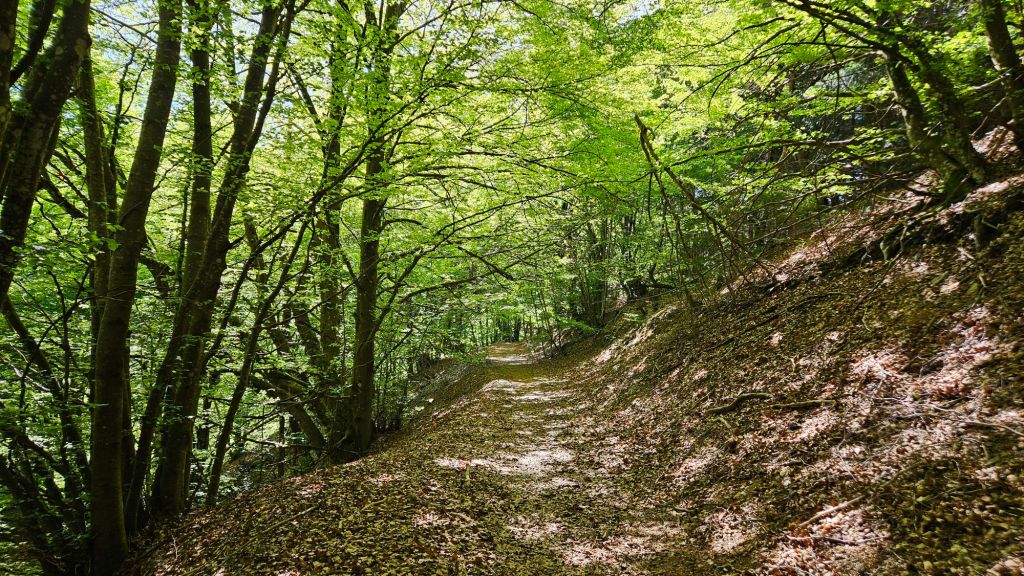
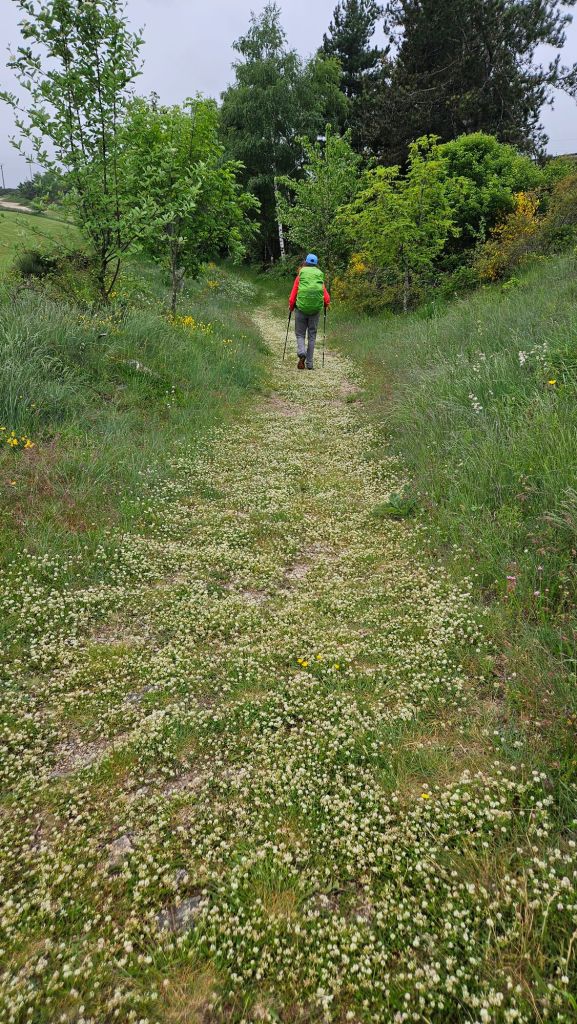
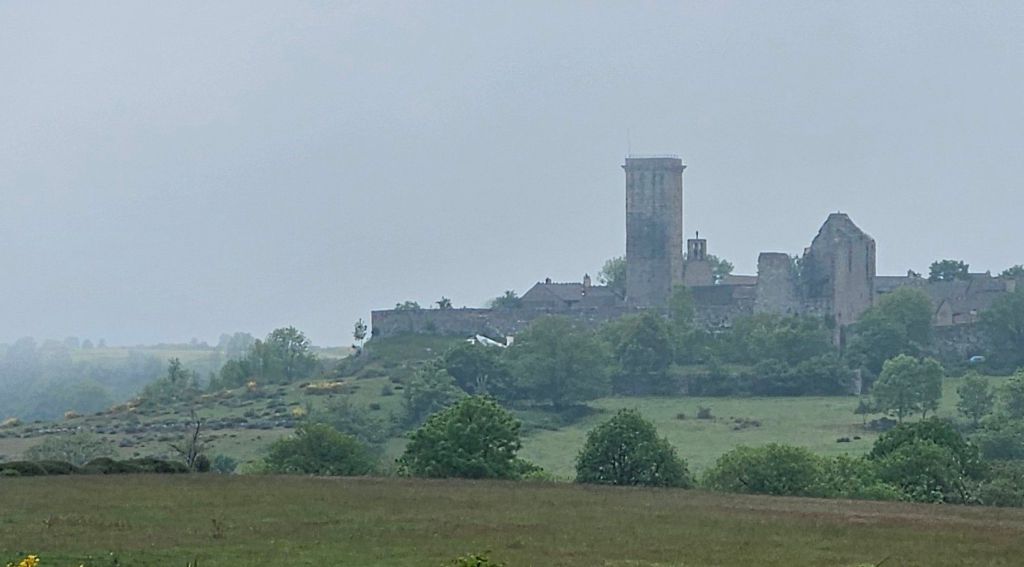
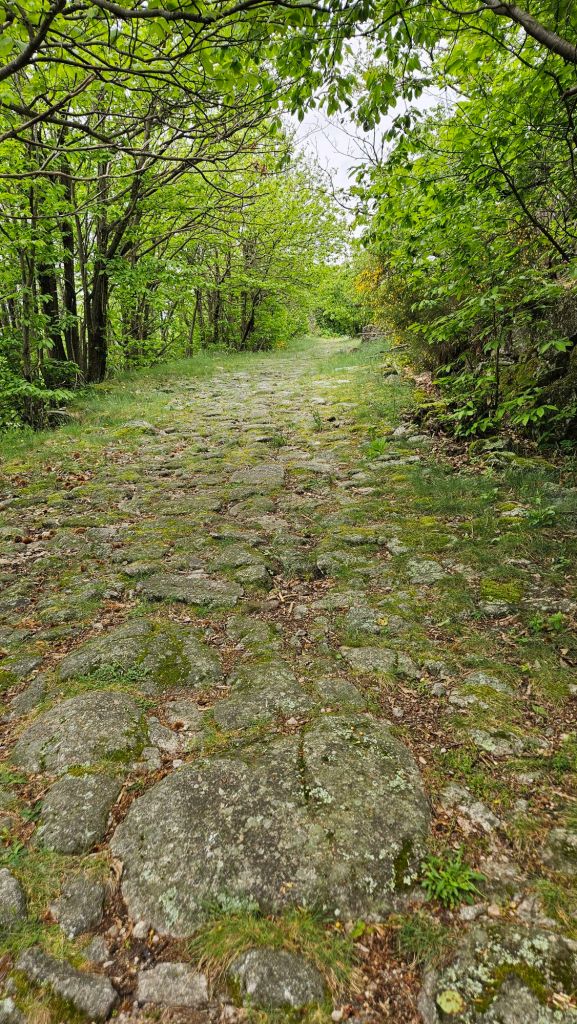
A field of rapeseedLandos at sunsetDay 3Paula can’t let an animal go unpetted Madonna and child above the portalLa Pieta advice the portal Day 4The Virgin overlooks the town of LucDay 5Day 6A path covered in clover was not an accurate harbinger of the dayAn ancient road. Perhaps Roman?
During our travels, we are occasionally surprised by chancing upon a novel festival that is unique to the area we visit. In Portugal, we celebrated with the residents of Viana do Castelo the 750th anniversary of the city’s founding. In Argentina, we happened on the 50th annual Fiesta del Queso. We wondered how much you can really celebrate cheese and had a wonderful time with rodeos, parades, meat, beer, and music. We hardly even saw any cheese.
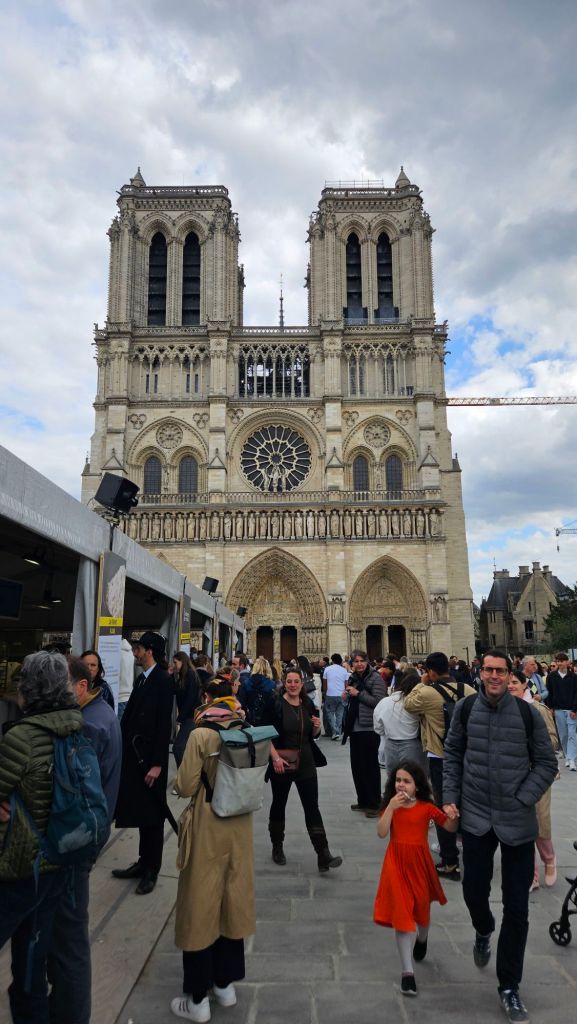
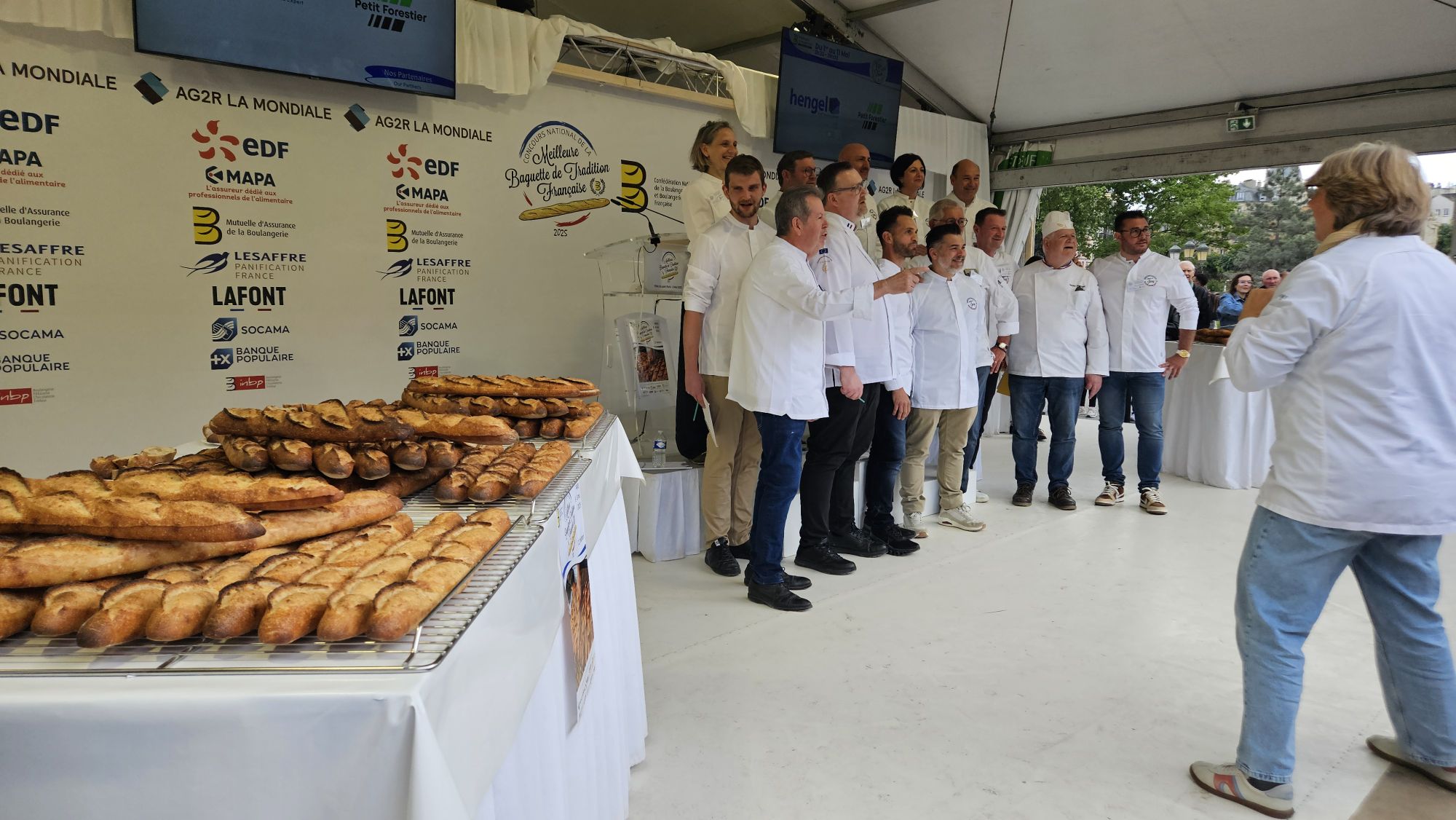
Due to our rescheduled flight, we had an extra day tracked on to the front of our brief visit to Paris. That day actually was concurrent with what was once known as VE Day in the US and by other various names among our former WWII allies . This year marked 80 years since the German capitulation. It is such a significant milestone that even the Germans are celebrating. It was so significant that many ancillary events were scheduled, one of which is a small but popular festival regarding a cultural element for which the French are renowned.
I would like to report that the Fete de Cognac et Armagnoc was a grand time. Unfortunately, such an event did not occur, though I believe there is much demand for it. No, the festival we encountered was the Fete de Pain, not the kind of pain we would have had following a long day of sampling Cognac, but bread.
Once again, we questioned just how much enthusiasm could be mustered over bread, and though I can not admit to being enthused, it was somewhat interesting during the brief period we attended.
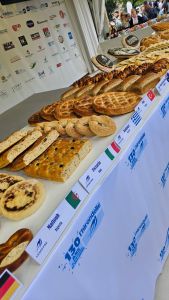
There were competitive events involving masters of the varying styles of bread and pastries. There were displays and sampling of bread from around the world. There were educational exhibits on preparation of grains, flours, doughs, etc.
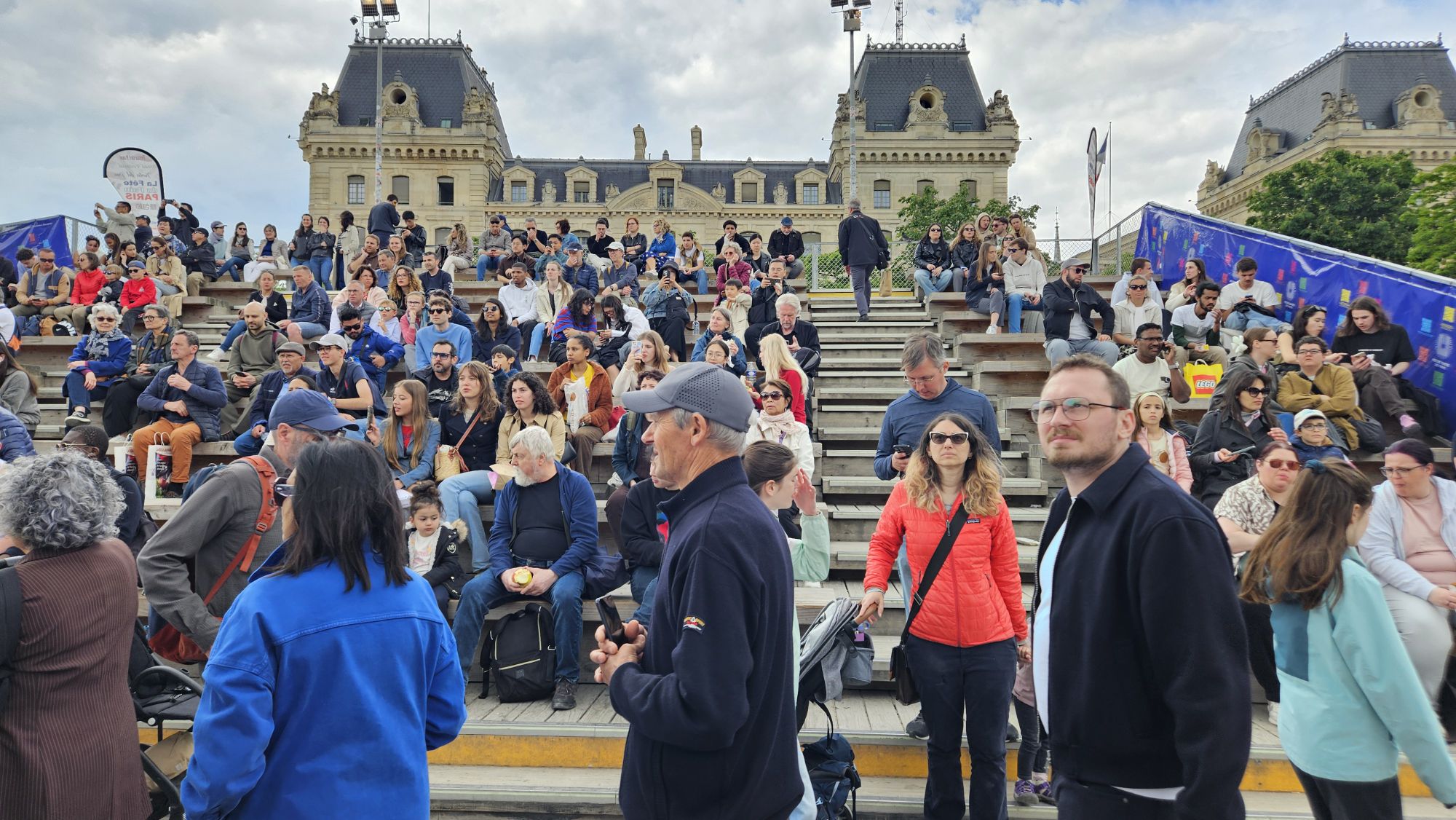
Here are a few photos of the event.
A small sampling of samplers
Just too French
Preparing an exhibitionAnybody say sweets?
So many kinds of bread
The finalists for the best baguetteThe grandstand for watching the excitement
Paula posted her resolution for the next year yesterday, and today it is my turn. I have been AWOL from our blog for a few years, leaving it for Paula to carry the weight of publishing stories about our exploits. She does it very well, and I appreciate her enthusiastic presentations and detailed descriptions. I have been mostly silent on all fronts during this period. I think it may be simply that I disagree and do not wish to dwell on my disagreement. “Disagree about what?” I hear you ask, though you probably are not asking. But just for the sake of argument, let’s say you did ask. Well, I can pretty much tell you: I have been against the current thing, a statement that is no longer in common parlance, I’m afraid, and, therefore, no longer the current thing.
I won’t phrase this as a resolution since that is so much the current thing, but I am, at this time and for as long as I am , back in communication. I actually started posting my essays, though a bit more formally and less flippantly, a couple of weeks ago by reestablishing my presence as the Contrarian Conformist on Substack. If you are interested, you can access my ramblings here, and if you would like you can subscribe by entering your e-mail and get future posts. The topics I discuss therein are outside the scope of this blog, so I’ll merely say that I am currently examining possible answers to Don Corleone’s question to the heads of the Five Families: “how did we let things go this far?”
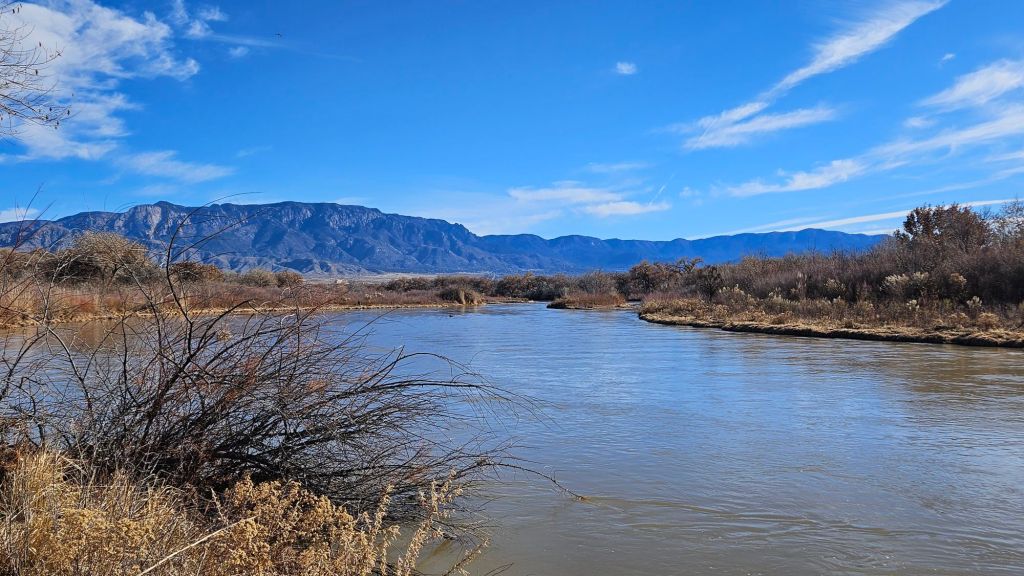
Today, we joined a group of fellow “pilgrims” for a New Years Day hike on the west side of the Rio Grande. I do not mean “pilgrims” in the general sense that we are all pilgrims in life, but because we are associated with the local chapter of American Pilgrims on the Camino, for which Paula is one of the coordinators. I use the term as an indication of our relationship through that organization. It was a chilly, almost cold, almost warm, bright winter day with plenty of sun and clear skies. The parking lots at the trail head indicated that the trail was particularly popular today, though it was not hard to get a sense of isolation in the bosque, even with a group of twelve people.
Winters on the Rio Grande are usually fairly dry, and this year, more so than normal. We have been in a drought, though it is not immediately apparent by the water level in the river.
The high water level is due to the release of water from upstream reservoirs so that the State can pay a portion of its water debt to Texas. Water is life, they say, and Texas has a life of its own. One of our fellow hikers asked whether Texas will share any of it with Mexico. I don’t have an answer for that question, but if one is to look at a Google Earth view of the US/Mexico border, one might have a fairly good idea.
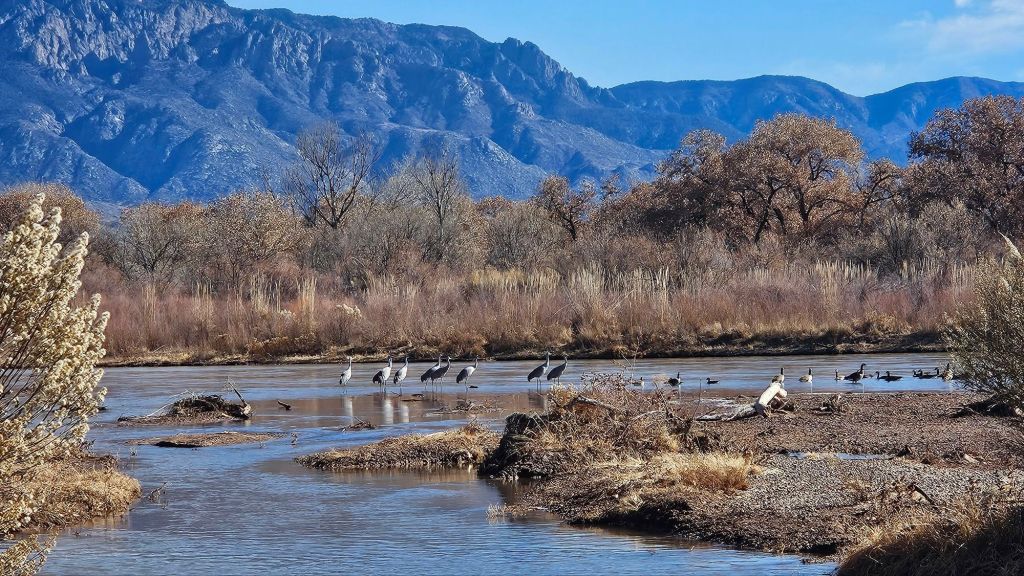
We are having a great year for migratory birds, with many cranes, geese, and ducks feeding and nesting along the river. Paula and I went to the Bosque del Apache preserve near Socorro a few weeks ago and there were many more crane this year than last year. This year we have not failed to see any when walking trails on the Rio Grande, passing them in small flocks as we walk up and down the river bank.
One of my favorite sights is watching cranes in flight, though since I have not been able to catch such a view on a photograph, I can only provide a photo of them wading.
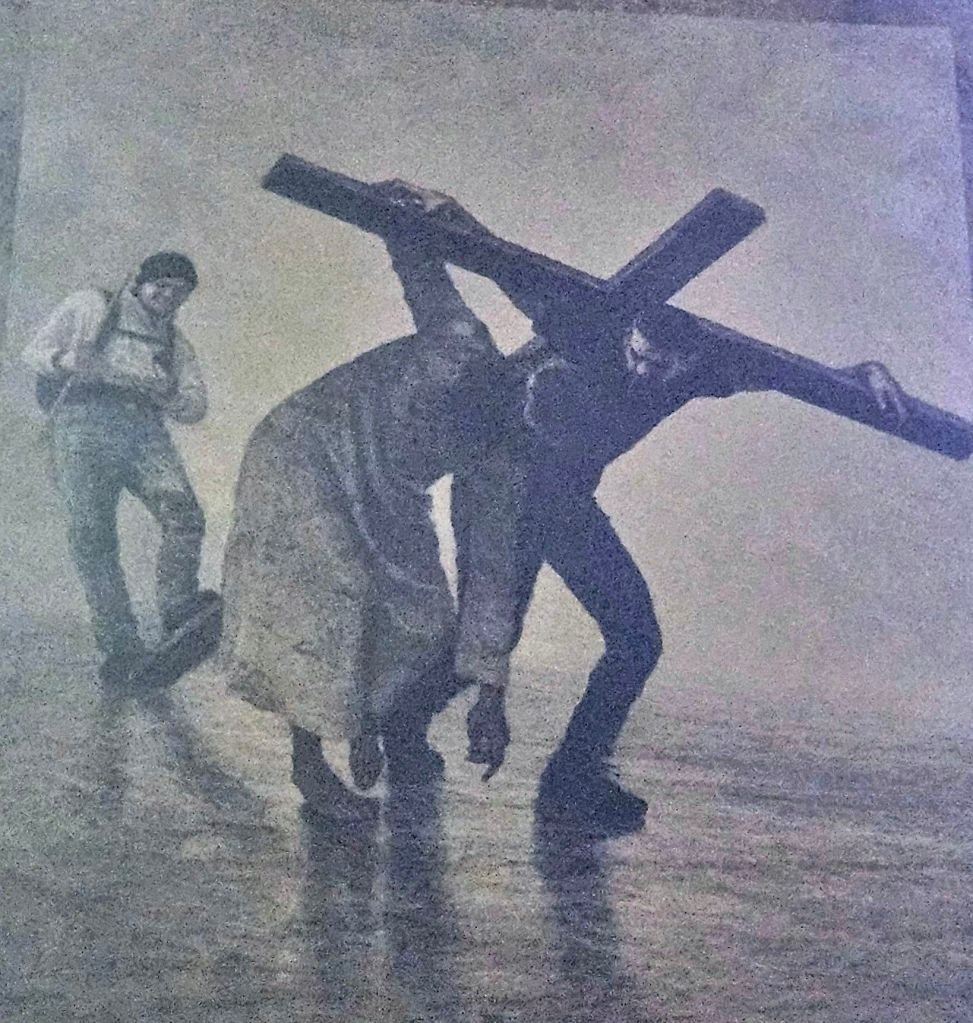
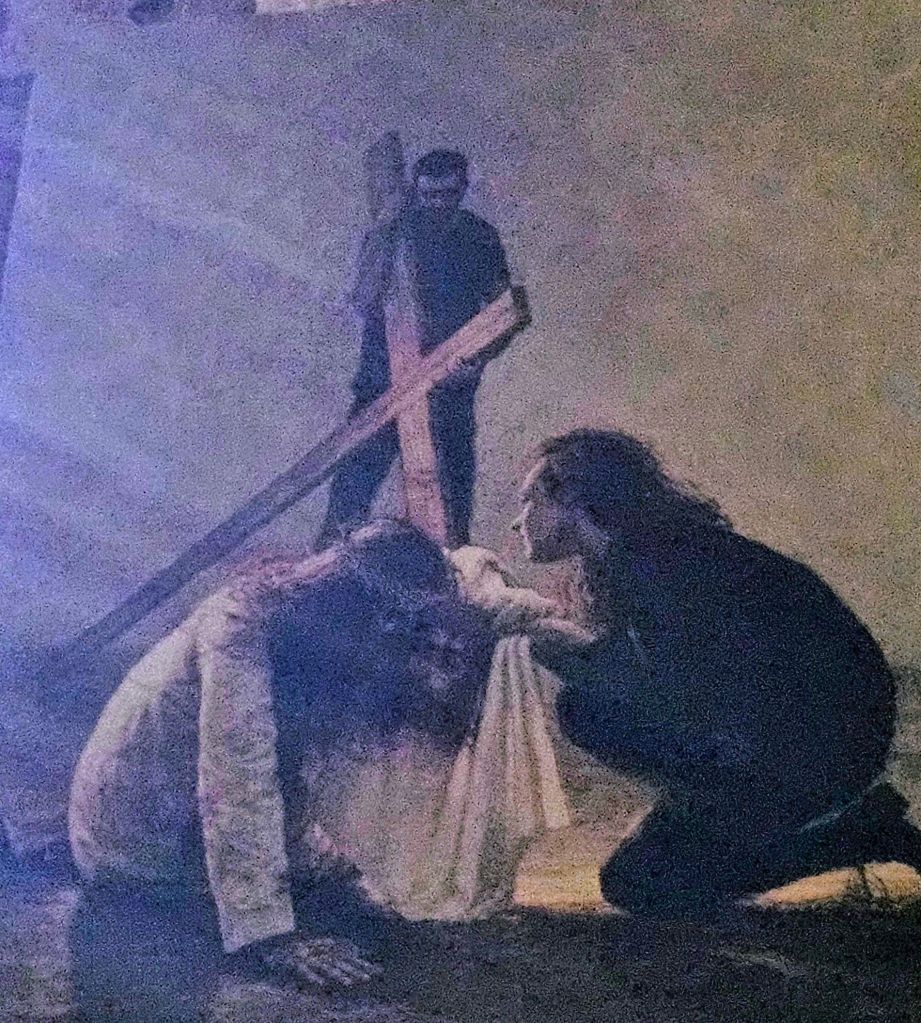
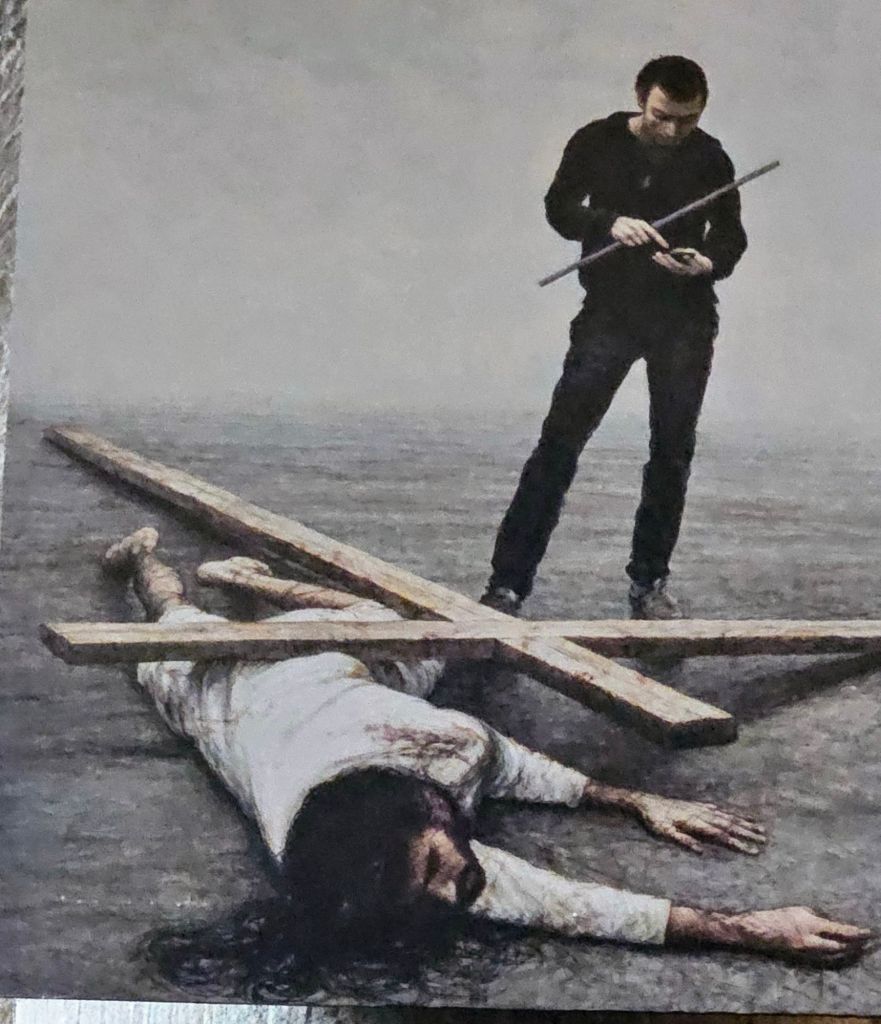
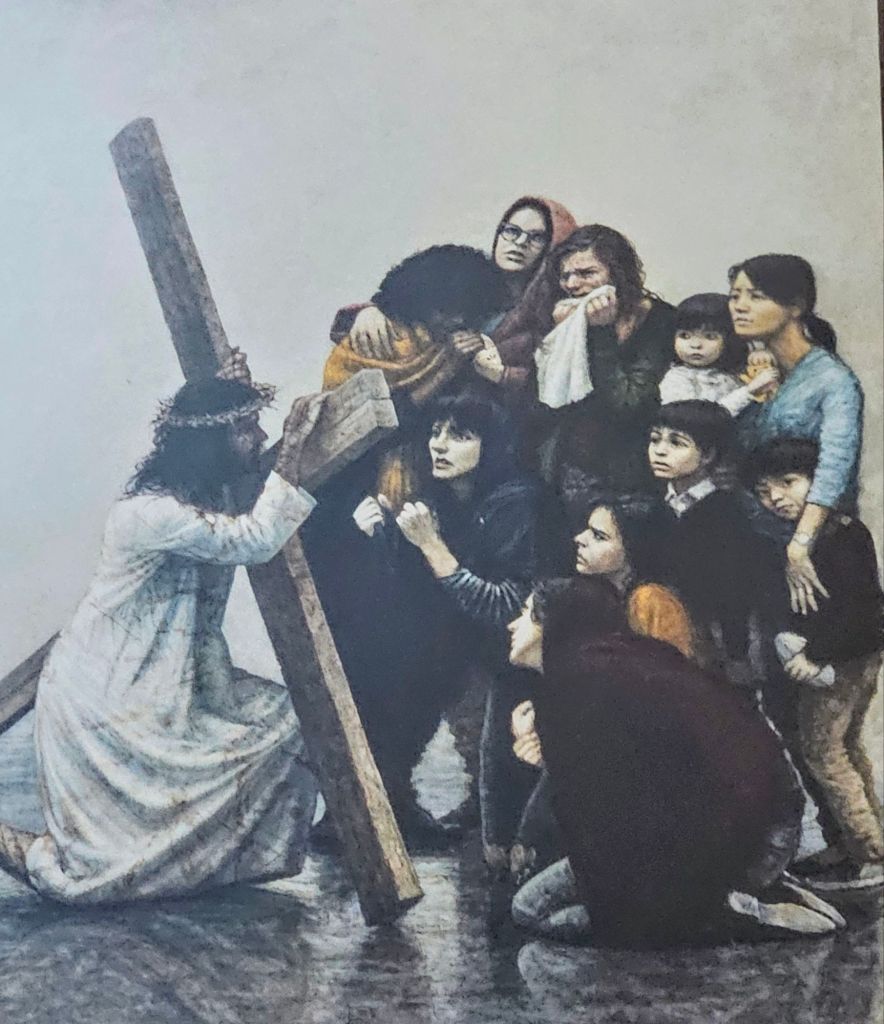
We had the opportunity to visit Eglise deSaint Sauveur à Figeac. As is my custom, I spent some time examining the Stations of the Cross. I appreciate the varying interpretations of a story that spans continents and centuries.
Usually, the stations are variations of standard images conforming to Catholic orthodoxy. Occasionally, a unique artistic interpretation provokes my interest. Within limits, of course.
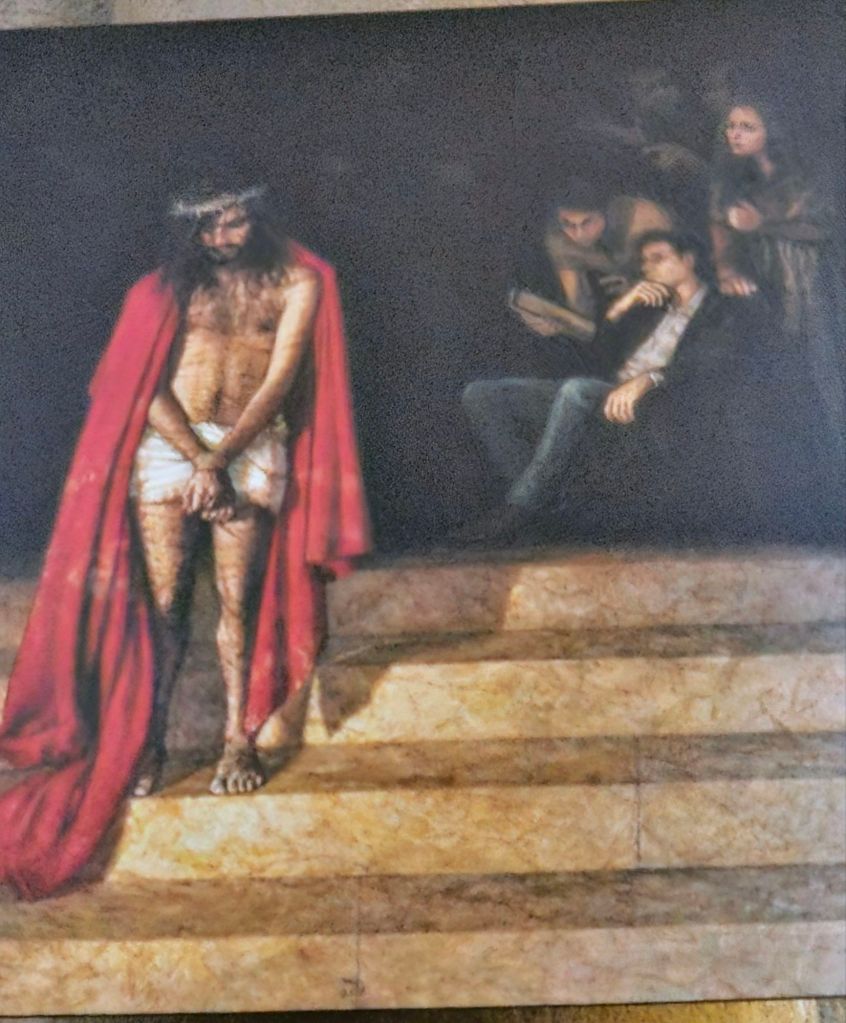
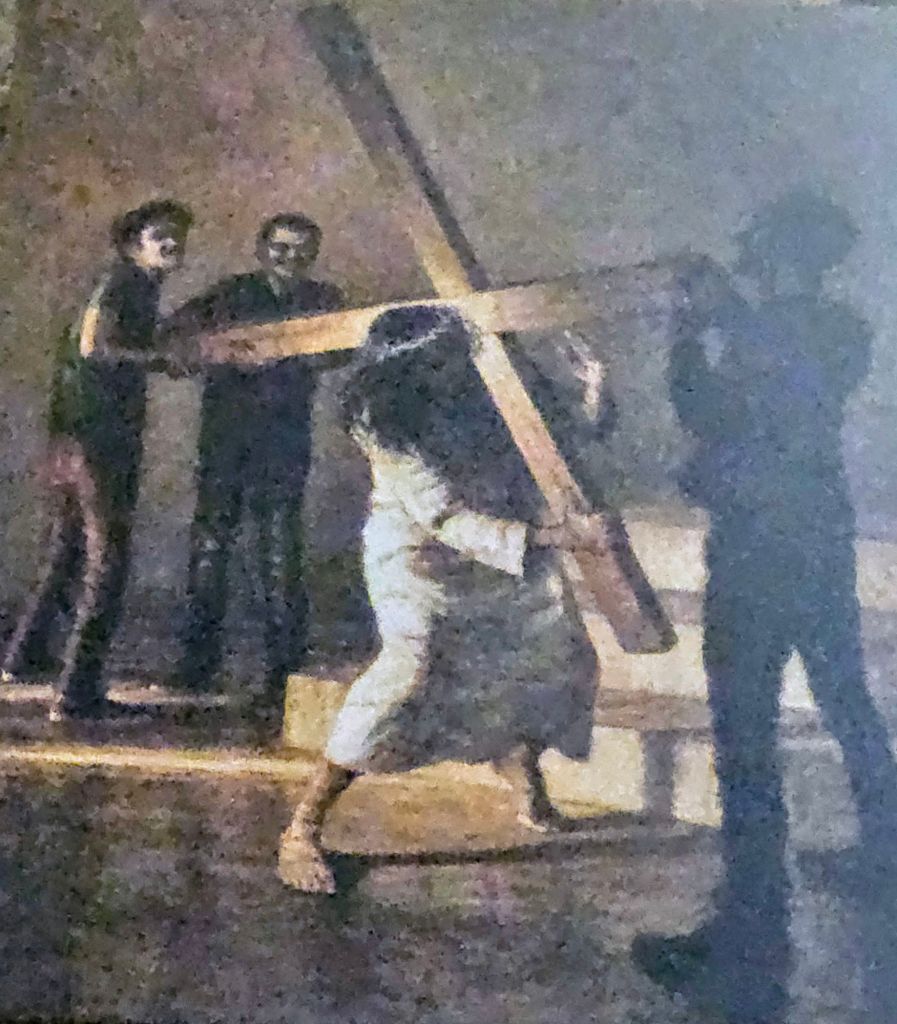
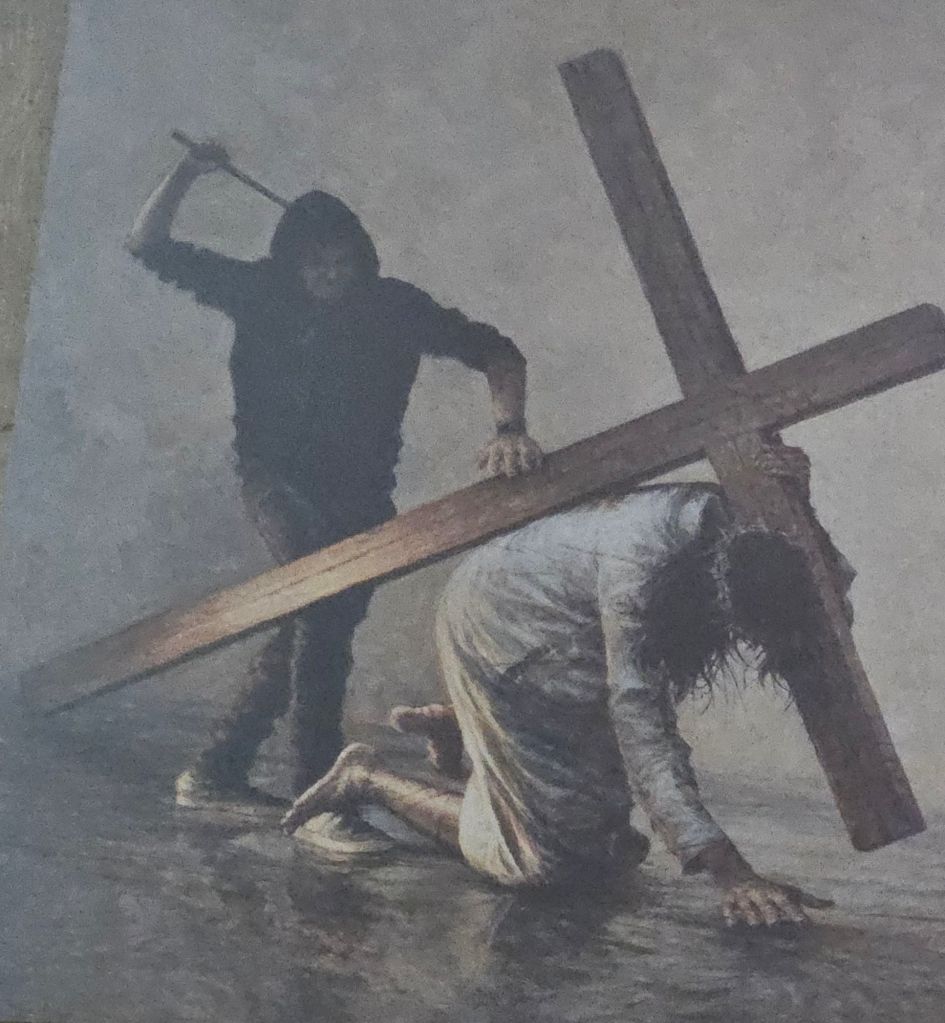
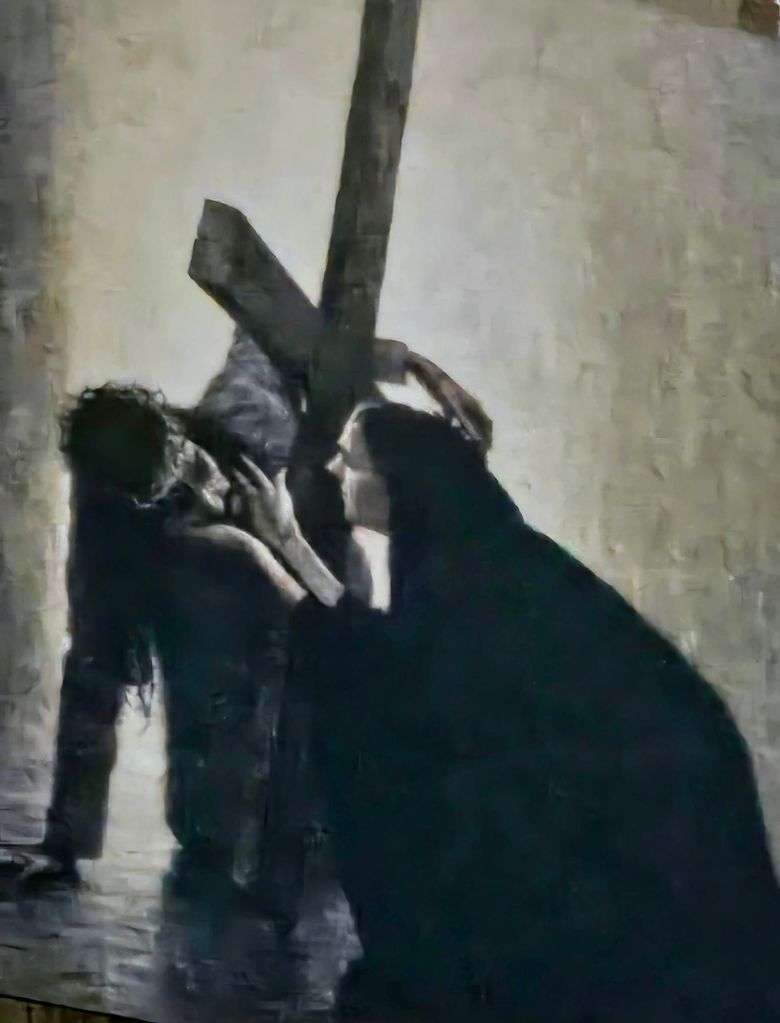
In this church I found the most inspiring and disturbing set of images that I had previously encountered. I am not yet able to articulate fully how these images affect me. I sense a postmodern influence that not only undercuts some of the basic preconceptions of the story of the passion of Christ. At the same time, I sense a deep critique of the post-modern viewpoint and the impact of that world view on society.
In this presentation, the passion continues to this day, and we are each acting in the ongoing drama. We have our roles, sometimes as victims, but more commonly as tormentors. Who are the others who are condemned with no hope of redemption in this world? Who is it that we cast aside by our indifference and our hostility?
Bear with me as I present the fourteen Stations with a brief narrative on some of them.
Station 1: Jesus is condemned to death
Jesus stands alone, scourged and beaten, the crown of thorns on of head. There is no Pontius Pilate overseeing the event. There are no centurions standing ready to enforce the order for execution. Rather, there is a young man dressed in denims and tee shirt with a small gathering of associates. He appears disinterested, distracted.
The condemnation seems less an action than an outcome of passivity.
Station 2: Jesus takes up his Cross
He is assisted, perhaps enthusiastically, by young men who appear to enjoy the task, possibly a bit too much.
Station 3: Jesus falls the first time
And he is well punished for it. The burden of his life (or death) is too much to bear. Perhaps a sound beating will make it easier. Is that how we respond to those whom we believe failed in some critical task or obligation?
Station 4: Jesus meets his Mother
A heartbreaking scene. A mother’s love in the midst of tragedy. Her son, broken by life and forced to play an active role in his own murder, collapsed before her. She reaches out to soothe him.
Station 5: Simon of Cyrene helps Jesus carry the Cross
While Simon takes a share of the burden, a tormentor can’t help but add to the difficulty, placing his own weight for good measure.
Station 6: Veronica wipes the face of Jesus
Literally wipes his face onto the cloth
Station 7: Jesus falls for the second time
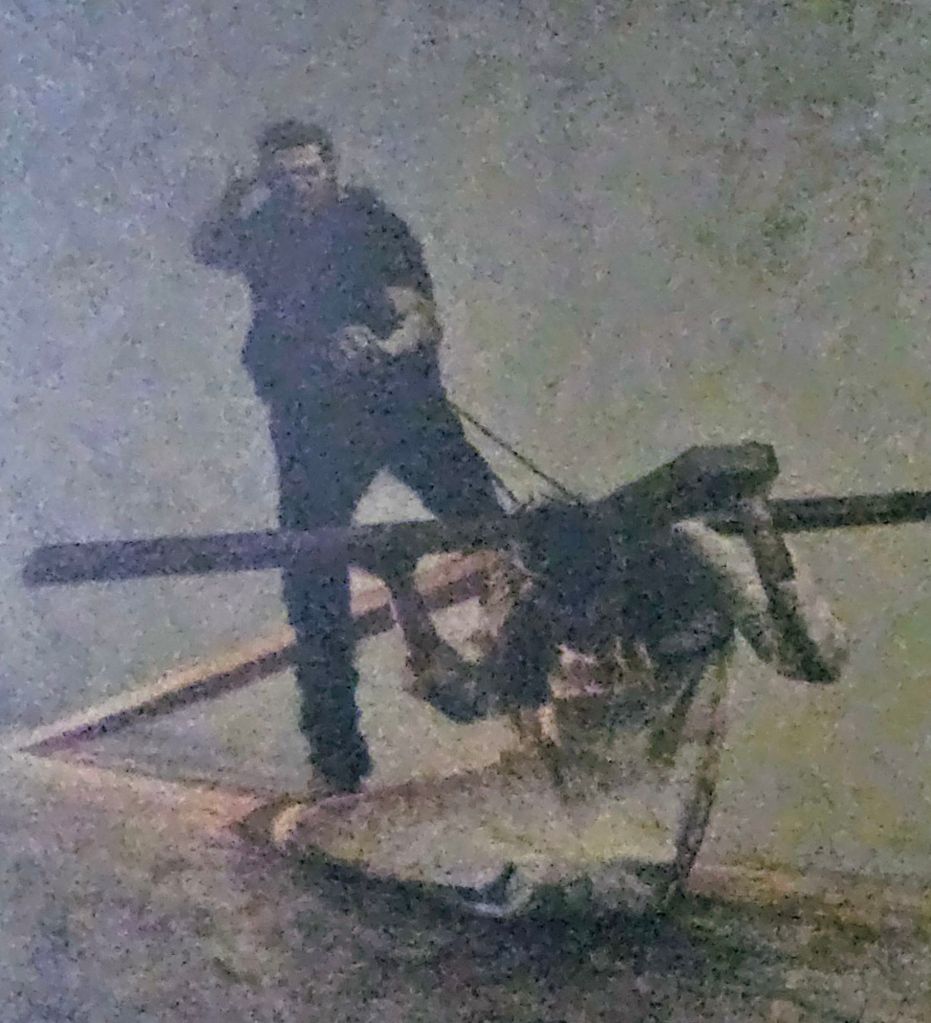
Perhaps he took a photo, or maybe a selfie, to post on Facebook. Or maybe just texting a friend, making plans for dinner, hardly conscious of the events unfolding before him.
Station 8: Jesus meets the women of Jerusalem
Station 9: Jesus falls for the third time
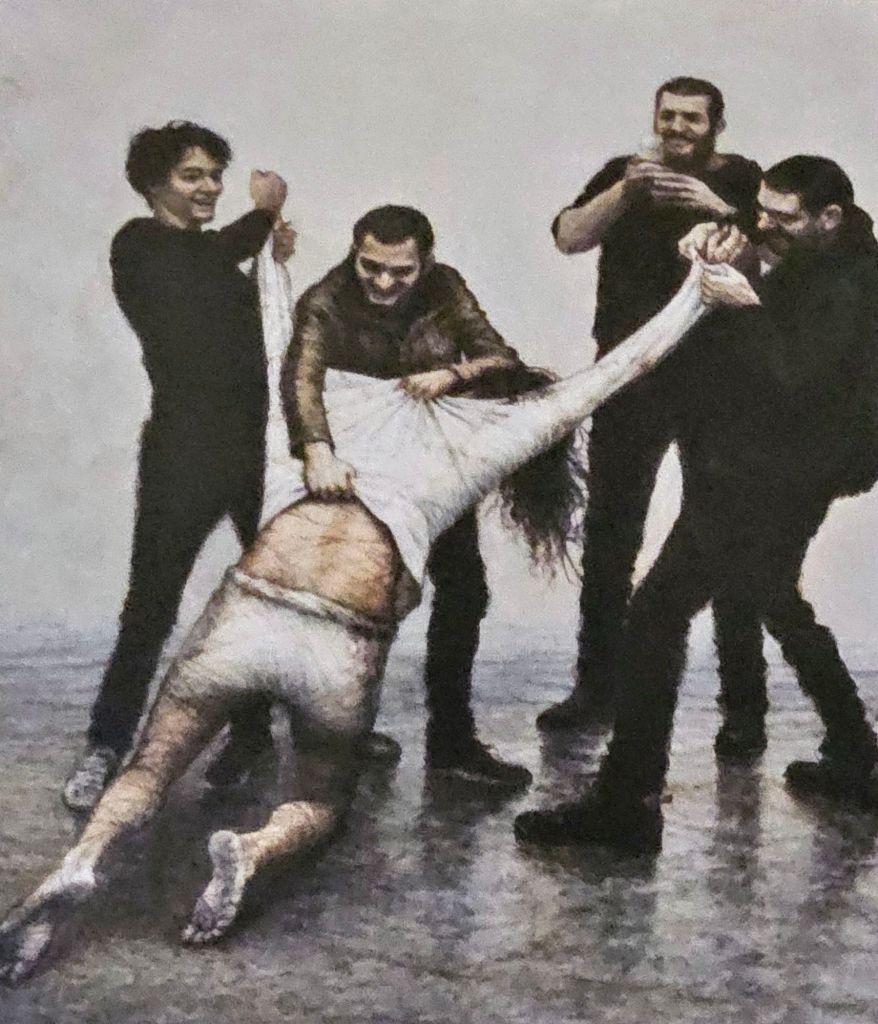
Station 10: Jesus is stripped of his garments
Such a momentous occasion. Let’s get it documented. Everybody say “cheese.”
Station 11: Jesus is nailed to the Cross
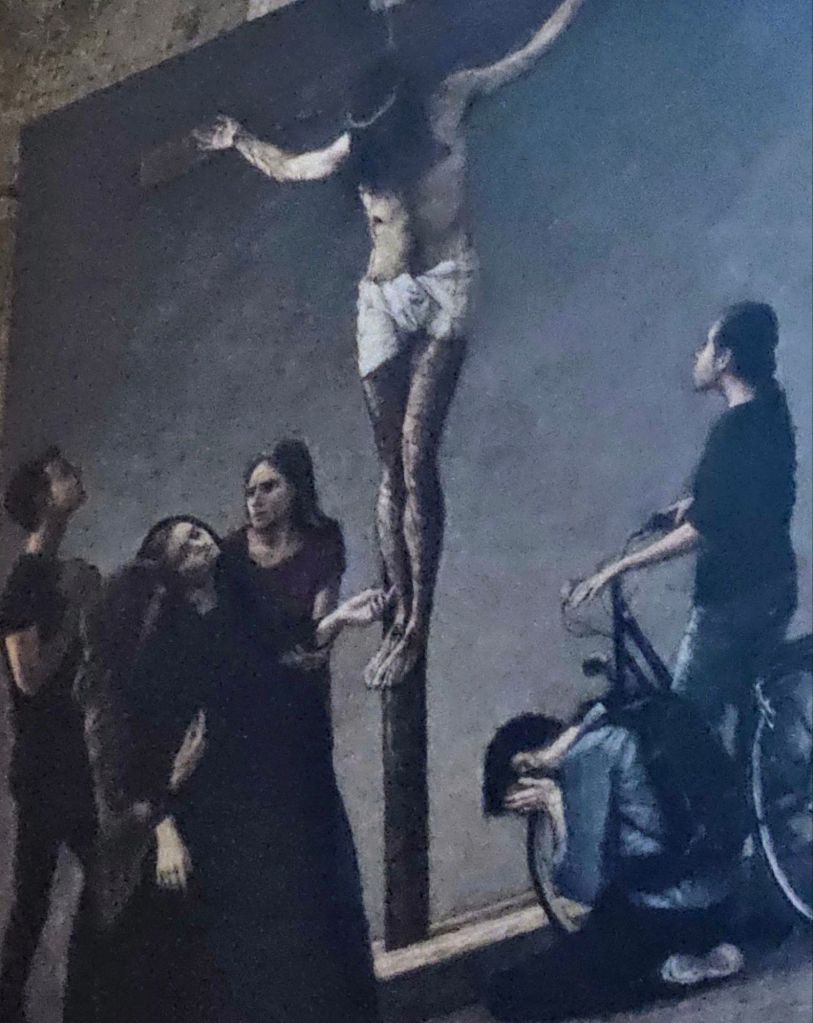
Station 12: Jesus dies on the Cross
Of incidental or passive interest to some.
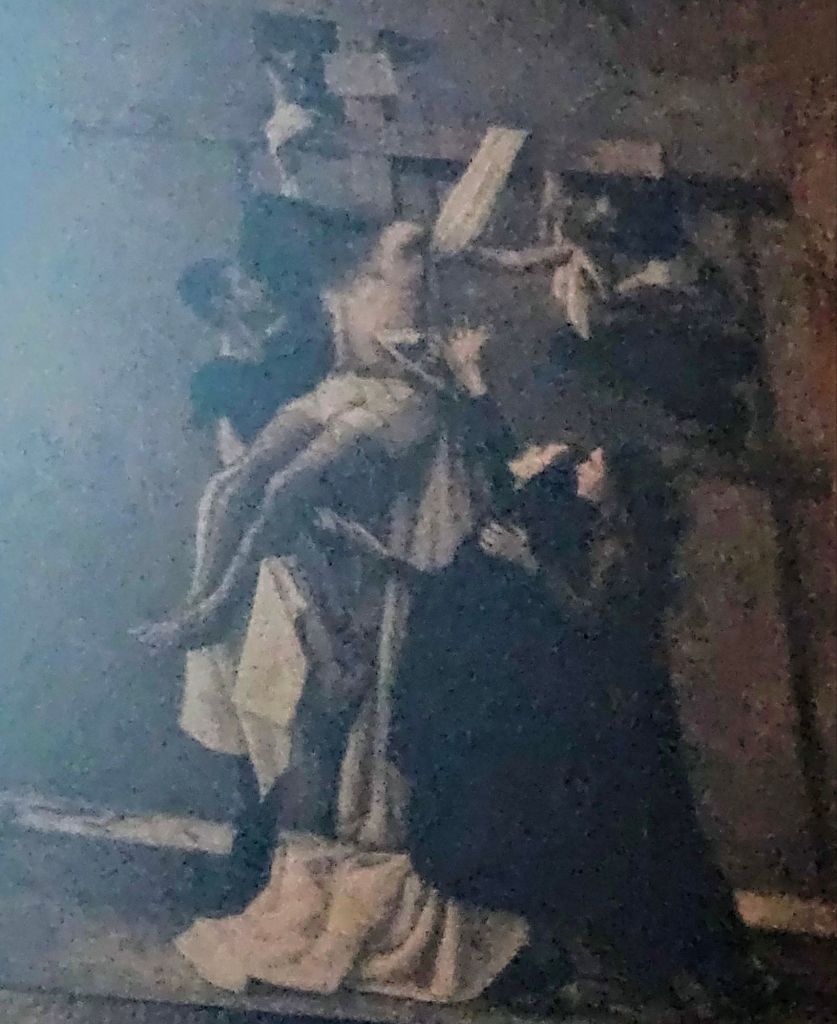
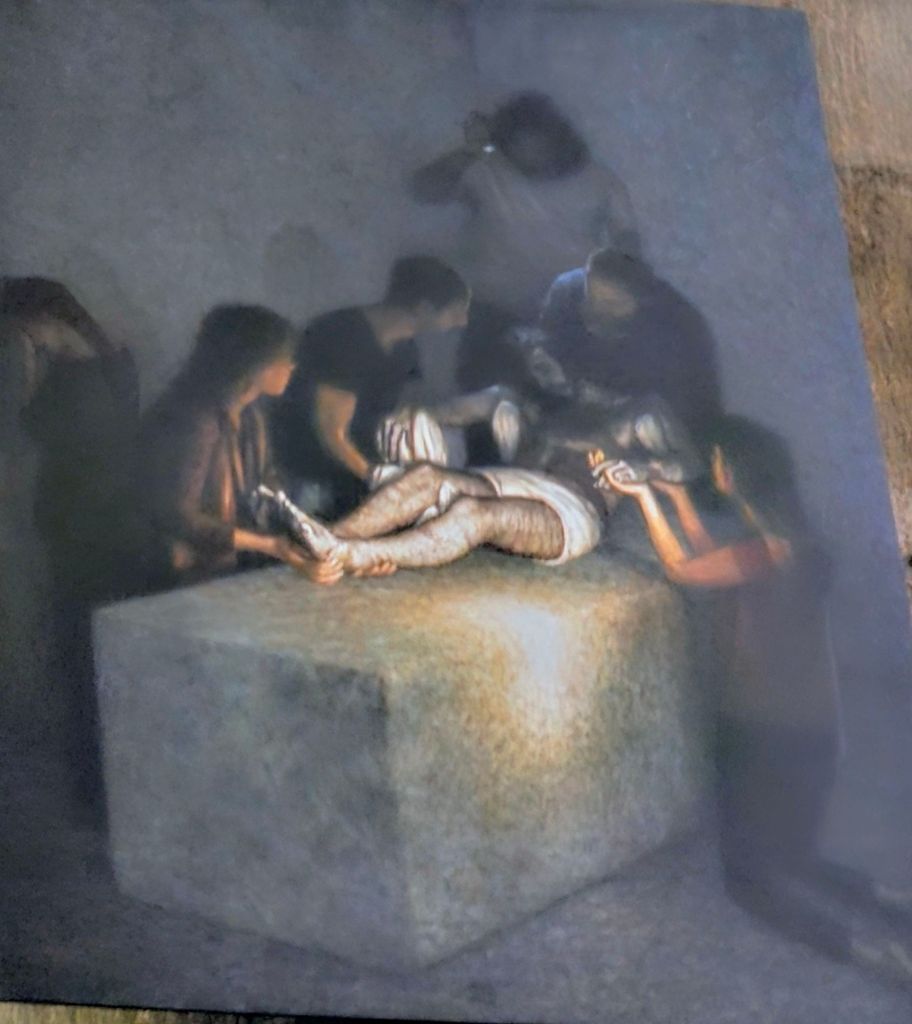
Station 13: Jesus is taken down from the Cross
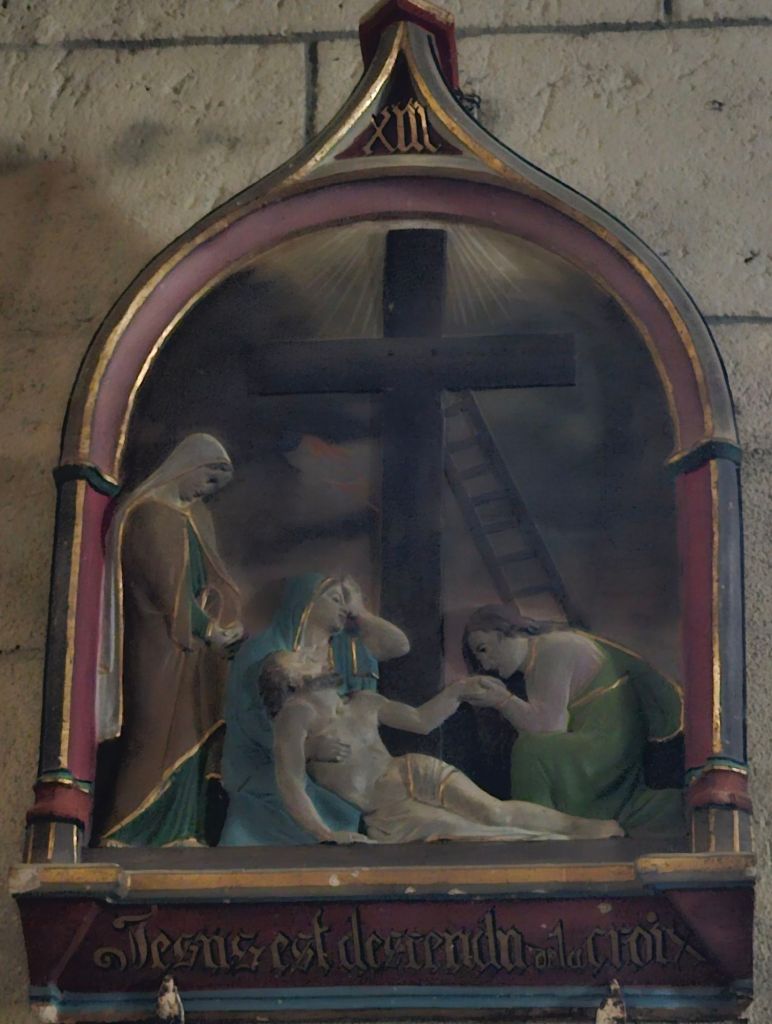
Typically, the central figure in the 13th Station is Mary. It is the source of most interpretations of La Pieta, featuring Mary, grief striken, holding the body of her son, in some cases accompanied and in others solitary in her grief.
In this version, the focus is on the body of Christ, being removed from the cross as a mechanical undertaking, a task to be performed as it is when recovering any victim . Emotional attachment is lost in the “doingness” of the event.
Here is an example of a more traditional 13th station from Eglise Sainte Radegonde, St. Felix, France.
HereStation 14: Jesus is laid in the tomb
What do you think of these images? I am interested to know.
I will touch on the Stations and their relation to some other icons that I find of particular interest in a future post.
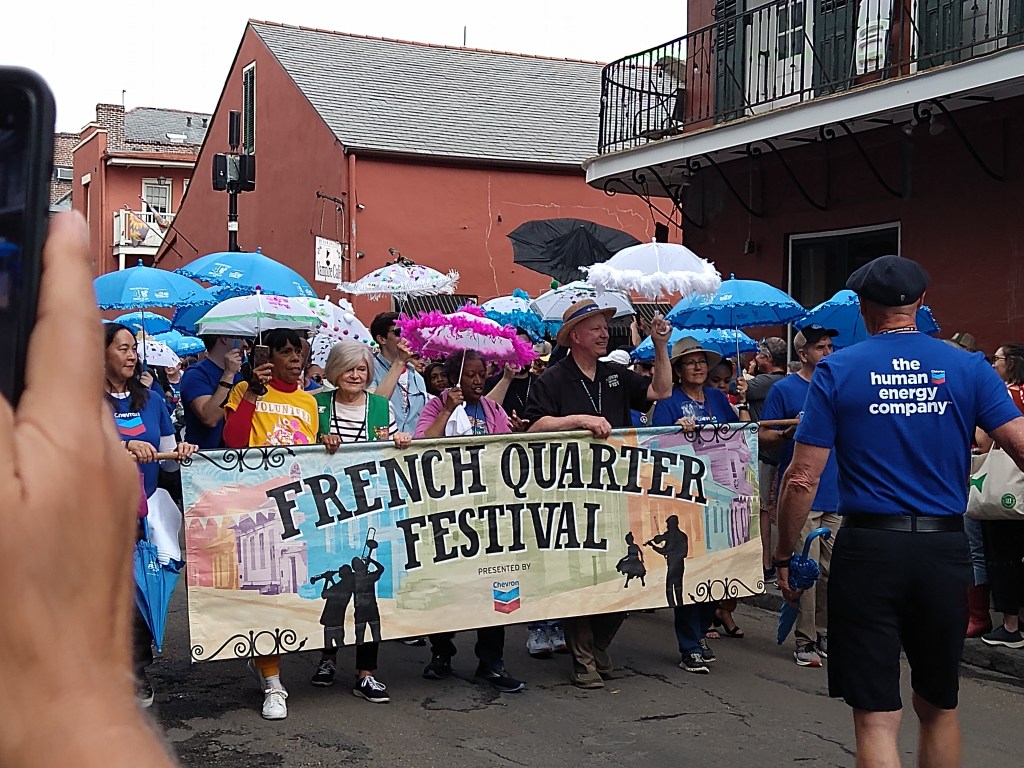
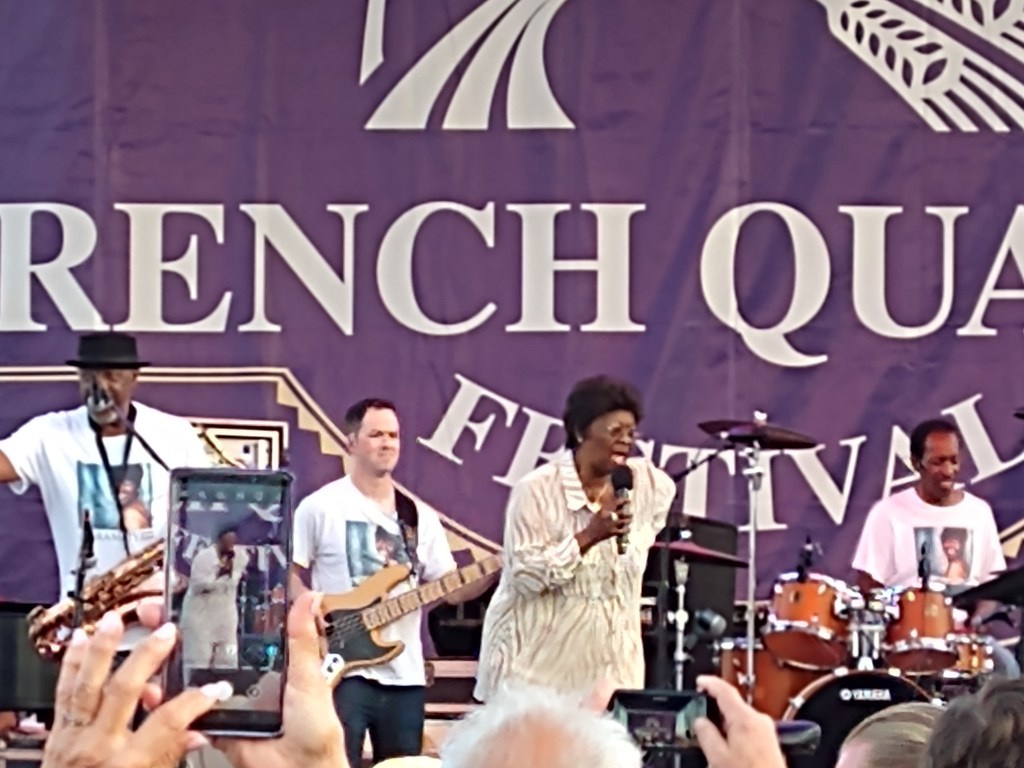
It is the first weekend after lent in NOLA, so of course it’s time to have a party.
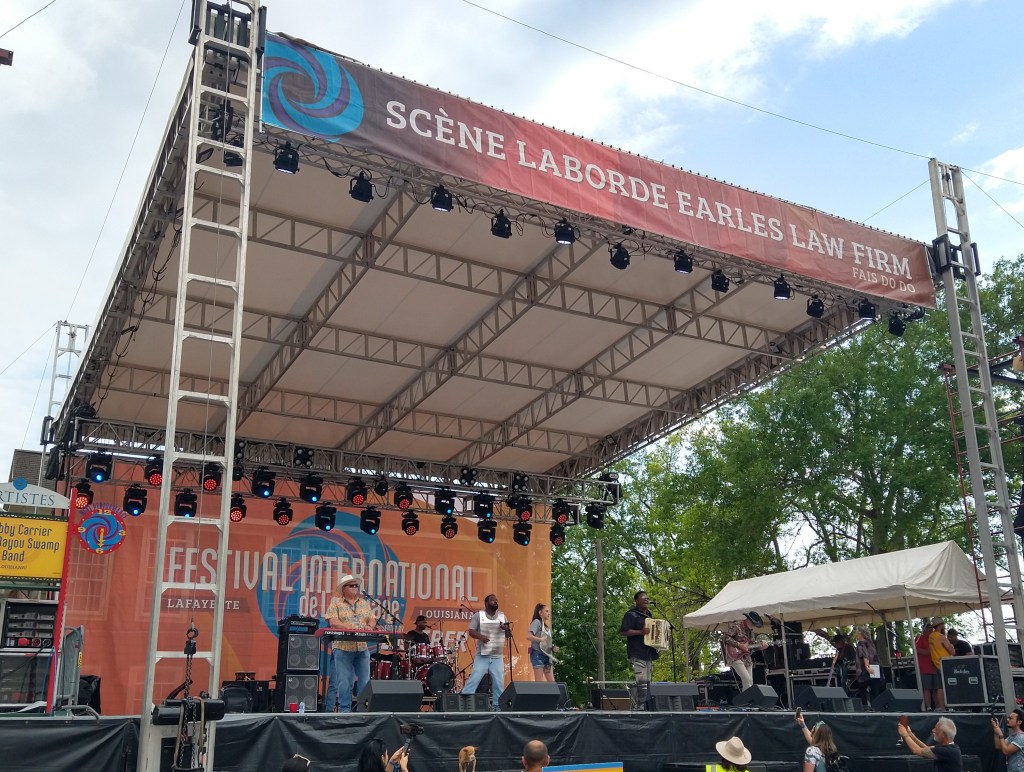
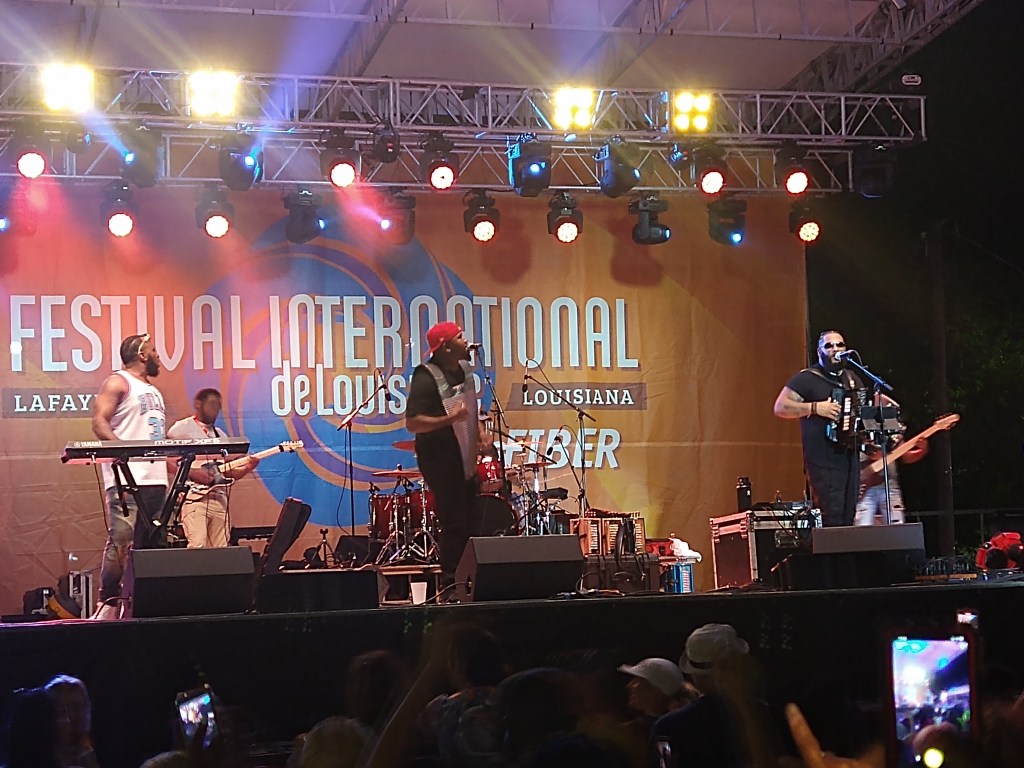
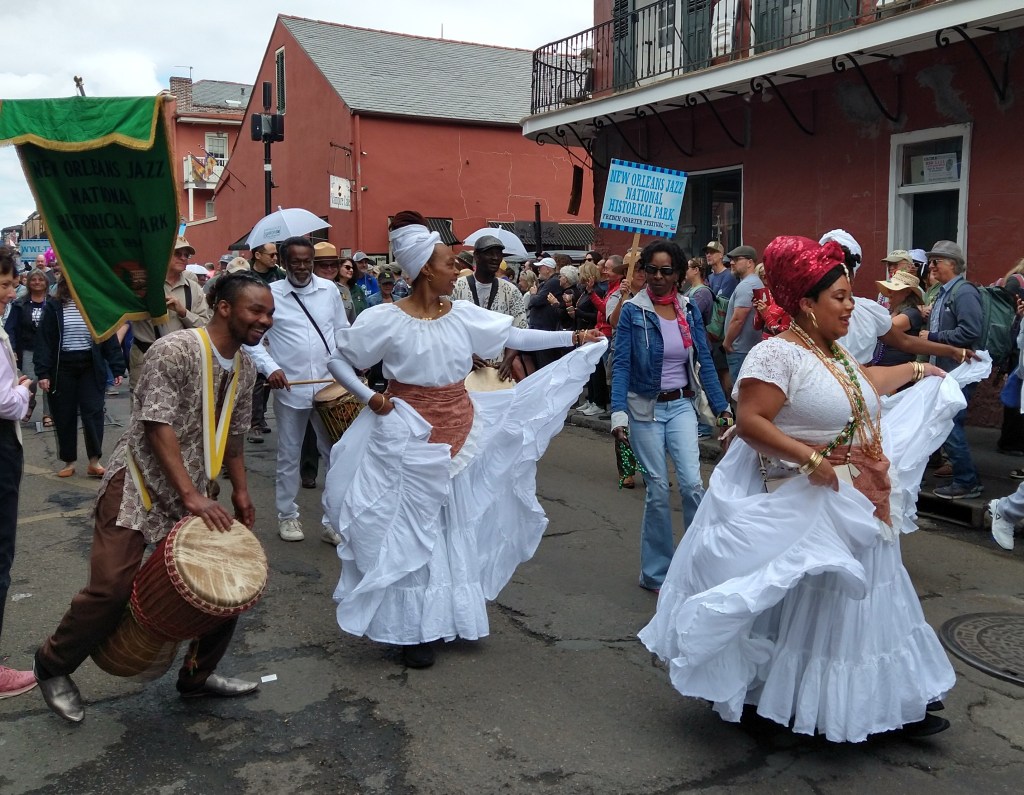
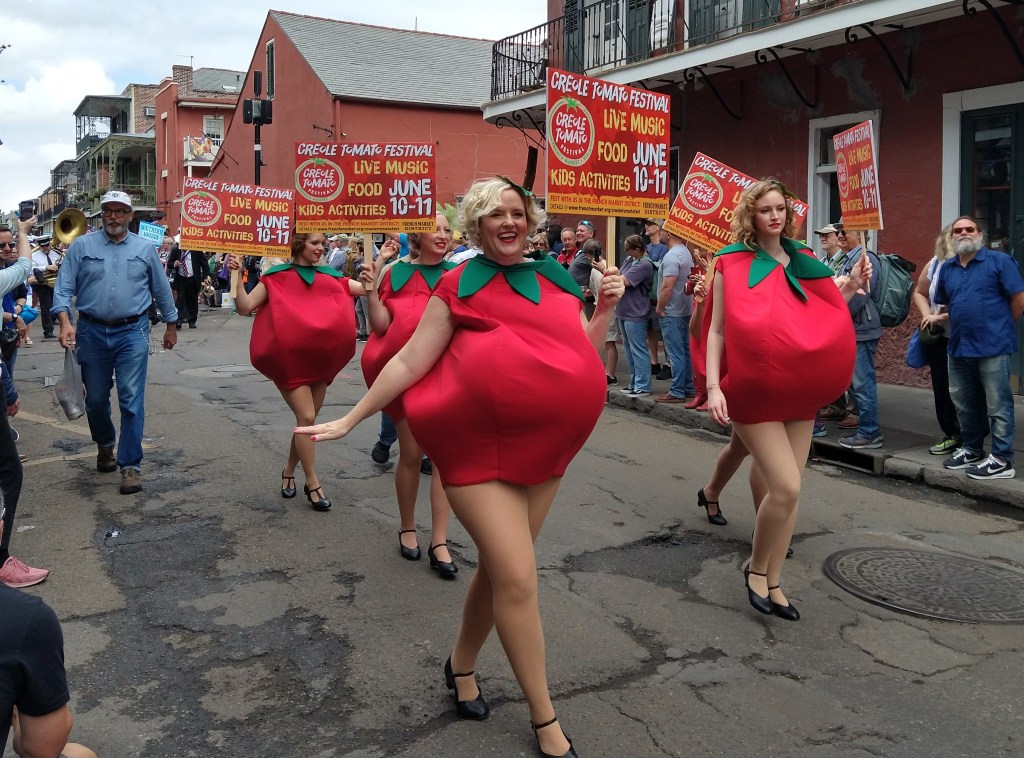
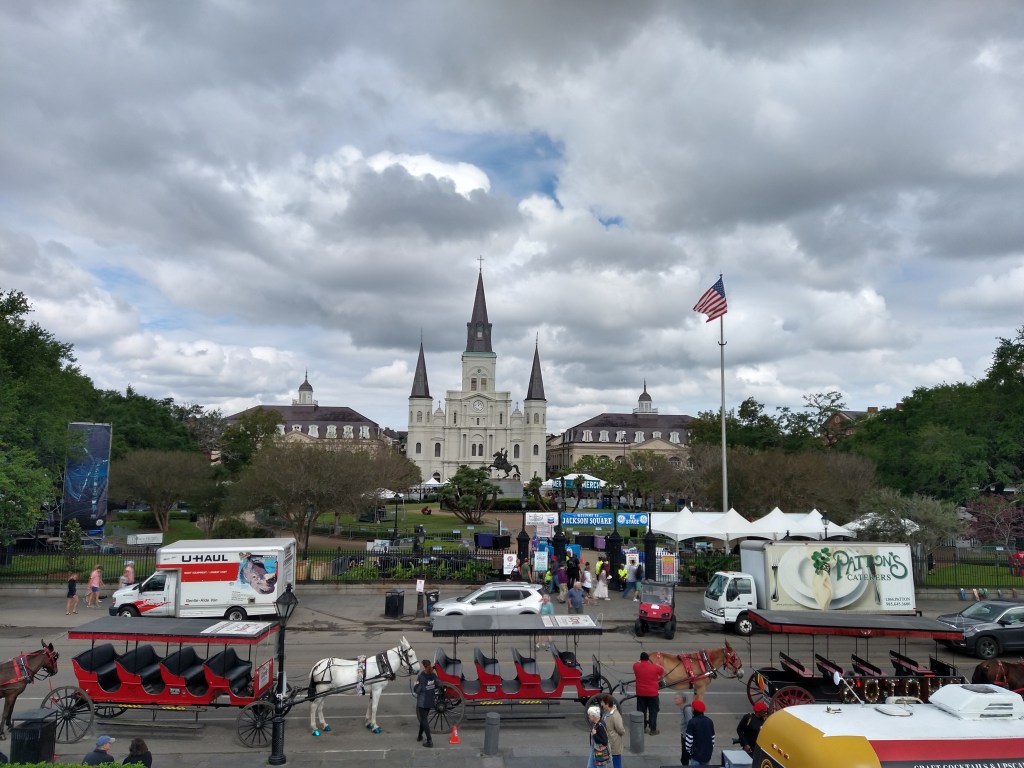
The opening day of the four day French Quarter Festival started of with a drum line and parade on Bourbon Street to Jackson Square. Music started on five stages at 11:00, and ended with fireworks over the Mississippi River at 8pm.
Weather forecast for the day held out a high likelihood of rain, but the combined wishes of thousands of attendees produced a warm, comfortable day with plenty of good food and drink.
Day two will have music at 12 open air venues. Choosing among the more than fifty performers will be an exercise in logistical planning. It promises to be a hot sunny day. I think I’ll wear a hat.
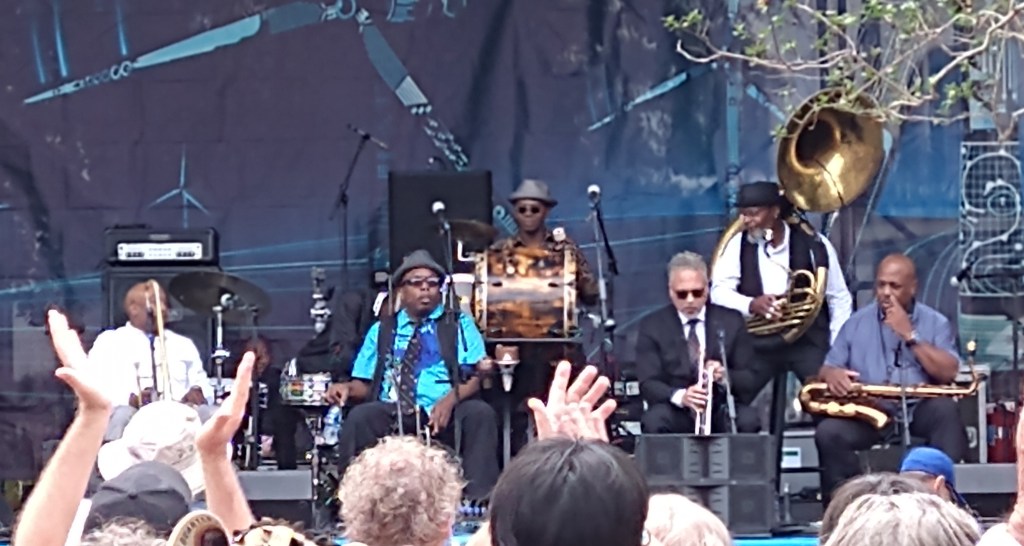
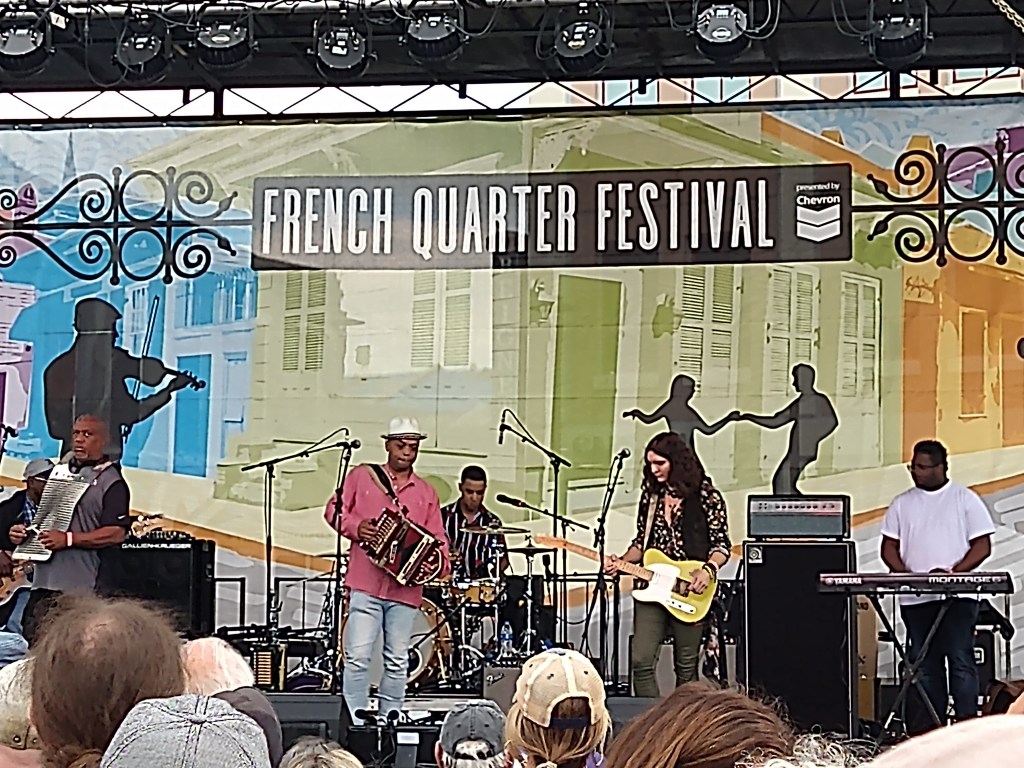
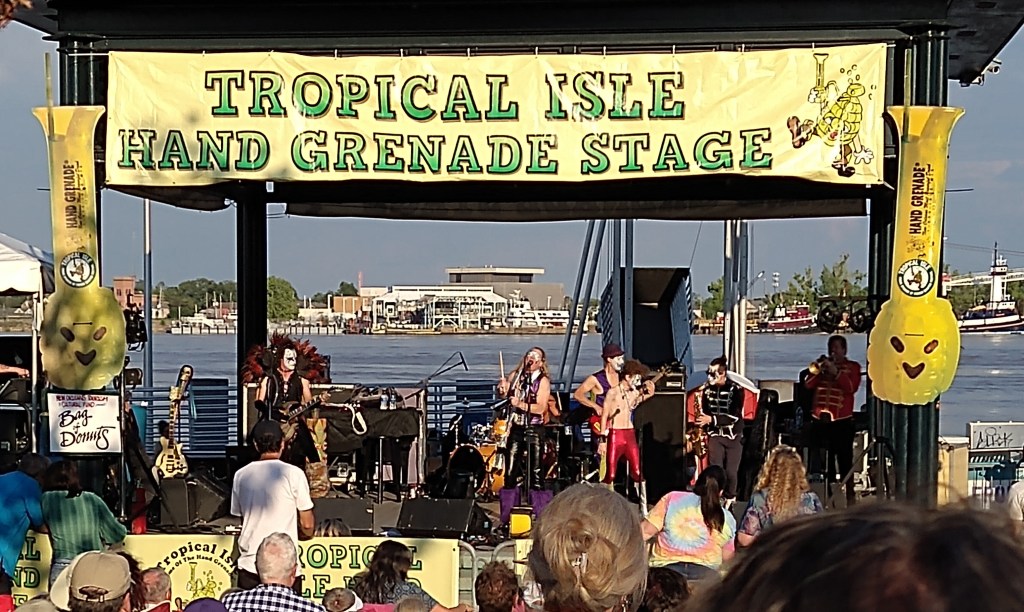
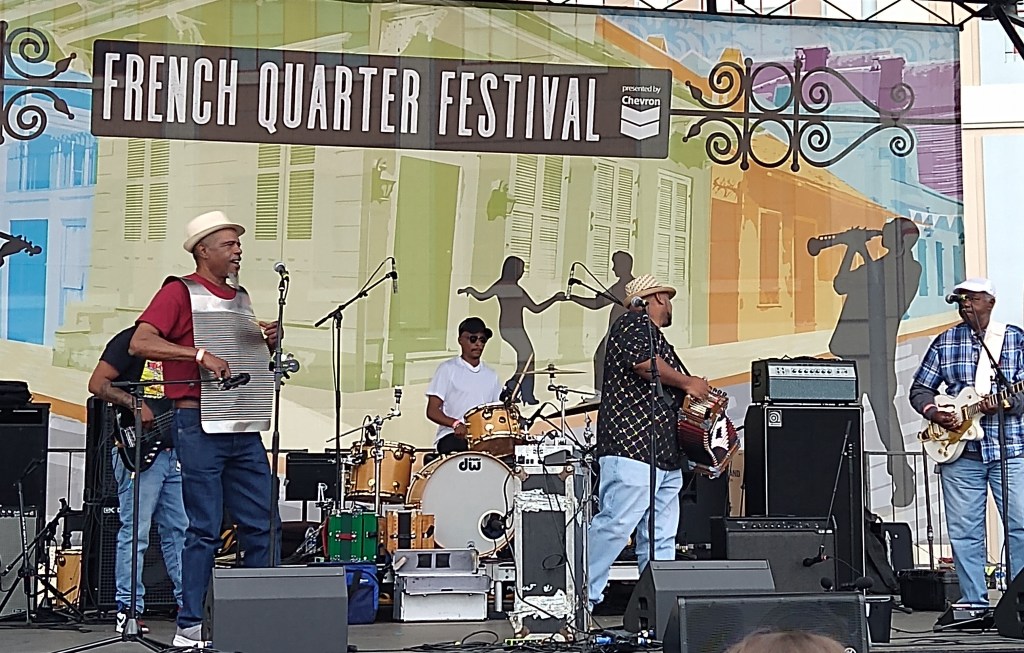
Opening paradeSt. Louis Cathedral overlooking Jackson SquarePreservation Brass Band opens the festival at the Jackson Square stage.Cory Ledet and his Zydeco BandBag of Donuts a fun local cover group with the great medley of Queen’s greatest hits among other favorites.Gerard Delafose and the Zydeco GatorsIrma Thomas, Soul Queen of New Orleans was the closing headliner.
We were on the ferry leaving Dubrovnik, heading north to Split, Croatia, when I recognized we were making our way back home. Dubrovnik is the furthest point of travel on this trip and we have been retracing our steps with still some days left until we get home. It’s clearly too early to start thinking that this trip has ended, but I have been reflecting on the trip in anticipation of that end. I find myself considering the entirety of this “vacation” as if it is already complete. It is too early to reminisce, but in anticipation of the time it will be appropriate to reminiscence, I will engage in some pre-reminiscence, that I will refer to as my preminiscences.
Let’s go back in time to the hazily remote past when Paula and I decided to undertake an international venture. For quite a while I had been reluctant to consider leaving the country, particularly for Europe. Initially I was deterred by the COVID travel restrictions since I wanted neither to enroll in the global medical experiment designed by mad scientists, nor allow strangers to stick swabs up my nose, into my brain, before boarding a plane back home. But those restrictions have been paused. That reticence was replaced by a concern that we really didn’t know how bad the situation would get in Europe due to the economic and political fallout from NATO’s war with Russia. (BTW we still don’t know and since we are leaving for Germany tomorrow, I have some concerns still.
It was Paula’s idea, I must admit, that we should put aside any misgivings and hit the airways rejecting cowardice and just accepting the uncertainty. Why let concerns like potential food and fuel shortages, runaway inflation and social unrest stop us. She was right, of course. Any belief that we are not in a period of uncertainty at any given time is merely a superstition. Existence is uncertain, and though we cannot determine whether the British Pound or the Euro will collapse as a medium of exchange in the next few months, we can also not be assured that we are safe from asteroids crashing into the house next door. “Crappy Diem,” I said,” Let’s make a plan.”
We decided on a modified version the long adventure we had planned for April 2020. I still haven’t forgiven the world for forcing us to forgo that plan. We got most of our money back from the deposits and non-refundable payments we had made, but that is faint recompense from missing the celebration of my 70th birthday (a few days late) on the summer solstice at a pagan stone circle in the Orkney Islands. That experience was to be the culmination of a three-month trip starting in Italy and including a tour of Central Europe by train before trekking through Scotland.
This trip we would take the train tour of central Europe, but not as a one-way journey from south to north, but as a loop, starting at one end and ending at the other (if you are unsettled by the notion that a loop has ends, please refer to Foundation and Empire by Isaac Asimov). We settled on a detailed itinerary: start and end in Berlin with many stops in between. That’s the degree of specificity we had when we made our flight arrangements.
We prefer to take the fewest flights to any destination, and in this case we made the journey to Berlin in two flights: a red eye from Albuquerque to New York City (JFK) and a second overnight flight from JFK to Berlin. That plan gave us an eighteen-hour layover at JFK. “Well,” we thought, “we’re still young and there is no reason we can’t do two all-nighters in a row with a full day of activity in between.” After all we could do that with ease fifty years ago, so what has changed?
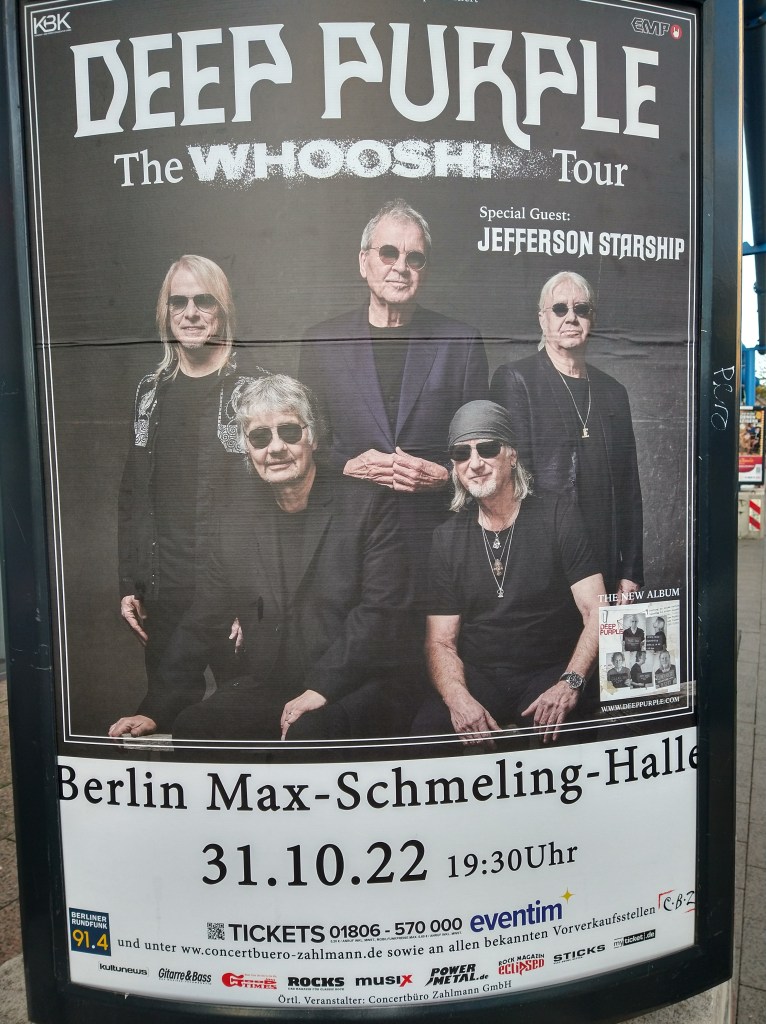
A recently bygone prophet announced that “first we’ll take Manhattan, then we’ll take Berlin.” (yes, I know who said it: it was the same guy who is referenced implicitly in another reference later on.) That was our theme as we headed on to the wild of New York City. Taking Manhattan is not such a big deal, provided you were born there or had spent enough time to understand the city. We did not fare quite so badly as some other noteworthy out of towners (another cultural inference, if I may be blunt) we actually did sort of okay once we figured out how to get out of the airport and into the MTA.
NYC does not come with instructions. It seems there should be some type of information system at the airport, with giant arrows in blinking lights, instructing newcomers where to get the instruction manual for New York before trying to operate in it. I did not find that kiosk, but did see a big sign saying “Welcome to New York: Deal With It.”
I’ll forego most of my complaints, but will just say that the expression “if you don’t know where you are going you will probably get there” should have a New York City corollary: you must already know how to get there before you can know how to get there. Enough said. For now anyway.
We arrived at JFK at a few minutes before 6AM, and given this, that and the other thing got to the subway about 8 having achieved lifetime satiation for Dunkin Donuts coffee. We started out heading to the Metropolitan Museum and Central Park, but sidetracked ourselves thinking a walk on the High Line would be a better strategy to stay awake than strolling at museum speed and lolling in the park for a few hours. After about 10 minutes on the High Line we decided coffee and breakfast would be a better idea, so we departed the High Line, heading towards the Flatiron building hoping to find a good place to satisfy out cravings.
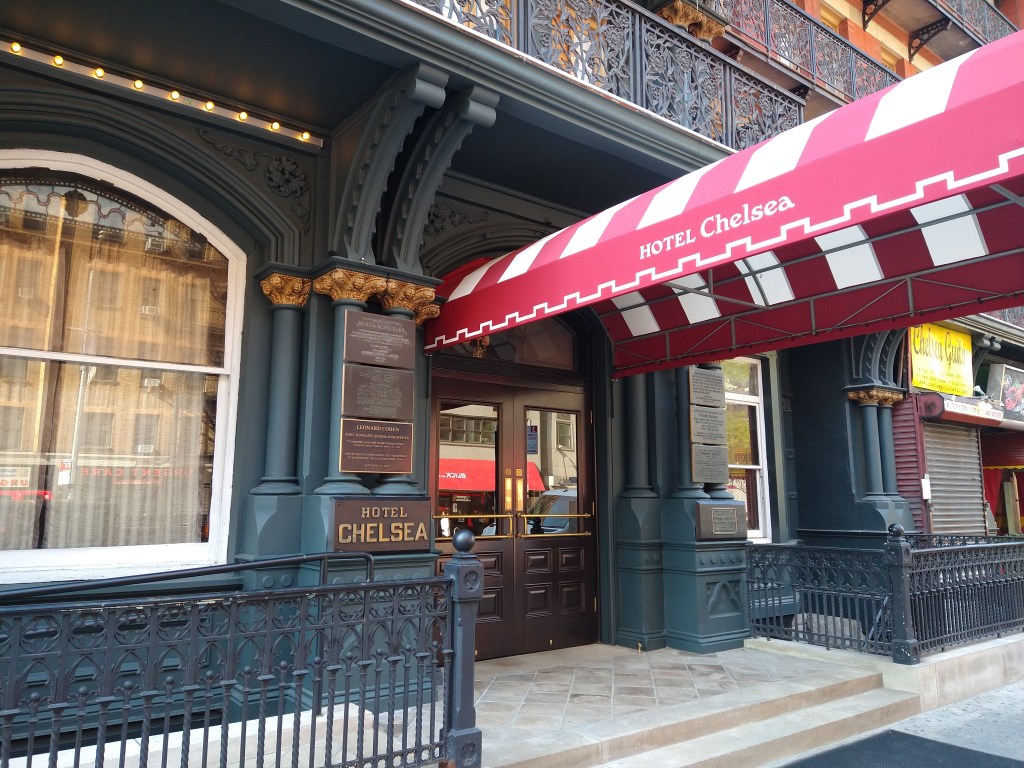
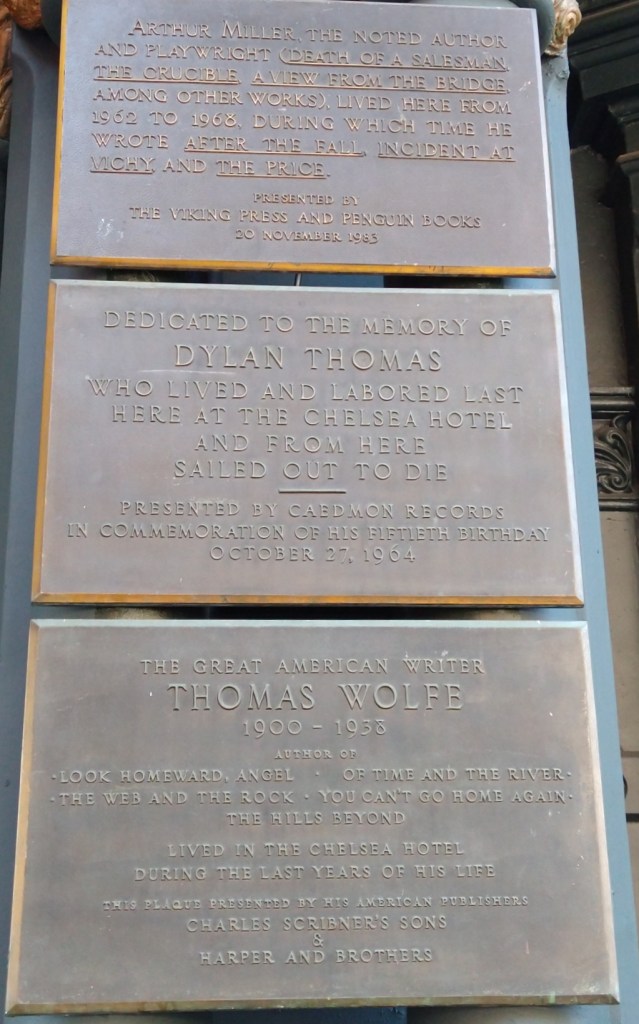
What we found, unintentionally, was the Chelsea Hotel, which started me thinking about unmade beds and limousines waiting in the street.
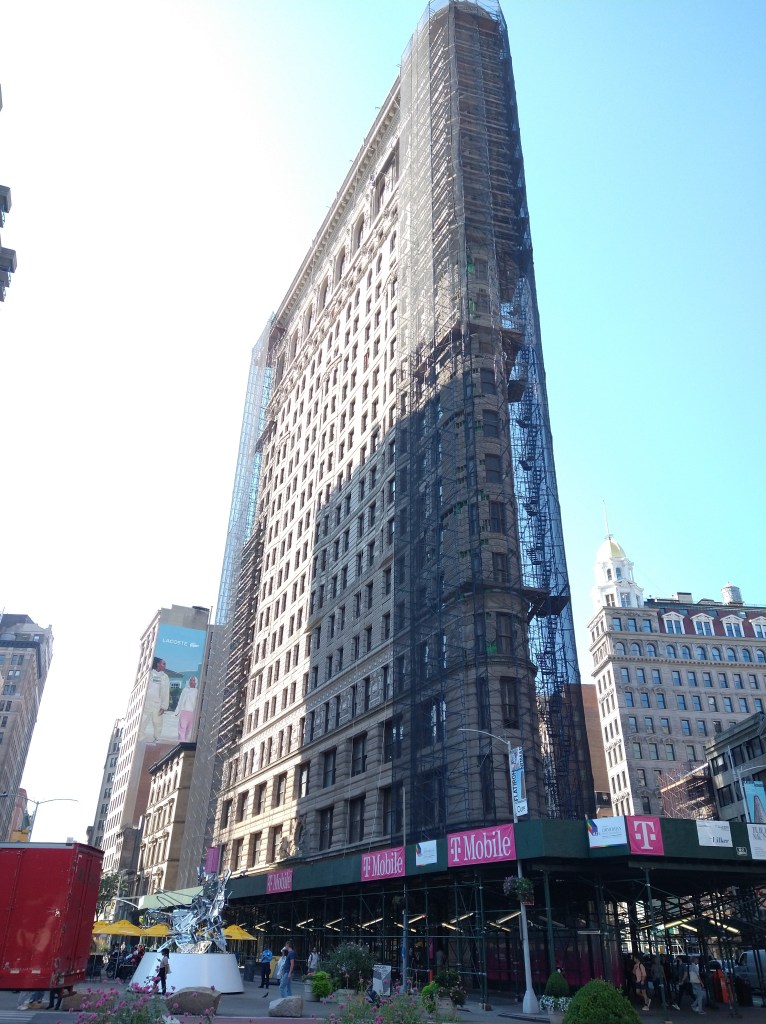
After a couple minutes debating whether we could ask for a room with hourly rates we decided to head on to see the sights. The hotel has outlived its Bohemian past and such a request would probably be misunderstood. We headed on to the Flatiron Building where we made a few observations.
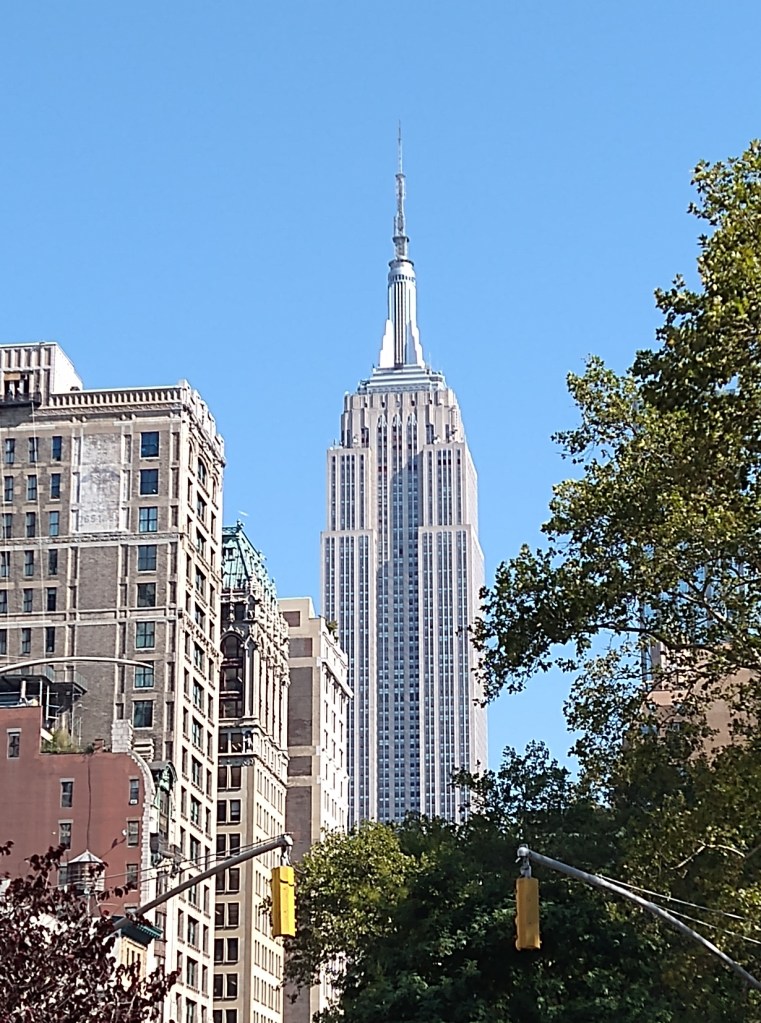
One: you can see the Empire State Building from there.
Empire state building from our lunch table.Flat iron building with scaffolding.Another “Flatiron Building”. This one is in Eureka Springs, Arkansas. I put this in just because, plus which, it was taken almost one year earlier, to the date.
Two: there are a lot of street food outlets in the parks adjacent to the building
Three: It appears to be not so unusual to order beer with breakfast in NYC.
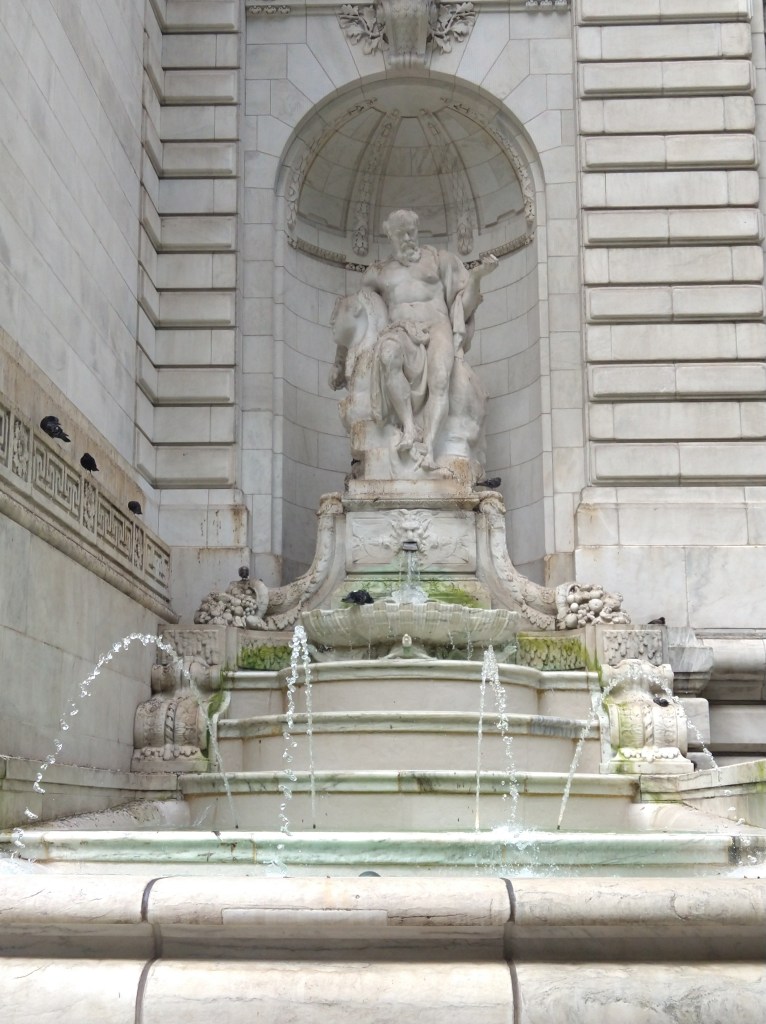
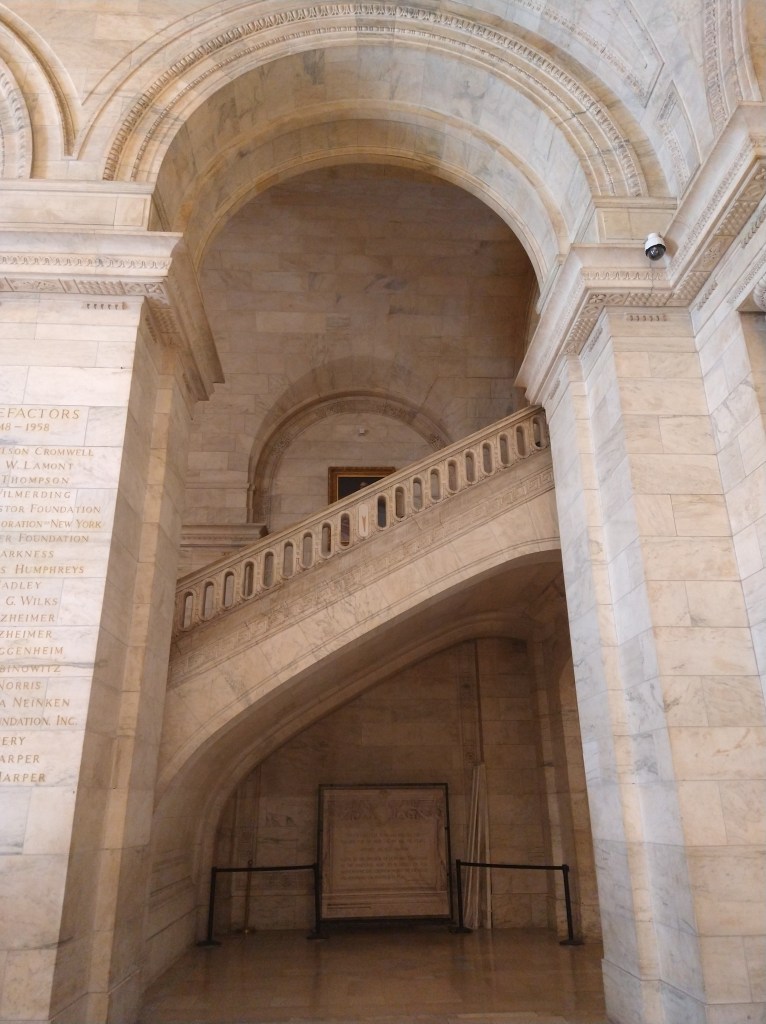
Seeing the Empire State Building from our breakfast table, we headed that direction but decided not to stop, passing the building and walking on to the New York Library where we went for a tour. The Library is an interesting place to visit for the architecture and for the exhibit. It is a museum of the history of recorded thought, including exhibitions on the evolution of written languages, the development of printing technologies, up to the current period where pluses and aughts record our thoughts. This is one of my favorite images of a self-organized exhibit situated serendipitously below a painting of Guttenberg making a demonstration of his press.
The recording of memory
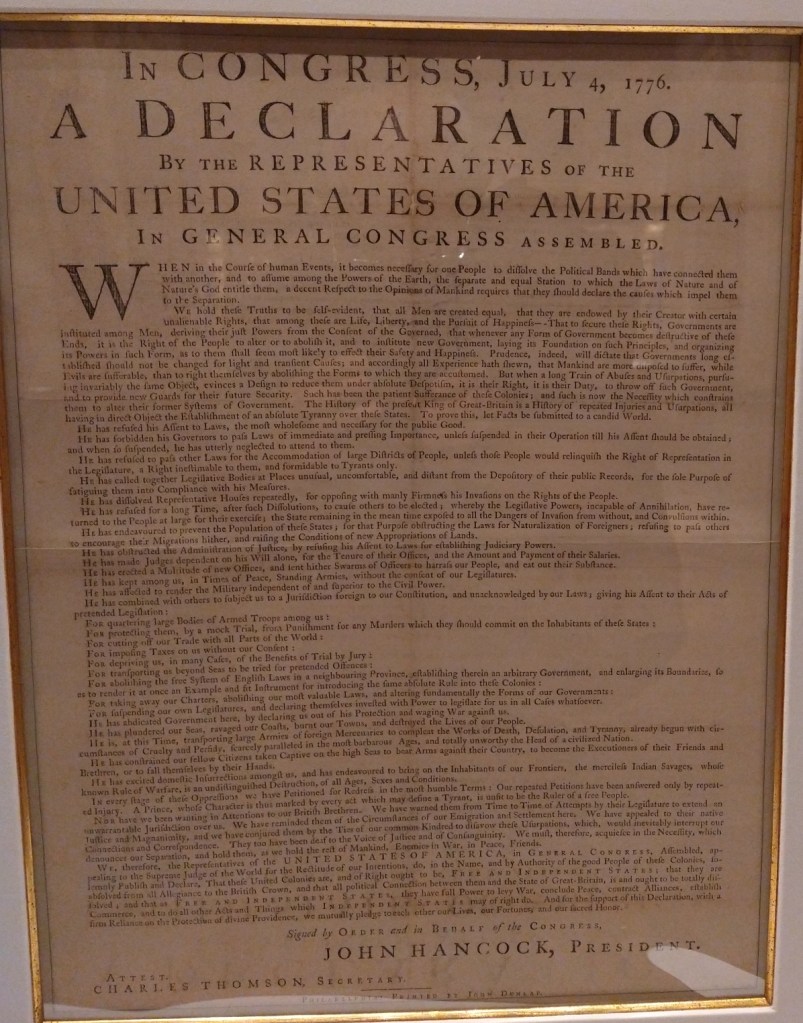
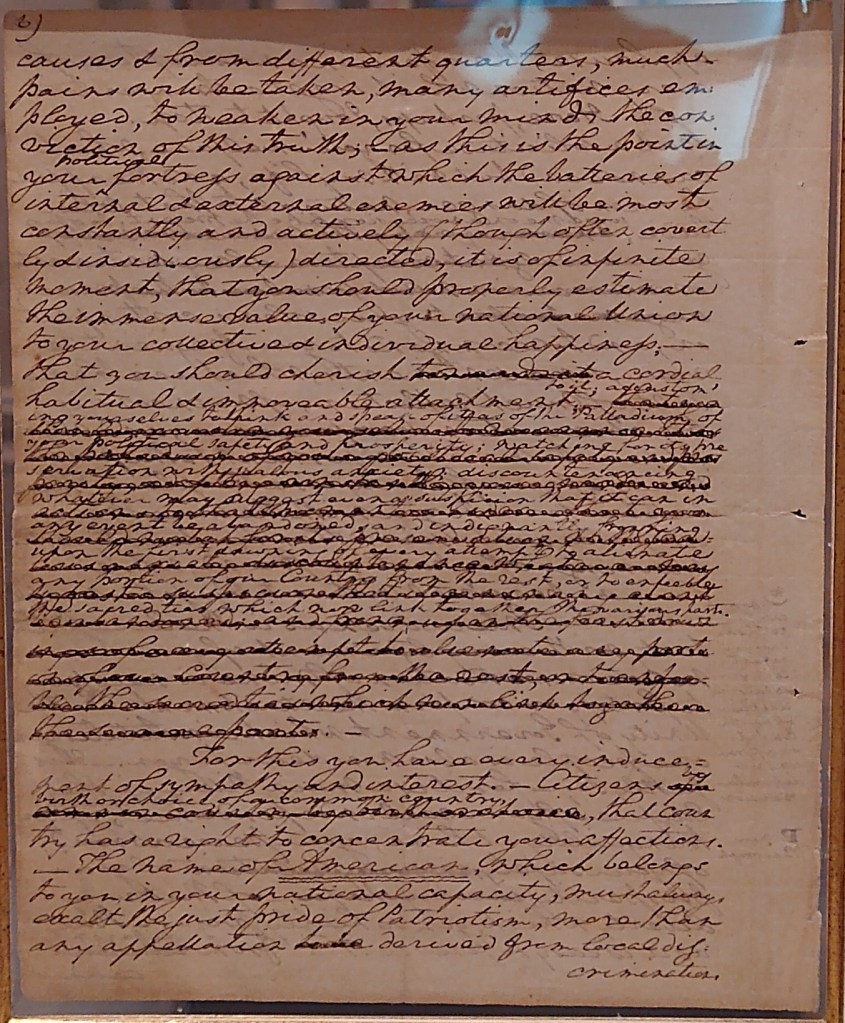
The Library holds an impressive array of artifacts: a Guttenberg Bible, a first printing of the Declaration of Independence, the handwritten notes of George Washington’s farewell address, and an original hand written copy of the first twelve amendments to the US constitution, ten of which were adopted as the “bill of rights” and one of which was finally adopted in 1976 as the 26th amendment. Here are a few images highlighting our visit to the Library.
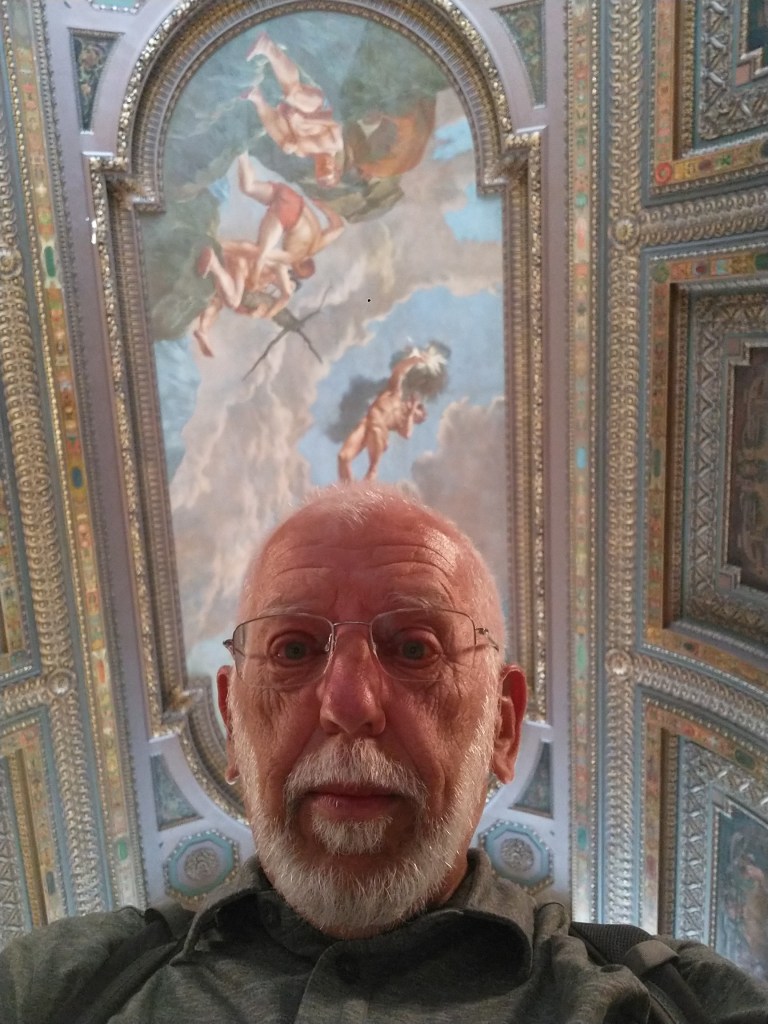
Outside the main entrancePrometheus bringing fire to what’s left of my hair.An original first print one of the Declaration of IndependenceWashington’s farewell address
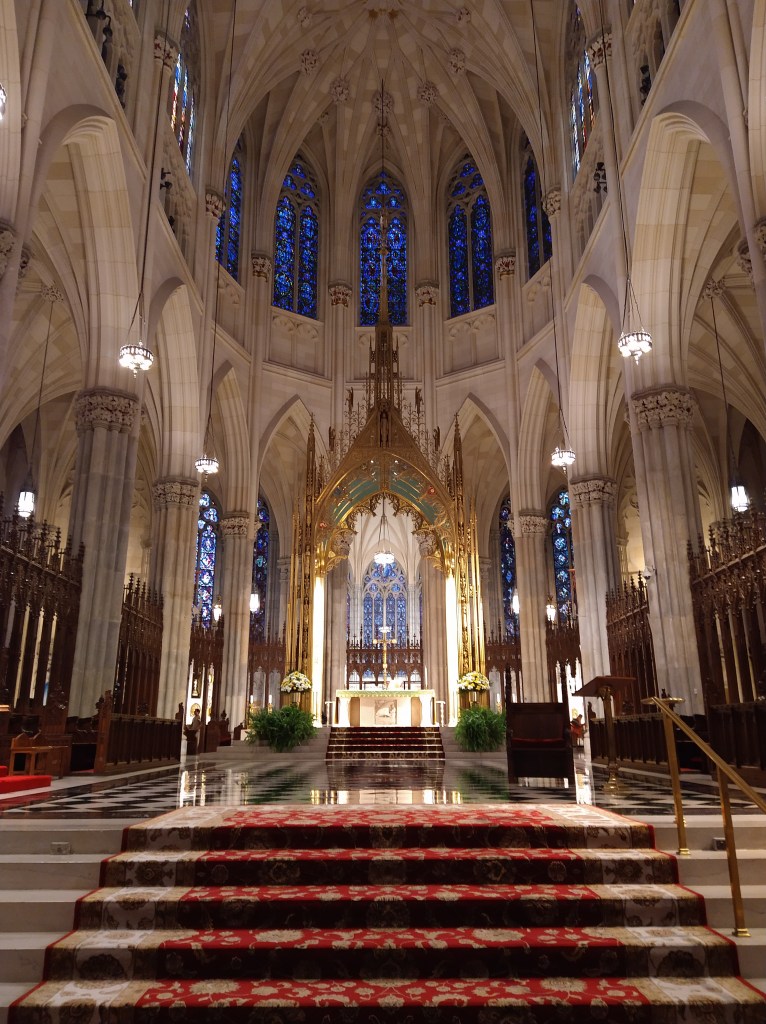
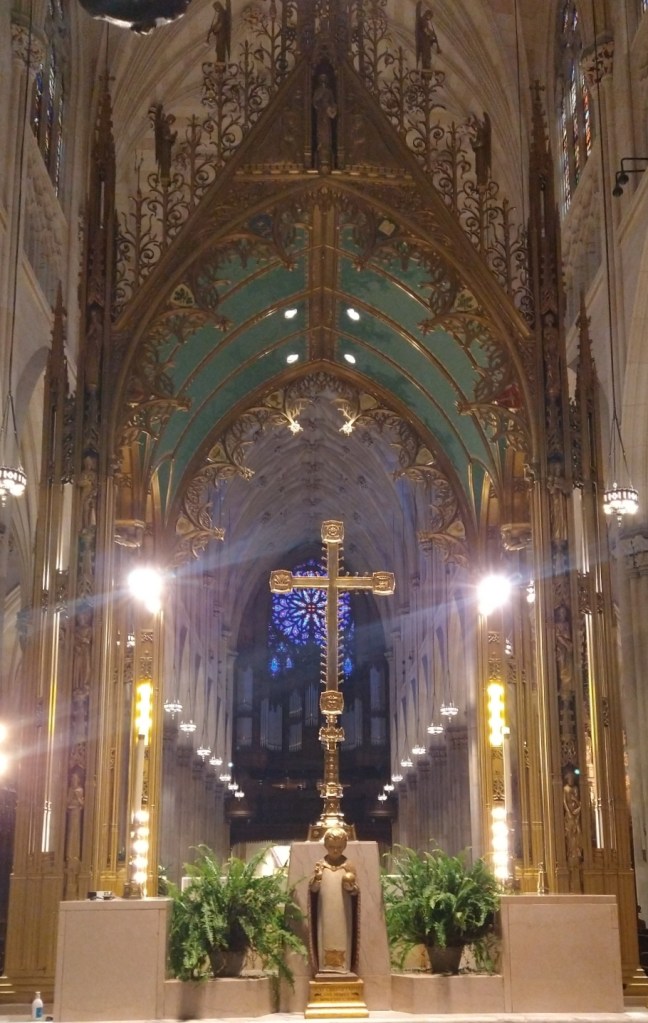
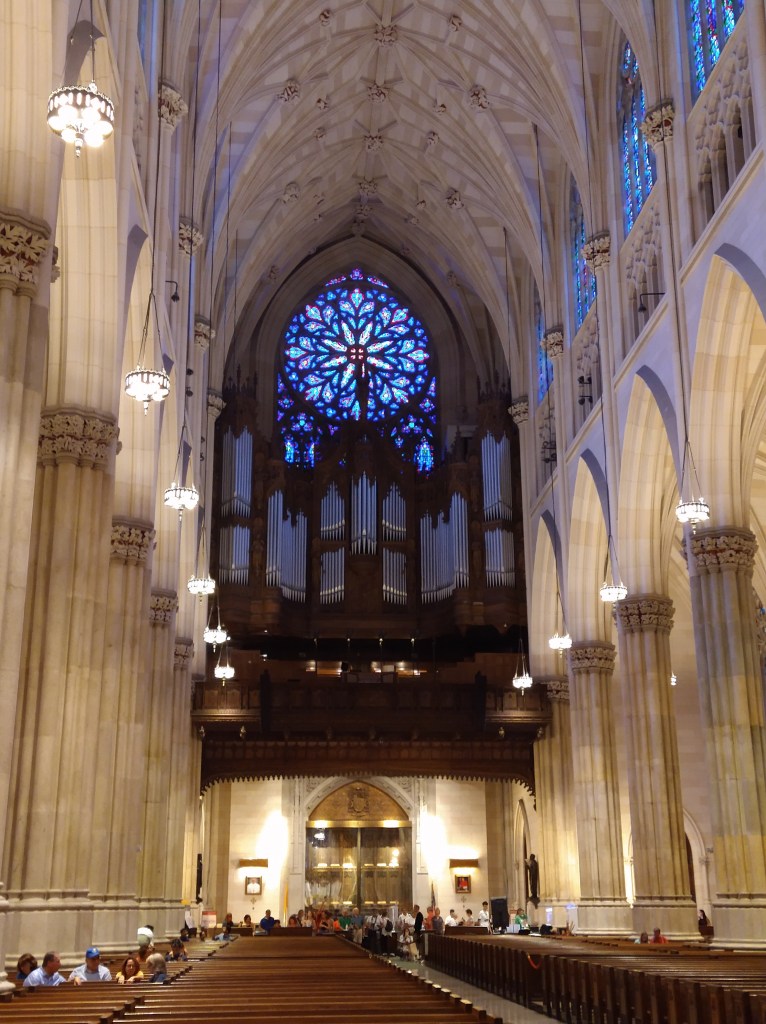
After leaving the library we noted that St. Patrick’s cathedral was a mere few blocks away and
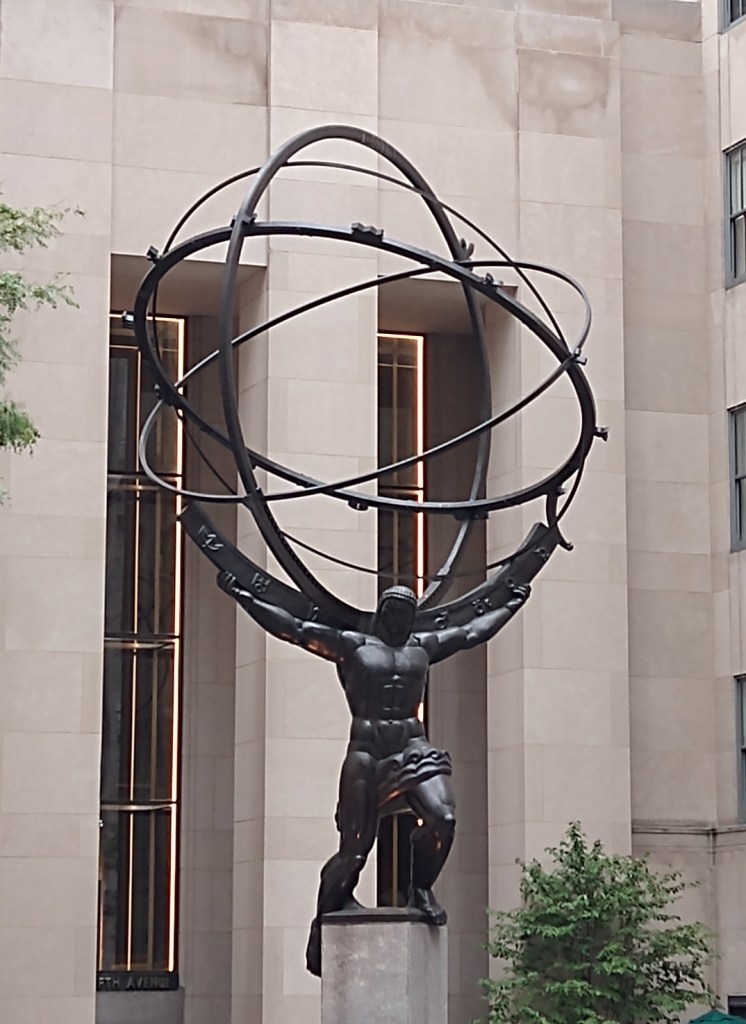
On the way we passed by Rockefeller Center.
What better way to preview a trip to Europe than to visit a cathedral, since there are so few of them to be seen over there. Well I was impressed. A few photos.
.
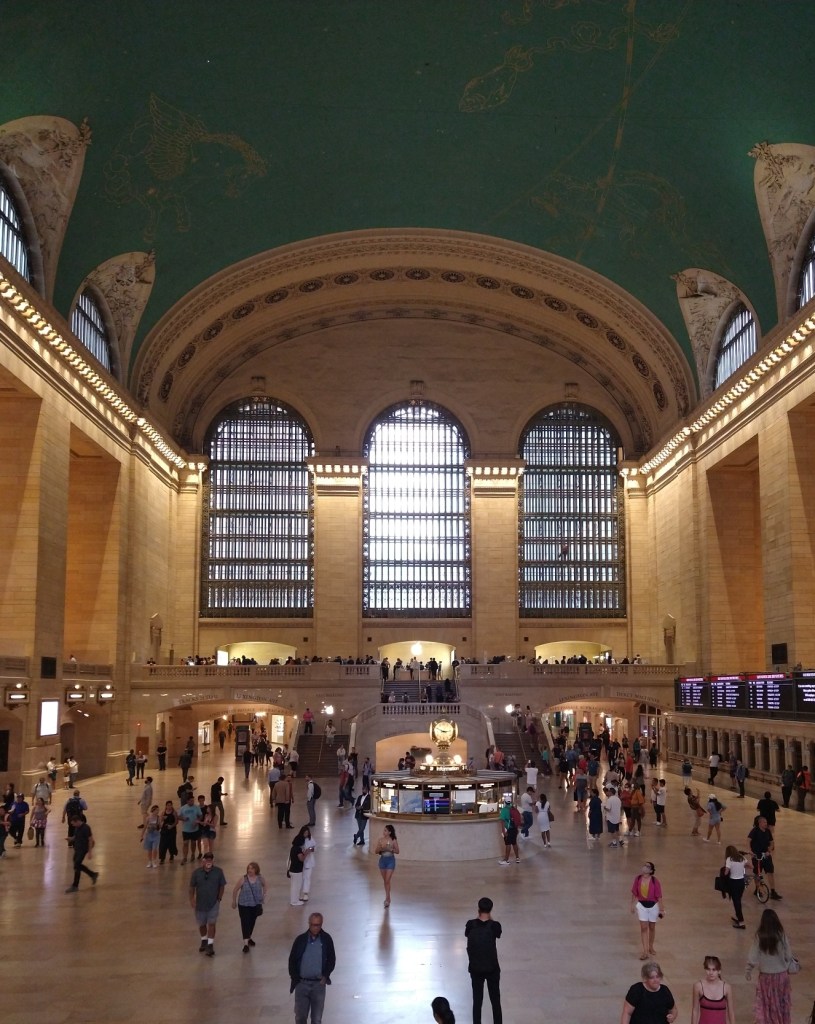
Of course no trip to New York can be complete without a trip to Grand Central Station, where we headed for dinner. Unfortunately the restaurant we were heading for appears to no longer exist, so we took the obligatory photograph, grabbed a bite in a different restaurant and headed back to the airport.
I’m not satisfied with this post, but I’ve been toying with it for two weeks so I’ll post it now.
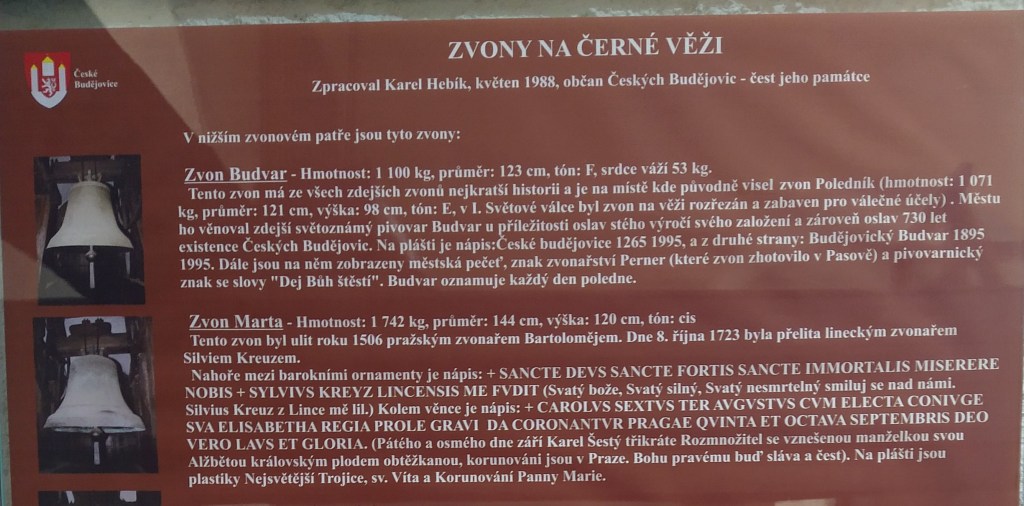
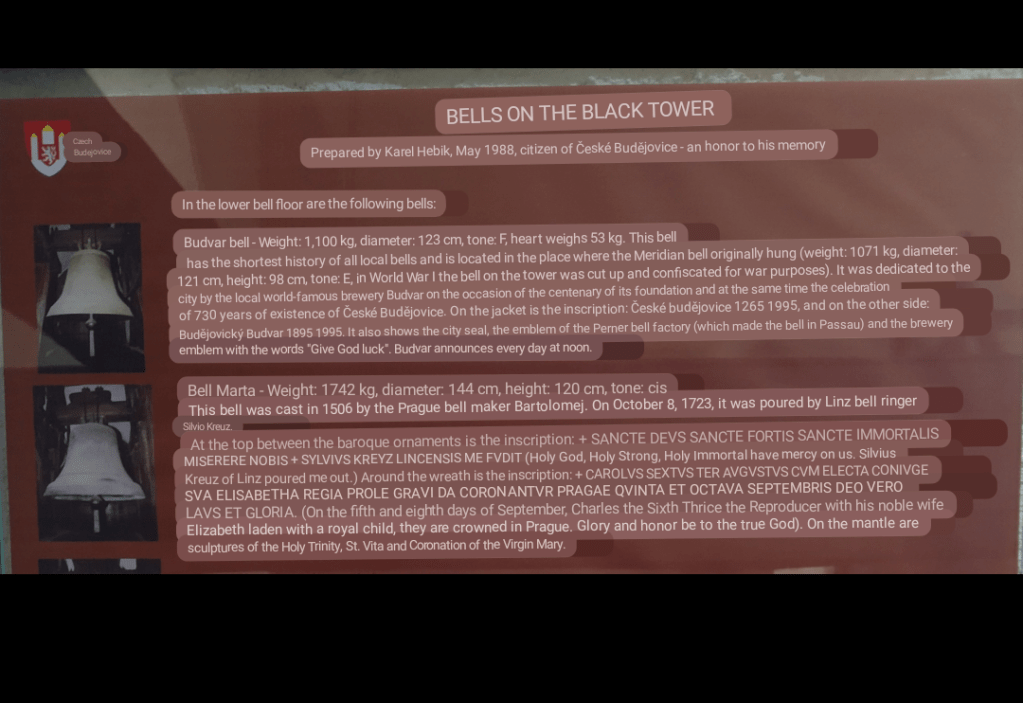
Like many people I know, I have concerns about the power Google has over access to information. However when they have technical innovations like “Translate” they will continue to have adherents. Check out these two photos to see how much more accessible are the signs and posters in the native tongues.
A portion of a description of the bells in the St Nicholas tower in Ceske Budejivoce. The signs were only in Czech.Open the photo one import into Google Translate and you get this.
This works well for signs, monuments, menus, and instructions that are helpful to understand when traveling.













 Shared Illusions