A walk through the city

There could be days when events come crashing in on one another in continuous waves. That was not today. We had no real plans for the day except one. We wanted to walk to our rental car location to see how much time we should plan on Sunday to pick up the car before checking out of our hotel. Perhaps we would fit in a museum or two, since rain was forecast for the afternoon.

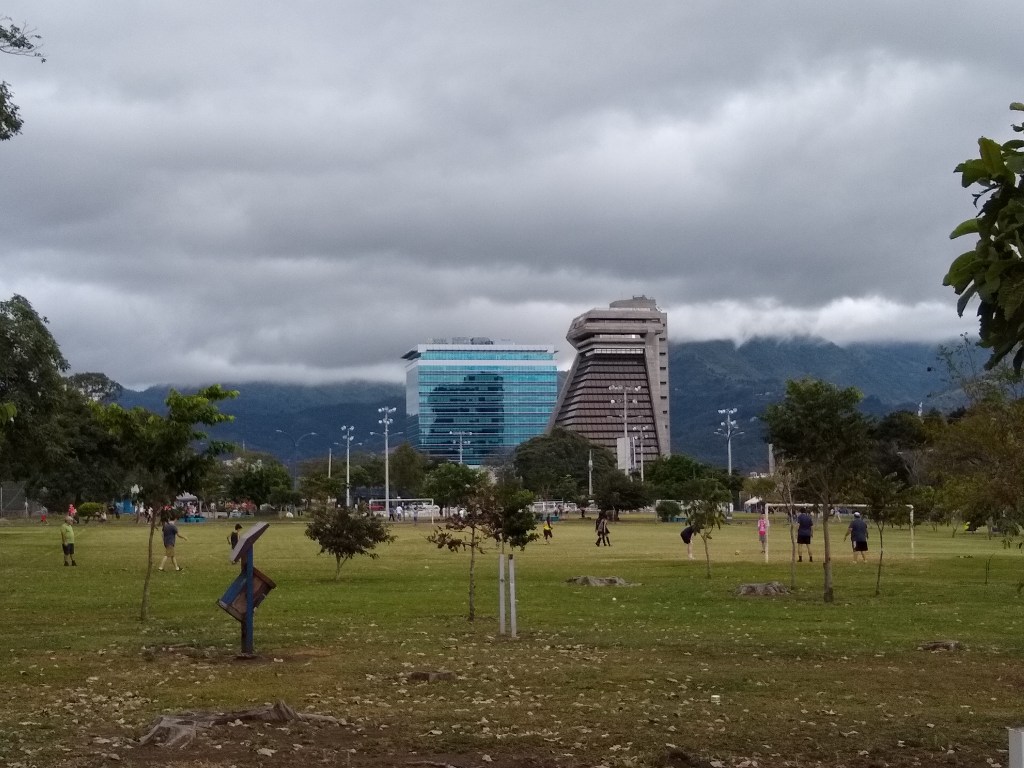
For the record, it took 40 minutes, which wasn’t bad for a bit more than 2 miles. Afterwards we walked through the Parque Metropolitano, which is a fairly large park that caters mostly to athletics. The numerous soccer fields and baseball camps were very active.

Methinks futbol is of great import to the populace. Among the groups in the fields were soccer schools where adult men drilled shots on goals and young boys and girls practiced blocking them. We were impressed by the energy and talent of the youngsters and applauded their accomplishments, noting that we were the only ones applauding. Perhaps it is just expected that they must succeed, and special recognition for doing so might not be all that much appreciated.

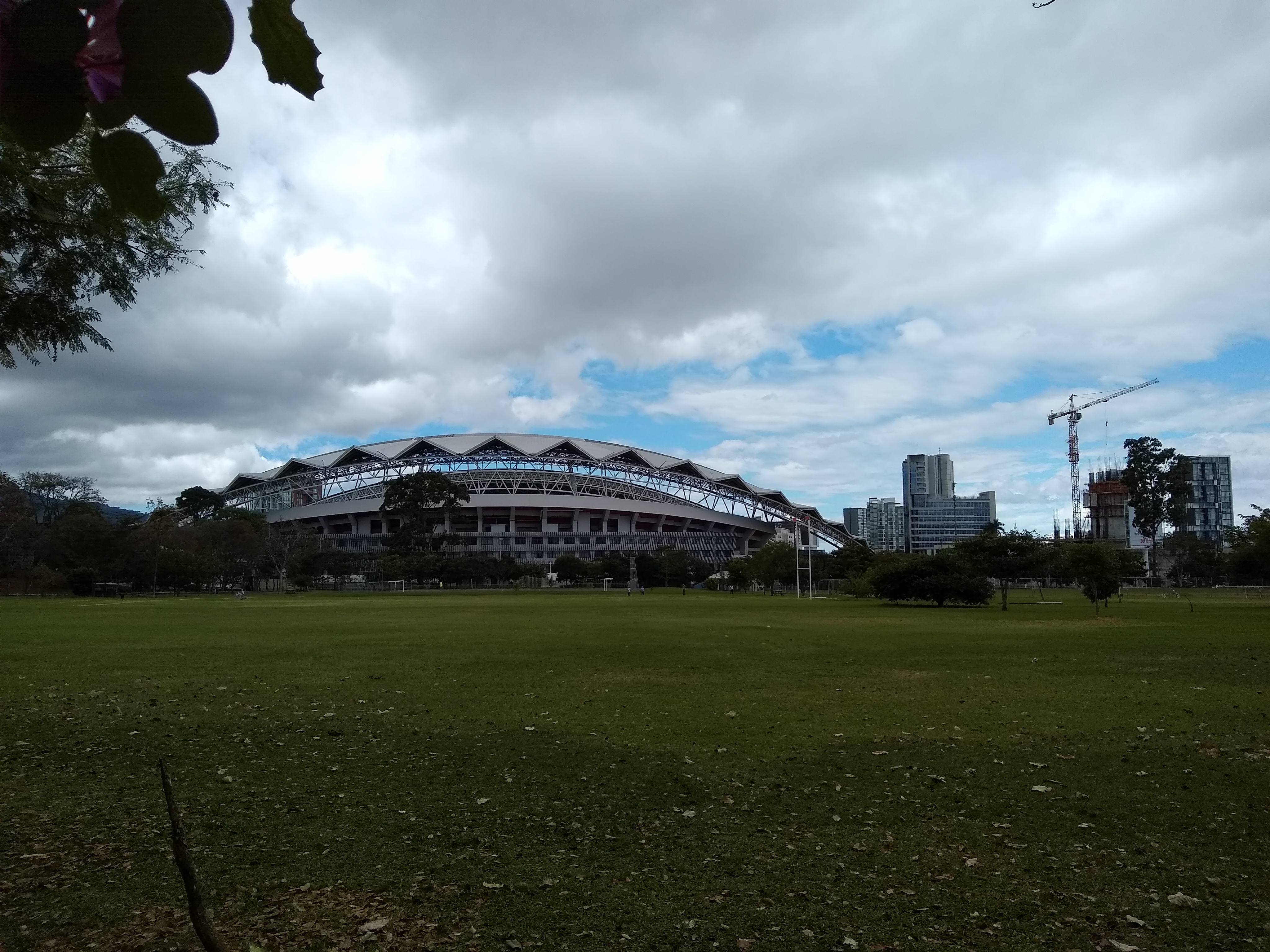
We tried to gain entrance to the National Stadium, but were blocked by gates and fences. We could hear chanting and singing from inside the gates. Here is the only view of the stadium we could get.

National Stadium in San Jose

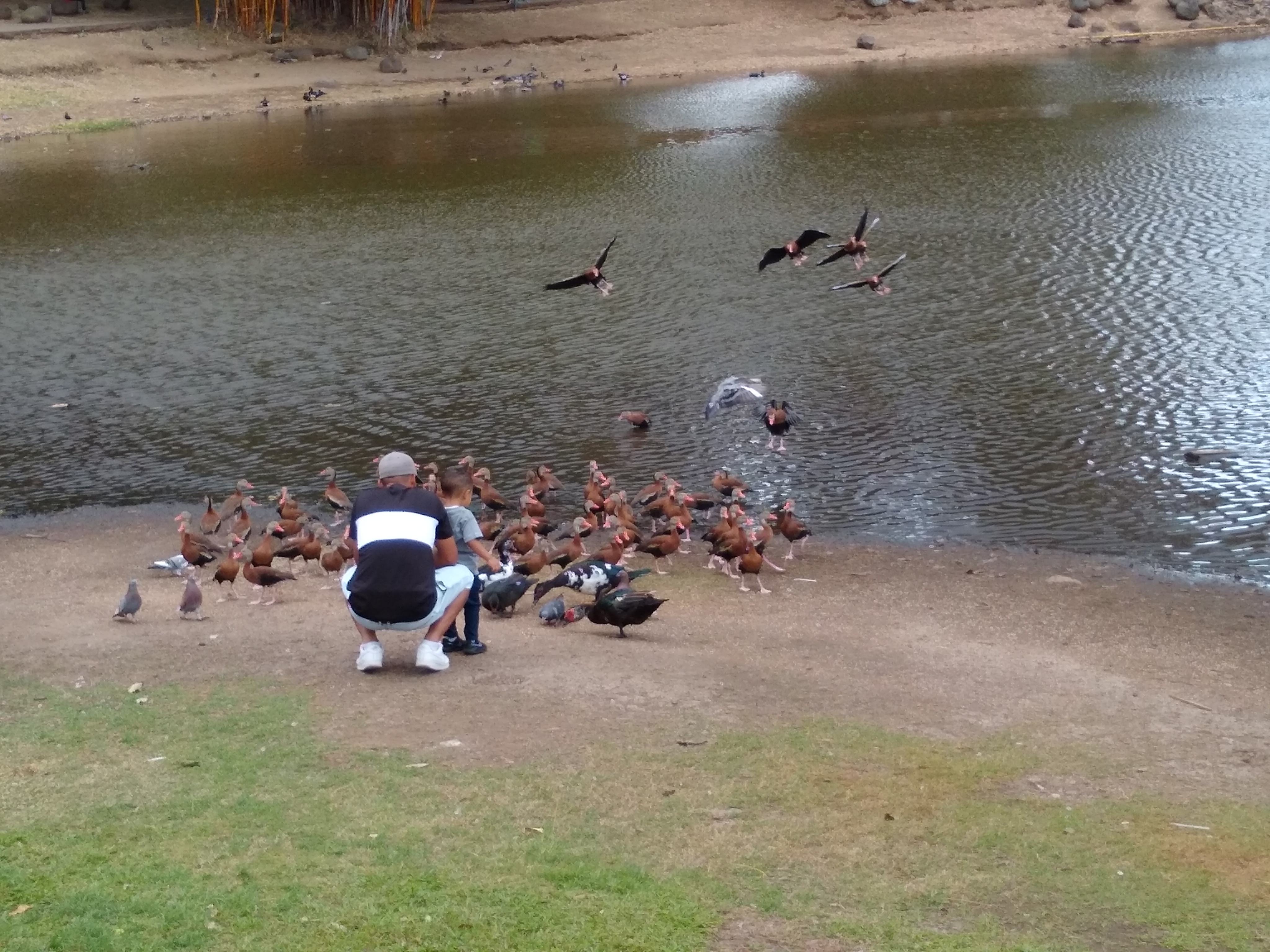
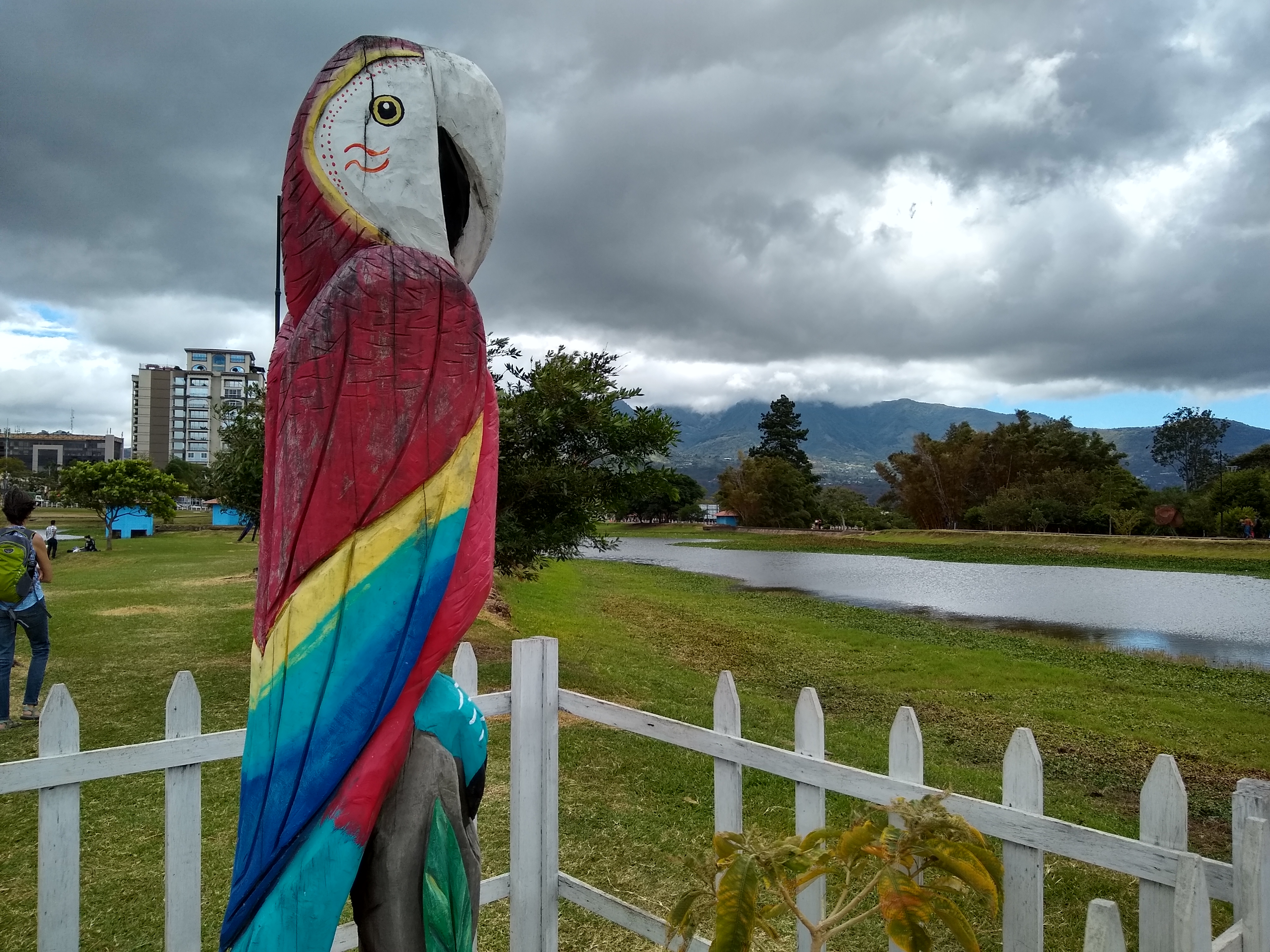
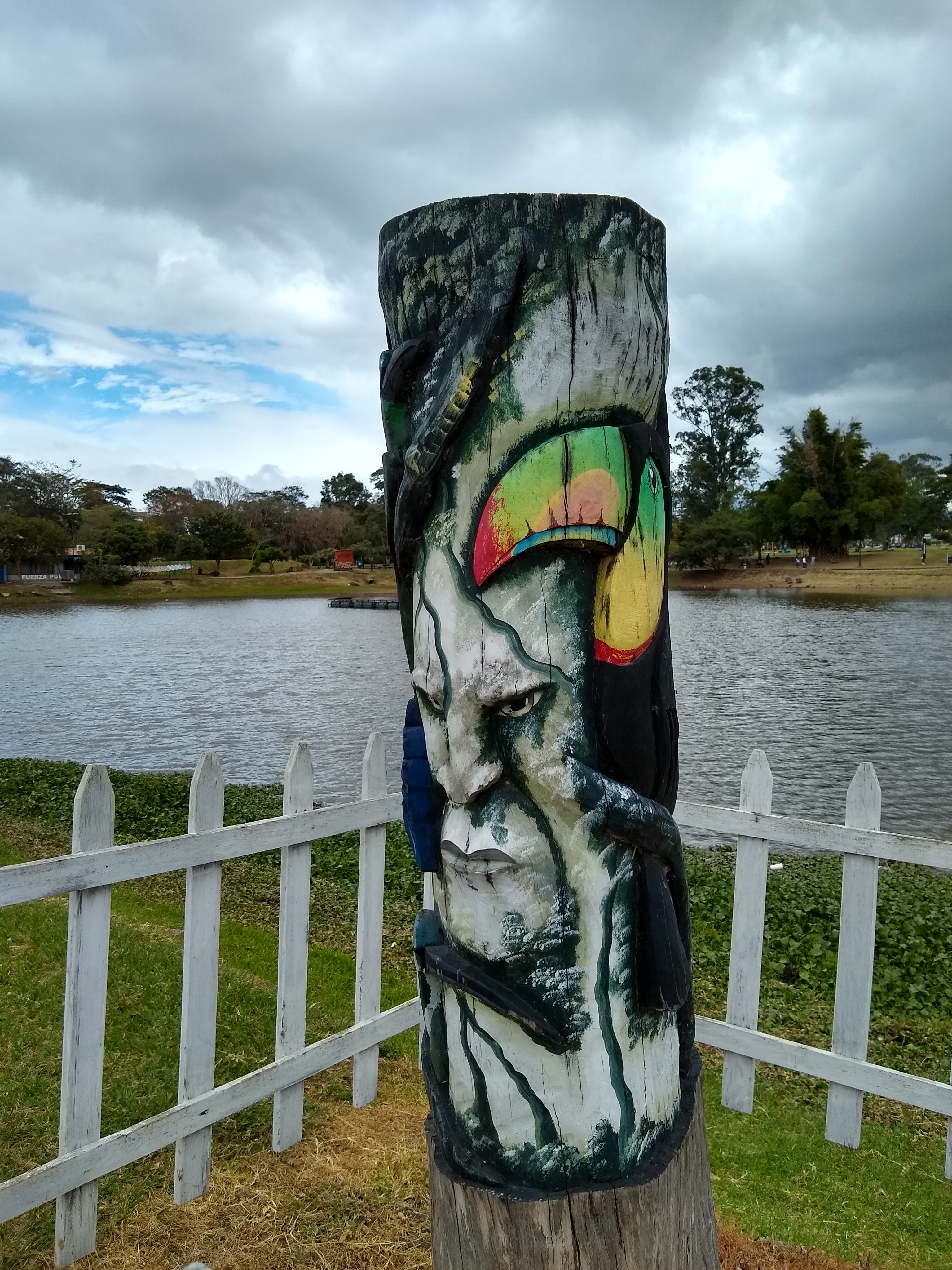
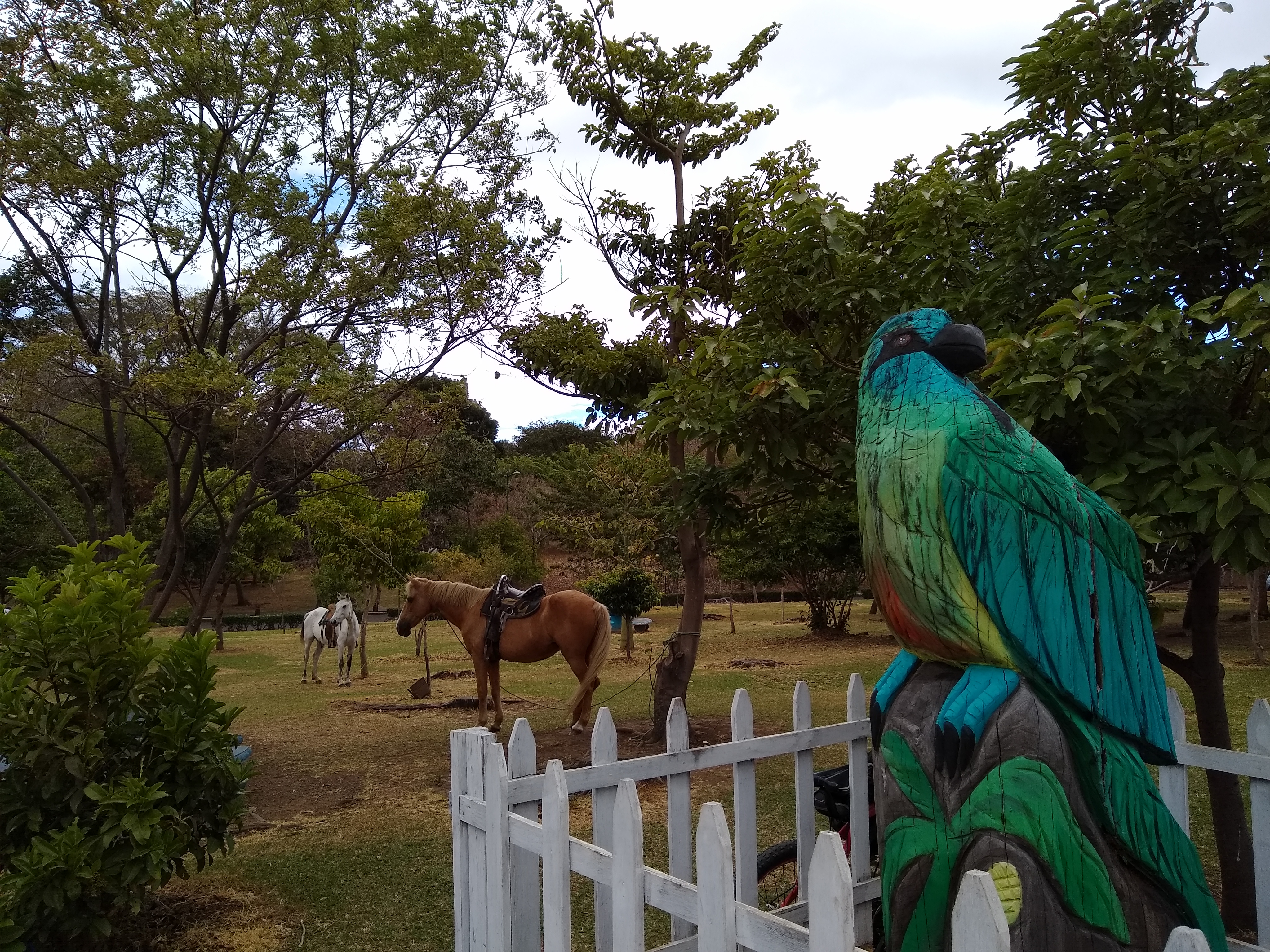
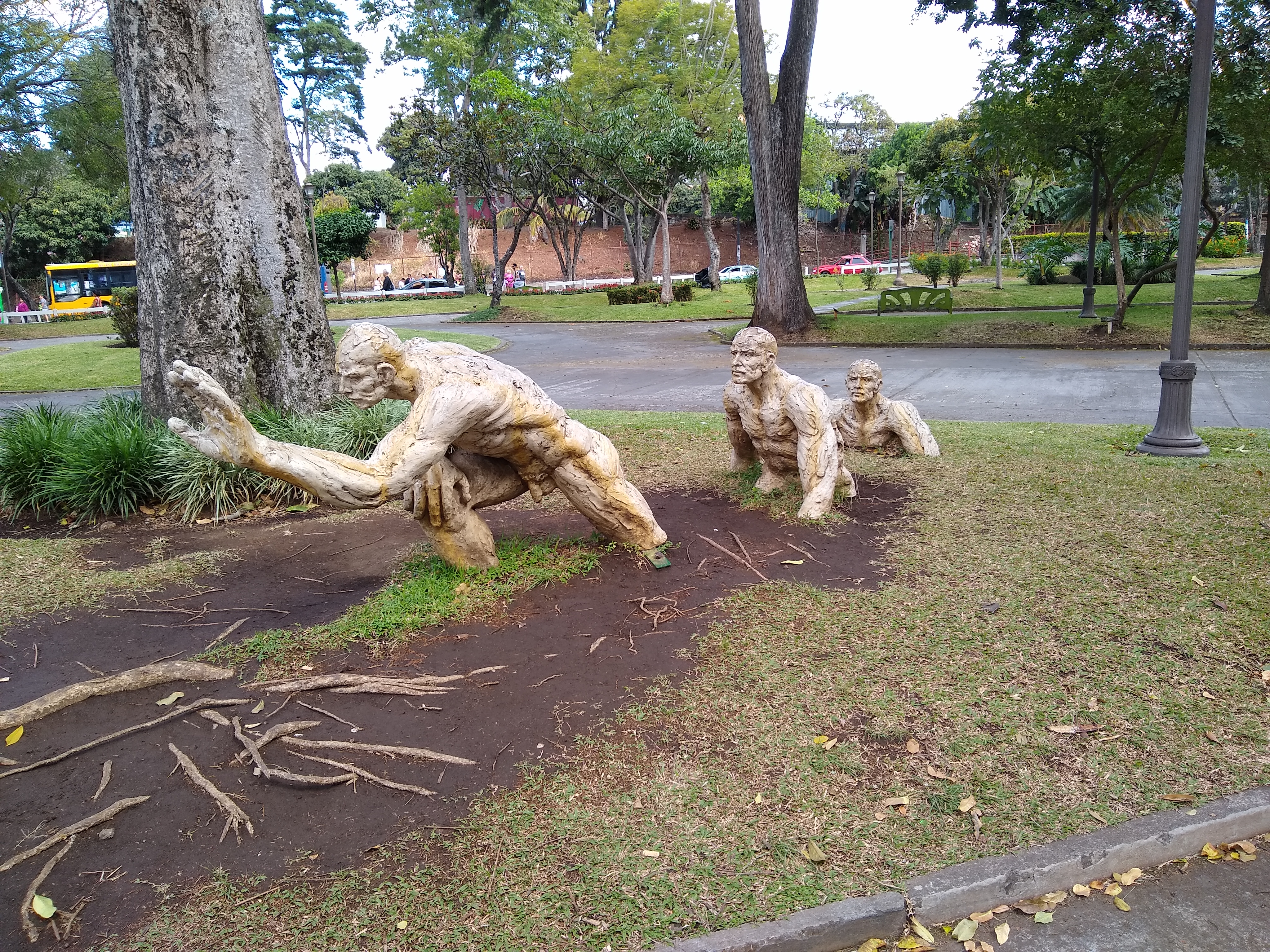
Near the stadium folks played around an overgrown lagoon, and children fed birds. Some of the trees around the lagoon had been removed and the trunks were carved to reveal their inner parrots and macaws.

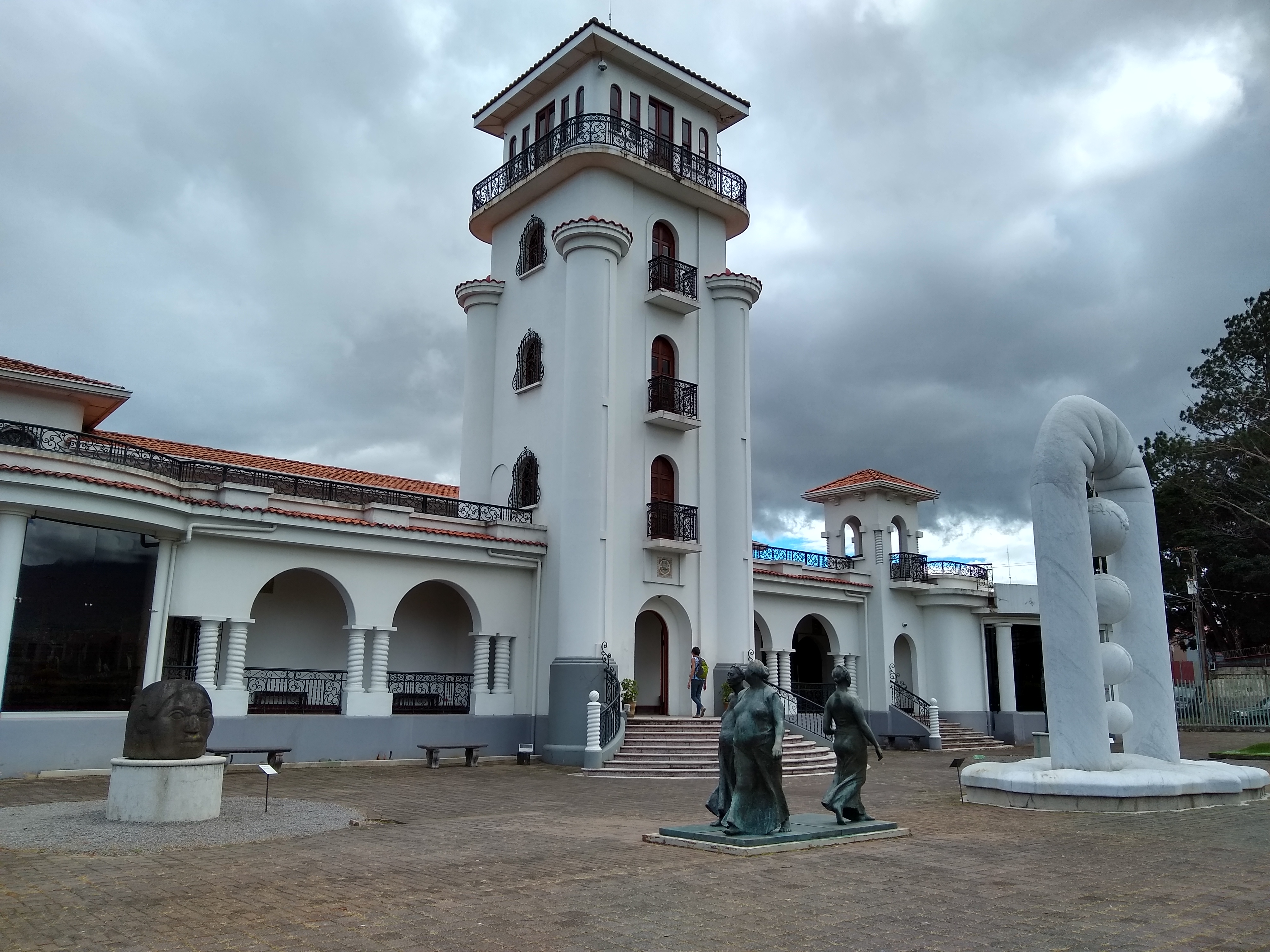
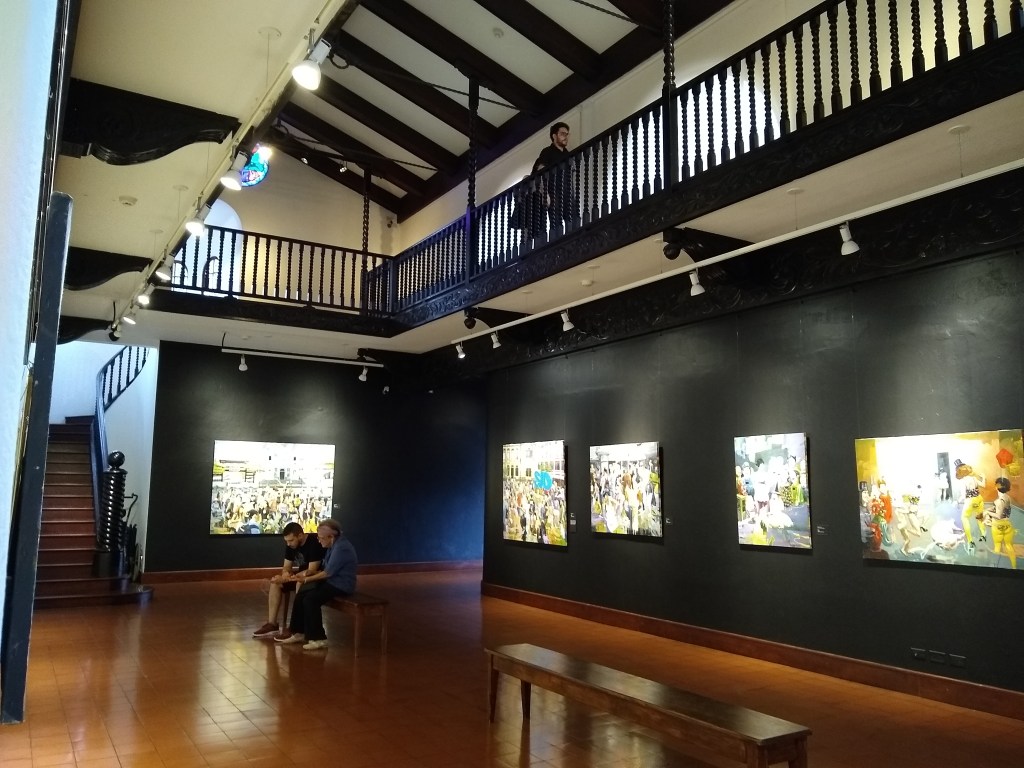
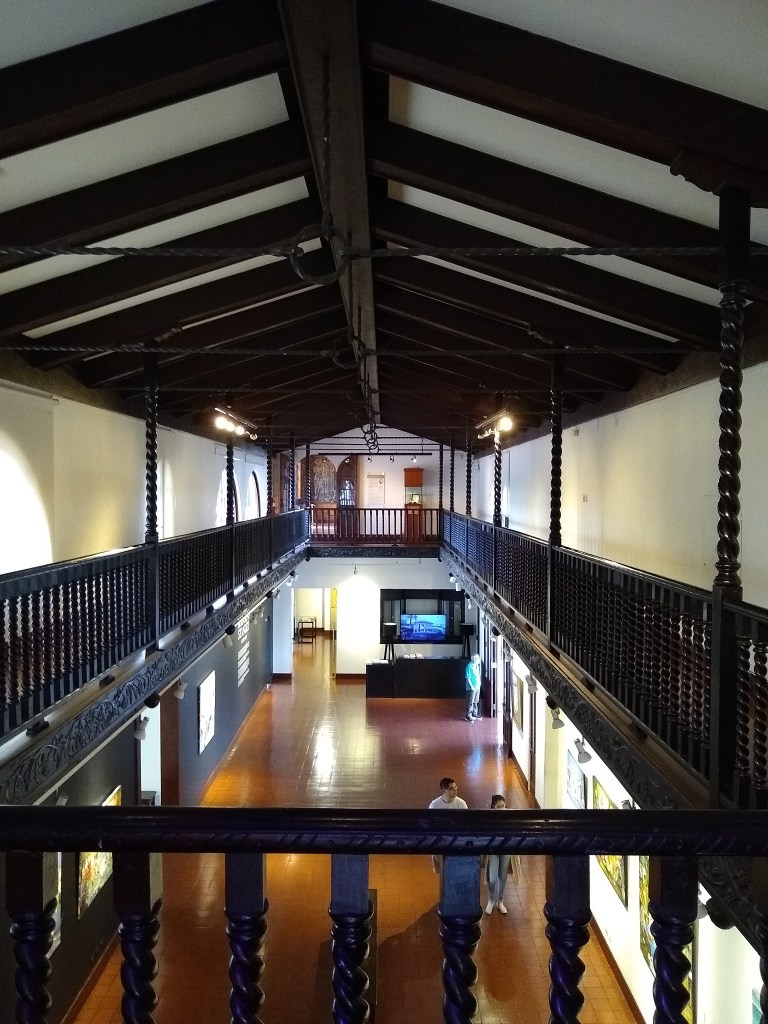
We entered the Museo de Arte Costaricanese, which was a very interesting building with interesting exhibits.

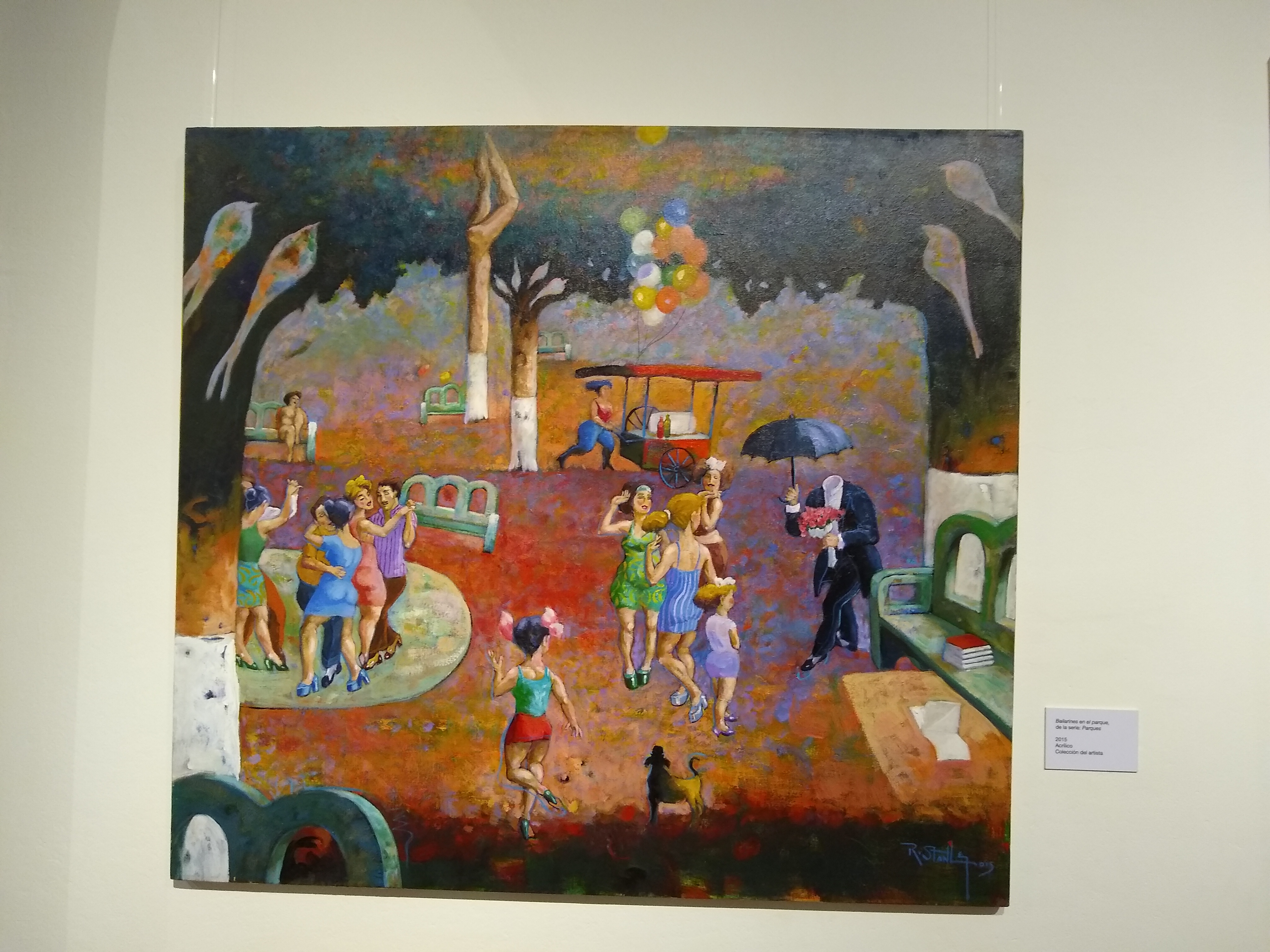
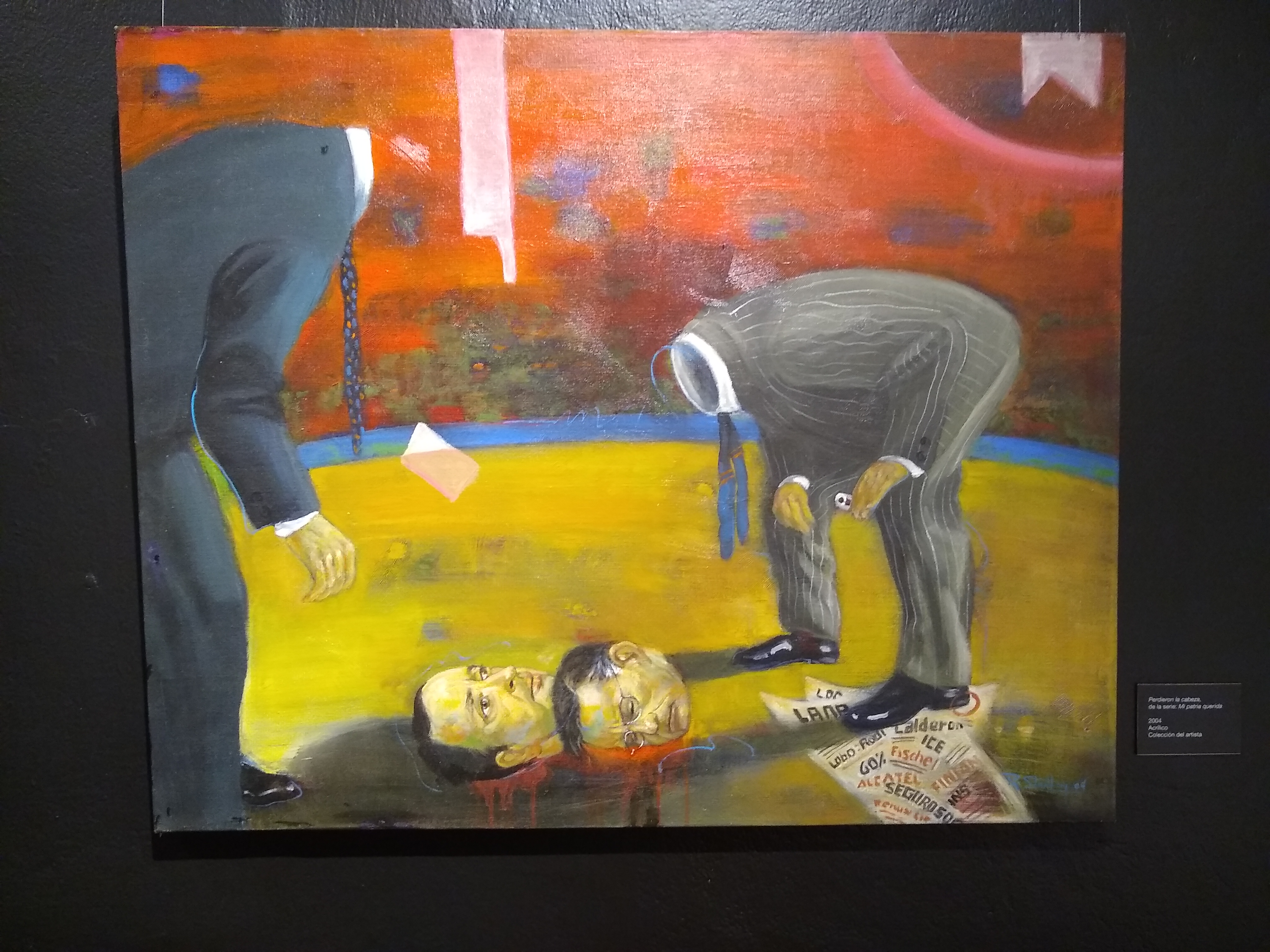
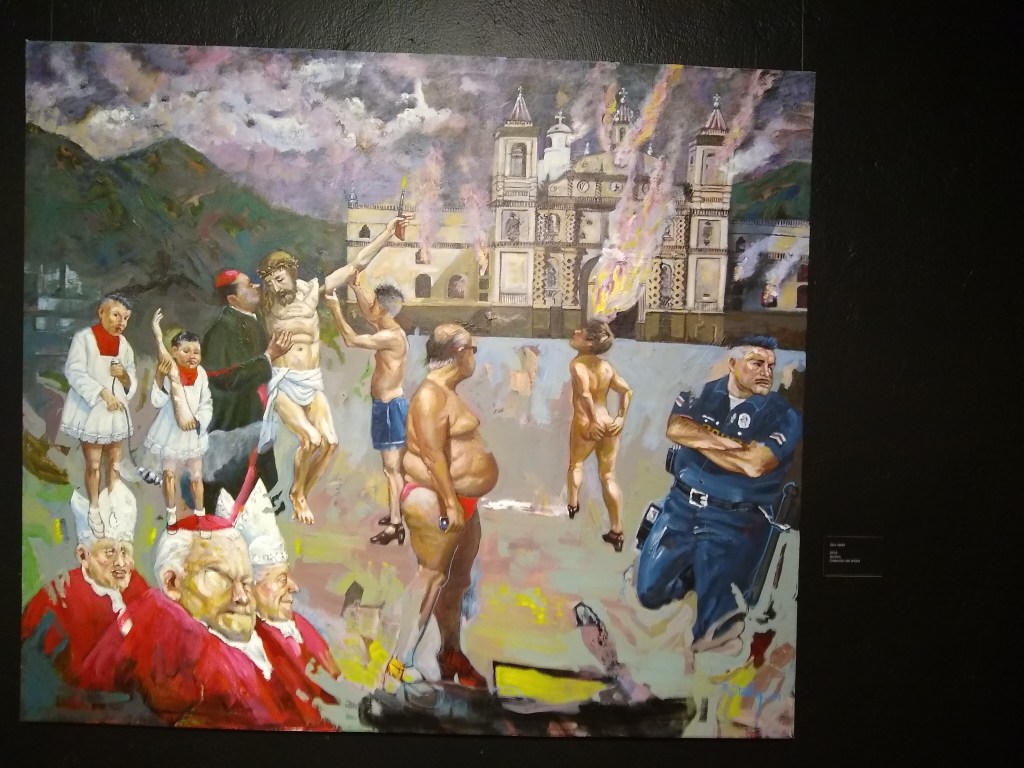
The principal exhibitor is Rudolfo Stanley. His work was very intriguing. Some of his paintings captured vignettes of daily life with a surrealistic flair. Even in somewhat innocuous settings he express contempt for modern (or post modern) life, and questions the direction society is headed.

This piece is titled Quo Vadis. The church leaders are engaged in their perversions, a captive Christ holds the lighter that he used to burn the church, and the representative of the state turns away, not recognizing the collapse of the integrating institutions. Where are we headed?

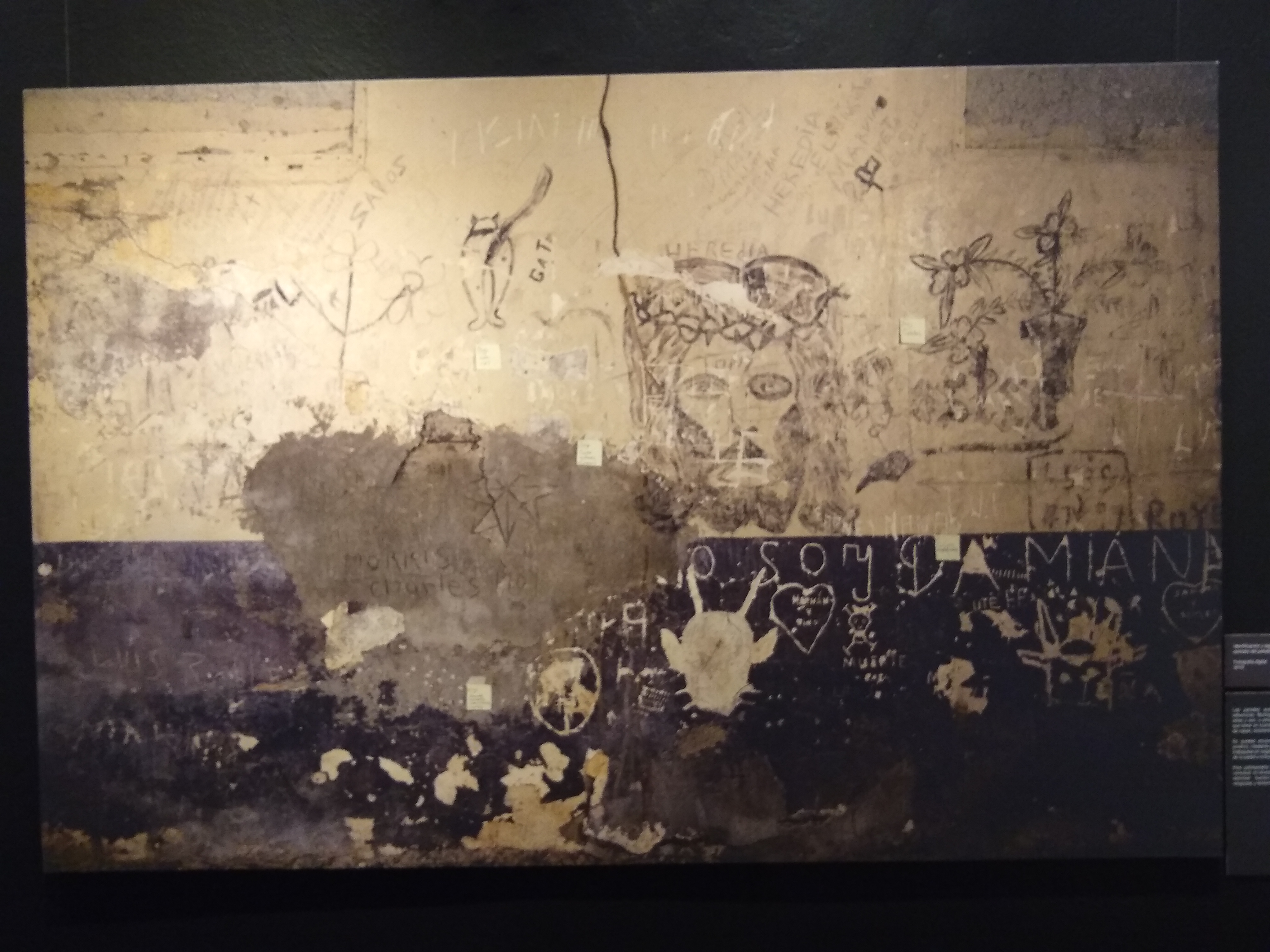
Another thoughtful exhibit was from an archeological survey of the penal colony on the isle of San Lucas that had been occupied from 1873 until 1991. The focus was on the graffiti and drawings on the prison walls.

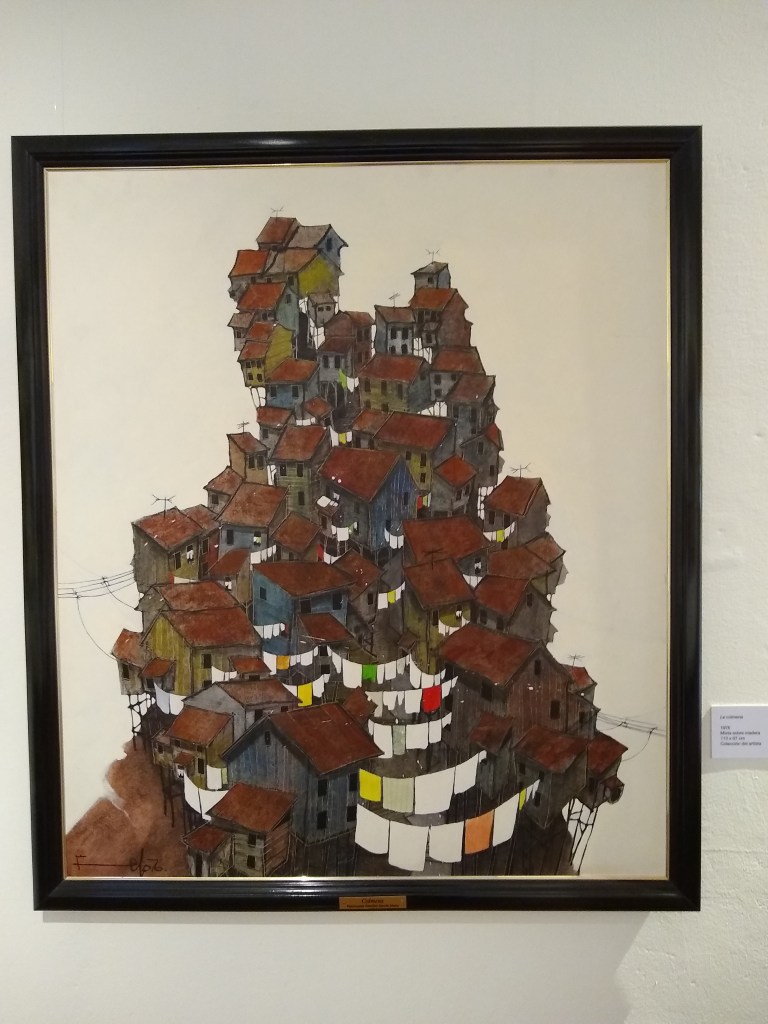
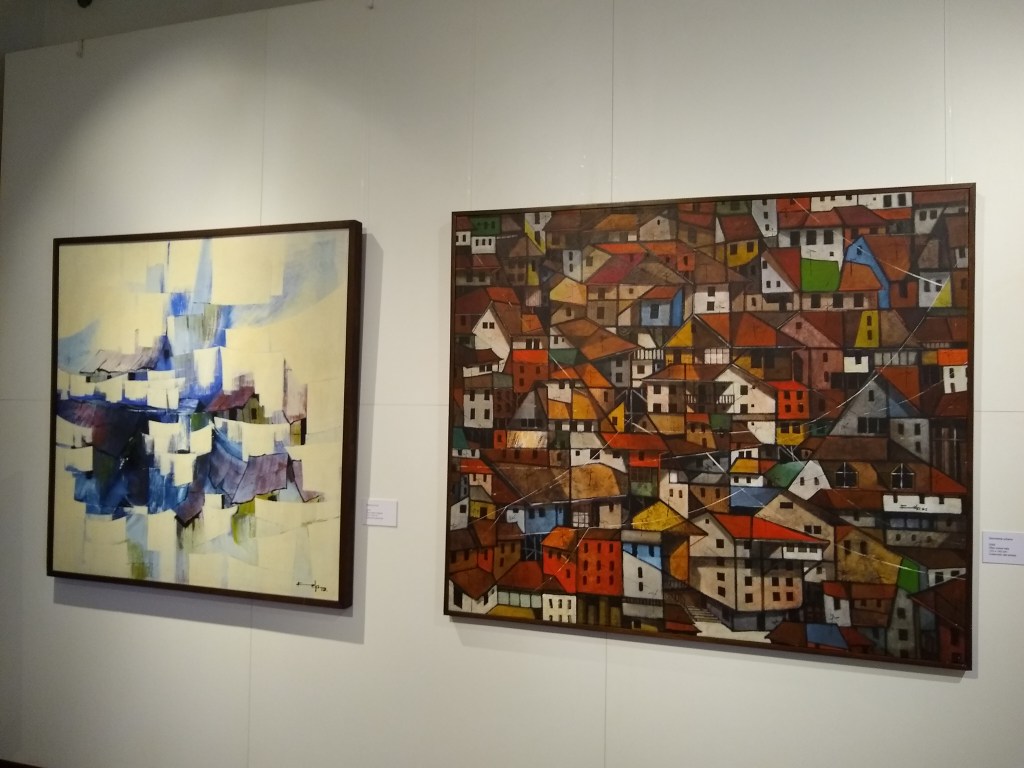
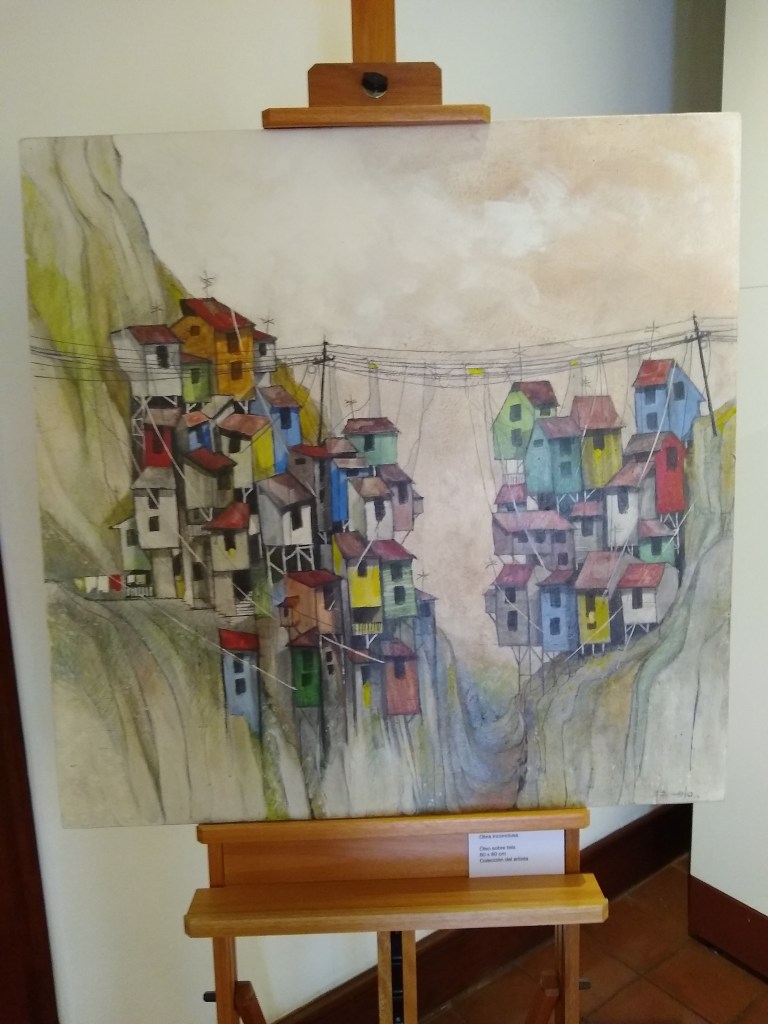
Felo Garcia had an interesting exhibit of disturbing representations of urbanization.

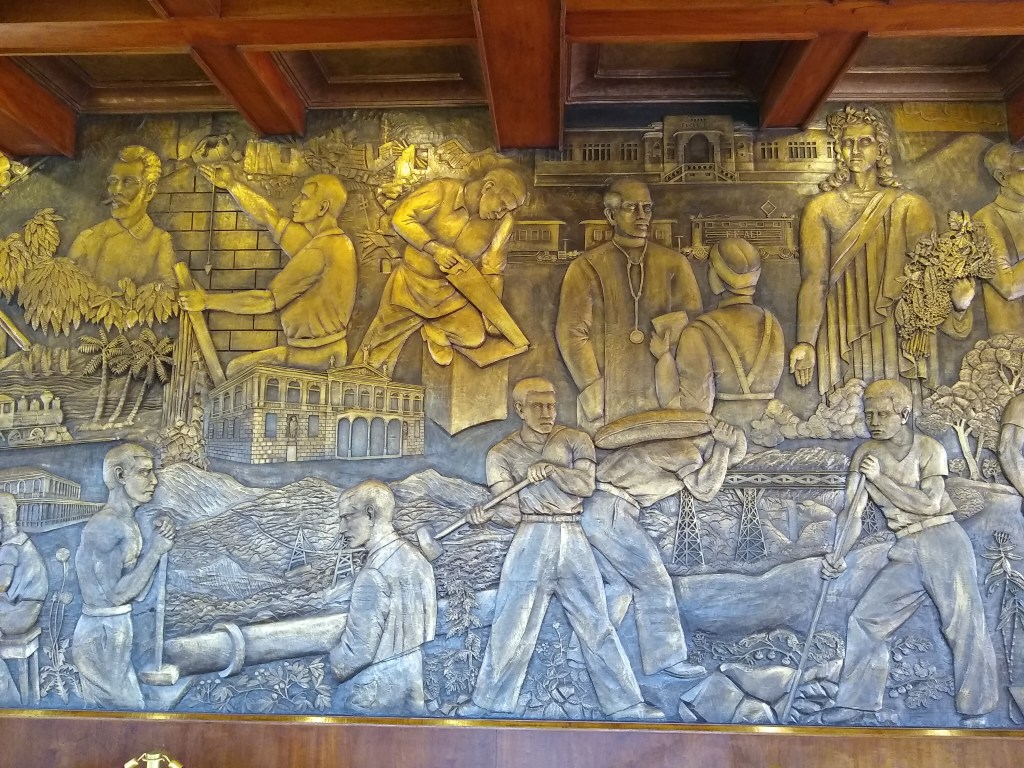
An upstairs gallery had a bas relief mural covering four walls, representing the history of Costa Rica, from pre-columbian days , the colonization by Spain, and the emergence of the modern era. The room was brightly lit by the many windows, so it was difficult to capture all of the mural.

The only other activity we were planning for the day was to visit the National Museum. By the time we got there, however, it was nearing closing time. We did not enter, and the only image I was able to get was of the bullet holes in the walls from some battle or other. If we are ever to return here, visiting this museum is first on the list of preferred actions.

That was pretty much our day. In the evening we walked to a nearby neighborhood, Barrio Escalante, which is about ten minutes from our hotel but is very different. The area is rapidly gentrifying and yuppifying. It is quite vibrant, and the many restaurants, bistros and pubs provide excellent fare at relatively modest prices. We visited at least one too many pubs.

We suspect ice cream is distributed from this installation.
This restaurant appears to be a real zoo.

That’s it for me for the day. Don’t forget to read Paula’s post for today. You might stand a better chance of getting to the truth. As I said, we visited at least one pub too many. I am publishing this without proofreading.

Did I know the way to San Jose?

The “thump, thump, thump” from the nightclub up the street was really starting to aggravate me. A younger me would have struck out to find the source of the sound and probably relished the action on the dance floor. But I am now my older self and instead chose to grouse about for a while until realizing that this is how I spend the first night on any trip – – fuming and complaining. I should not travel on the first day of a trip.

Our decision to come to Costa Rica was somewhat impulsive. For several months we had been planning to visit Copper Canyon via the El Chepe train from Chihuahua to Los Mochis followed by a couple weeks at the Sea of Cortez. As time drew near we came to understand that January is not the time to visit Copper Canyon and decided to scrap the plan. The next morning I was going about my day resigned to being in Albuquerque for the entire winter, and found out later that Paula had been conspiring with herself, behind my back, researching other destinations.

It is possible, still, to find travel bargains at the last minute if you don’t mind small amounts of inconvenience. In our case it was cramming seven hours of flying into a sixteen hour travel day. I can’t say whether it is the seven hours of sitting or the nine hours of waiting that is the more difficult challenge.

Aside from the physical stress, I had a couple of psychic shocks due to encountering a future I was hoping I could avoid. Others might think these experiences to be somewhat mundane. The first instance occurred on an escalator at the Atlanta airport. In the course of the ride to the top, three people, almost simultaneously, keyed information into their watches, perhaps text messages or the like. I know people who have these contraptions, of course, but, Luddite that I am, I’ve always considered them to be useless trinkets, never tools people might actually use them to organize their lives.

Okay, that was a throw away rant. Not really serious, nor caring that much. The other event, however, I found really frightening. As we boarded the plane, the gate attended did not take our boarding passes, but only took photographs of our faces and handed us receipts with our names and seat assignments. I wasn’t aware that facial recognition technology was being deployed routinely. Clearly the photograph from our scanned passports were linked with our flight data which allowed for quick linking of images. I wonder, though, to what degree that information is used to track us through our journey.

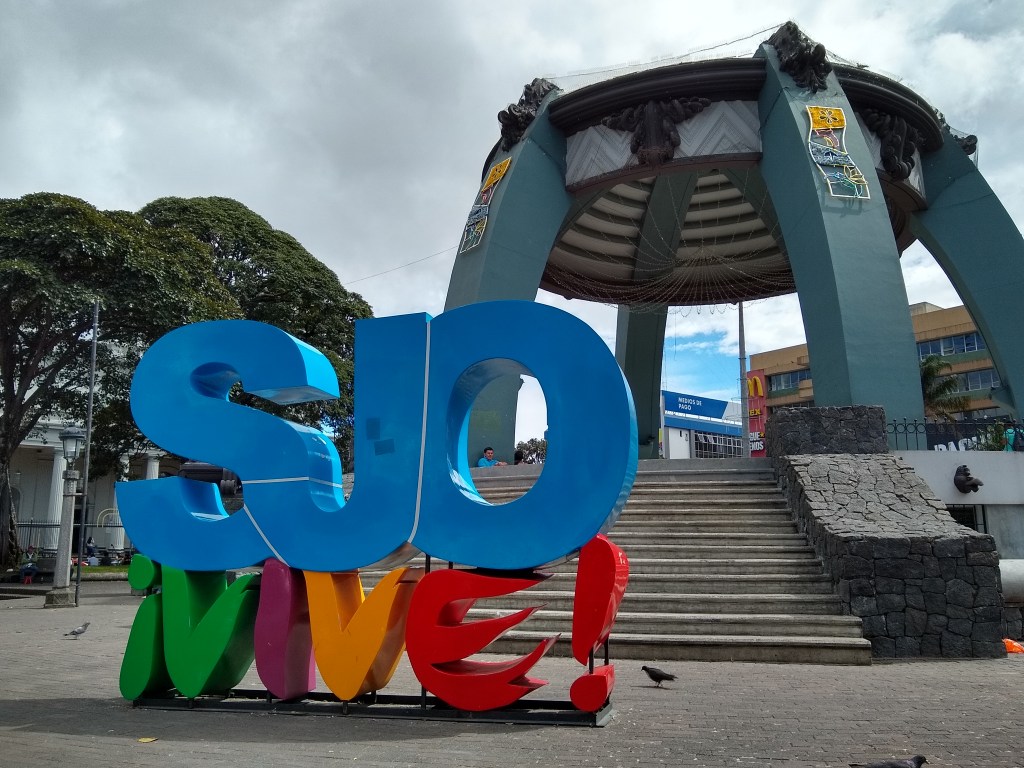
I cannot say I spent the entire flight pondering this distopian future, fantasizing about _Minority Report_ and _1984_, but I also can not say that I didn’t. We arrived in San Jose late at night. Needless to say the city was dark, as was my mood. After settling into a comfortable bed and giving up my desire for perfect quietude, I found myself waking to a bright day in the tropics. My self concept was a bit like the following photo:

A New Day at Parque Central

During our morning walk, which somehow stretched until sunset, we found that our hotel is in a good location to experience the sights and sounds of San Jose. I wouldn’t describe it as a charming city, but I can say I have taken it off my list of cities I prefer to avoid. The air was cool, with a slight breeze (that intensified over the day) with alternating periods of sunshine and cloudiness.

Paula is writing her blog entry for the day as I type this, and she is much better than I at describing our experience, so I will just mention a few bits.

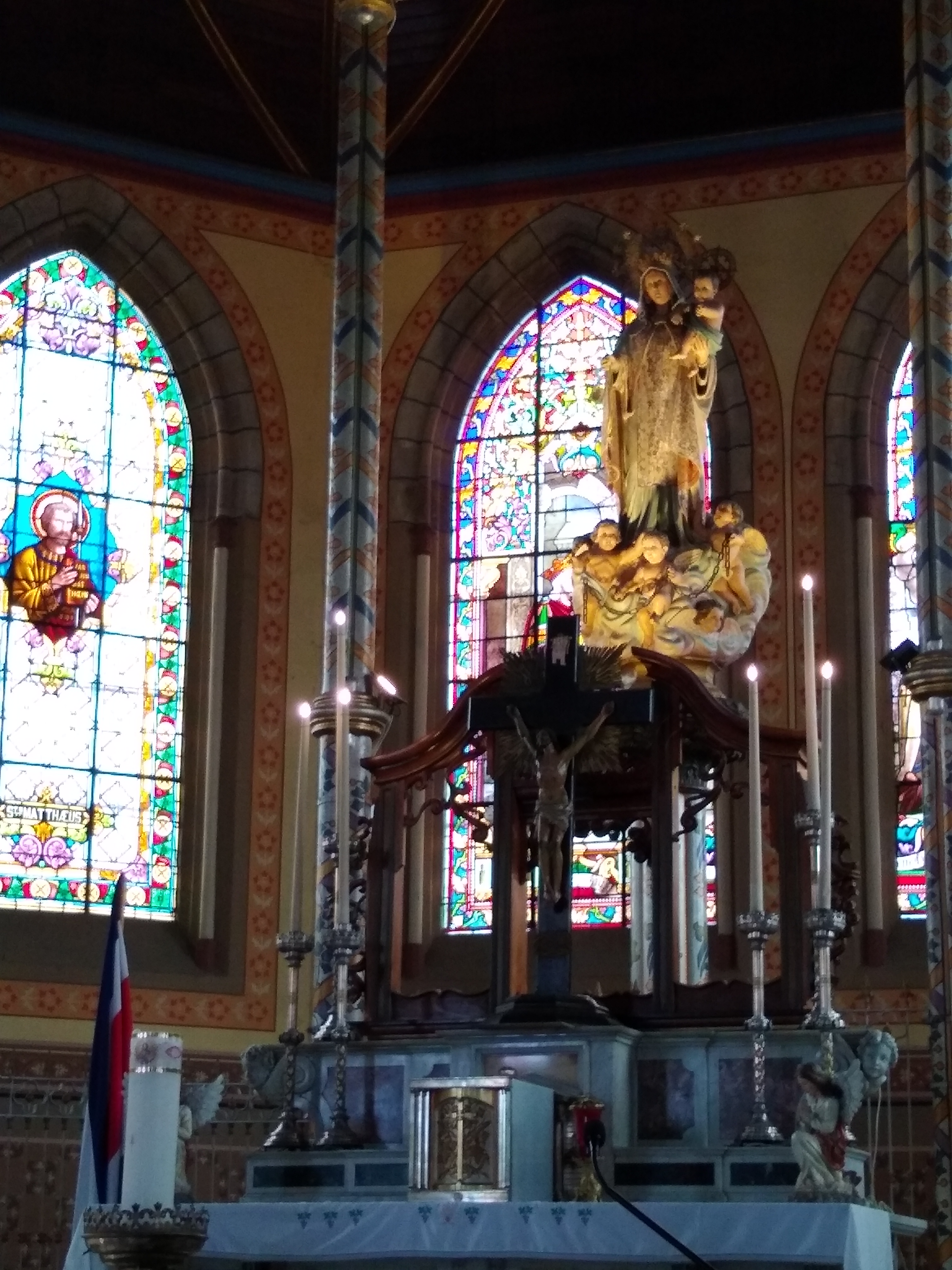
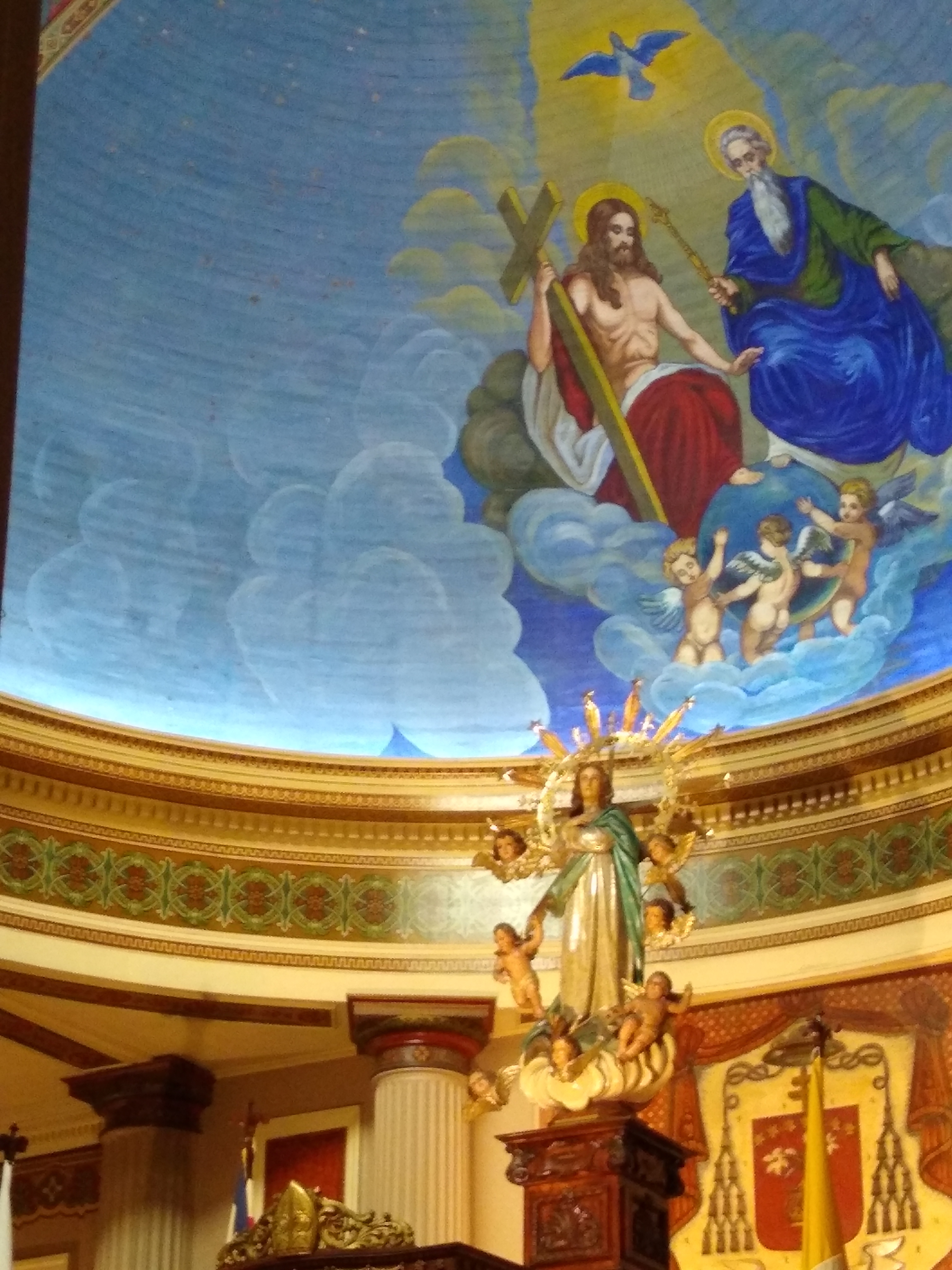
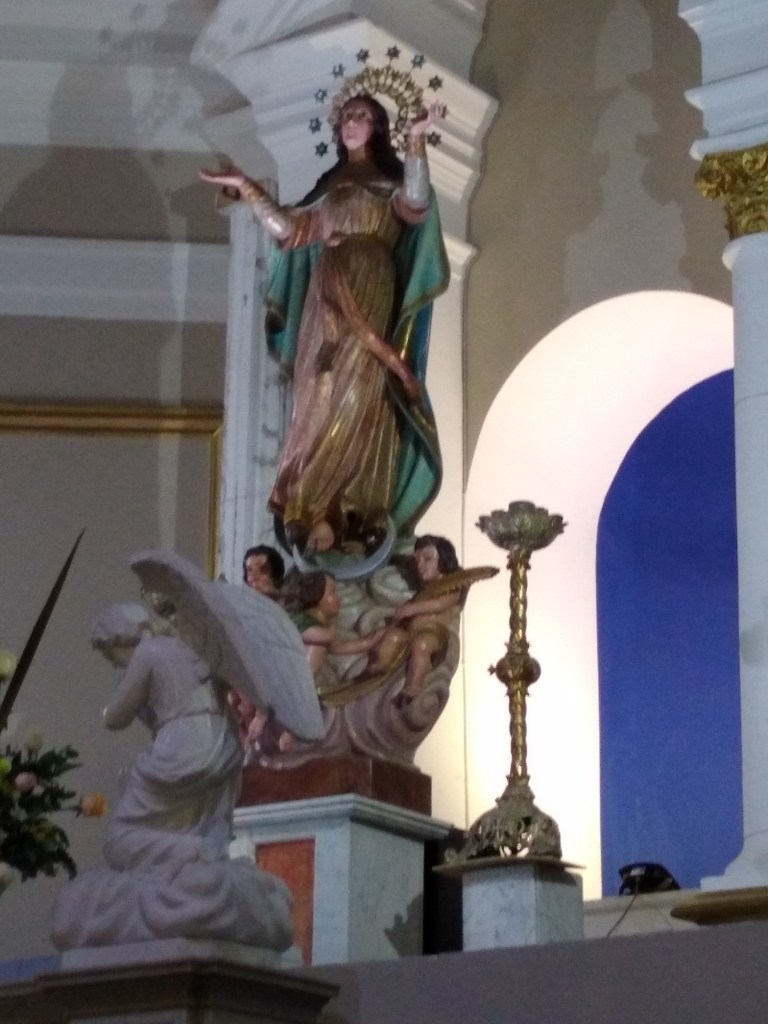
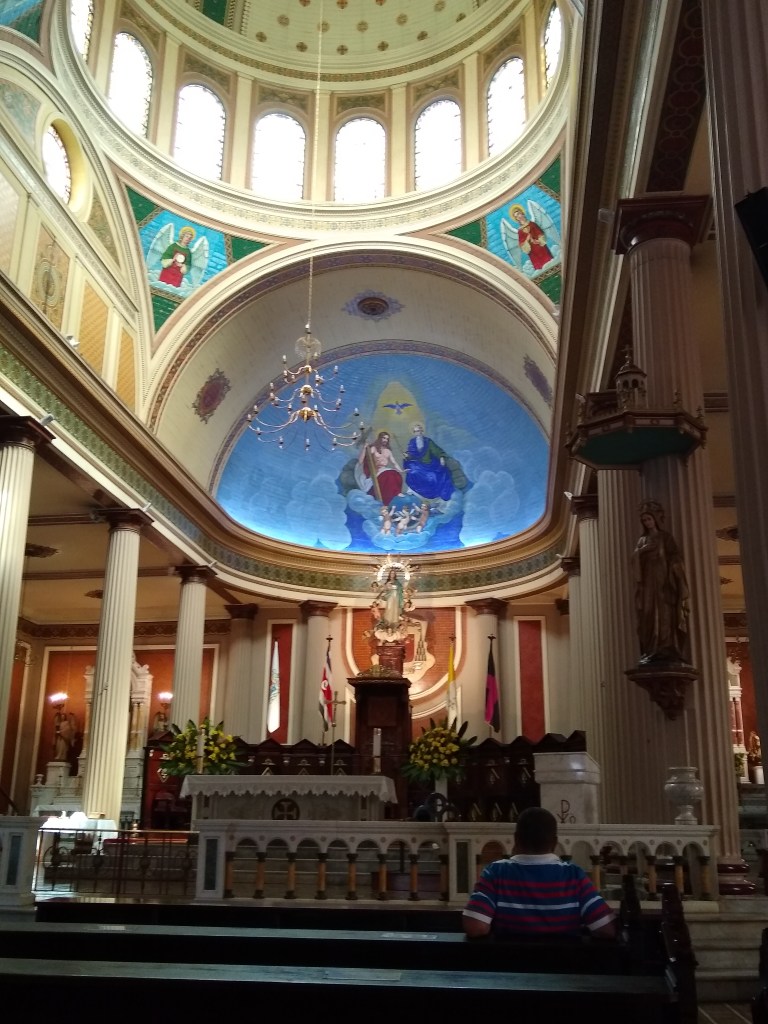
We visited churches and a cathedral. I will repeat my frequent observation that Catholic churches in Latin America seem be monuments to the Virgin Mary much more that Jesus Christ. Christ is present, of course, but central prominence seems to always go to Mary. I imagine educated people have written knowledgeably about this phenomenon, though I think my intuitive and unsupported notions are probably more accurate. This has to have been an accommodation to the local population by the Spanish occupiers. Jesus could be conceived through immaculate conception, but could not have been born without a Mother.

Here are a couple images of Mary in her places.

Altar at Iglesia de Nuestra Senora de la Merced
Altar at Catedral Metropolitano
Altar at Iglesia de Soledad

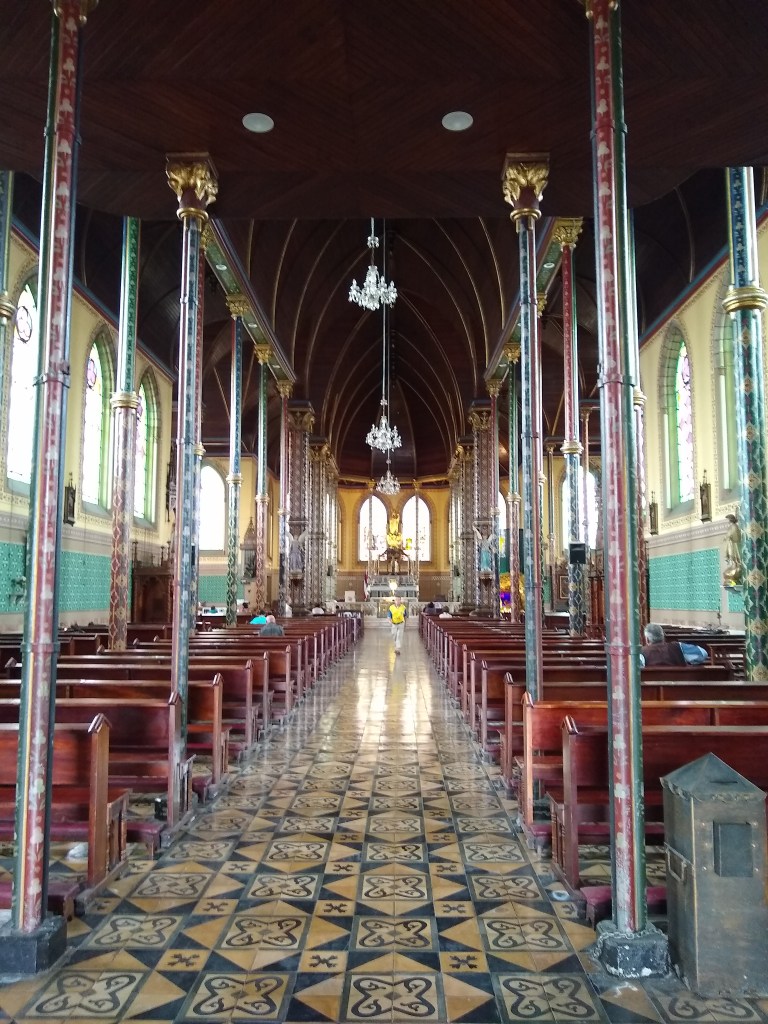
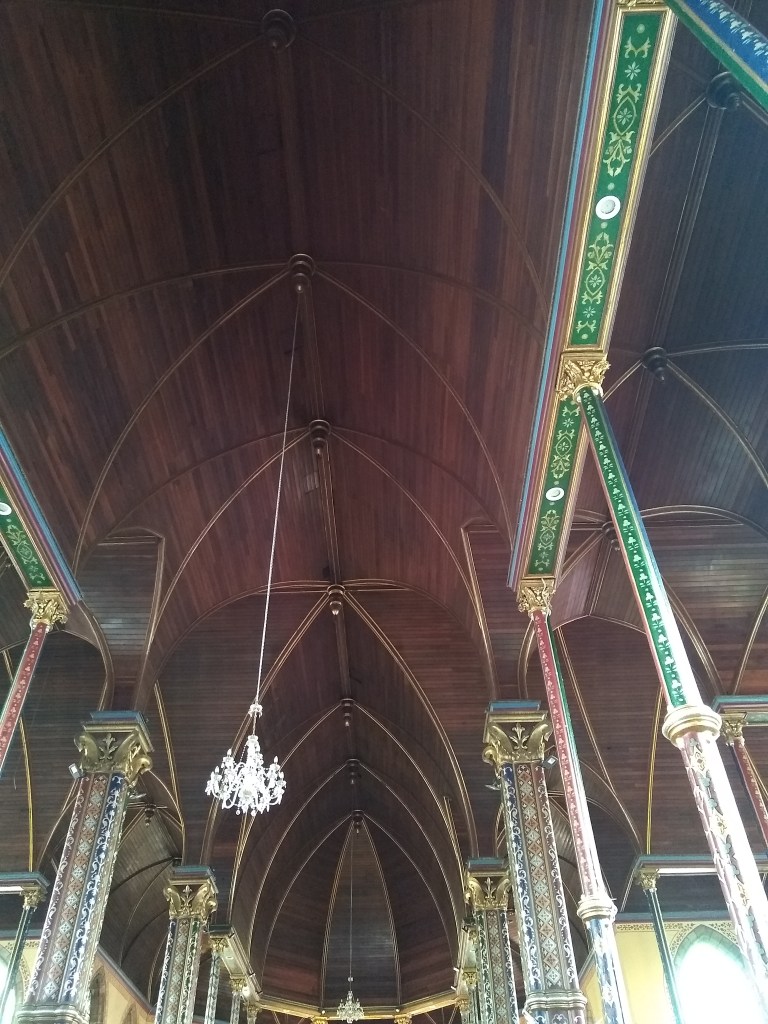
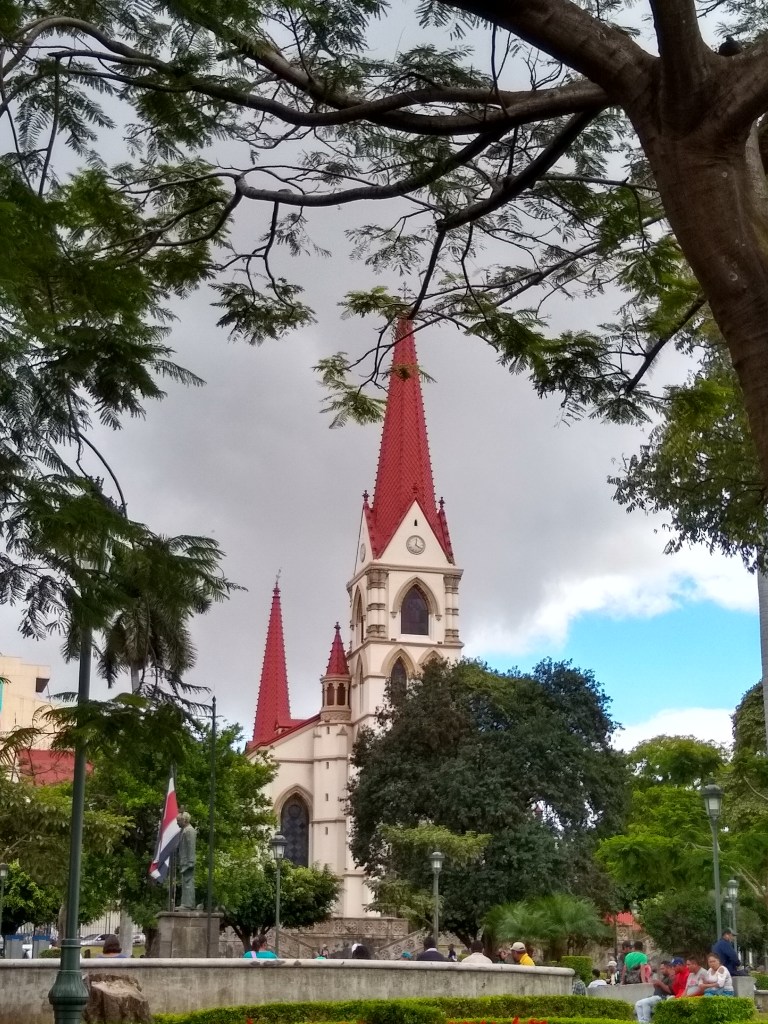
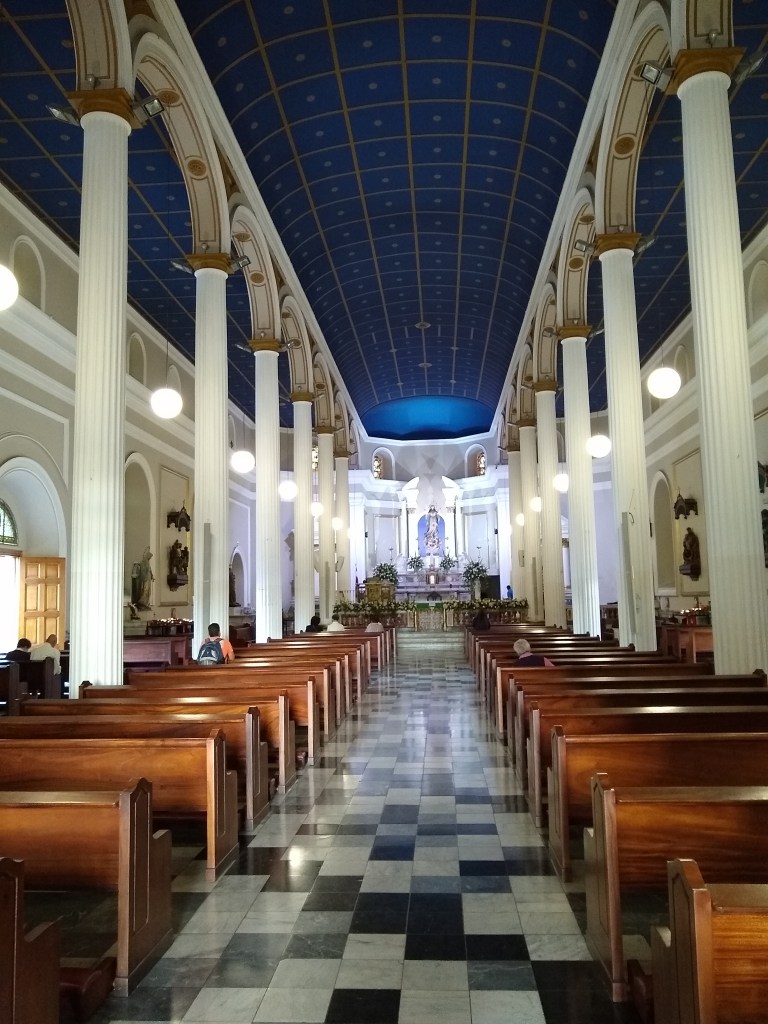
The churches are immaculately maintained, unlike the general environment of the city. Here are some more images.

Iglesia de Nuestra Senora de Merced
Ceiling of Ig. de Nuestra Senora de Merced
Nuestra Senora de la Merced
Catedral Metropolitano
Iglesia de Soledad

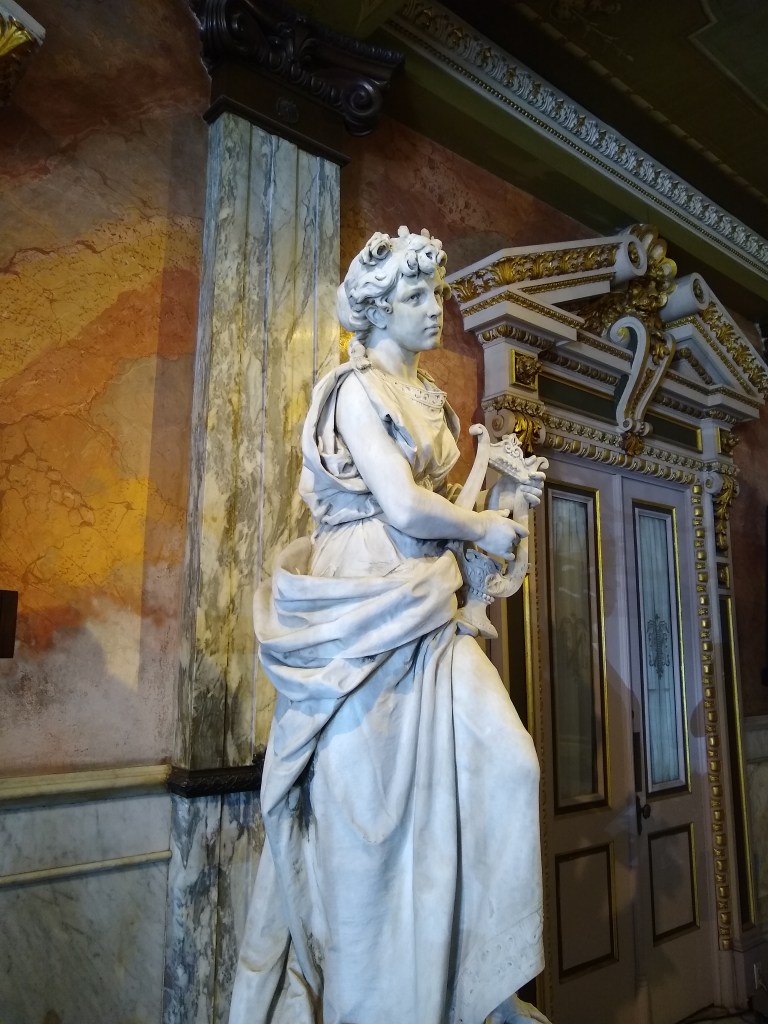
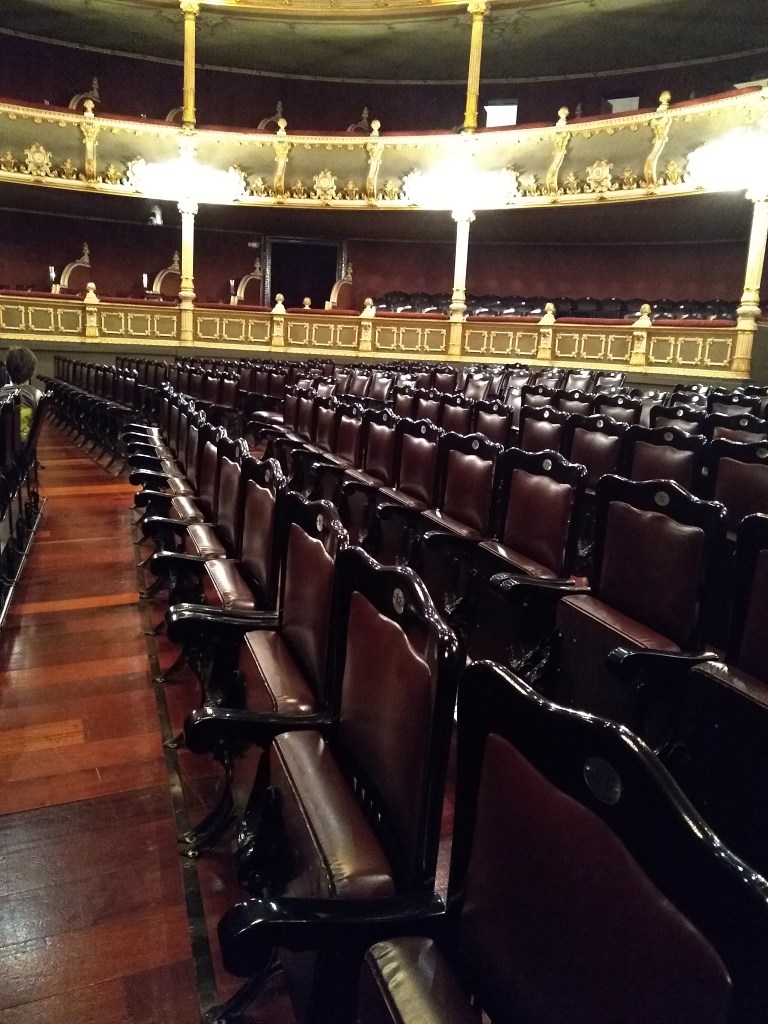
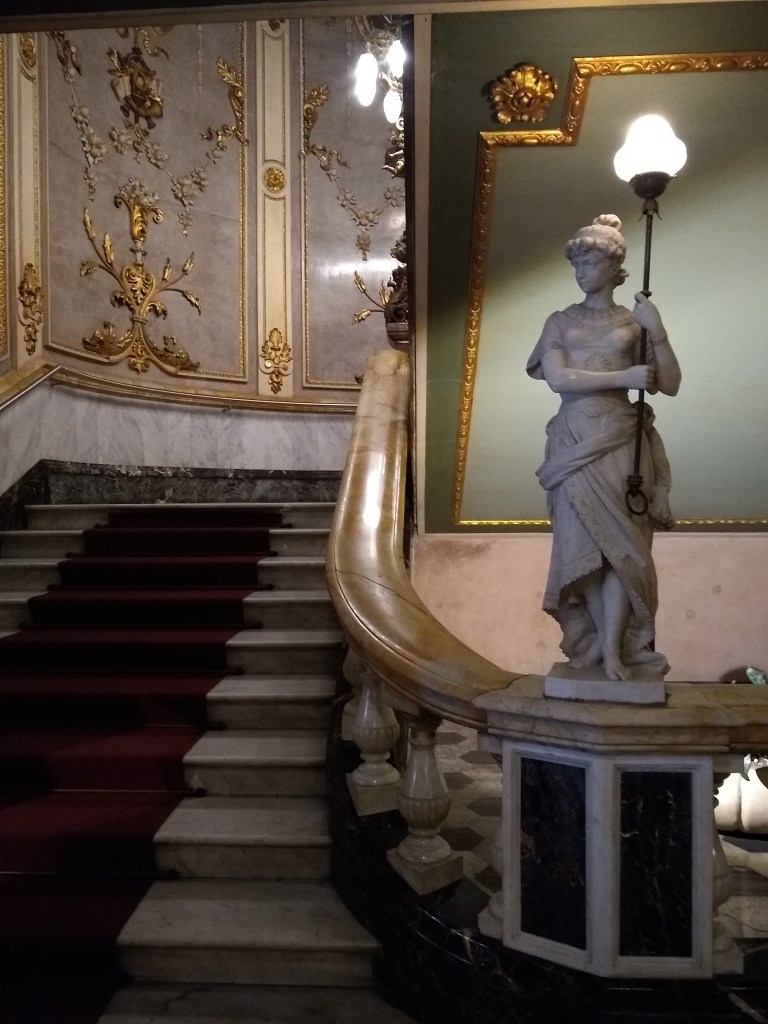
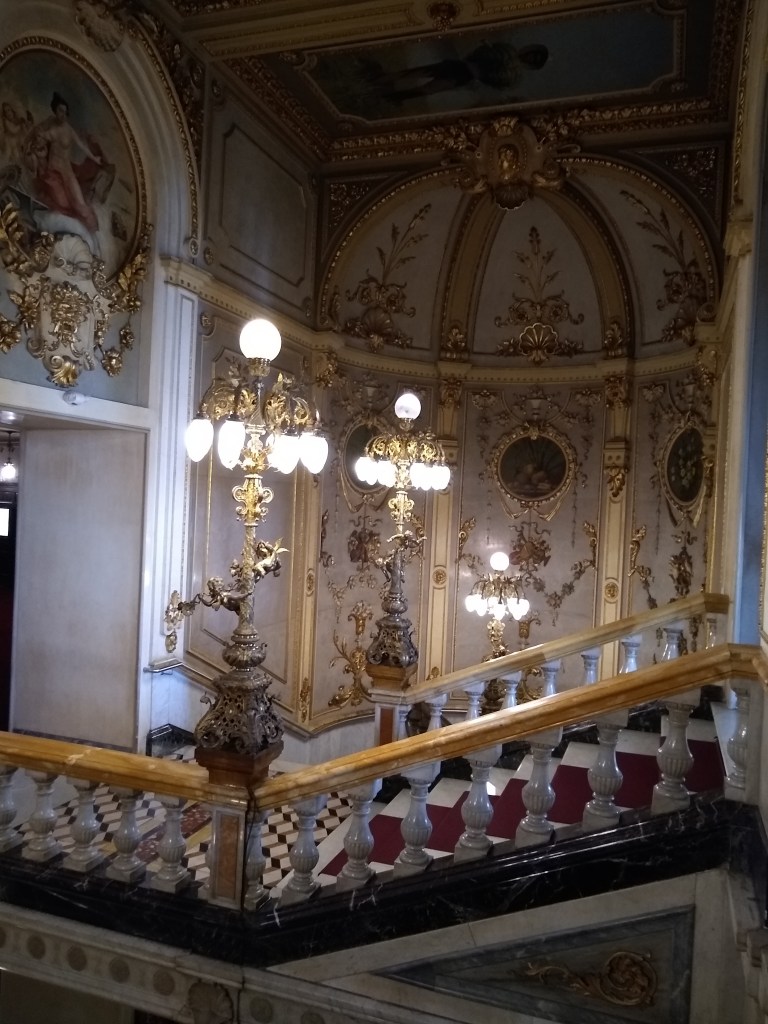
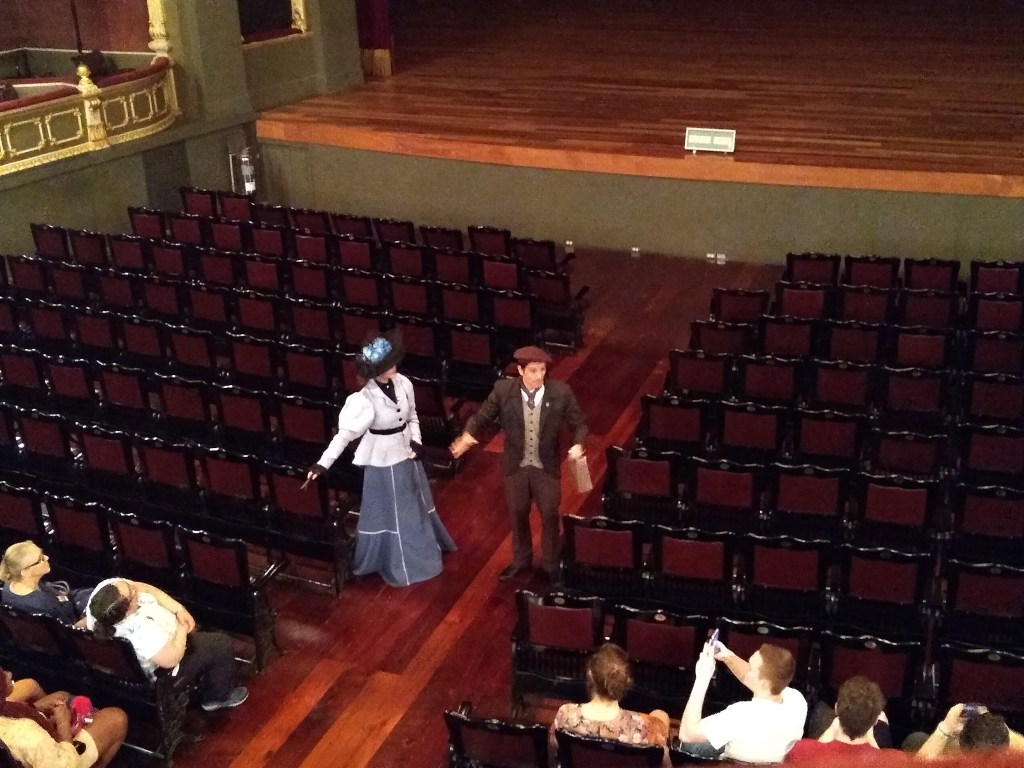
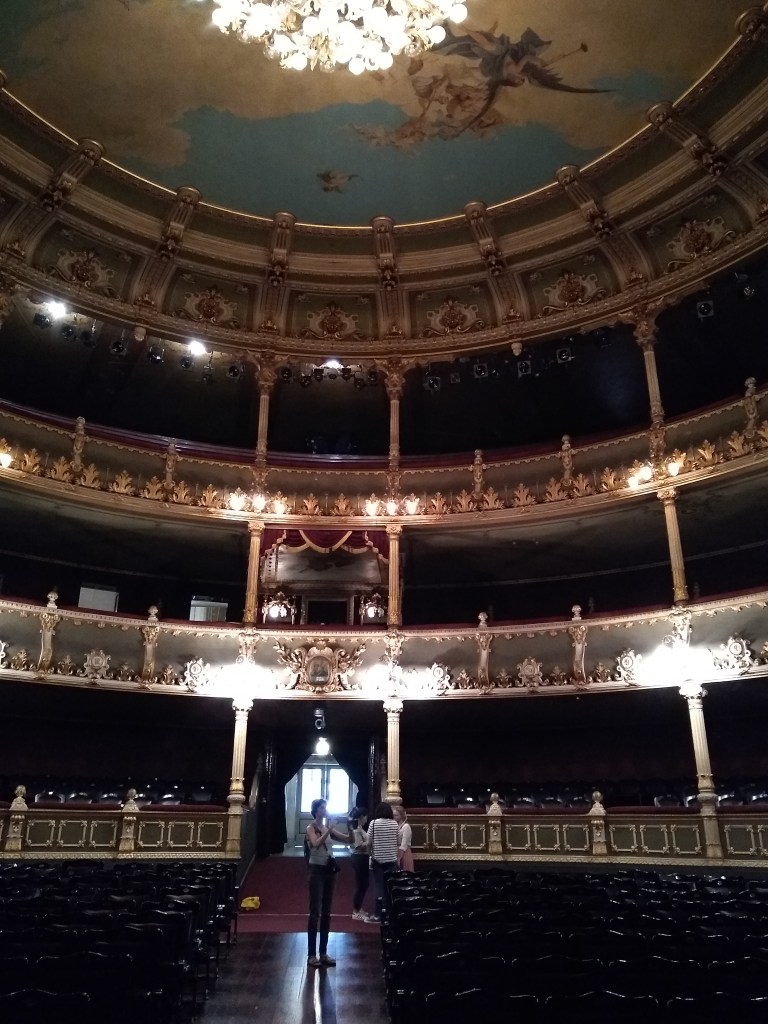
We also toured the Teatro Nacional. This theater was constructed in the late nineteenth century. It is smaller than other national theaters, and could use a facelift of sorts, but it nonetheless has a charming elegance and thoughtful architectural and design flourishes. We hitched a ride with a group of kids who were getting a tour from actors in period costume, playing the parts of the building architect, the President and First Lady of Costa Rica. It was nice to be around youthful energy .

A few images:

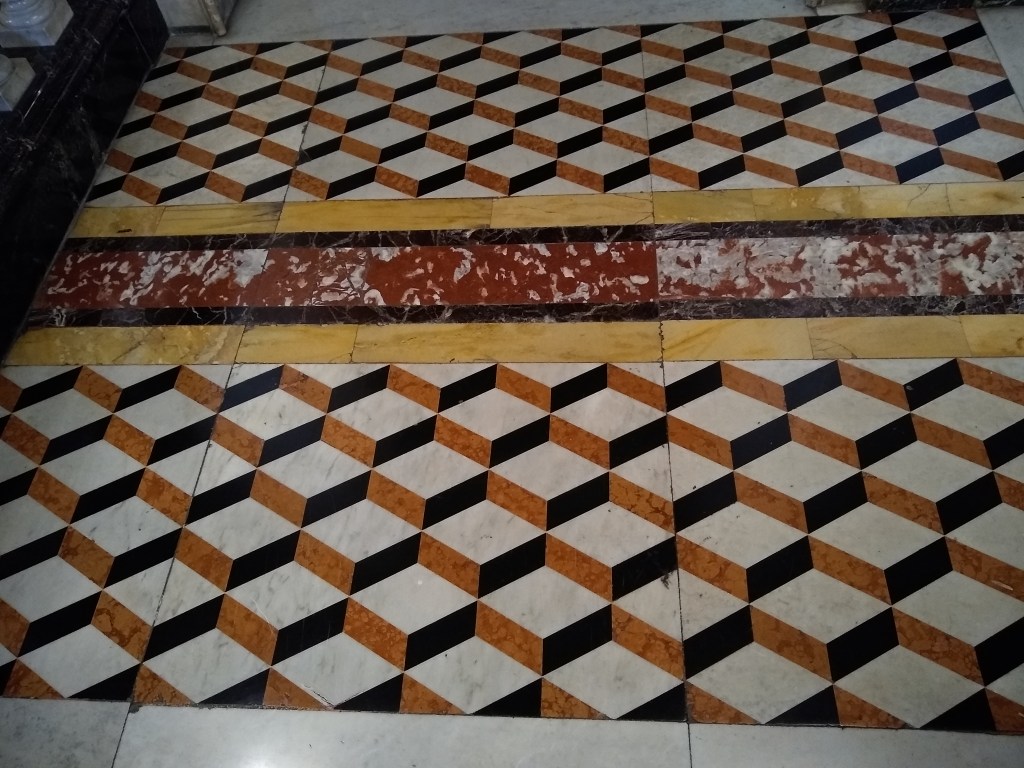
Interesting floor tile
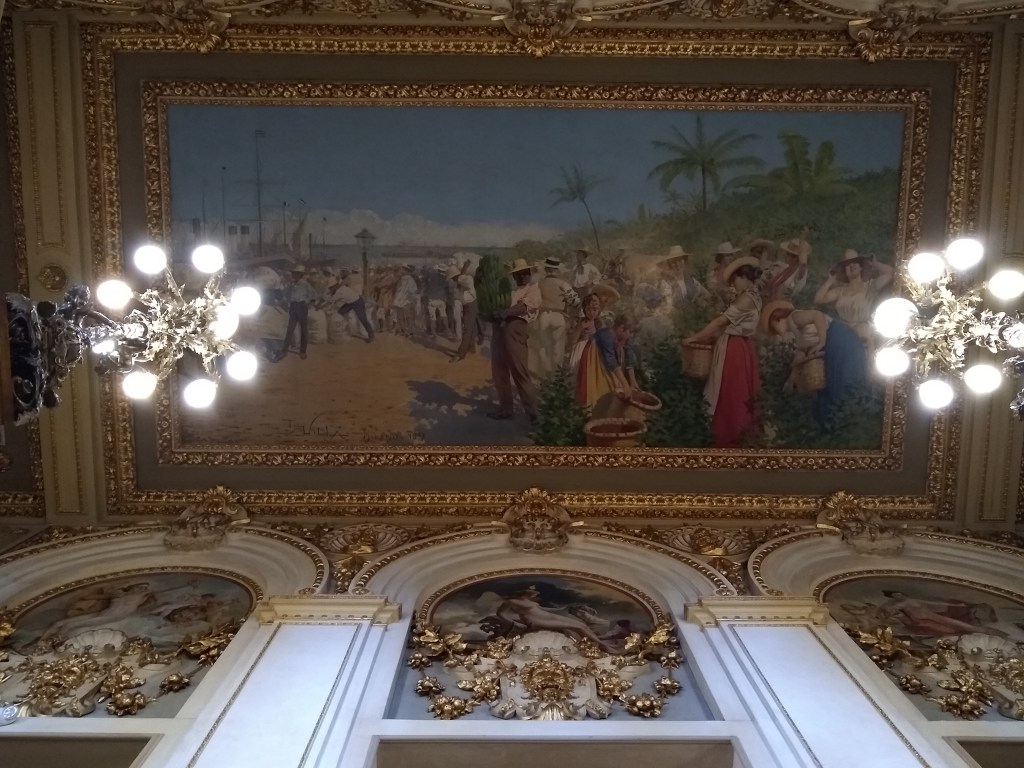
Ceiling Mural in Entrance Foyer
Tour guides in period costume

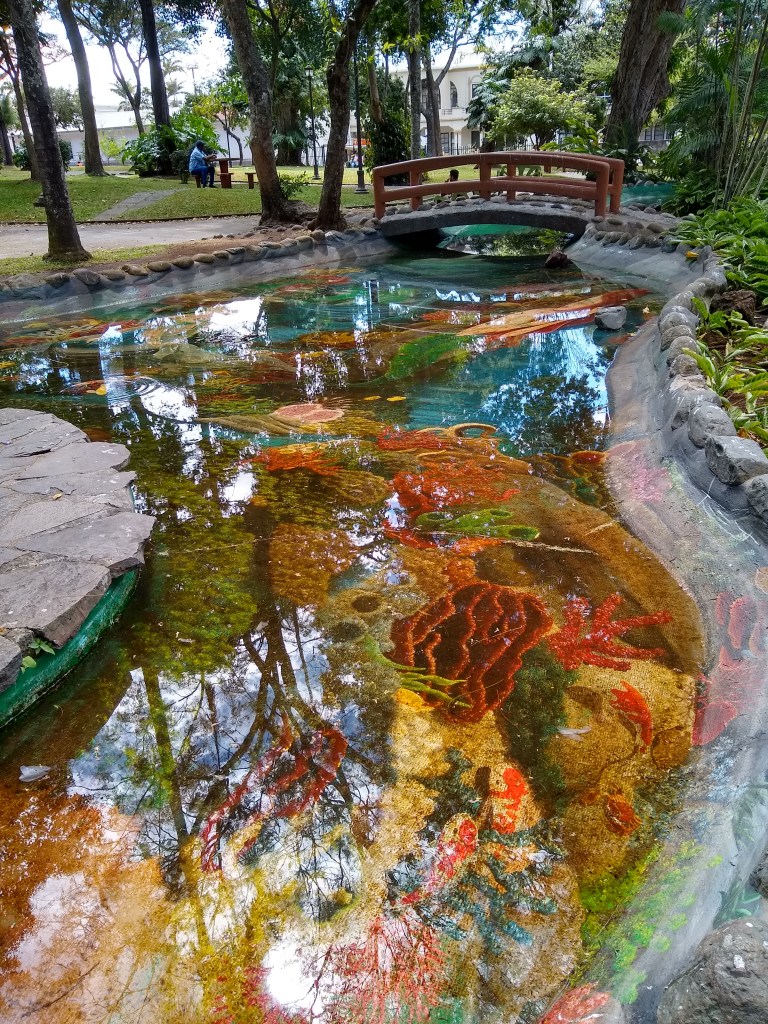
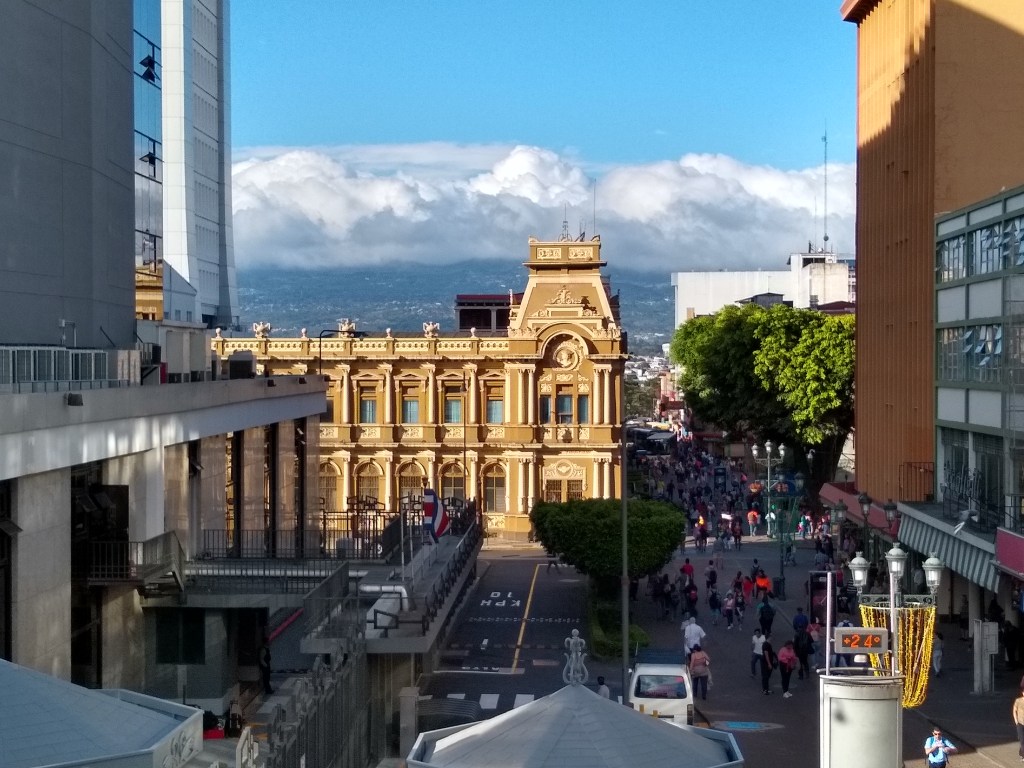
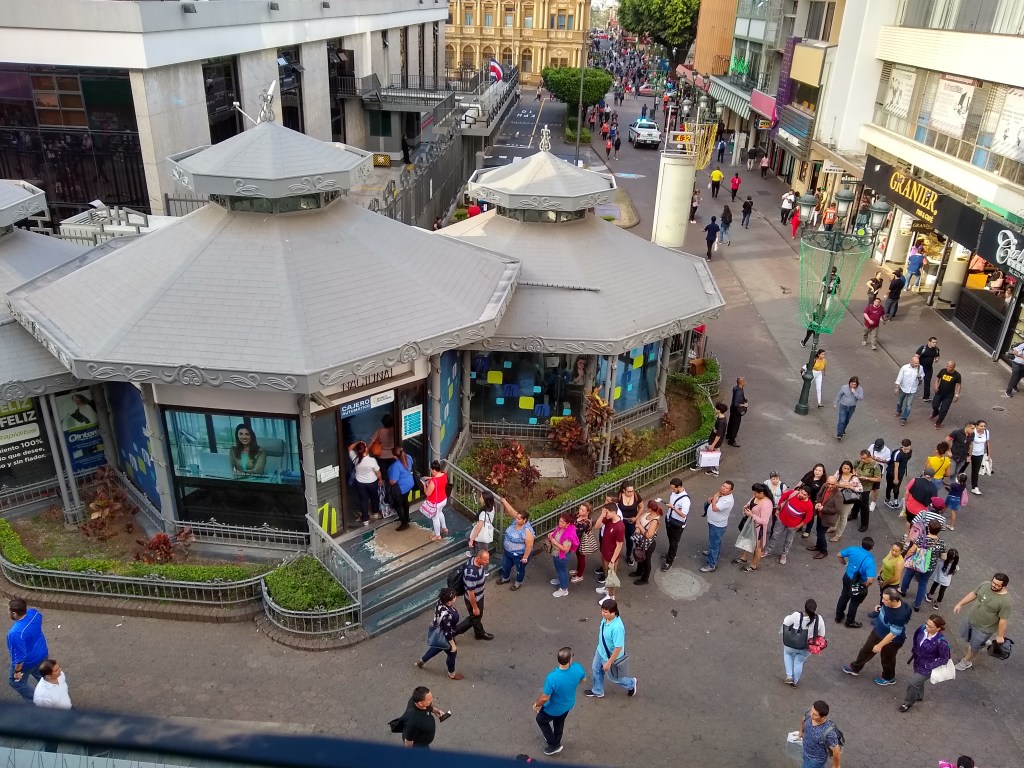
Here are a few more images from the day, in no particular order:

The bottom of this stream was painted with great effect.
Post office in the sun
Line for the Automatic Teller Machines
Albuquerque could use a sign like this (inside joke)
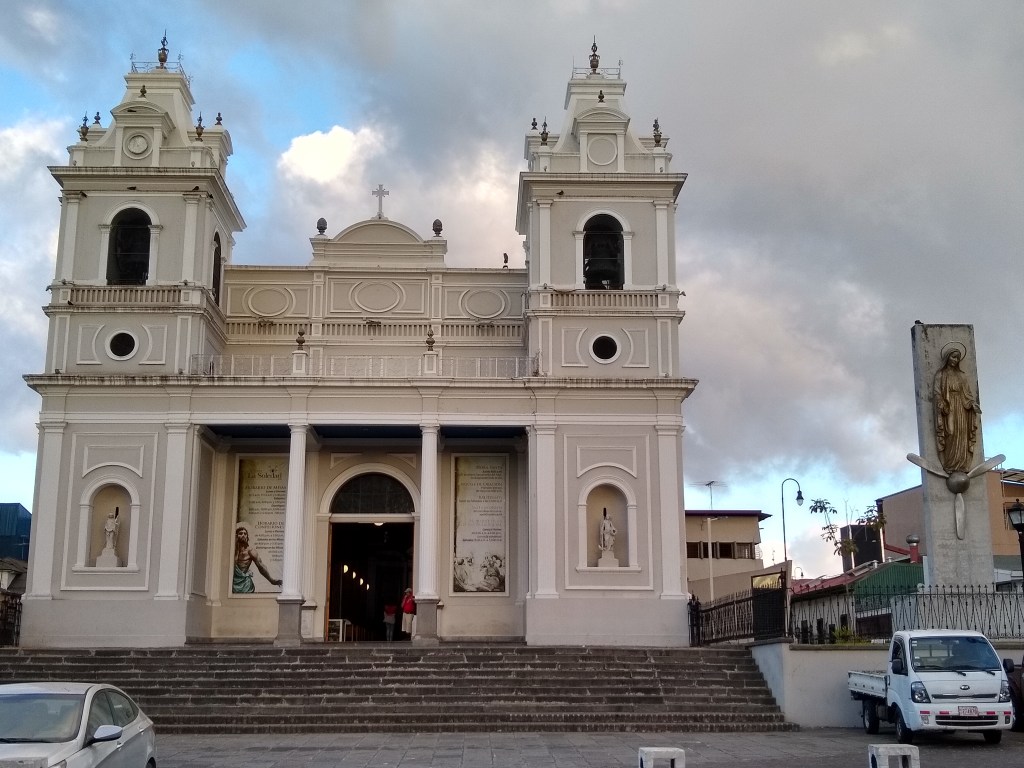
Iglesia de Nuestra Senora de la Merced
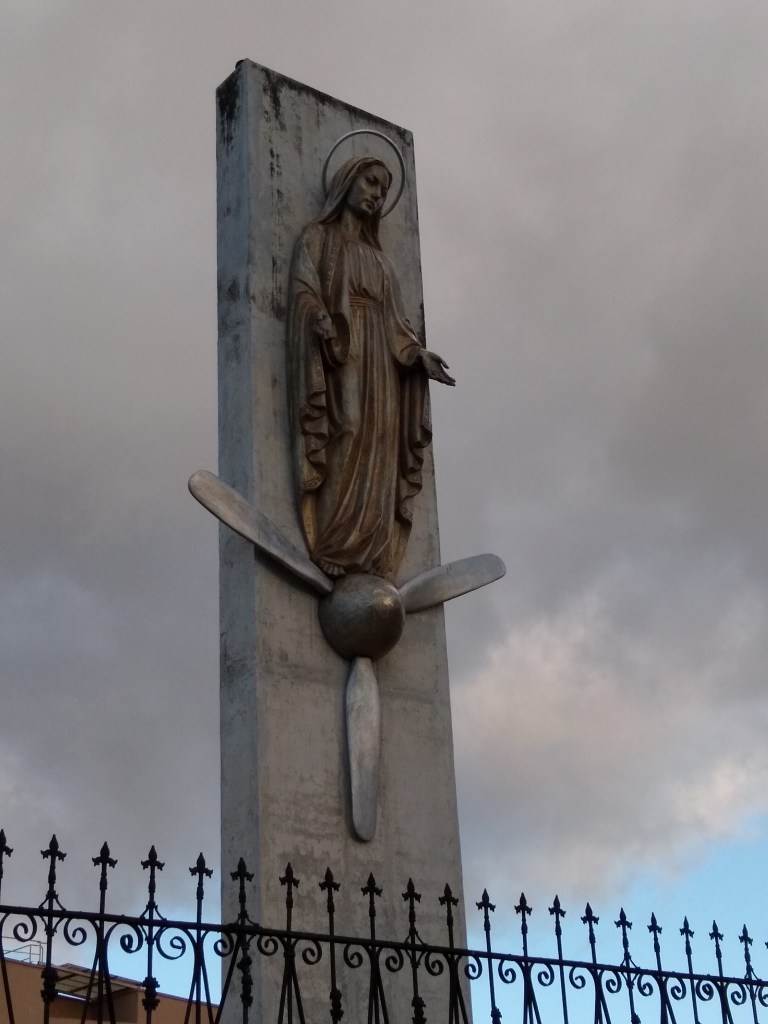
Our lady of General Aviation
Iglesia de Soledad

That’s it for today.

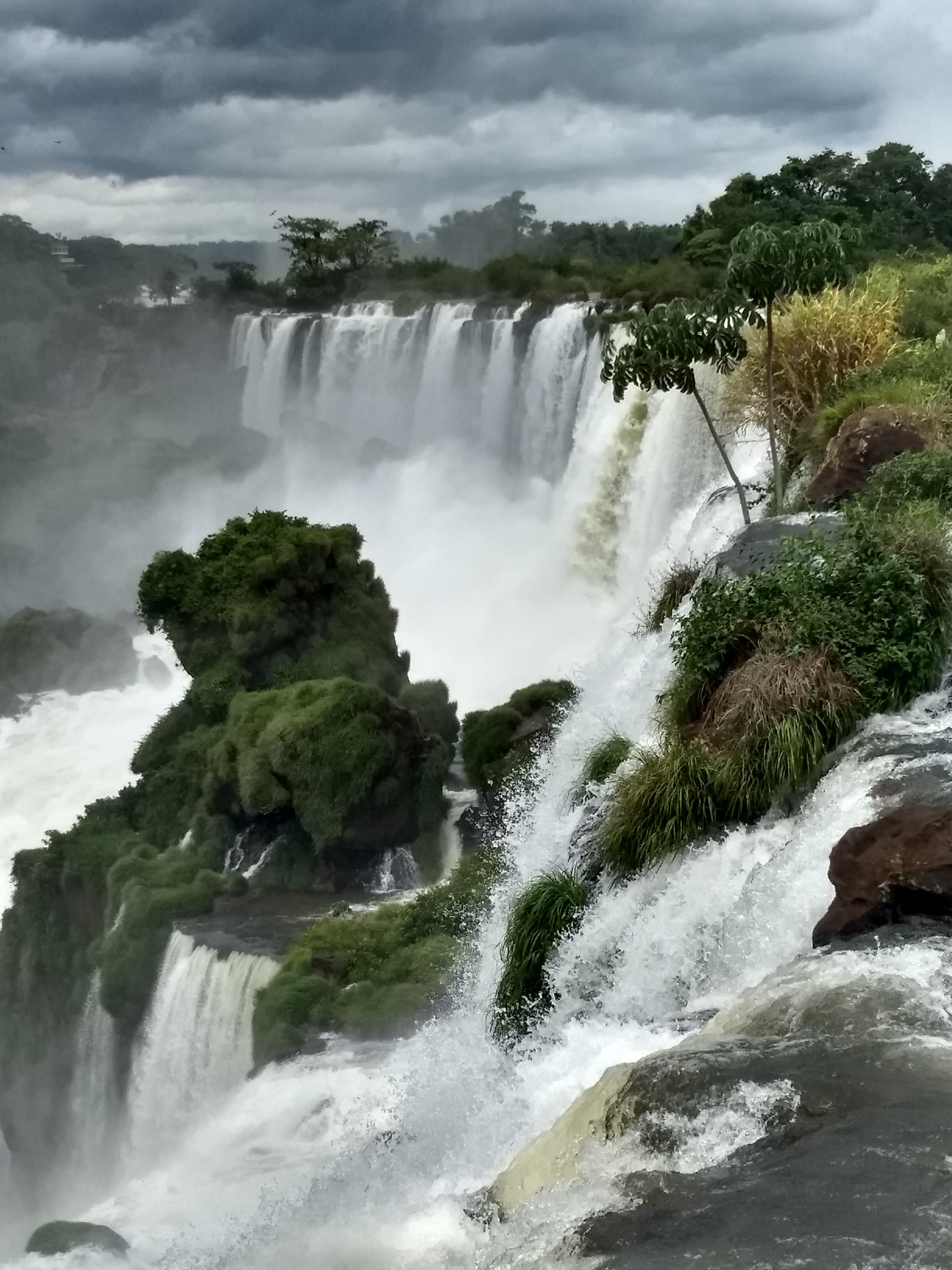
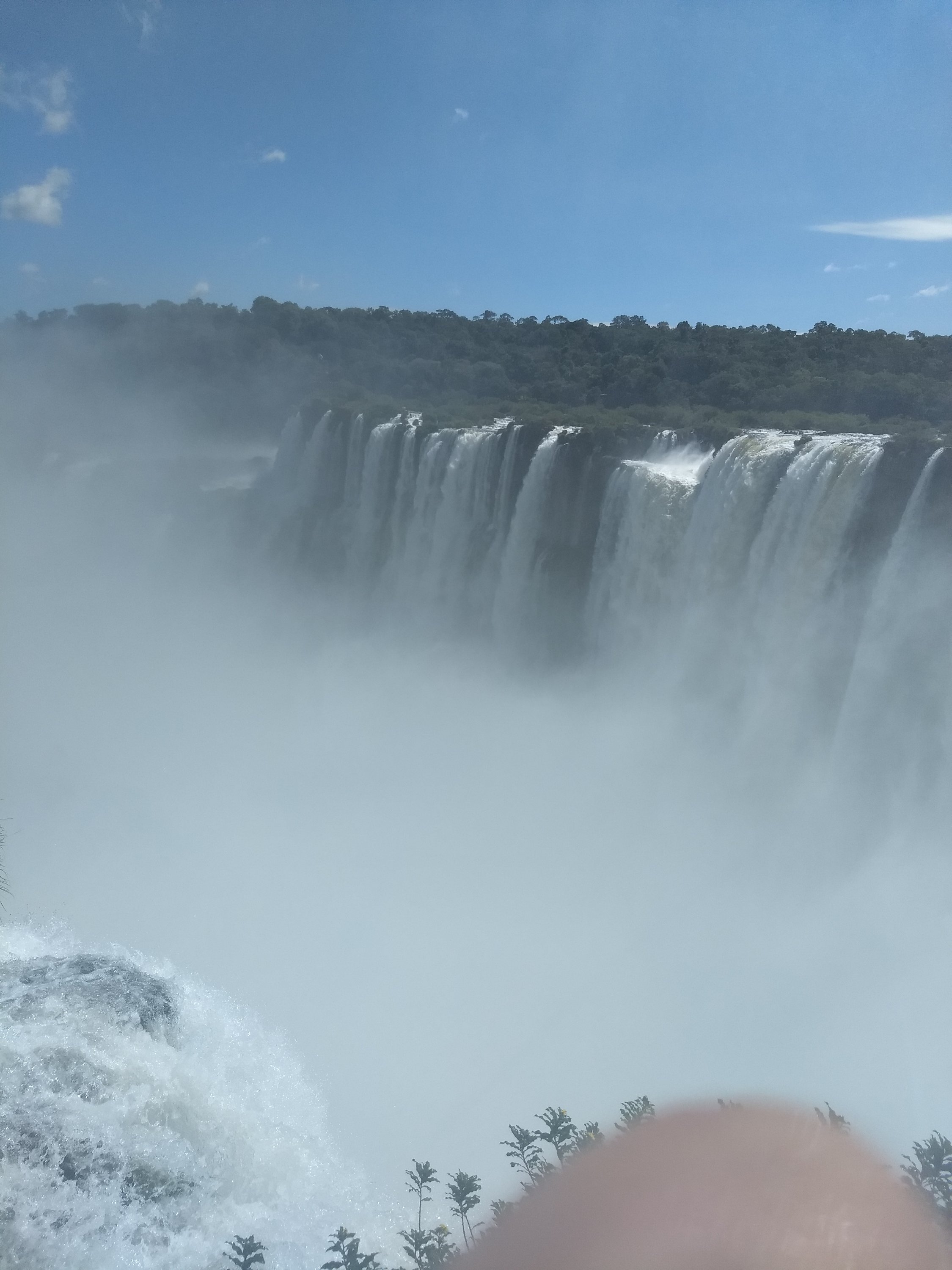
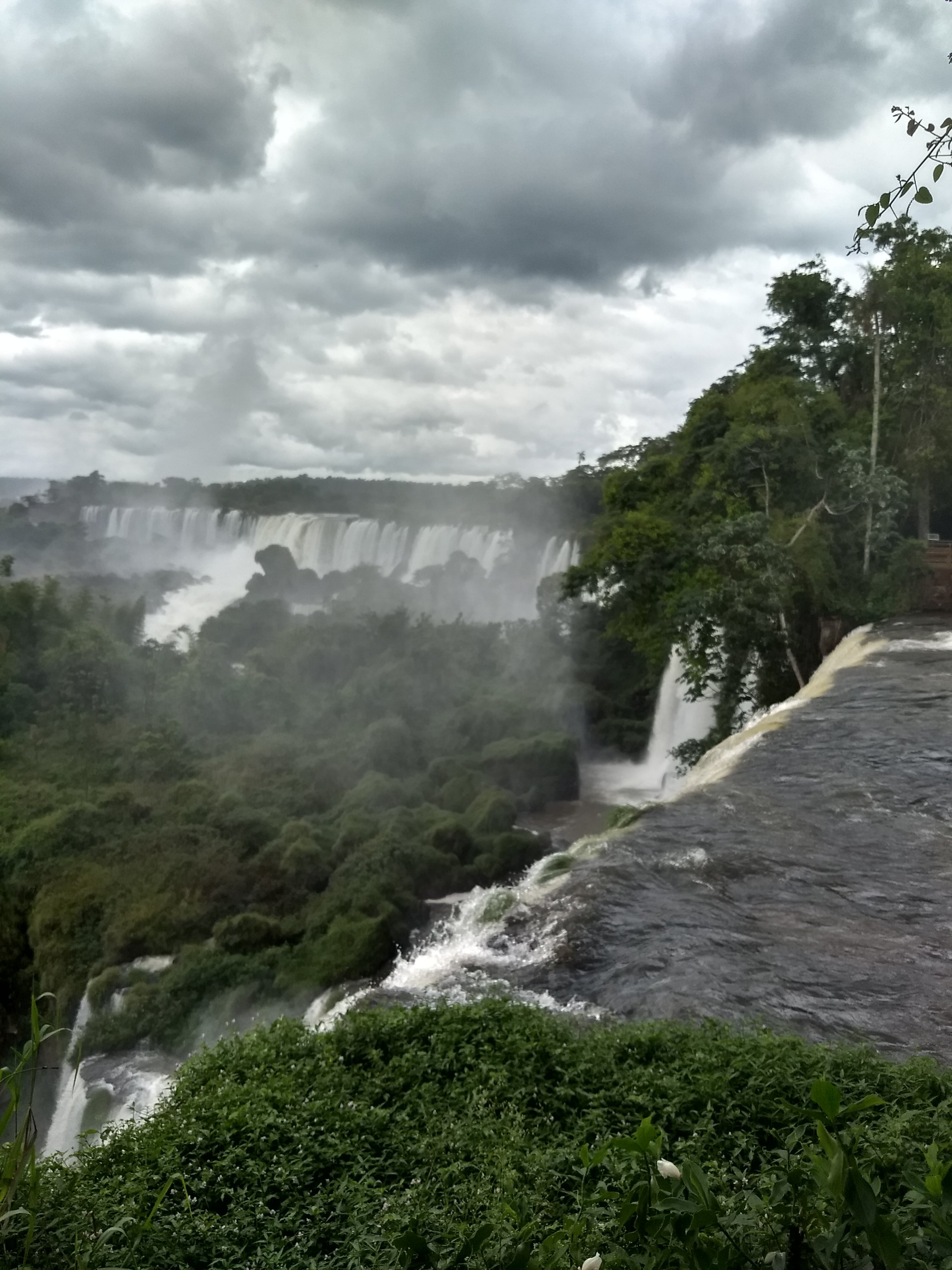
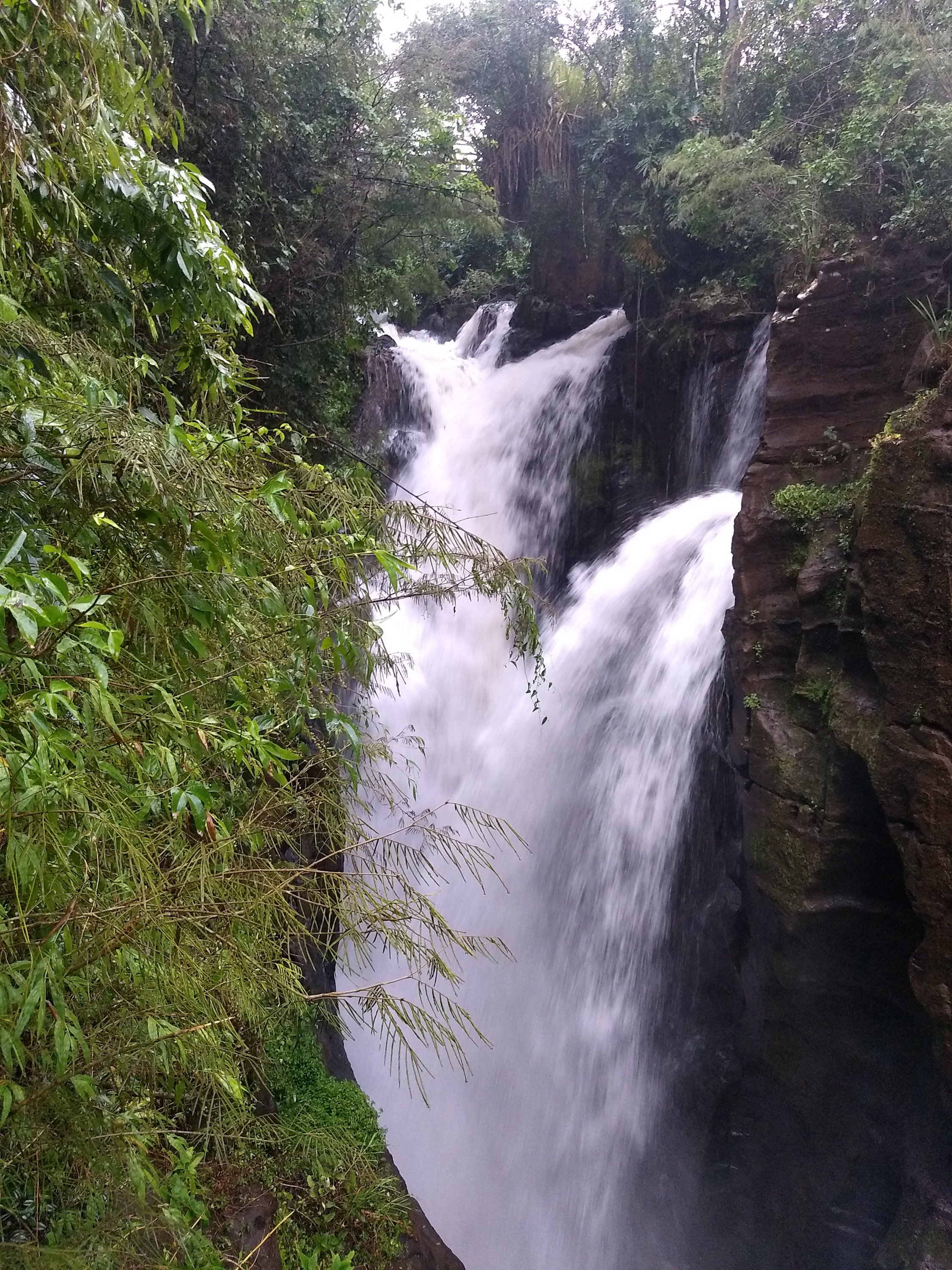
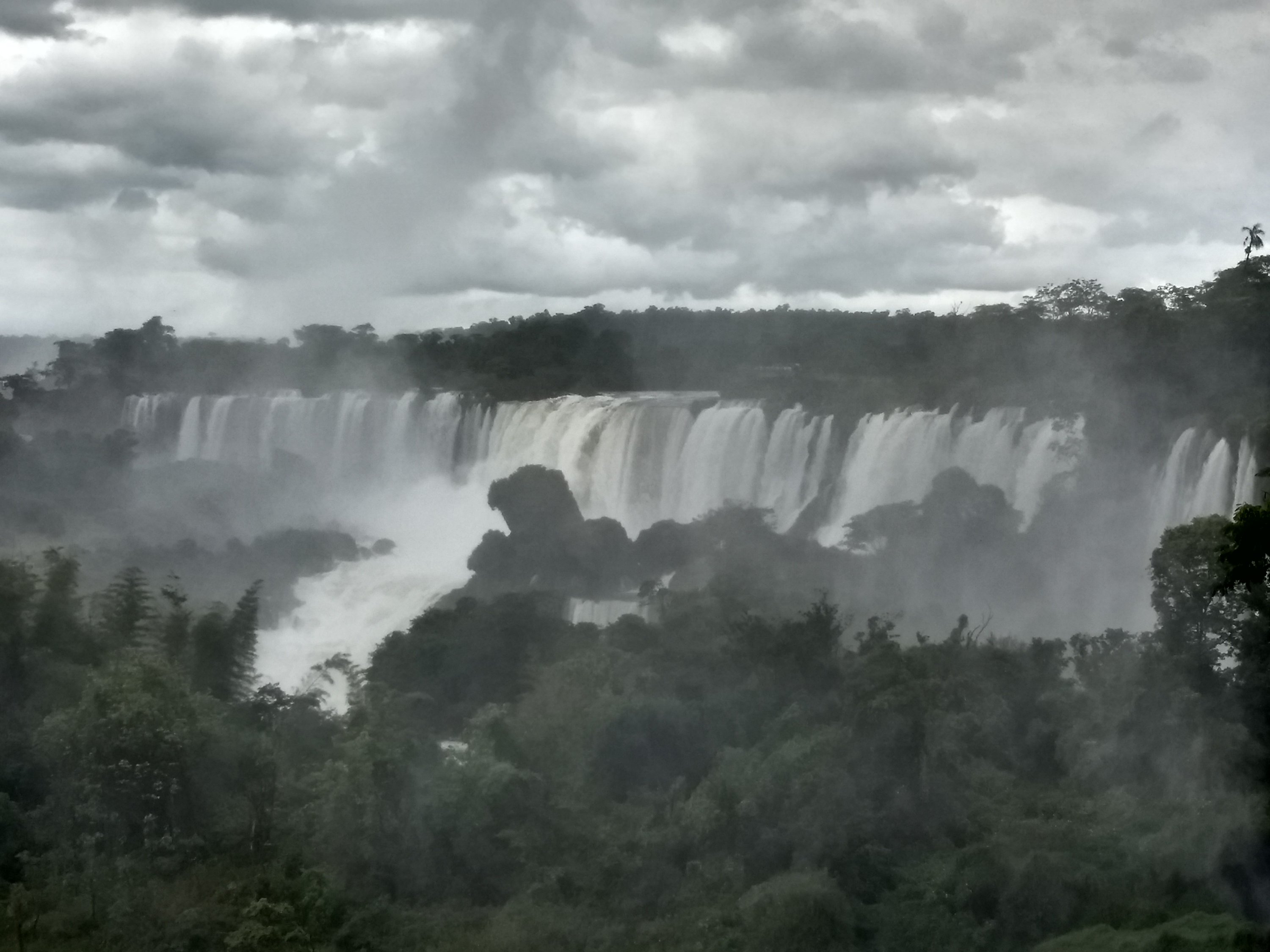
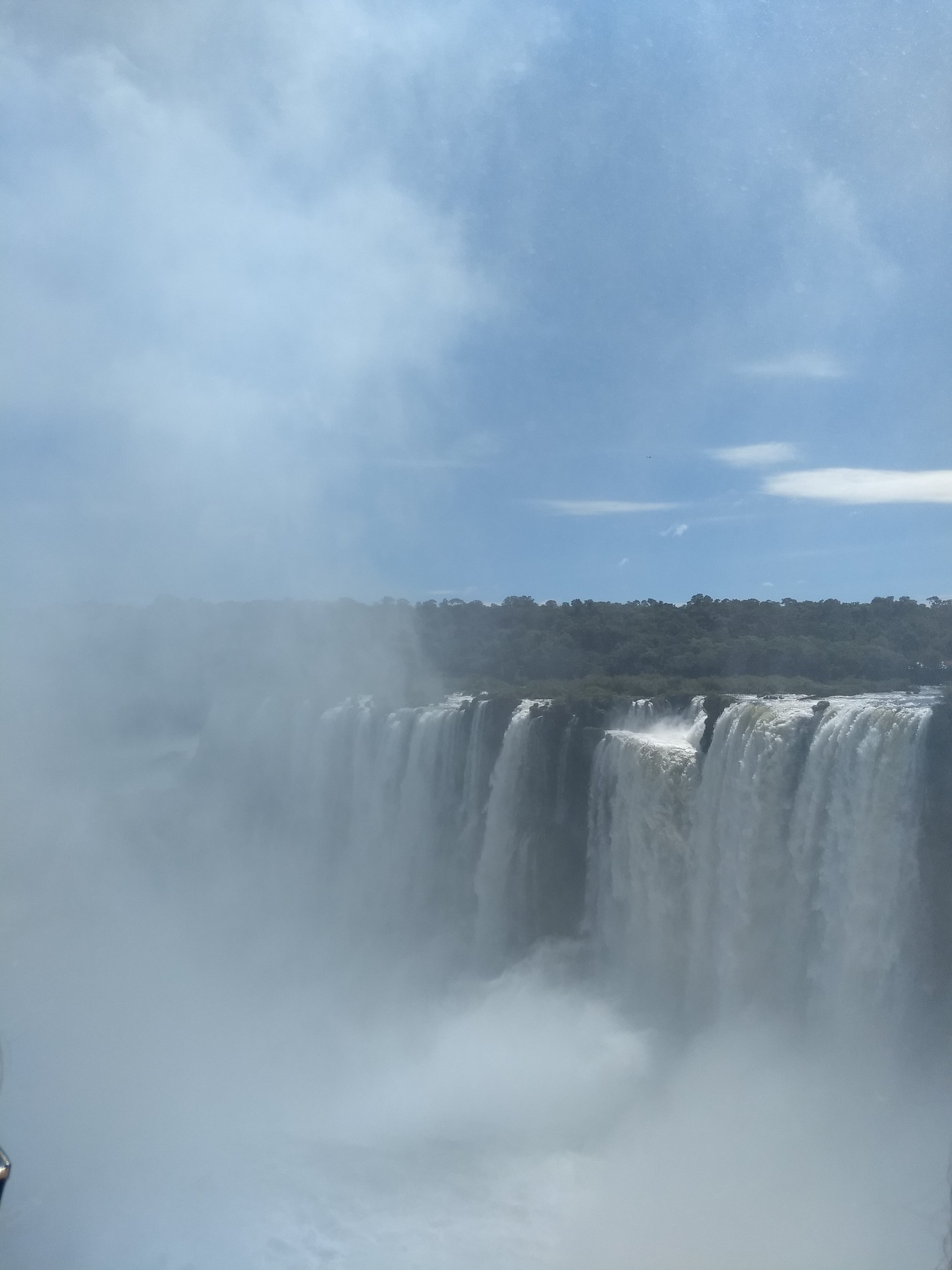
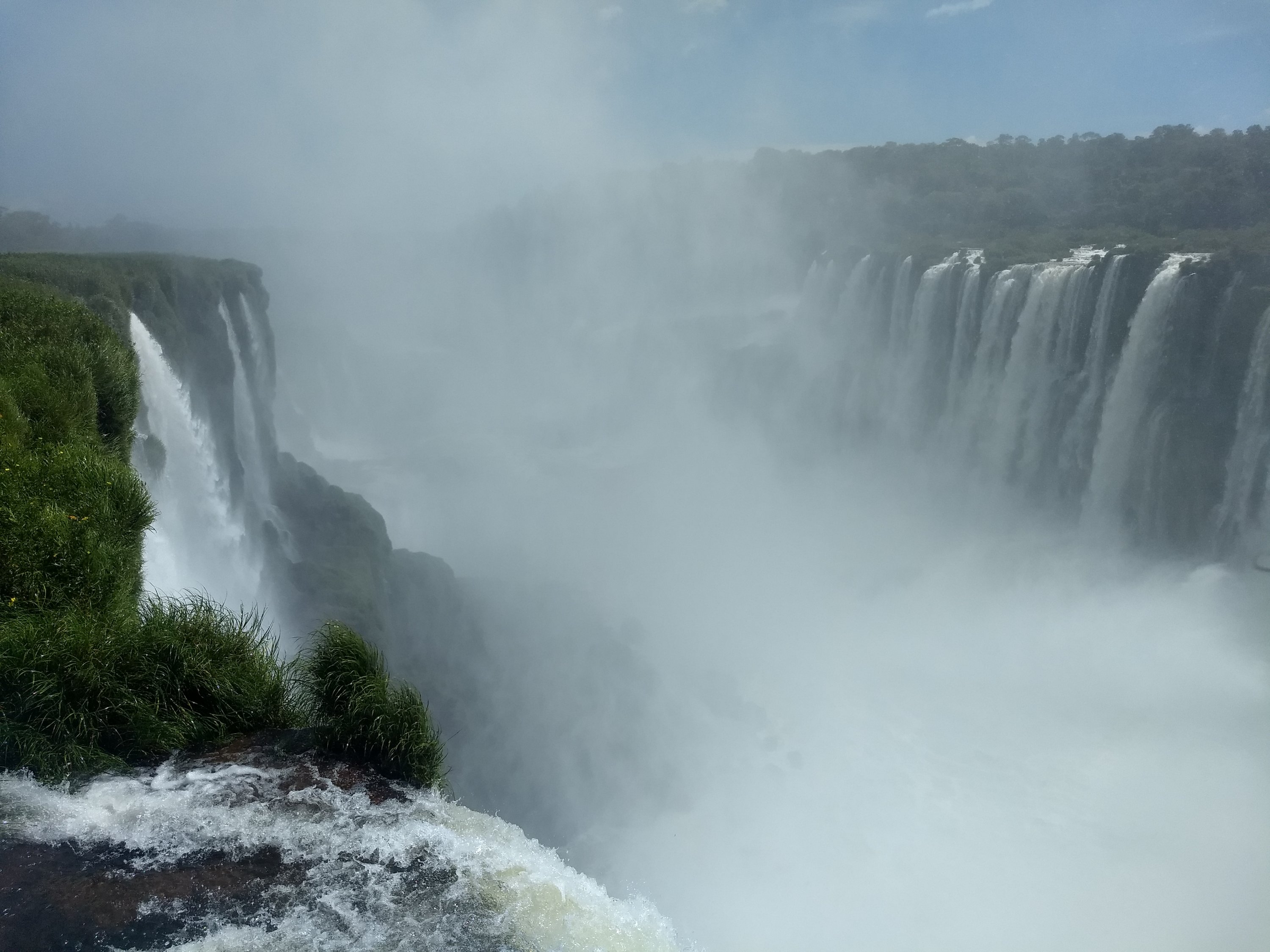
Iguazu Falls

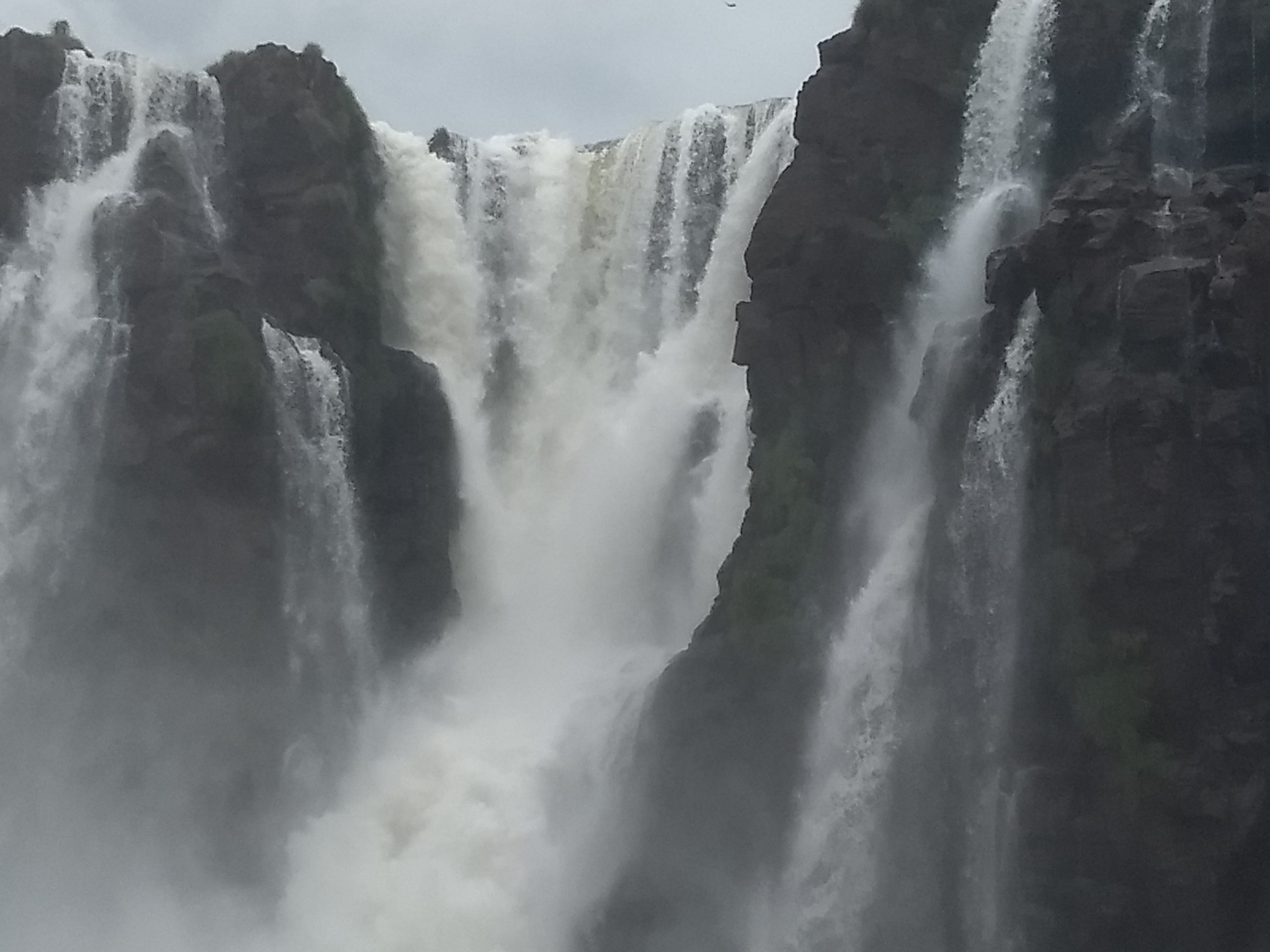
It has been reported that Elinor Roosevelt exclaimed upon her first visit to Iguazu falls: “poor Niagara!”

The falls border Argentina and Brazil, where an inconceivable amount of water flow from the upper and lower Iguazu River. When more inconceivable is that there falls have gone dry twice in the last fifty years.

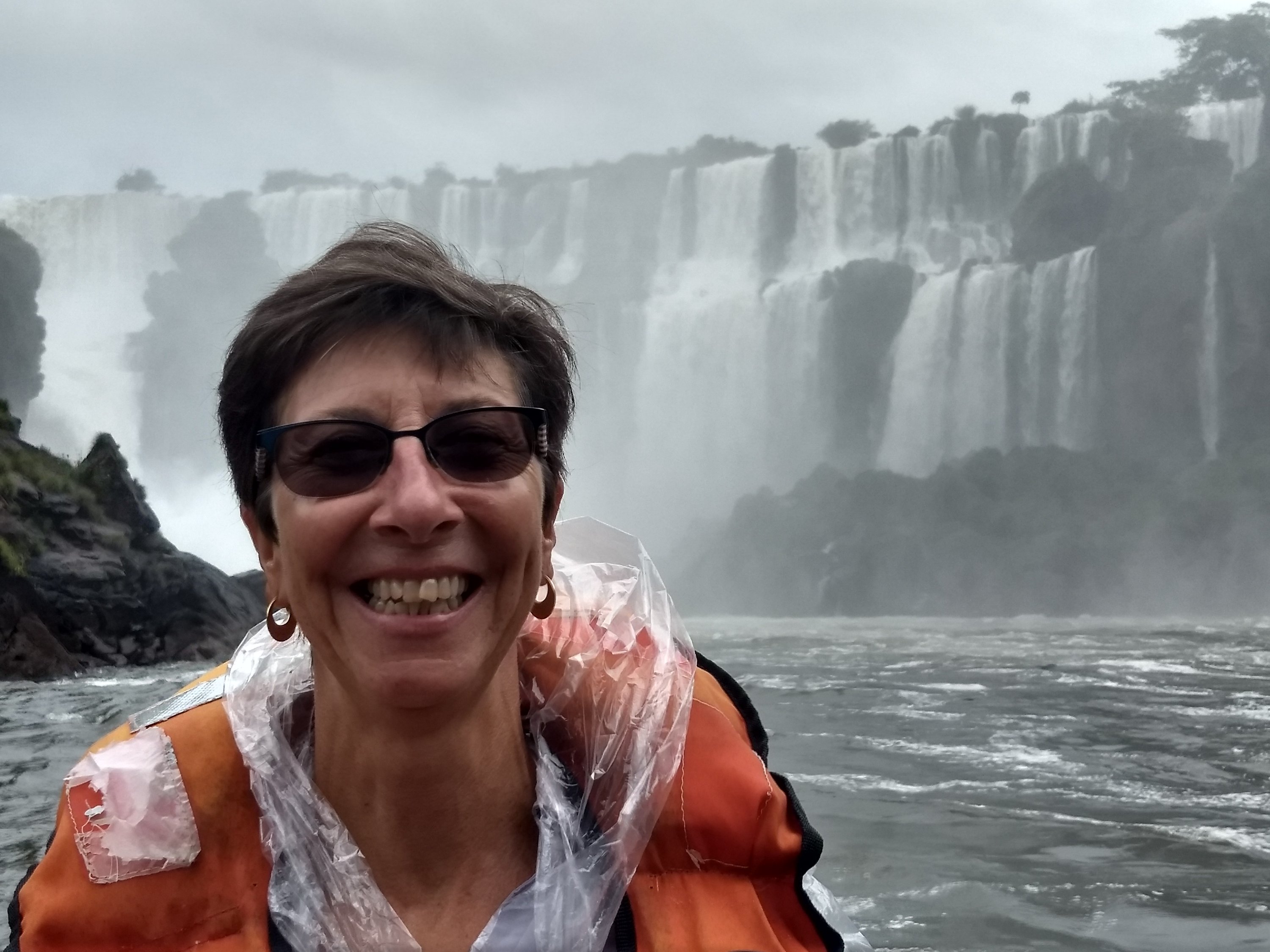
There is no possible way to capture the magnificence of these “cataracas” in photographs, particularly with a cell phone. Here are some feeble attempts.

I


We were unable to visit the Brazilian side of the falls for a more panoramic view sure to the high cost and time required to get a visa. Form Brazil it would be apparent that the Niagara horseshoe falls pale by comparison.

Santa Fe

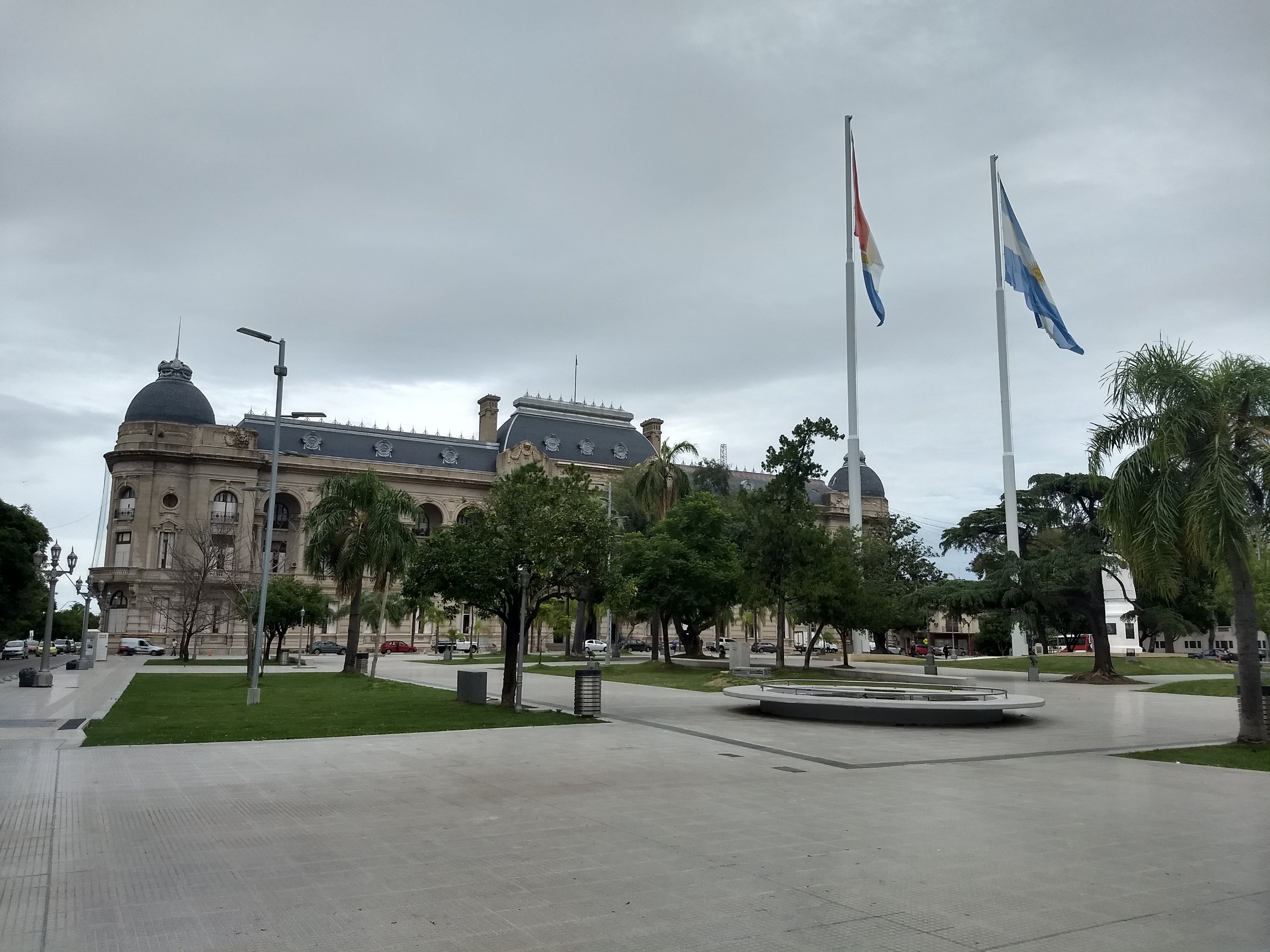
Santa Fe is the capital of Santa Fe province, the location where the first national constitution was ratified (1853) as was the first Alfajor (the Argentine national cookie) was created (1861). It is the 9th largest city in Argentina with a population of 500K as of 1010. It is hard to tell whether the city’s best days are behind or ahead.

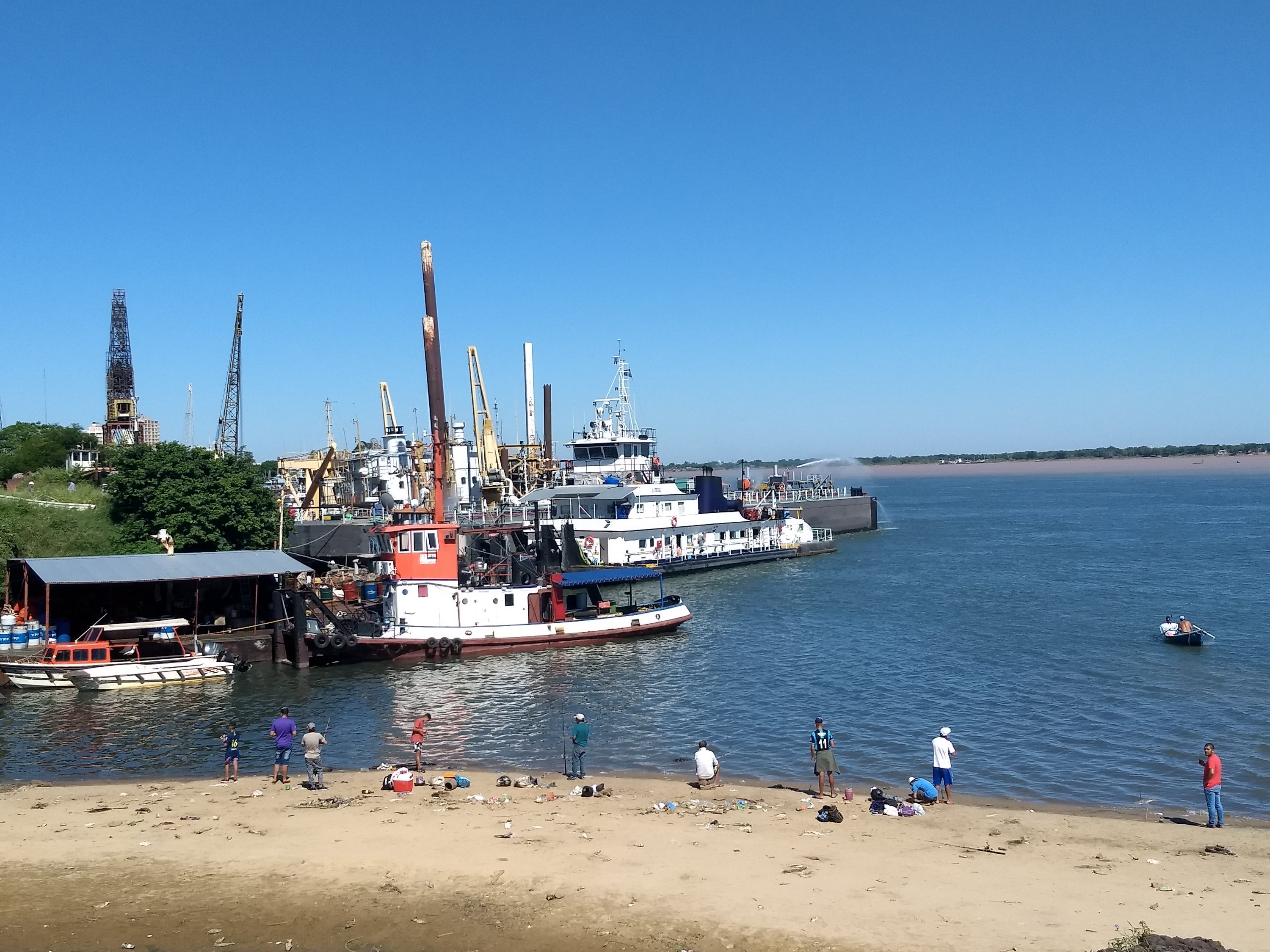
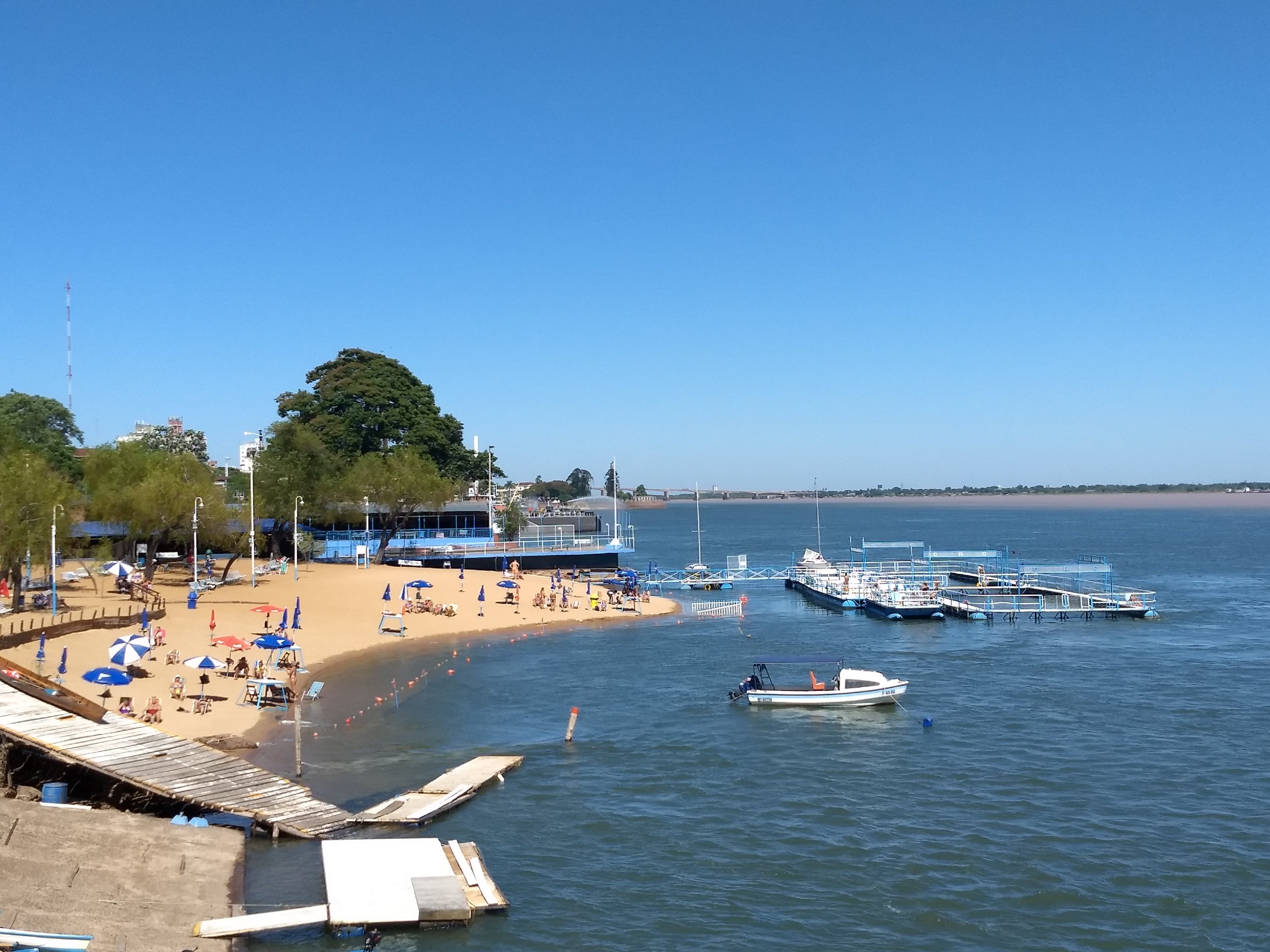
Santa Fe was founded in 1651 near the confluence of several rivers: Rio Parana, Rio Salado, and Rio Santa Fe. Traces of it colonial past remain and it appears considerable effort is being expended to reverse the inertia of decay. Refurbishing of some colonial structures is underway and tall modern apartments are under construction. Yet the beaches on both sides of the river, which have turned to weeds and layers of trash, serve mostly as fishing spots. The Costanera (promenades) remain undeveloped.

We are staying in a old hotel on the major commercial street highlighted by a peatonal (pedestrian walk way) lined with high end clothing stores, cafes, and collapsing buildings. It is fairly quiet, though that may have a lot to do with our tendency to arrive on a Sunday when many businesses, museums, offices, etc. are closed.

We have enjoyed our stay here, given the closures, walking the various neighborhoods and imagining the city as it once was. Many of the old facades retain their elaborate ornamentation.

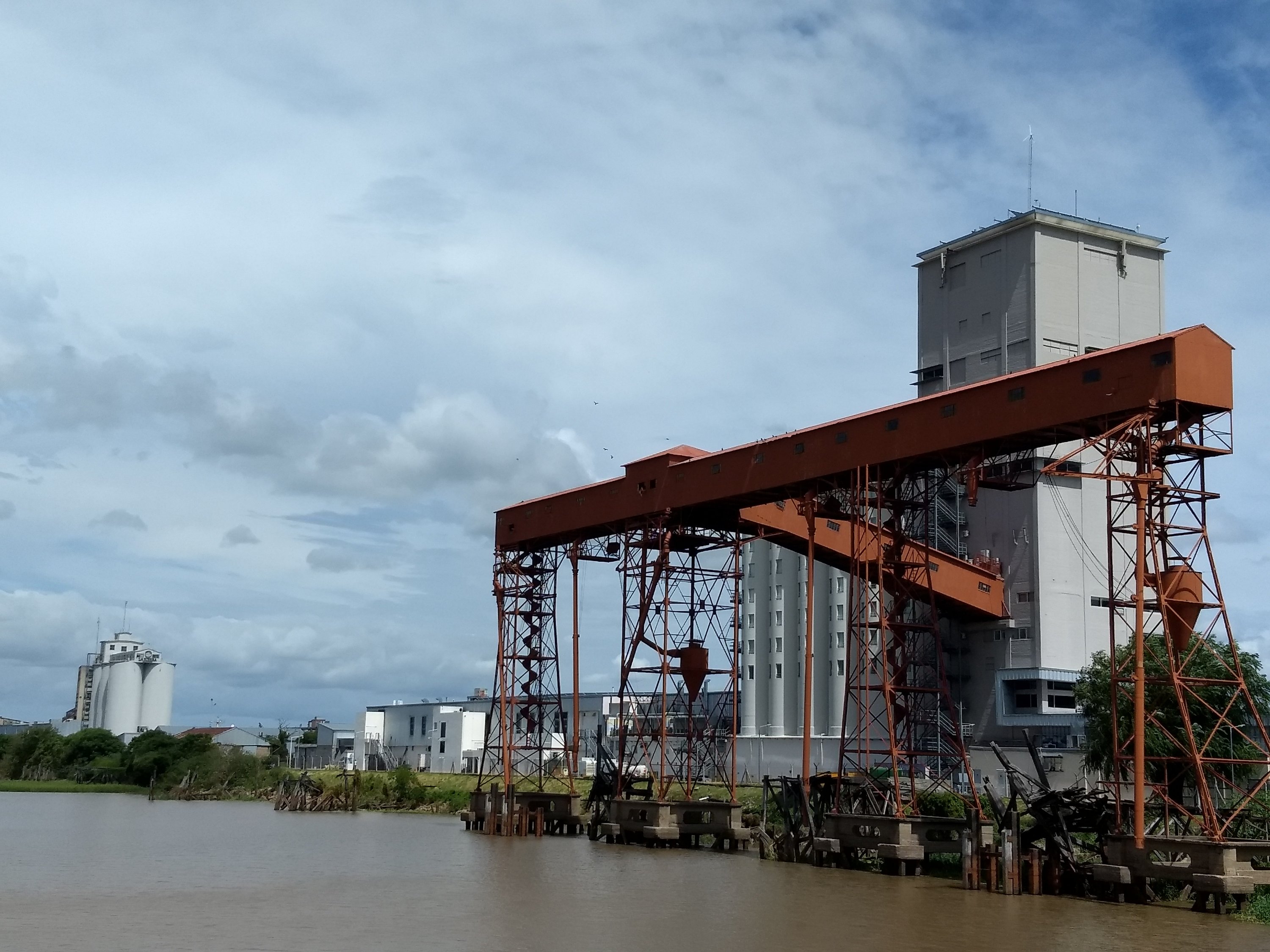
Here is an old grain storage silo complex that has been restored to a modern luxury hotel and Casino. The rooms are round, we hear. We tried to take an elevator to the rooftop deck, but after going to the second floor could go neither up nor down and had to take the emergency exit to get back to the ground floor. Security met us at the base and gave us pretty clear directions about how to leave the property.

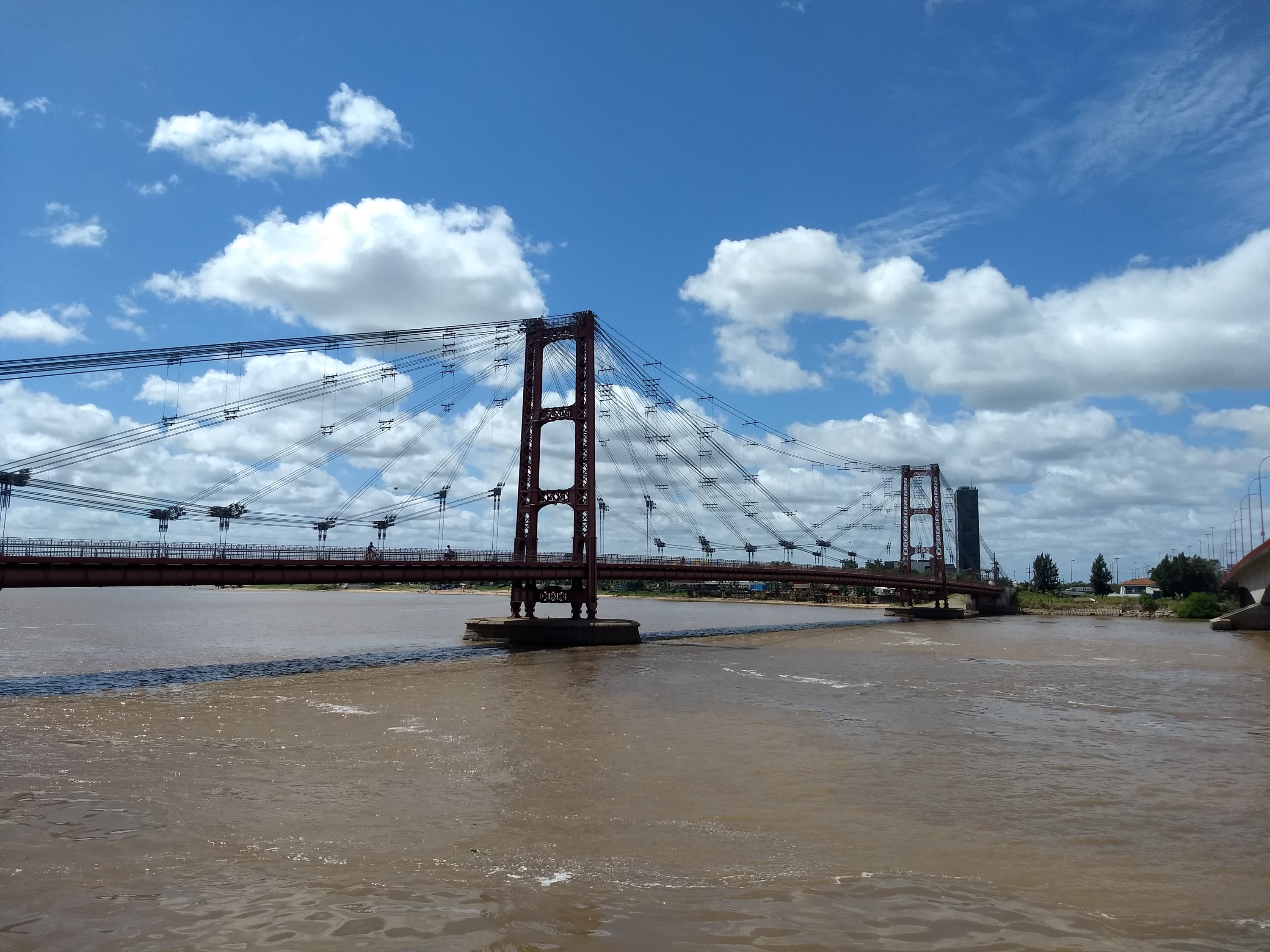
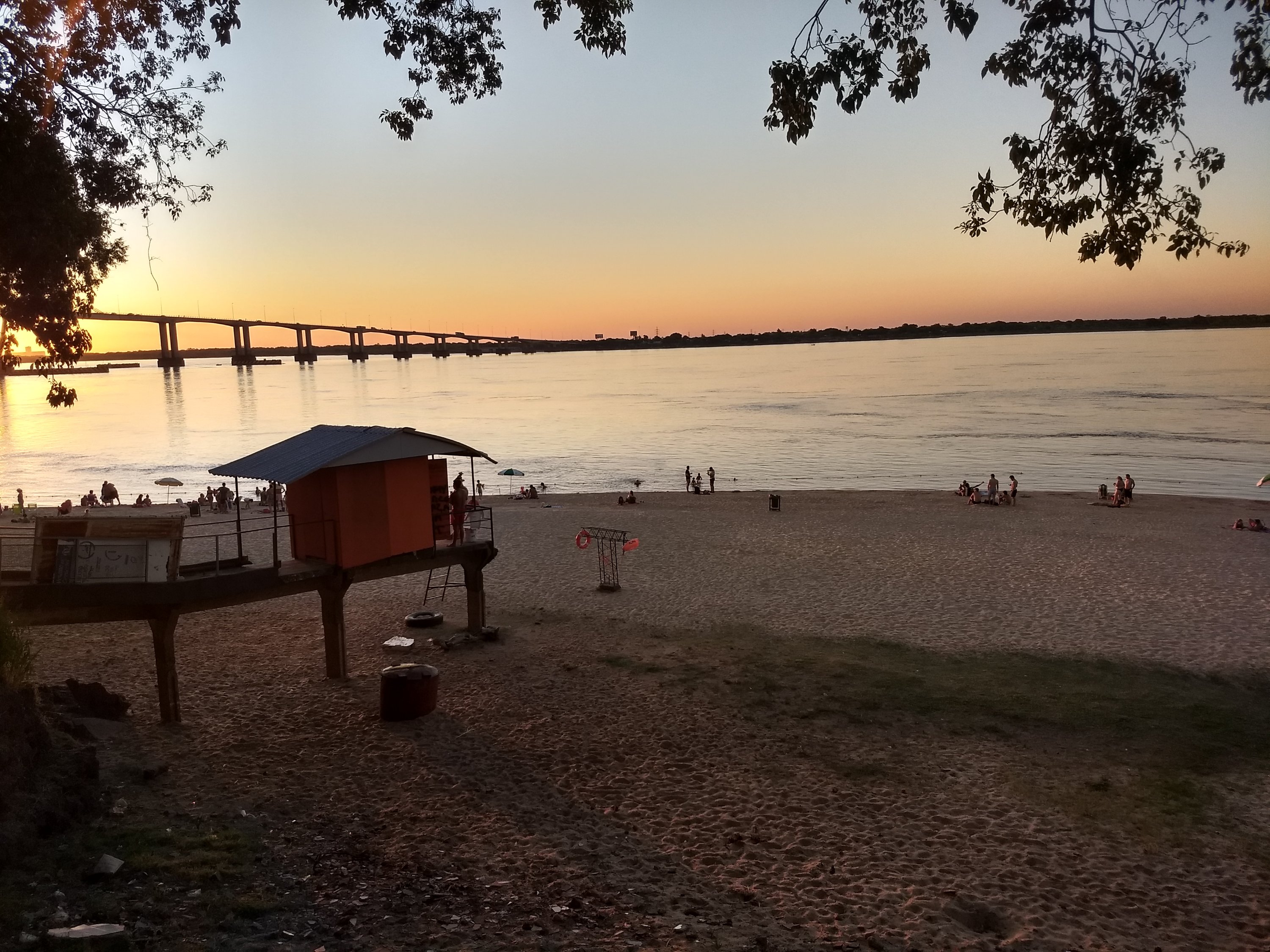
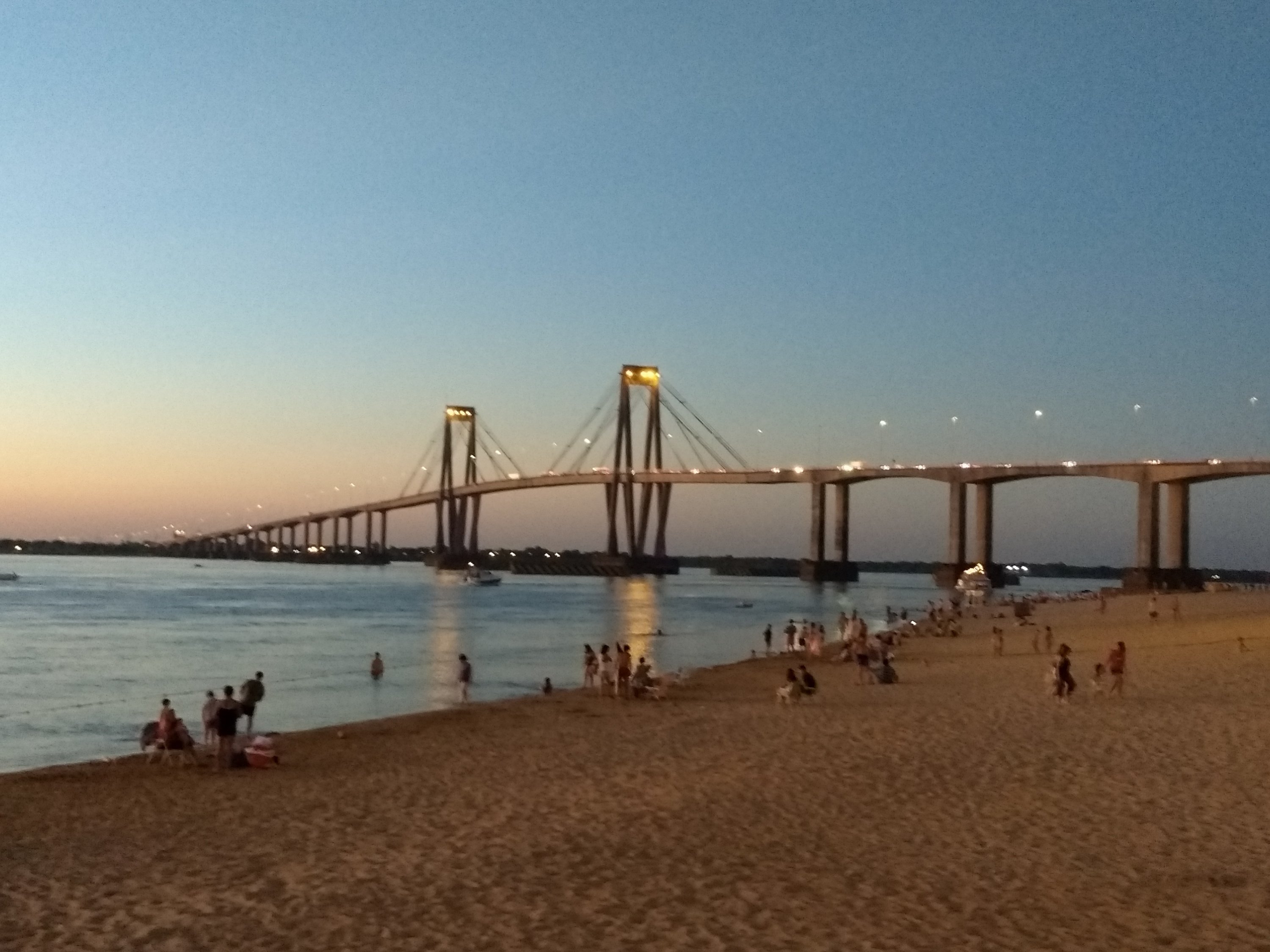
An old suspension bridge is still used, though a modern multi-lane concrete structure is immediately adjacent. We walked across to the east side of the river and had lunch in a restaurant that had an enormous menu but would only take orders for a handful of options.

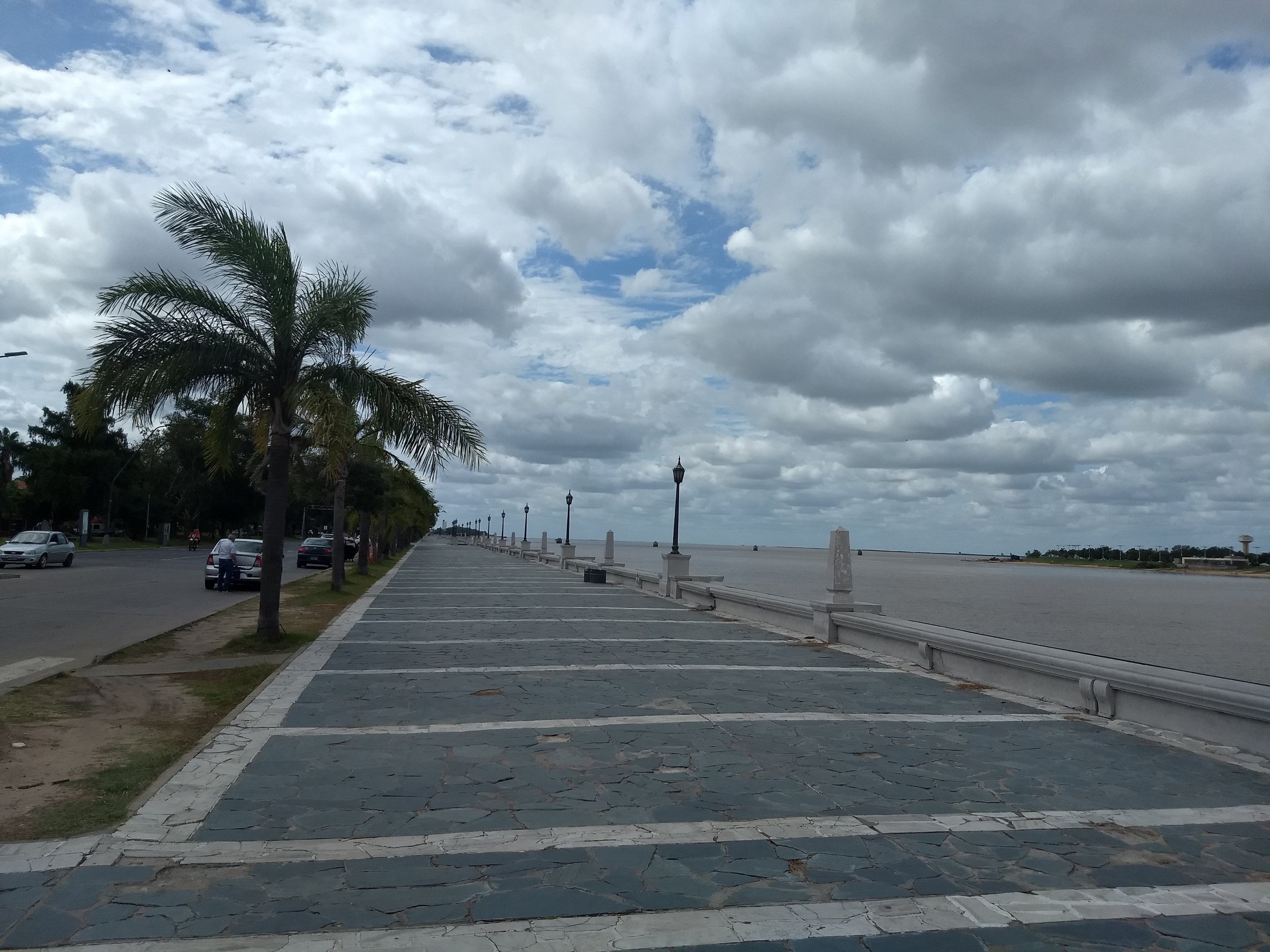
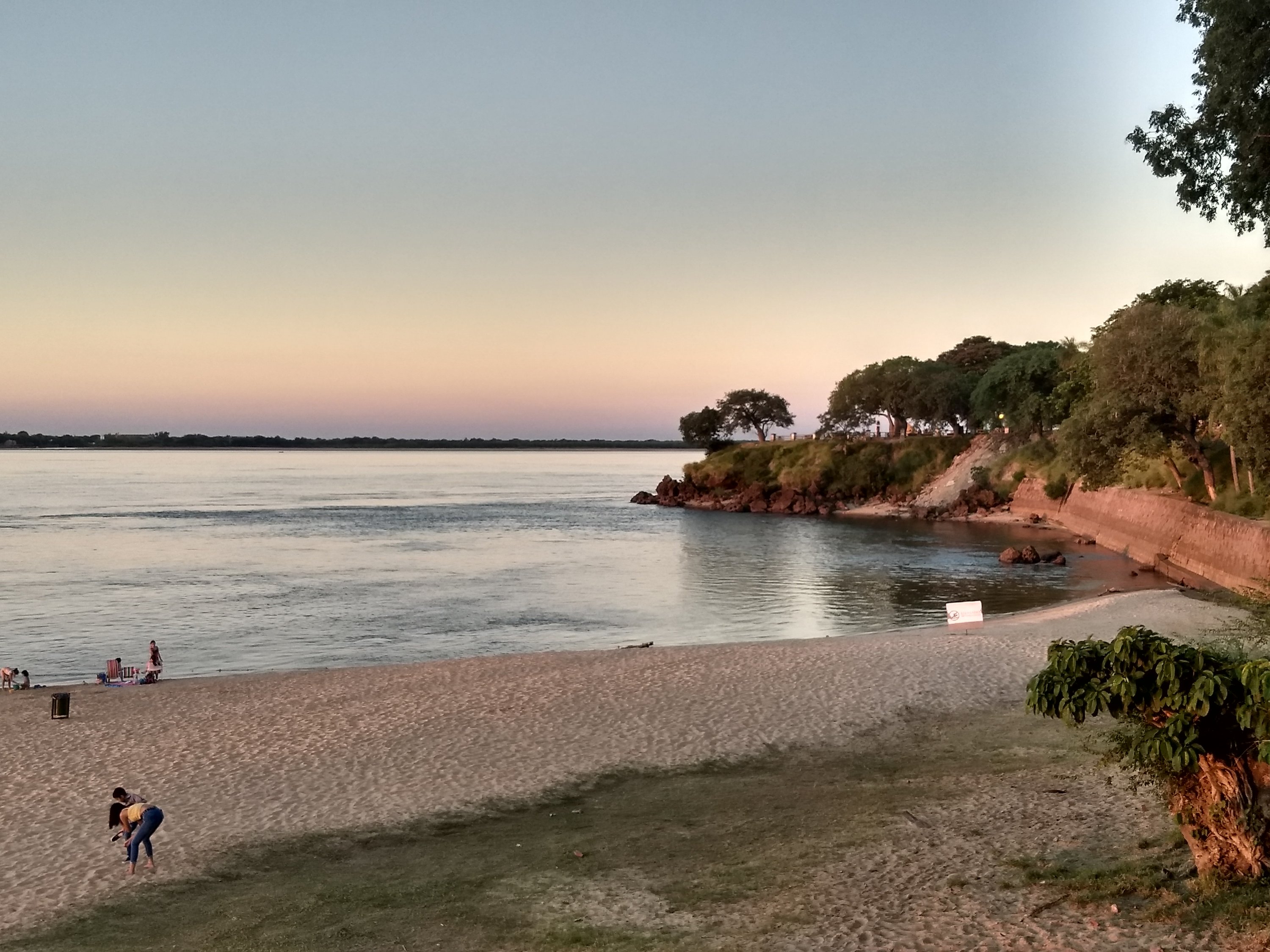
The Costanera provides a gathering spot for families and fisherpersons, though none are apparent in these photos.

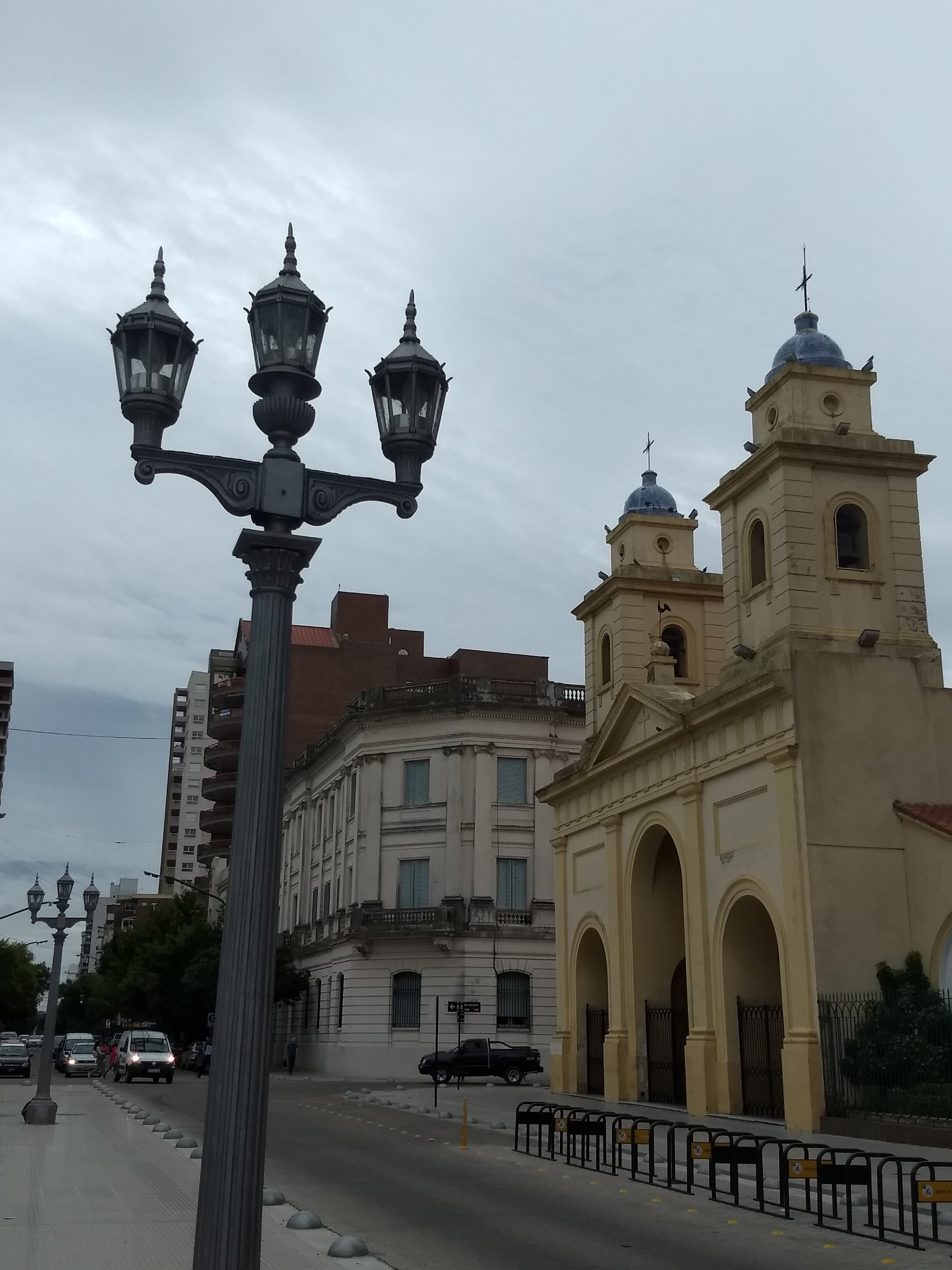
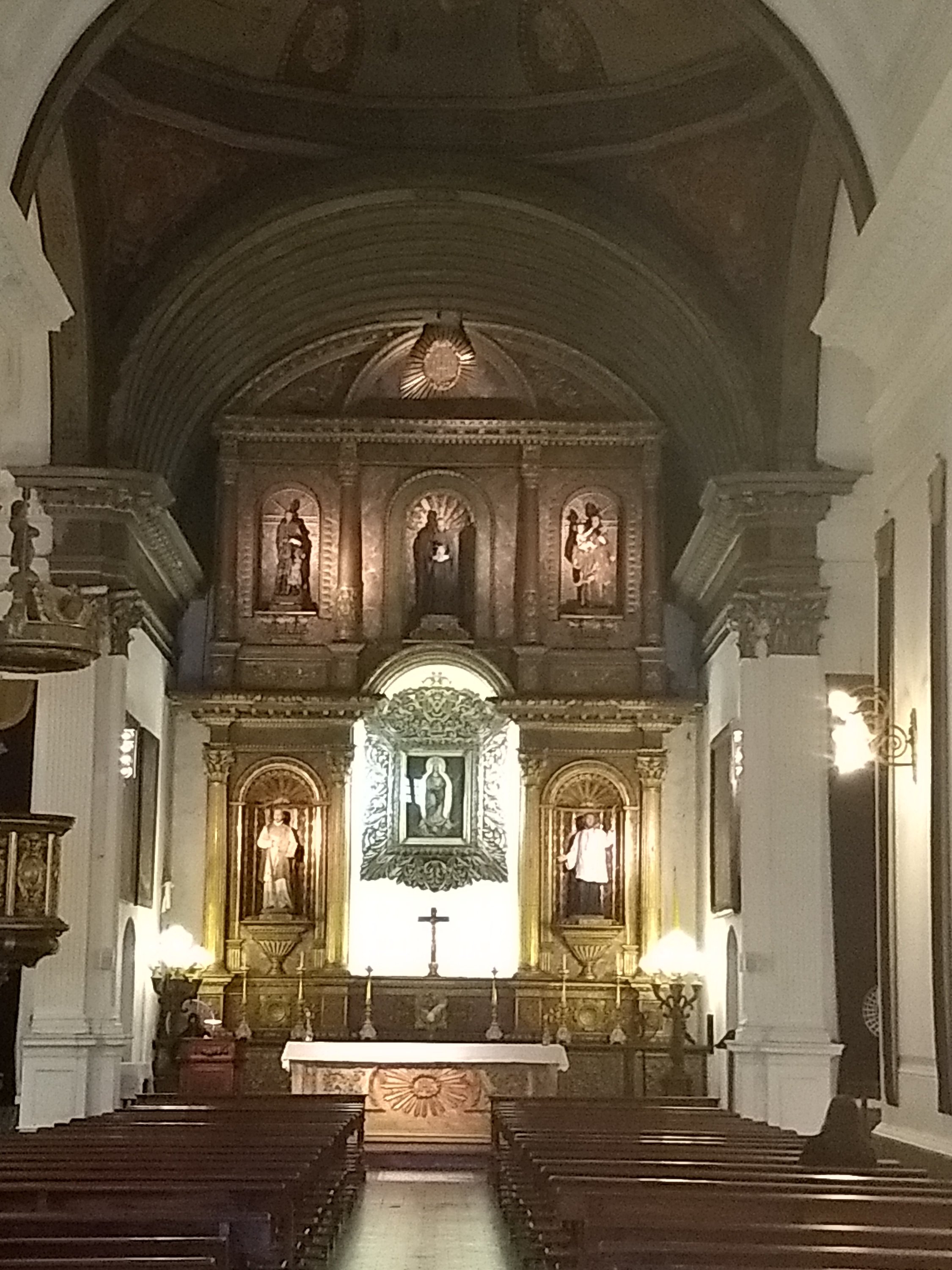
The Plaza 25 de Mayo has been in use since the 16th century, and some of the buildings, including the Iglesia de Compania, date to the 17th century.

We are in Santa Fe as an intermediate stop on our return home. We arrived yesterday morning after nearly 24 hours traveling from Puerto Iguazu, our farthest destination from Buenos Aires. Tomorrow we take a seven hour bus ride to BsAs where we have only three items on our agenda: buy clothes suitable for the opera, attend an opera at Teatro Colon, and catch our flight on Thursday evening.

Paula and I will be spending some time in the next three days catching up on our blogs and sharing some of our experiences for the last weeks. We have fallen way behind.

Charlie

Corrientes

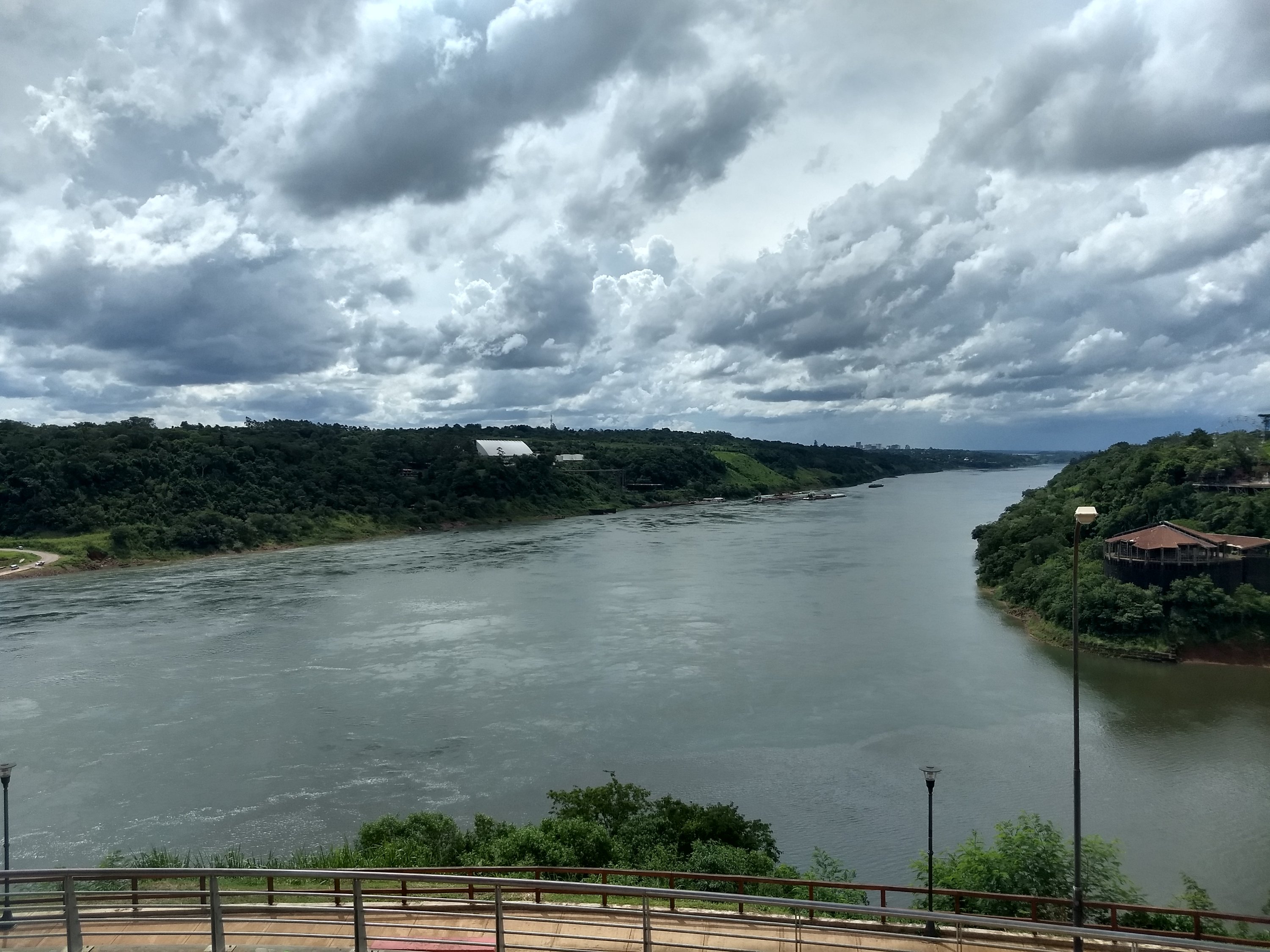
Corrientes is the current name of the settlement called San Juan de Vera de las Siete Corrientes (Saint John of Vera of the Seven Currents), a name that references characteristics of the Rio Parana. The citiy is located near the northern boarder with Paraguay, just below the confluence of the Rio Paraguay, which forms part Paraguay’s southwestern border, and the Rio Parana, which is the southern boarder with Argentina. The population of Corrientes was 346,000 in 2010, making it the 13th largest city in Argentina.

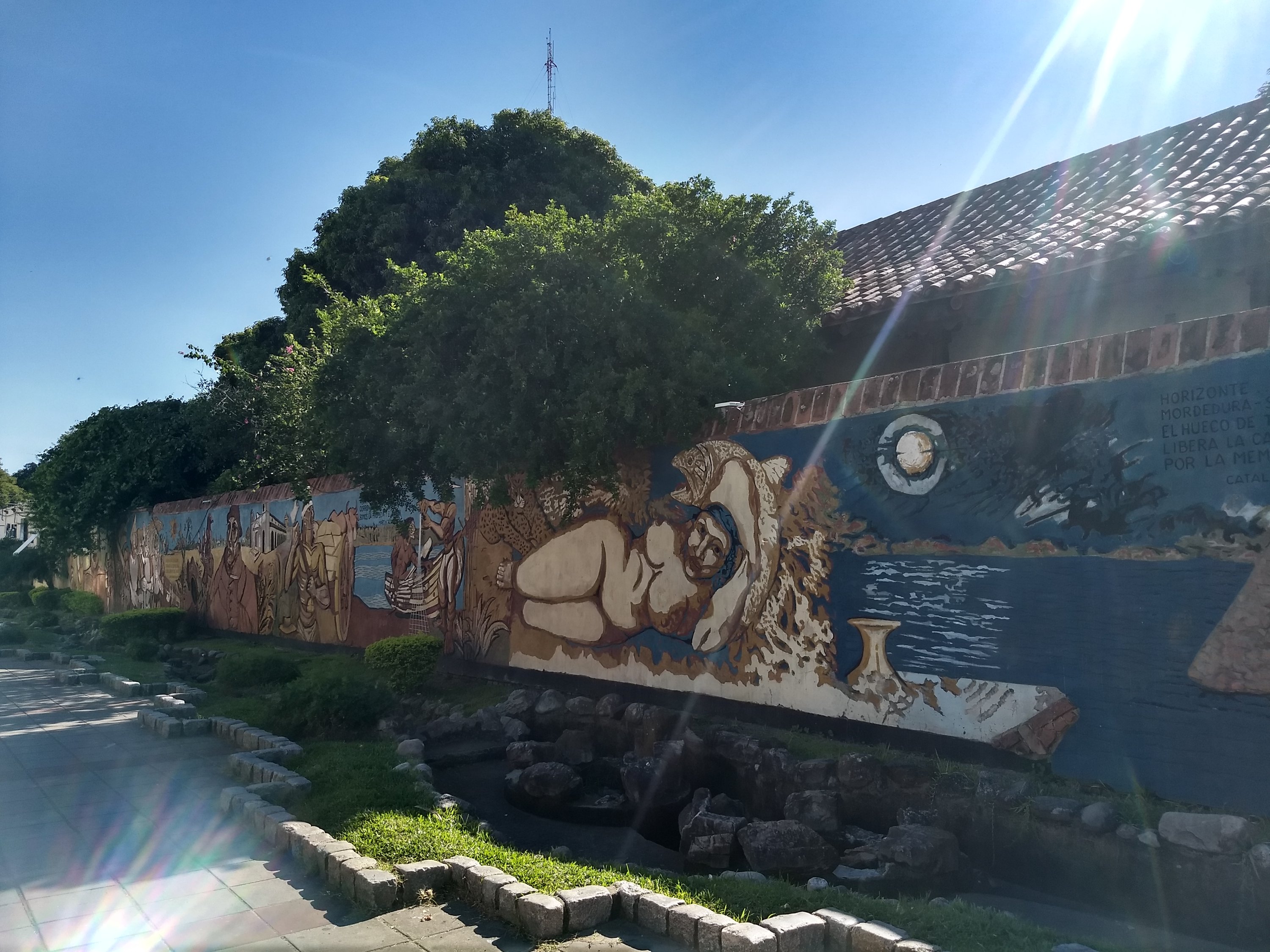
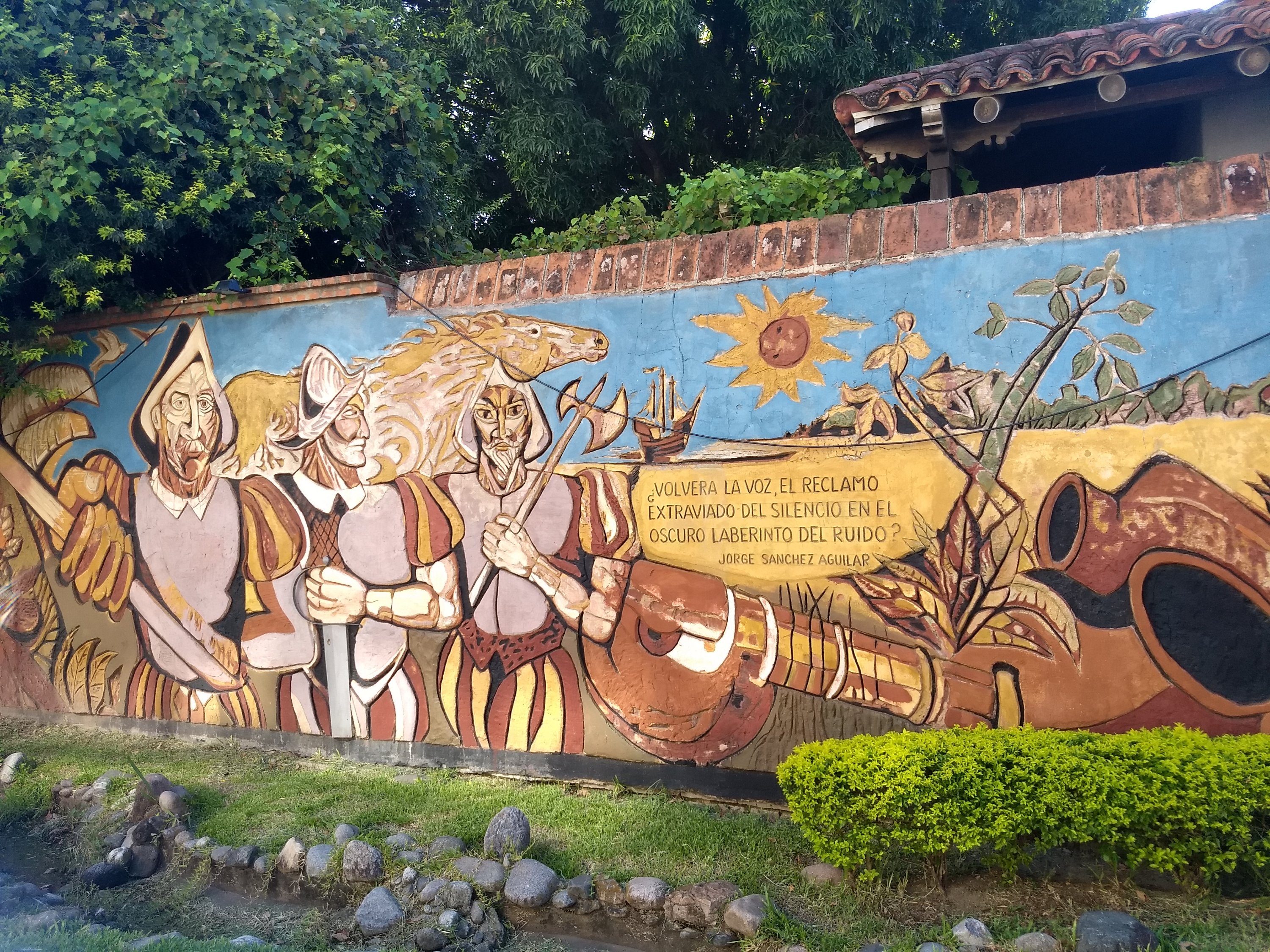
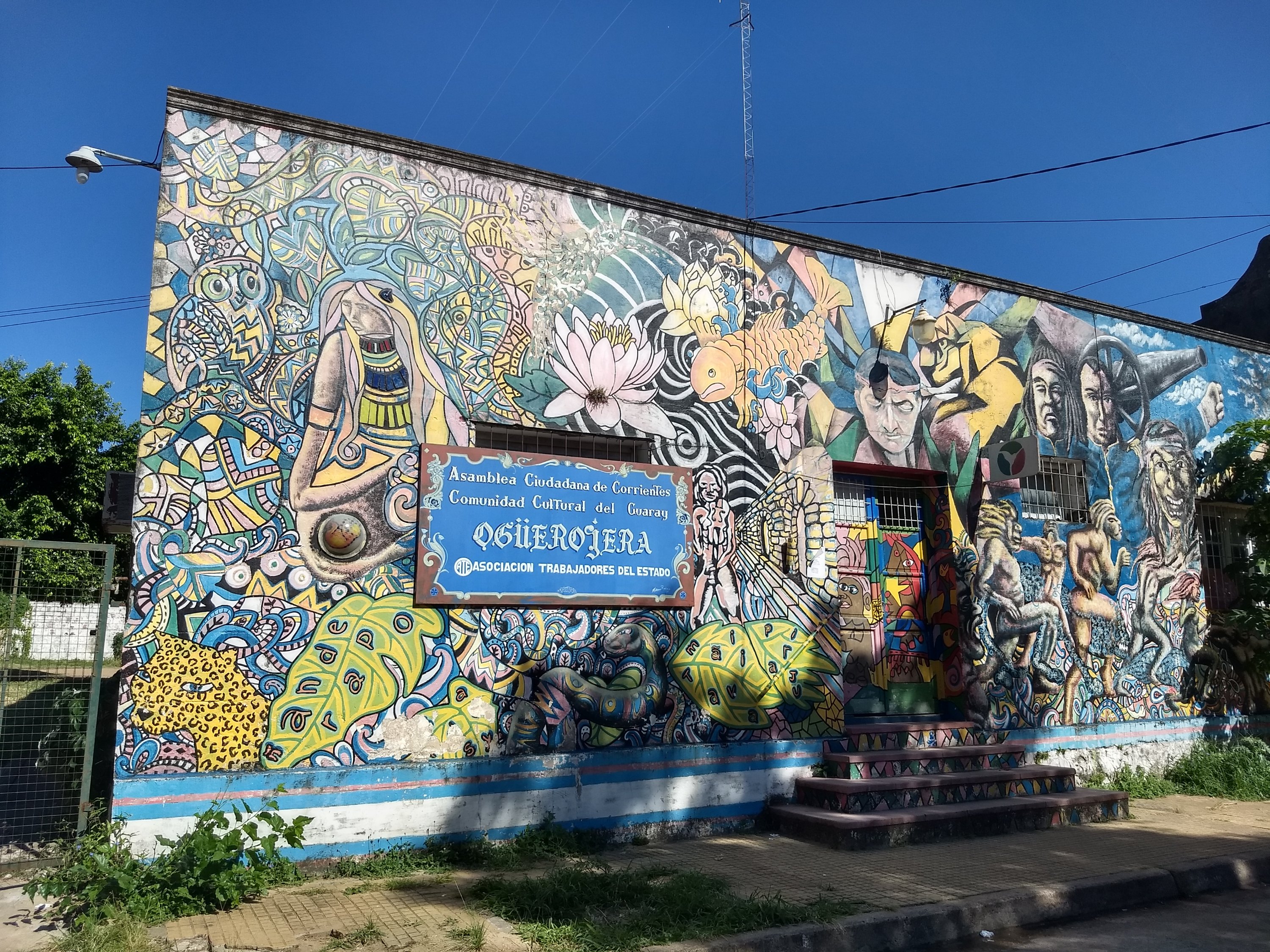
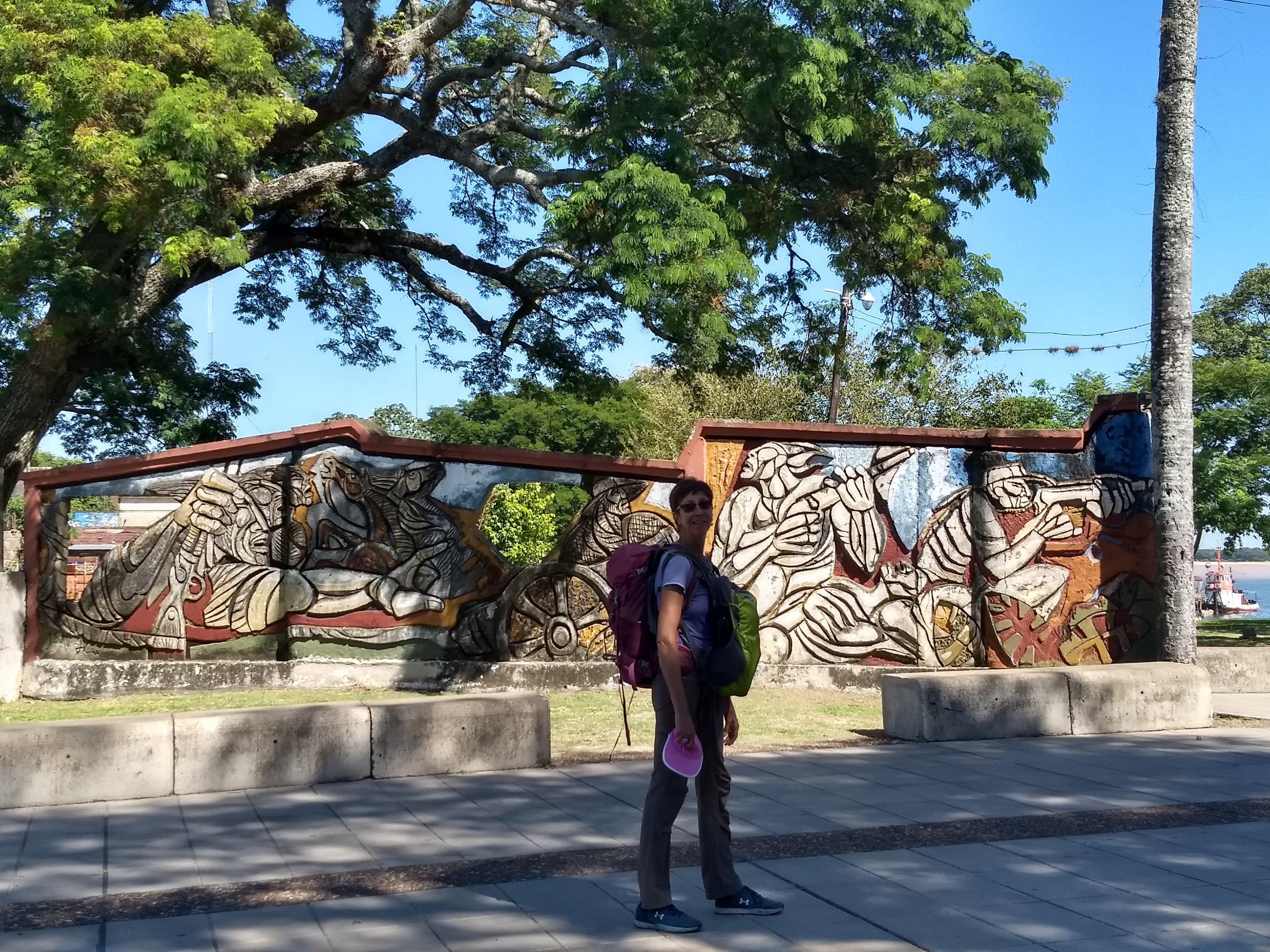
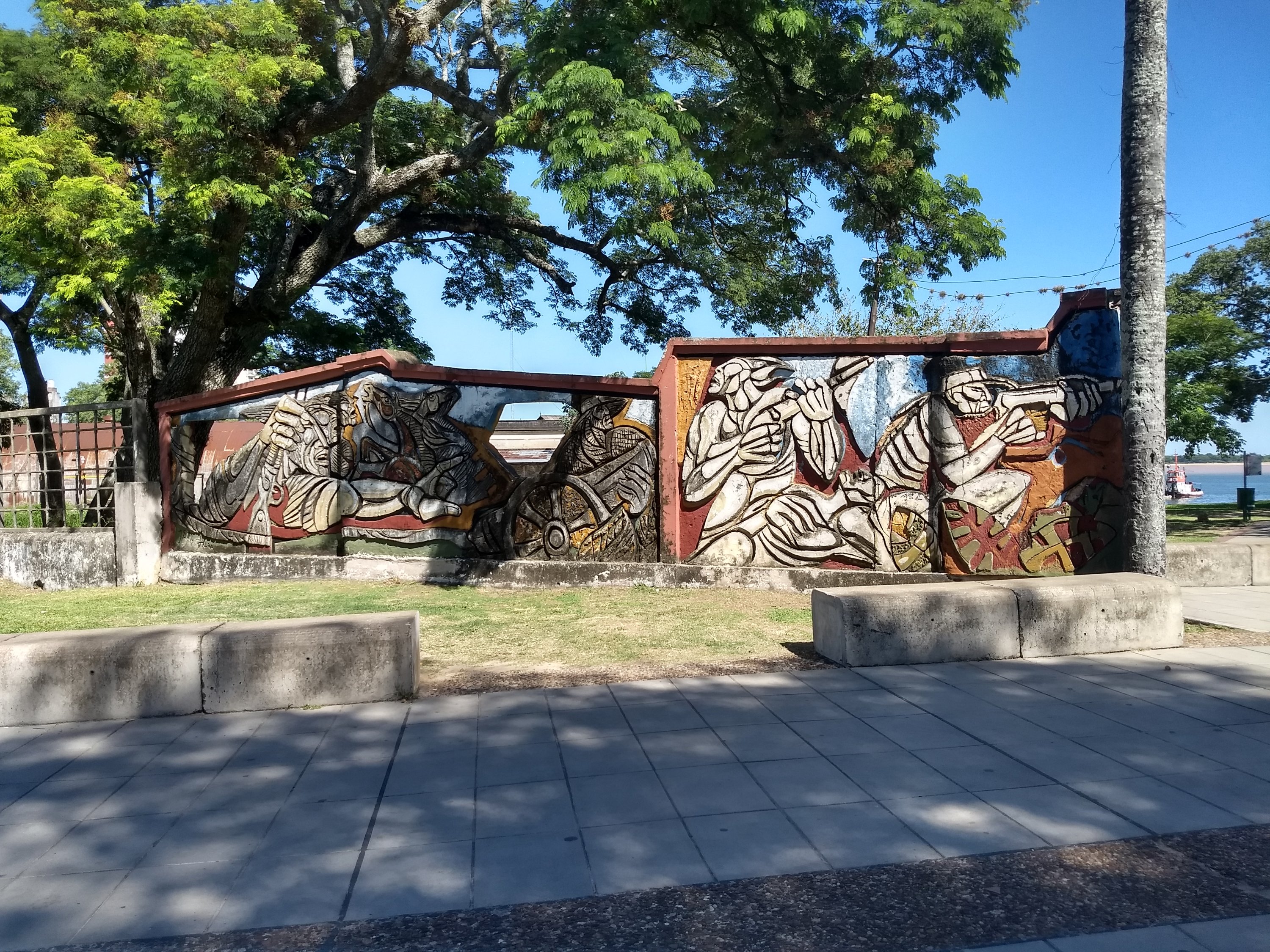
We arrived yesterday on the overnight bus from Tucuman and spent the day mostly getting settled in. Our apartment was not available until 11:30 so we had nearly four hours to spend wandering our way towards our temporary home. After breakfast and coffee we decided to check out street art murals in a somewhat circuitous path.

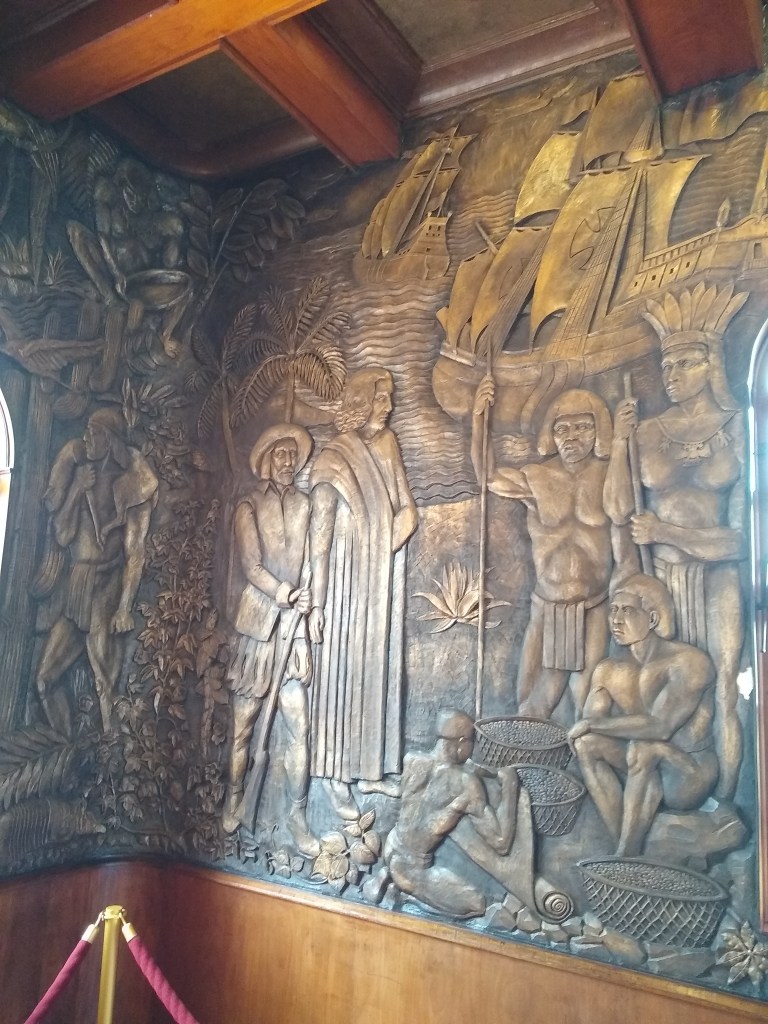
These murals are bas relief and are representations of various cultural and historical elements of the city. Here are images of a few of the murals.

We are not really familiar with the history of this area and have found little current information in English. The area was colonized by Europeans in the early sixteenth century and has been subject to various disputes, originally with the Guarani indigenous population, and subsequently the Portuguese, English, and Paraguayan incursions. We are assuming these murals reflect elements of that past.

Although we were not particularly touring at this point, we did check out some of the beaches and cooled our heels in Parque Mitre, named for the former Argentine president who was an important general in the war of independence from Spain.

After checking in to our apartment we made a quick foray to the nearby markets to stock the kitchen and then settled in for a few hours to escape the heat of the day and catch up on our sleep a bit.

In the evening we roamed the Costanera, which is a promenade along the river on the north and west sides of the city. It was a wonderful, peaceful walk during which we decided to extend our stay here for an extra day.

We are here for Carnival. Corrientes calls itself the “National Capital of Carnival” in Argentina, though most people we have spoken with think that honor should belong to Gualeguaychu, which is on Rio Uruguay a couple hours north of Buenos Aires. We were expecting a city “painted in color” for the Carnival, but for now all we have seen is a couple of booths selling tickets for the events at the sports park twenty minutes east of the city. We bought our tickets for tonight, and will be leaving the apartment at 6PM for the show that will run from 9PM until 6AM tomorrow. We are going to try once again to see the whole show, which we understand gets better and better through the night.

We will be posting about Carnival de Corrientes tomorrow.

On the road

We are at the bus station in Tafi del Valle waiting for the bus to San Miguel de Tucuman where we will transfer to the overnight bus to Corrientes.

Well be out of touch for the next tent four hours.

We received a request to provide more information and context to our posts and will do that. We’d like to broaden the I invitation to anyone to reading that we will be glad to answer any questions or present specific information upon request. We are promised good internet connection in Corrientes

Right now, however we are on 2g data network with limited bandwidth. We’ll be in touch.
Charlie

Charlie

Tafi del Valle

It has been a relaxing couple of days in Tafi de Valle. The fiesta ended early Monday morning. After restless sleep as the final six hours of amplified music played from the concert stage a couple hundred yards away we arose, ate, napped, walked, napped some more. Paula has posted what that day was like.
The town center had a feel of a Monday on a holiday weekend as families departed the cafes and shops, loading their cars and drving away. The town became quiet, and although there were still young people playing music in the streets, a calm was descenting on the town. The quiet was amplified when we realized we were the sole remaining guests at our hostel. Even the proprieter bundled up his family and departed, leaving us in the care of a caretaker.

Monday was a rainy day as was today. Although it seemed the Sun was trying to break through, the clouds would close up and the air would become misty. There were intermittent showers and in the evening the rain came steady and hard.

And it has gotten cold. The lows at night are in the 40s and highs barely get above 60. It is like an early fall.

Tomorrow we are taking a day trip to Cafayate for wine tasting and touring. Cafayate is slightly lower in elevation (Tafi is about 2000 meters) so it will be warmer. On Thursday we depart to Corrientes where we will be spending 4 nights for Carnaval. We were warned today that it will be hot and humid. I’m already looking forward to it.

I’ve not much to say about Tafi that Paula has not already said, but here are a few photos of the surrounding area.

The National Festival of Cheese

This post is disjointed and rambling, but if I do not post it now, I will edit it to the tone of a business memo and you will be deprived of my overpowering wit.

I mentioned that the 50th annual Fiesta Nacional del Queso was underway when we arrived in Tafi del Valle this weekend. We had not expected a festival this weekend and had just assumed we would encounter normal weekend conditions. The first we heard about it was from our taxi driver who advised us that our hostel was on the outskirts of town, but it is close to the main celebrations of the Fiesta. We found out later that “close to” means within 250 yards.

Paula had read about this Festival and was under the impression it had already happened for the year. She was disappointed, but I could not, for the life of me, understand how to make a five day festival out of cheese. “How much can you celebrate cheese?” I asked. Hearing that there would be all sorts of cheese from cows, goats, llamas and alpacas did not do a lot to pique my interest.

As we walked to the hostel from our earlier quest for cash (see yesterday’s blog), we took a shortcut along a narrow, circuitous road. We encountered a flat bed truck driven by a man who was also seeking a shortcut, and the truck appeared to be a parade float. The driver advised us that there would be a parade outside the festival grounds at three o’clock. We are suckers for parades, though I have tempered some of my enthusiasm agreeing to go to parades only when it is not an election year. This fortuitous encounter seemed an invitation that could not be ignored, so we walked directly to the sports field and bought tickets.

We did not immediately enter the grounds, preferring to wait outside the gates along the appointed parade route. We noted a significant lack of evidence of anyone waiting for a parade. A woman told us the parade would be at 5 o’clock so we went to the hostel and freshened up. We returned to the fiesta grounds a bit after 5 and since there was still no evidence of a parade we entered the fiesta grounds to see what was available.

Touring the grounds it was clear that there was plenty of cheese of many varieties. As we were to find out later, substantial cash awards awaited many of the cheese makers. It soon became clear that the festival was only nominally about cheese.

The festival is a celebration the unique Argentine culture that emerged from the same economic and cultural conditions that gave it its cheeses. It is a celebration of the gauchos and the estancias. It is about horses, cattle, sheep, wine, music, dance, family and community. In the course to two evenings we witnessed, and in some ways shared, this celebration.

Immediately inside the gates we entered the area where the competitors in cheese making were set up.

It was difficult to get a good photo since the stalls were actually much more packed than the above image. After tasting a few items we went deeper into the park, past the amusement rides and came across an Argentine rodeo, where men dressed in traditional costume competed in riding and roping in front of an enthusiastic crowd. Around the perimeter, people sold beverages from coolers as young and old cheered the exploits on the field.

We enjoyed watching the show for quite a while and then decided to see what else was happening. That was when we noticed the parade was underway. It was a very slow moving parade, since each of the floats had a five minute demonstration for the judges at the grandstand. Each of the floats had active demonstrations of aspects of their heritage. Some were passing out food to the observers, including one float where an asadero was slicing generous servings of ribs right off the asador. We chatted with one woman who was planning to pass out servings of minced meat, pastry and other treats on behalf of a wedding party that was in the parade on horseback. We had met the newlyweds on the earlier portion of the route and were invited to a sip of a very flavorful spot of distilled spirits.

A few samples from the parade:

Nearly every float had a mujer vieja screeching a traditional song accompanied by an out of tune guitar and receiving wild applause. The emcee was enthusiastic, constantly calling on the crowd to show their appreciation, continuing to remind me about applesauce (aplausos).

As the parade neared its conclusion, the sound techs continued to set the stage for the main event for the evening –a music concert with local and national stars. Music is to start at 9 PM and as we waited we walked checked out the many asadores, wine and beer stands and other food stands.

As we surveyed the many options available, it was really clear that there was much more available than conceivably be consumed in the evening. We did our share, of course, but it did not seem there was, or would be, enough people in attendance to even make a dent.

That was before we understood the importance of the musical portion of the event. The concert began fairly close to 9, consisting of traditional music on traditional instruments. The performers were quite talented, and as the evening progressed the music, while retaining the traditional rhythms and cadence, took on a more contemporary feel. Around midnight the group we assumed were the headliners played a very powerful set. After about a half hour Paula and I began to succumb to the nearly 45 hours we had been on the move and decided to return to the hostel and get some sleep.

We were curious about why there were large lines at the ticket window when we left, with hundreds of people waiting for admission. Young mothers with baby carriages pushed their way through the growing crowd.

Our curiosity about why so many people were waiting to enter a concert so late in the evening was satisfied later. At 2 o’clock the music was still blaring into our window. As it was at 4 and 5 and 6. The concert ended about 630 AM Sunday morning. (for sake of brevity let me say the same thing occurred on Sunday night, though the music lasted until 730 AM this morning).

We returned to the fiesta Saturday night determined to last into the wee hours of the morning. Needless to say, we didn’t. In the effort we were amazed to find the attendence to reach levels we could not previously conceive. As we left the area about 1:30 the ticket windows were crowded and a line of mothers with baby carriages waited at the gates.