Stopping in Vienna for an overnight stay to catch a train to Czech village of Cesky Krumlov tomorrow morning.
Autumn arrived, it seems, before we got here. Time for the winter jackets to come out of the packs.

Stopping in Vienna for an overnight stay to catch a train to Czech village of Cesky Krumlov tomorrow morning.
Autumn arrived, it seems, before we got here. Time for the winter jackets to come out of the packs.
I’ve decided that pictures really are worth a lot more words than my words usually convert, so here is my discounted essay about a day in Zagreb, Croatia.
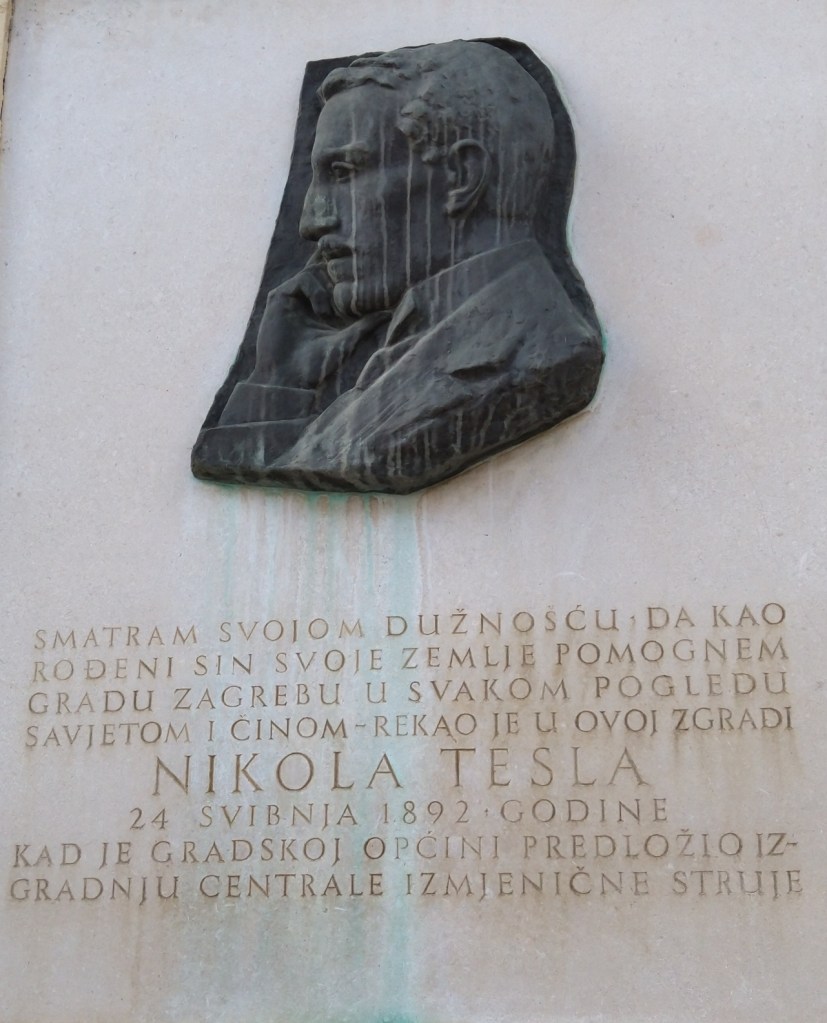
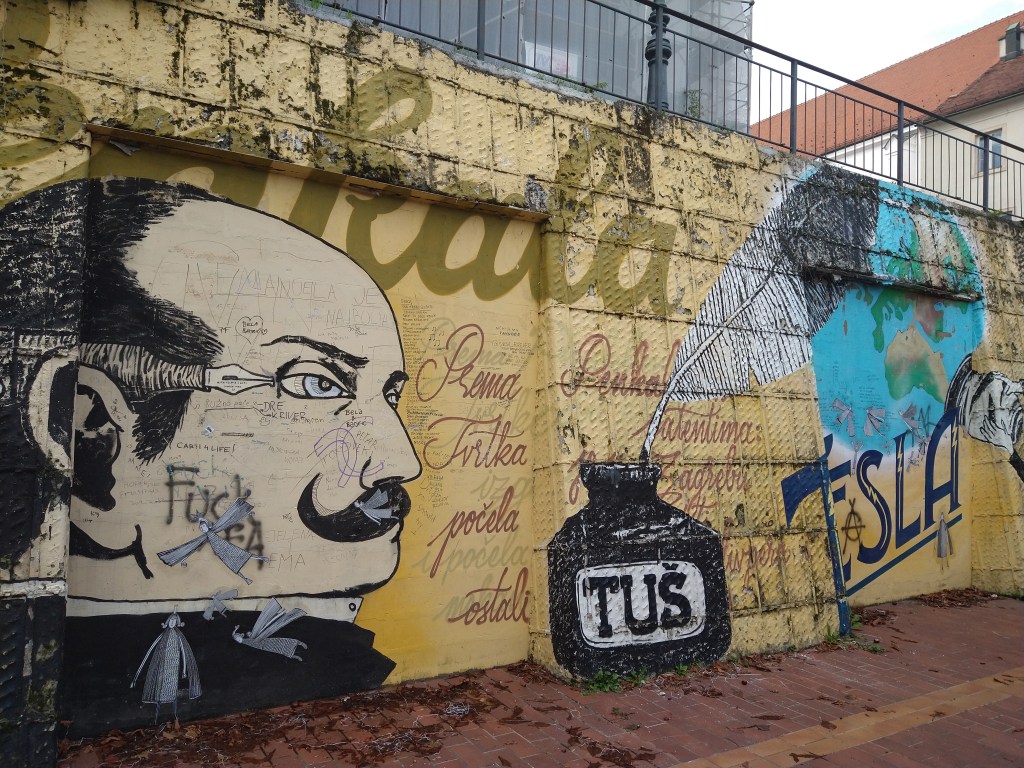
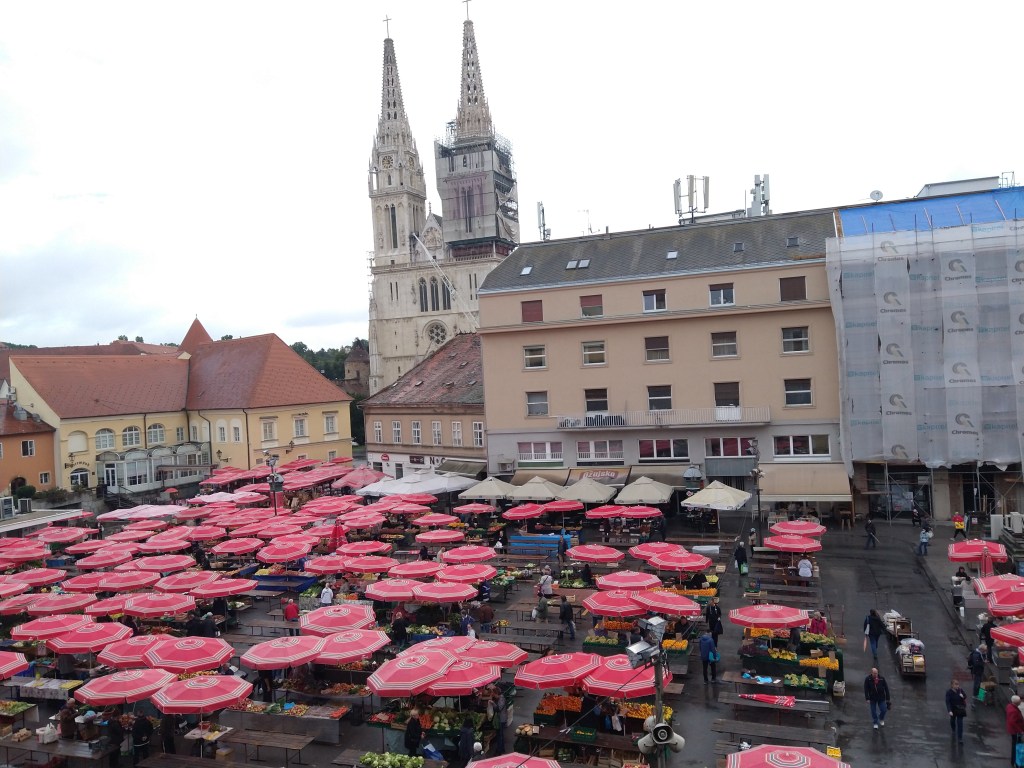
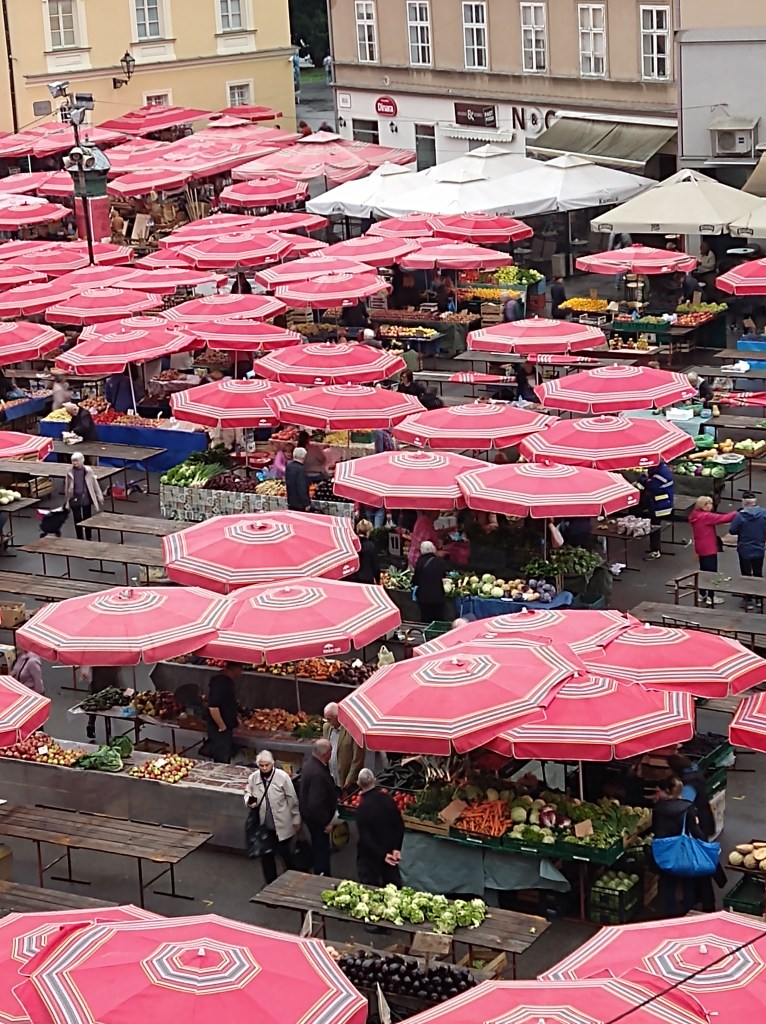

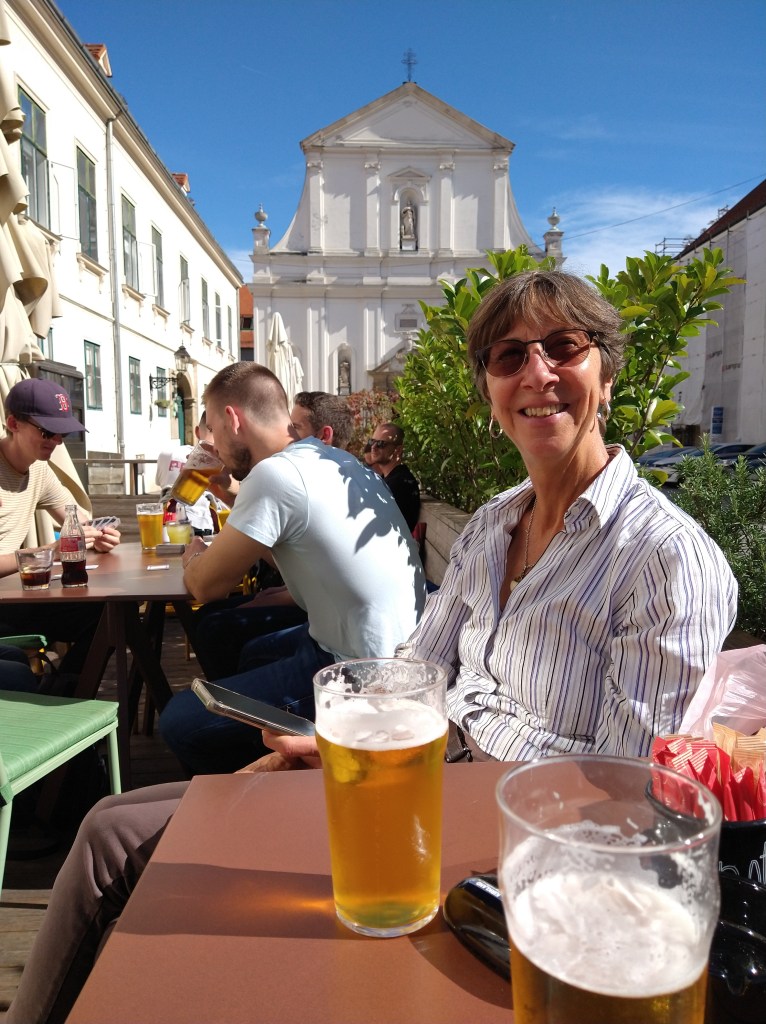
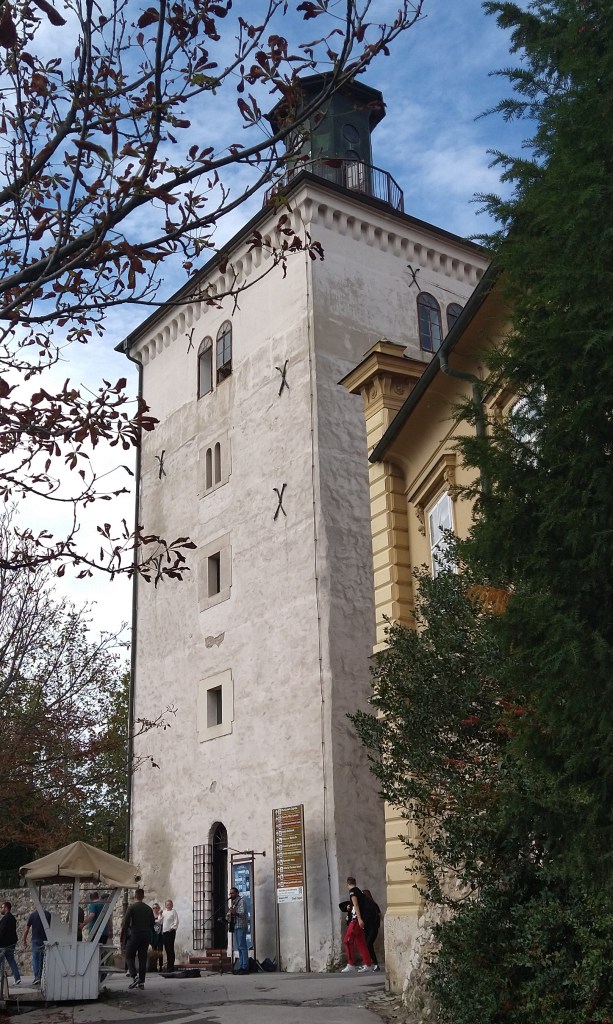
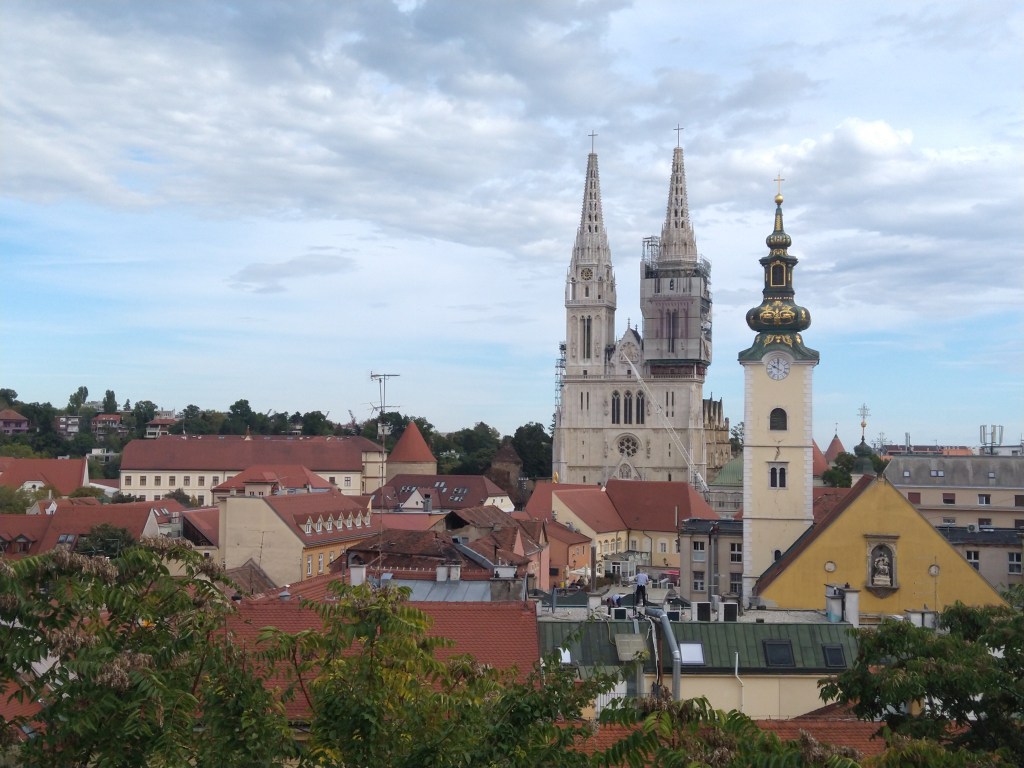

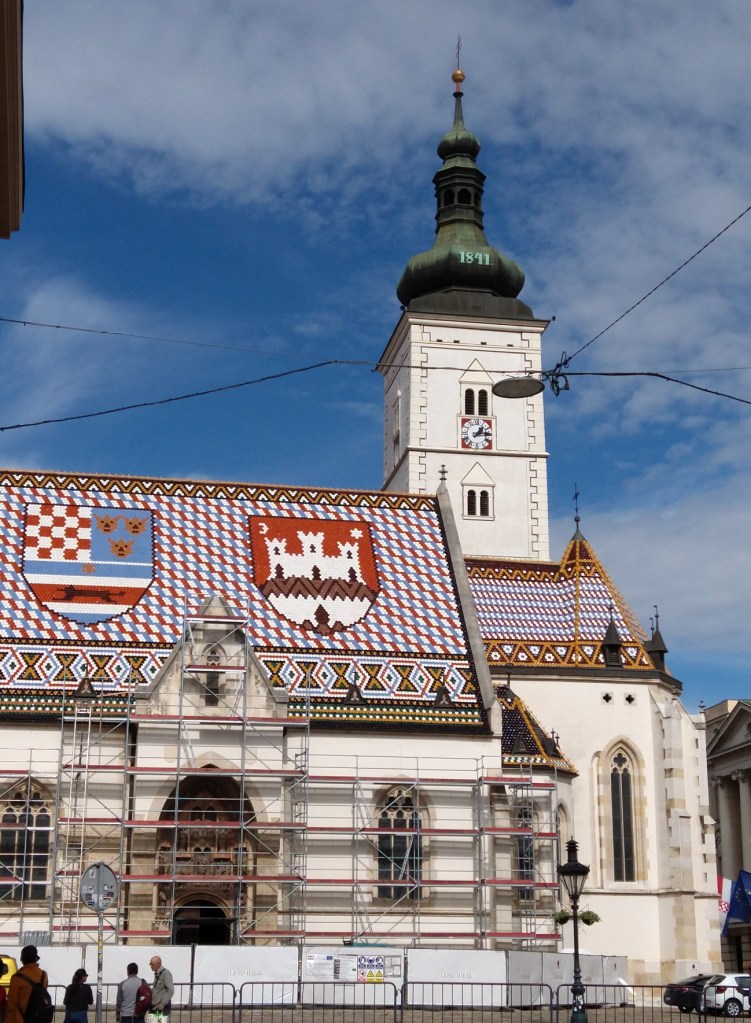

Which would you choose?
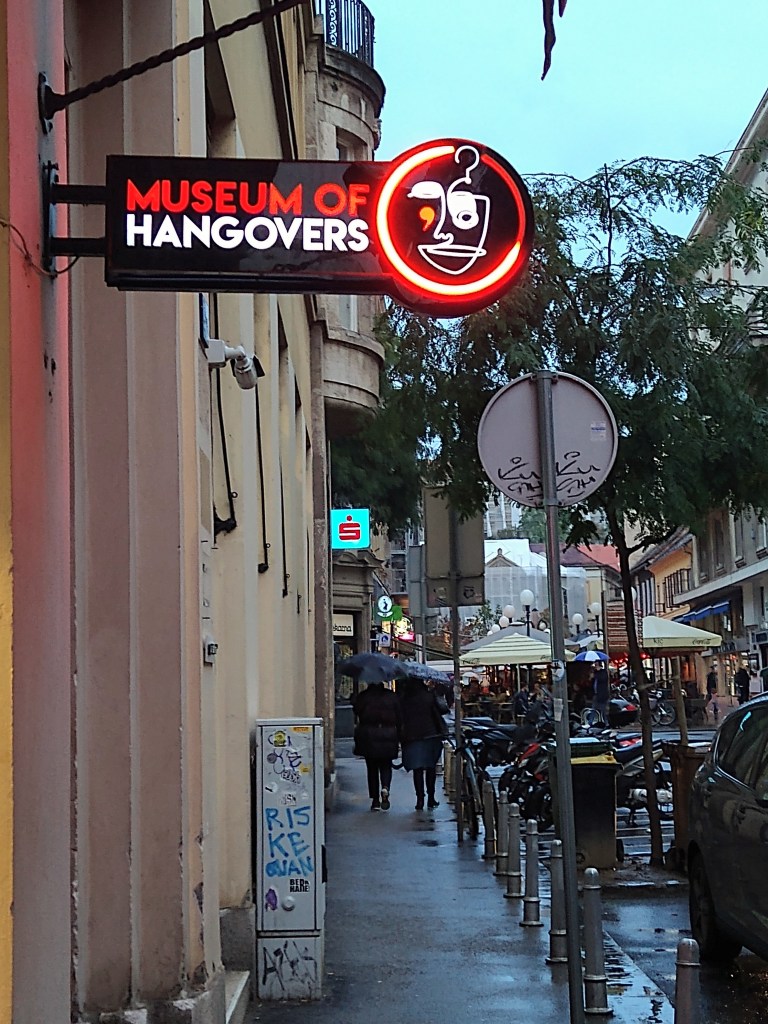
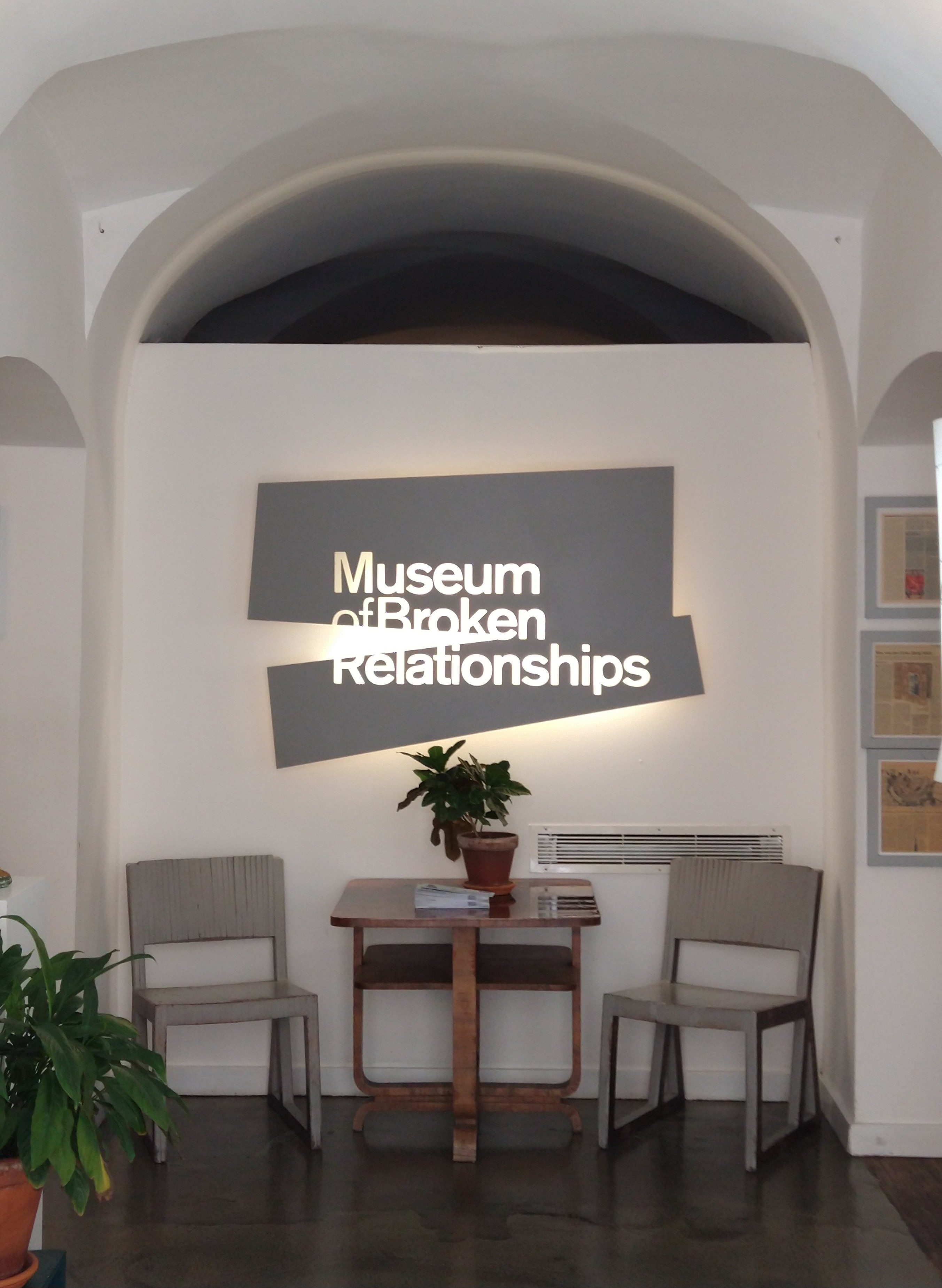
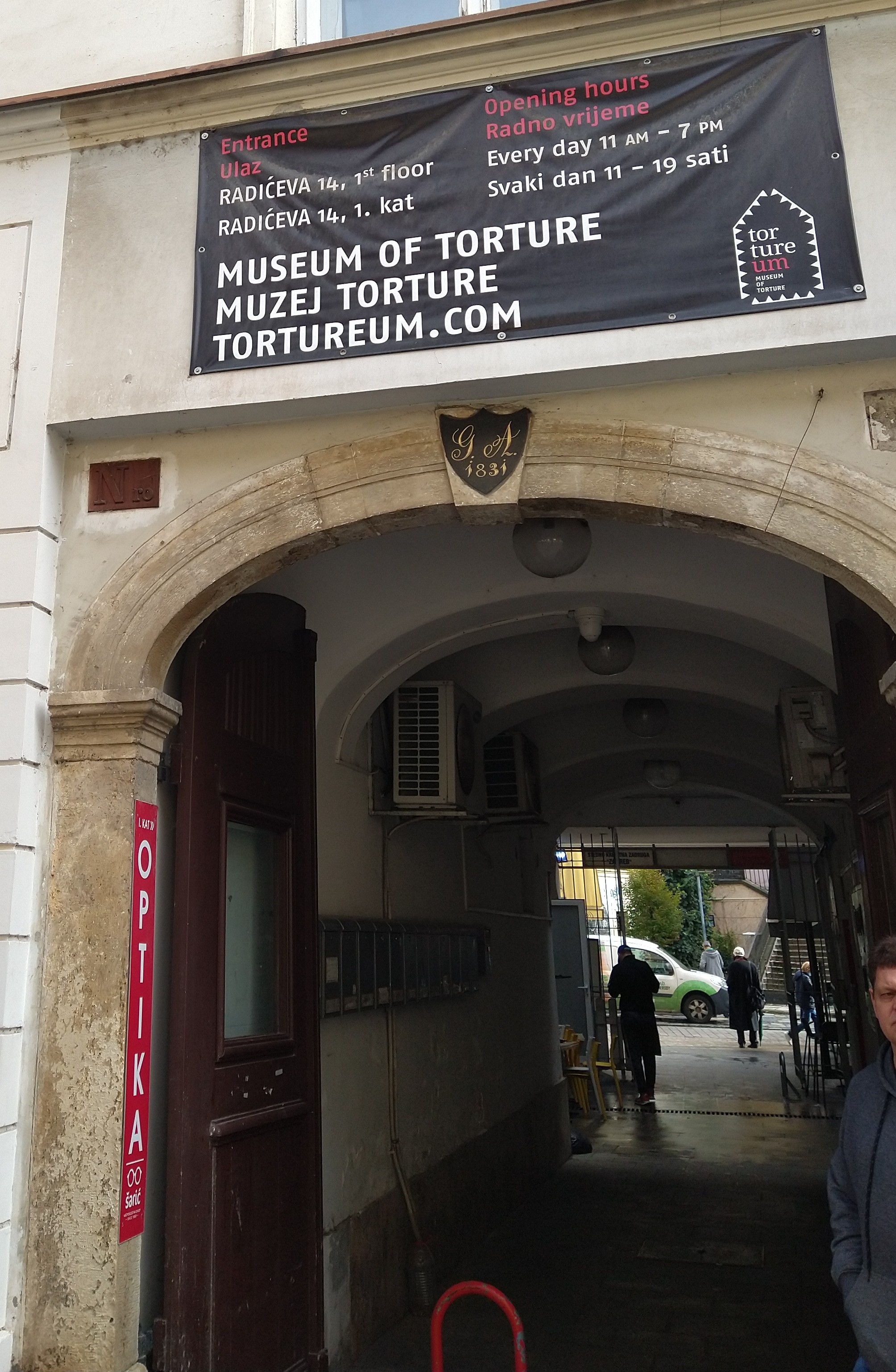
That’s what I thought.
While I was in Prague thirty years ago, newspapers were publishing the names of people who had been coerced into signing contracts with the authorities to provide information regarding matters of which the state had some interest. Jiri, my host, would show me the list in the morning, highlighting who were his neighbors and colleagues, and who were his cell mates when he was in prison for his crimes against the state. It was an interesting time to be in Prague as the nation was coming to acknowledge what Jiri called the “deformation” caused by fifty years of totalitarian rule.
I was attending the international conference of the Institute of Cultural Affairs, which is an NGO focused on organization and empowerment of communities. I would travel each day on the Metro, forty five minutes each way with two train changes, to reach the conference facility. I watched the fellow passengers sit in stone silence, eyes straight to the front, refusing eye contact and not speaking for the duration of the trip. I could sense the utter alienation of the citizens one from the another.
Many details of the conference are lost in the haze of an aged memory. Among those surviving is a reference made by the keynote speaker of the “parenthetical phrase” that started in 1917 and was now coming to its close. Our trip to the Museum of Communism makes me question whether the “close parenthesis” has yet been typed onto that page of history. The conditions described at the museum reverberate through time and many of the vibrations echo in the present and in my own country. As the statement mis-attributed to Mark Twain reminds us, history does not repeat itself, but it does rhyme.
The exhibit starts with a presentation on the origin of the Czechoslovakian state from the Austrian-Hungarian empire at the close of World War I, the birth of the Czech Communist Party and its growth in response to the post war poverty and. the Great Depression. Then there was the “great betrayal” of the Munich Agreement when other European powers ceded the Czech border lands and ultimately the entire nation to the Nazi regime. In this part of the exhibit, I remembered Jiri showing me the various informal monuments where the bullet holes still remained in the walls where partisans had been executed. And I recalled that earlier in the day I came across one of those monuments.
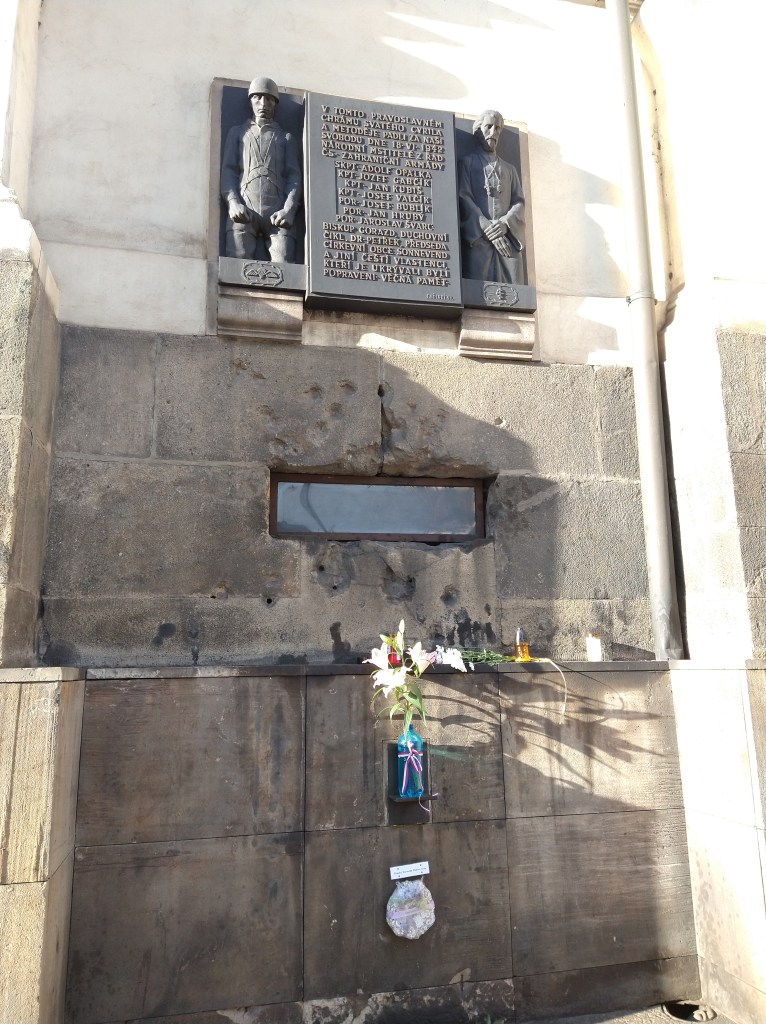
The Nazi occupation of Czechoslovakia was clearly harsh and brutal yet the suppression of the mind and spirit that was achieved in the next phase of totalitarian rule was complete and comprehensive. As I read the text and saw the images of the communist periodI knew that I had not really understood what Jiri had called the “deformation.”
The exhibit showed how in nearly every aspect of life, from the family, the church, the civic organizations, and the entire industrial enterprise had become a tool of oppression. What is called “oppression” in the West today is a mere shadow of the oppression experienced by the Czechoslovakian people (as well as the other nations and cultures on “that side” of the iron curtain.

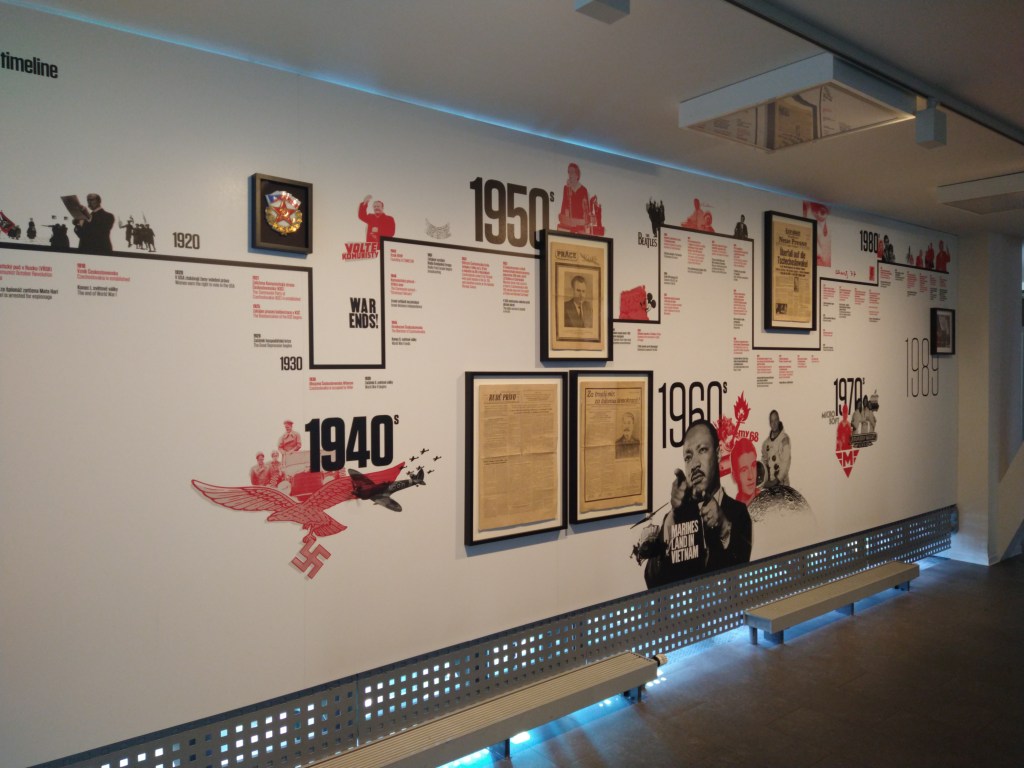
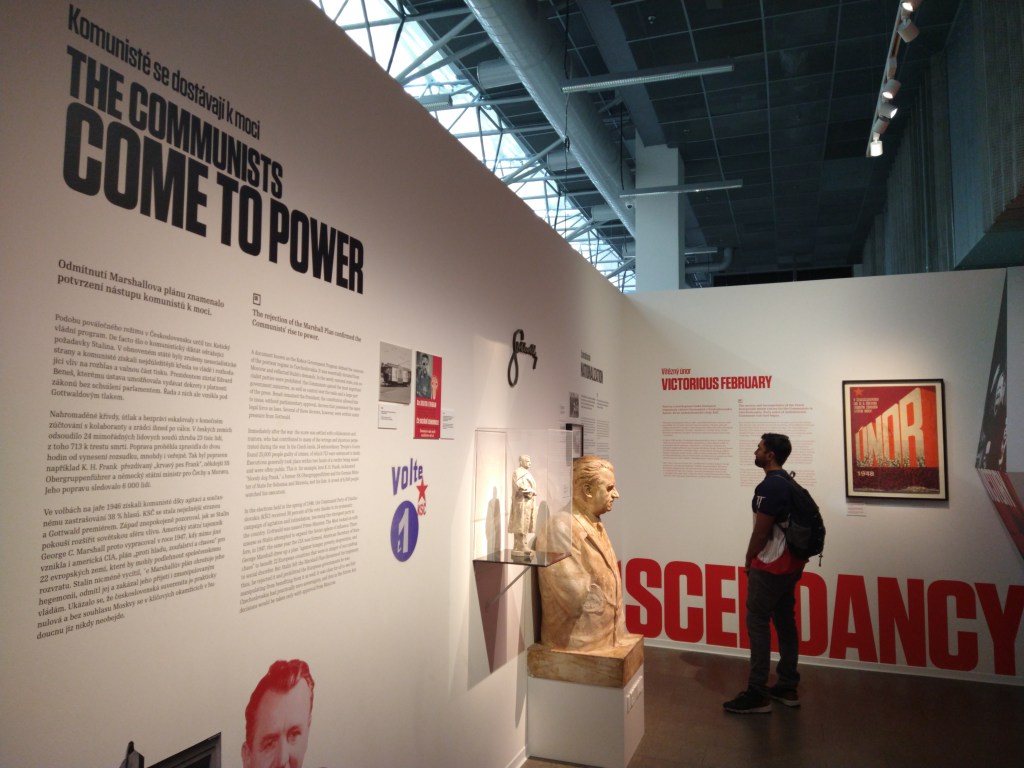
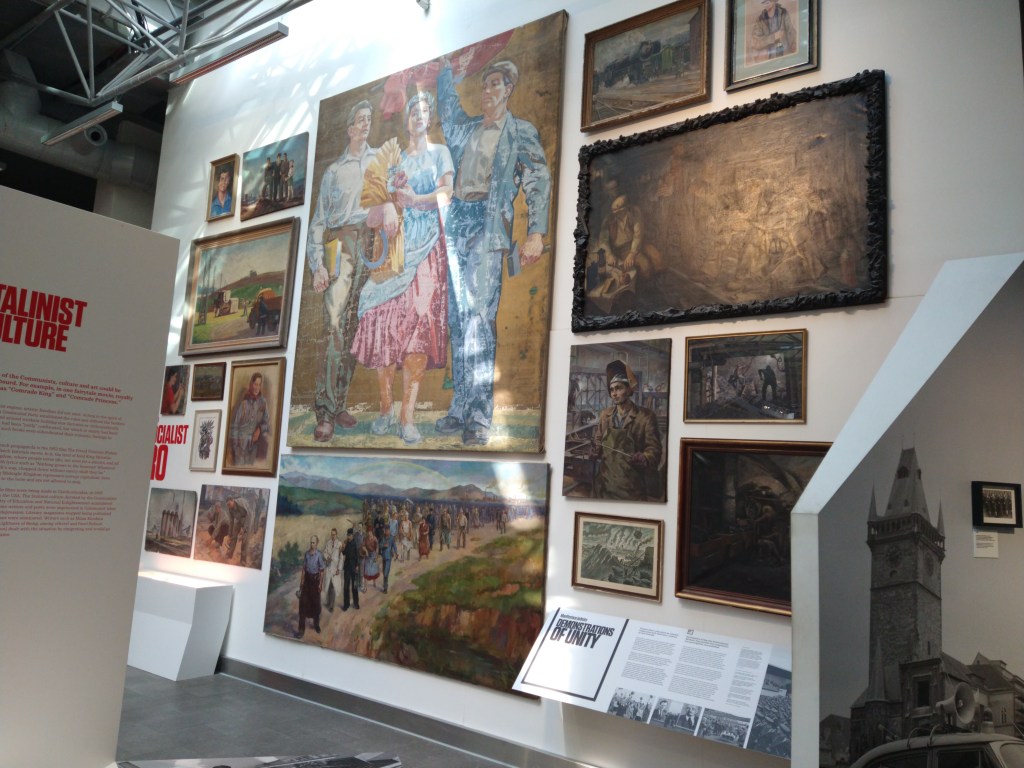
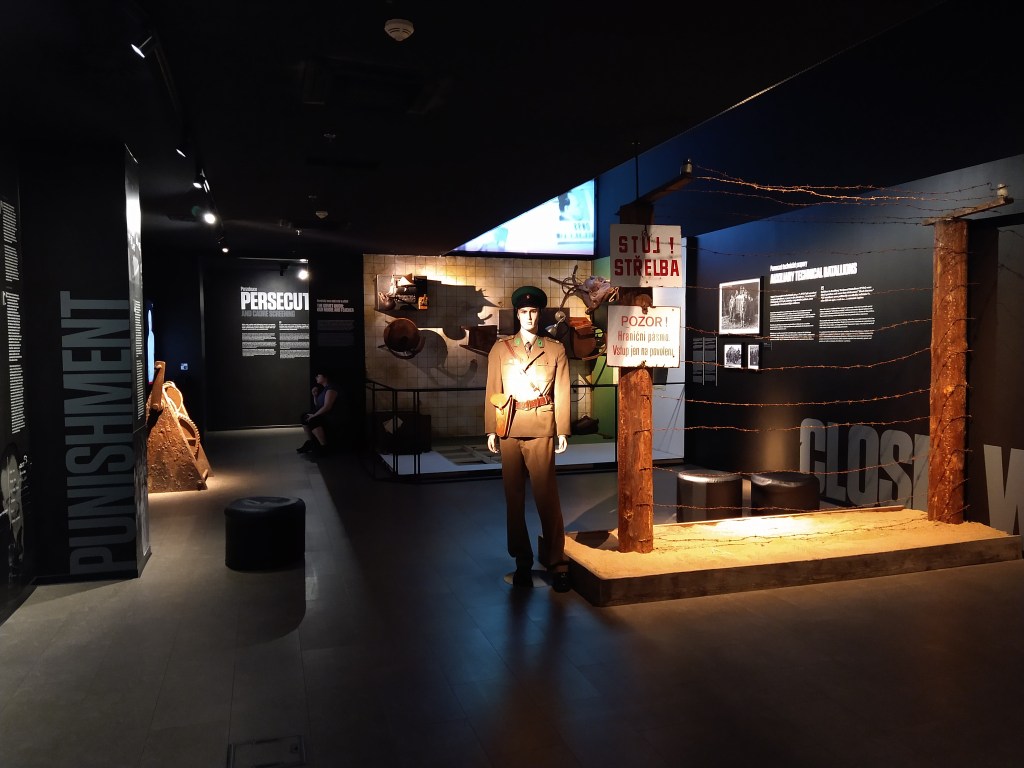
Among the actions taken to implement the regime, as outlined in the exhibition, were:
Do any of these measures seem familiar?
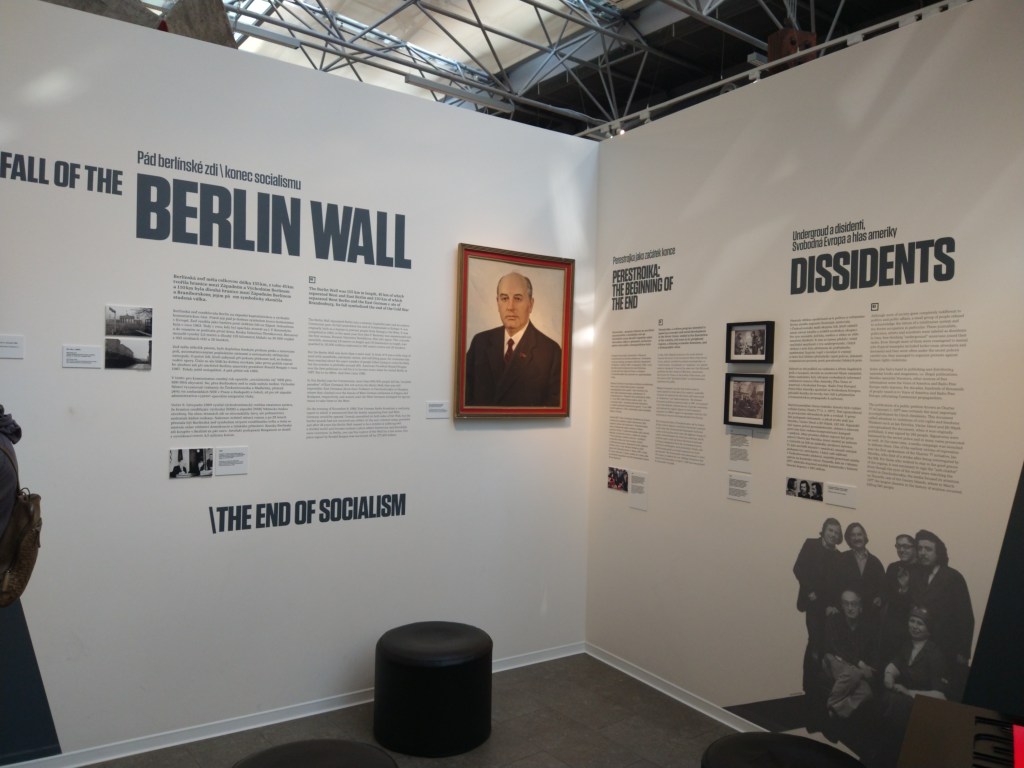
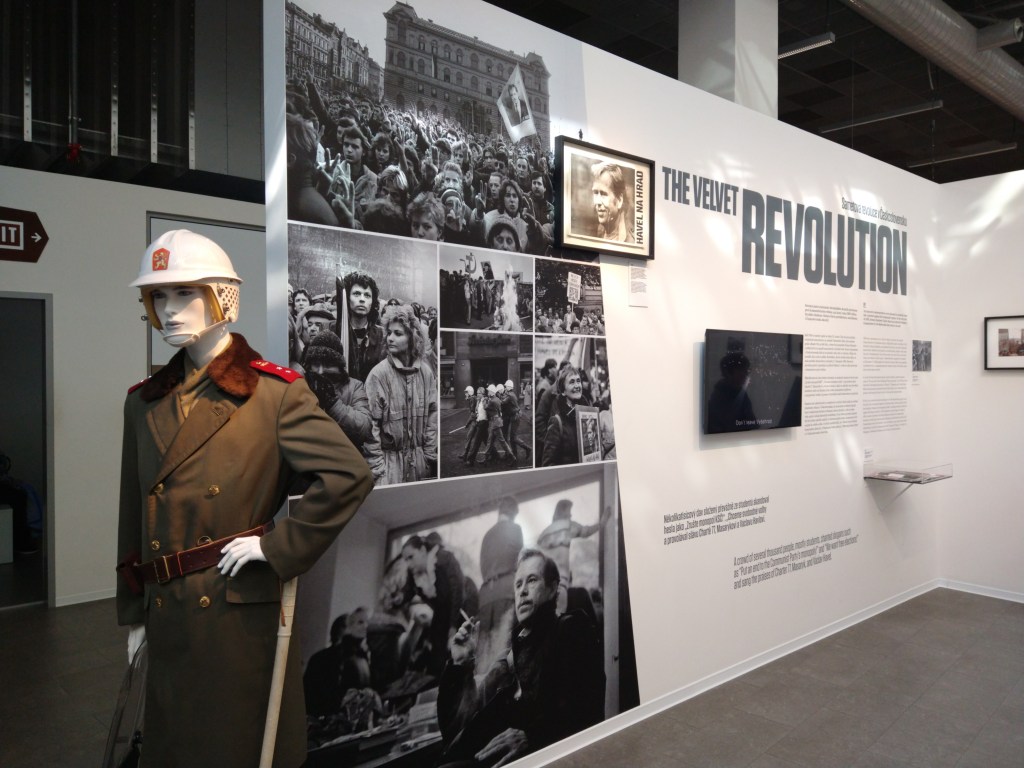
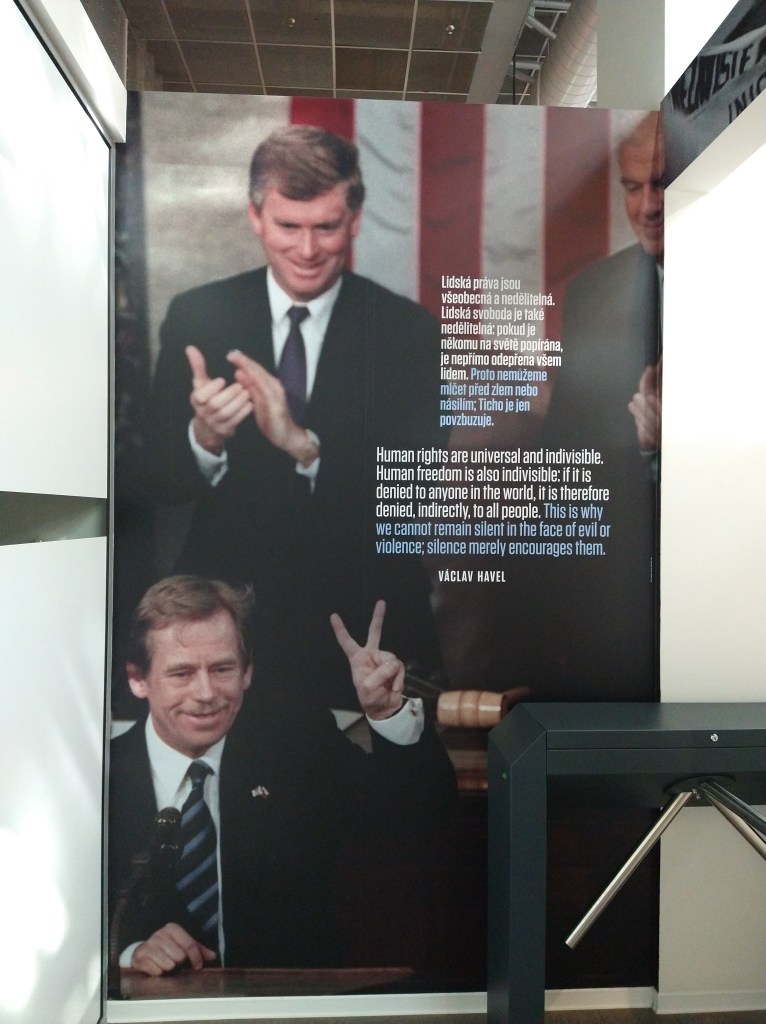
The exhibit concluded with the fall of communism in Europe. Among the last panels we found the statement that “the fall of communism took ten years in Poland, ten months in Hungary, ten weeks in Germany, and ten days in Czechoslovakia.” That assertion addresses only the “Velvet Revolution” of 1989 and its aftermath. Earlier, the exhibition includes a long history of resistance and disobedience. There was the “Prague Spring” of 1968, the annual self-immolation of protestors, and the various examples of cultural insurrection through art, poetry, and literature, distributed through the underground.
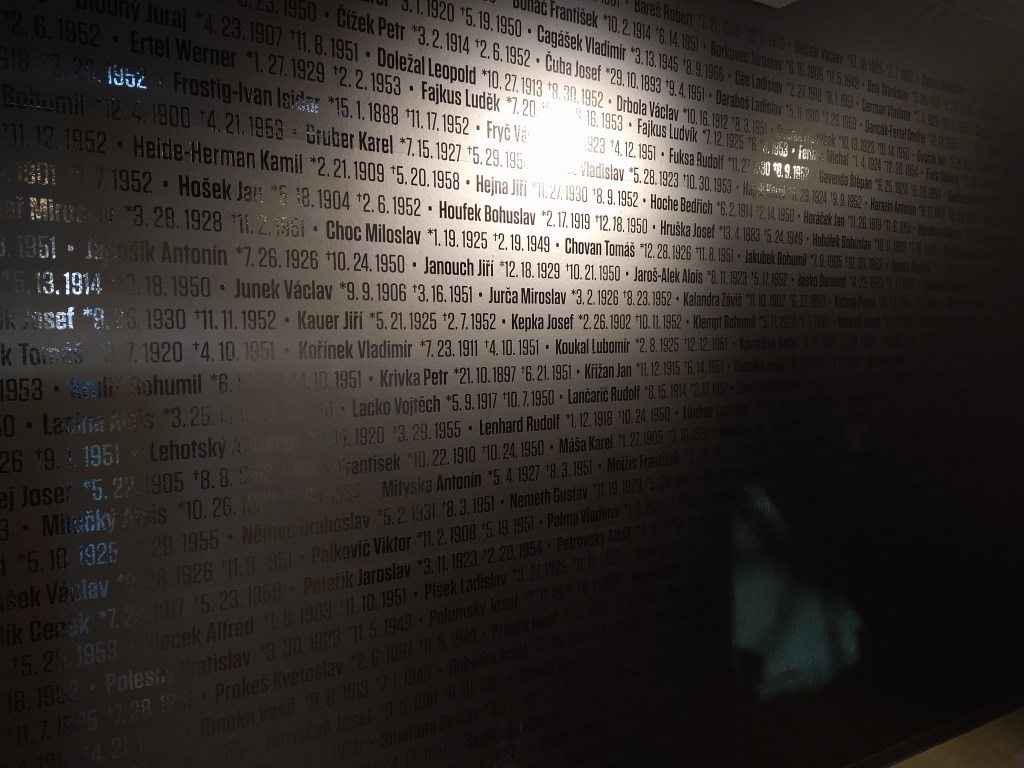
The last item in the exhibition is a video of the street demonstrations and the State’s response during the Velvet Revolution. The heroism of the demonstrators who stood against the unconstrained violence of the State was astounding. As for the closing of the parenthesis, it is an open question whether the citizens of the West have the clarity of mind and the courage to act as the totalitarian forces in our society solidify their control.
Our plane landed in Berlin under heavy clouds and hard rain. I had hoped the forecasts would be mistaken as they had been so often when we’ve been able to compare real life conditions to media representations. Weather forecasts tend to have the same bias towards sensational reporting as other so-called news. As we approached Berlin, I was pleased to watch the ground below illuminated by bright sun in cloudless sky, but my once again I was not disappointed by my disappointment when we suddenly were descending into thick clouds onto rain drenched runway with haze and fog obscuring the terminal and peripherals.
In my mind, there are probably a few more cities more depressing than Berlin under clouds but I haven’t been to one yet. My last trip to Berlin was thirty years ago as winter approached, and my expectations for today’s visit have been shaped considerably by that experience. It was barely after the fall of the wall when the neglect and deterioration of the city from the communist deformation was evident. It seemed the environment, particularly in the eastern zone, created its own overcast. Of course, times have changed, and Germany has (or soon to have had) the strongest economy of the European Union, so I expect the malaise I detected thirty years ago has been overcome and that even the clouds and rain may become something else to appreciate.
Before leaving the airport Paula and I took some time for coffee and to steel ourselves to plunge into the Our Next Great Adventure. By the time we left the airport, the sun was shining in a dark blue sky. My skepticism has not necessarily served me well, but it has at least been a trustworthy companion. We plunged into the city, confident or our ability to steer ourselves through an area where we have little understanding of the language and considerable ignorance of societal dynamics. After a short break at our hotel we decided we should take a long walk in the city to delay the inevitable encounter with jet lag. We immediately somehow locked ourselves out of the hotel, on a roof-top terrace in midst of a gigantic downpour.
How does that statement end? You know the one that starts “Past performance. . . . . ” Fortunately, we had both an umbrella and a cell phone so were able, after several calls to the front desk, were eventually liberated by a young woman who lectured us sternly, in the way only a German can lecture, and advised us not to engage in any further misbehavior.
There will be no photographs in this post. It is only a teaser, an introduction to our new next adventure, about which we will describe in upcoming posts. We will write about our sixteen-hour layover in New York City, and the two overnight flights we completed. We will catch you up on our day in Manhattan and the joys of experiencing the city as a couple of “out of towners” (intentional reference to the movie). We will also fill you in on how we happen to be where we are and where we intend to be next.
I am also uploading this post as an advisory for those of you who would think a good drenching is an acceptable substitute for abundant sunlight to stave off jet lag. It’s nearly two o’clock in the morning and I’m in the lobby typing away. Club music is playing over the speakers and young folks, in well lubricated good humor, are streaming in towards the elevator as I wonder how it is Tuesday night is a party night in Berlin.
Another bit of warning. This blog will be over-taken by events. By the next time one of us posts again we will be somewhere else. Our hotel has a nightly rate slightly more than a round trip flight to JFK, so tomorrow we will be on a southbound train for a destinationabout which we will discuss later.
Fare thee well, for now.
Paula has suggested that I provide citations and references to the post I wrote last night. I can only say I have studied these issues for the last two years and the information I’ve encountered comes from a wide variety and range of sources. I will attempt to provide something of a guide for people who would like to examine the issues in more depth, but I am not intending to present a scholarly reference for peer review.
The best starting point is to question what you hear. When you are told someone has been spreading “misinformation,” ask the following questions: What, specifically is the misinformation? Who said it? Where can I find the statement(s) in an original context? Was the information supported? Do you agree with the arguments that are presented? Are those who have declared it misinformation accurately conveying what was actually said?
You may find it difficult to find source information. It may not be available through a Google search, on YouTube, on Facebook, on Twitter, on CNN, on MSNBC, on Fox News, on the various broadcast channels, in the New York Times, the Washington Post or other AP news outlets. Contrary perspectives have been largely purged from those platforms. Some helpful platforms are Substack, Rumble, Odysee, Quilette, Epoch Times, Just the News, and British Medical Journal to name a few. You may need to get past the social conditioning that may have convinced you that these are “Alt right” or “White Supremacy” platforms. As a matter of course, you should question any assertion that a platform or speaker is “alt-right,” “racist,” “white supremacist” or otherwise described in derogatory terms. Sometimes it may be true but more frequently you will find these terms are simply slurs used to dissuade honorable people from listening.
For a search engine I prefer “Duck Duck Go” which appears to provide results that are less ideologically biased than Google and Bing.
In terms of voices that can serve as a starting point, I strongly recommend Dr. Bret Weinstein, Dr. Robert Malone, Dr. Pierre Kory, Dr. Peter Mccullough. Each of these will reference research and studies and make links to that material available through their sites. You will find links to analyses of data from NIH and CDC , the Vaccine Adverse Event Reporting System (VAERS), and public health agencies internationally where you can compare trend data from the US government sites to that in the UK, Israel, Sweden, South Africa, India, Japan, and others countries. You will find many studies confirming the effectiveness of vitamin D and zinc in preventing serious illness from COVID, you will find studies on the use of nasal irrigation and nebulization with dilute antiseptics in preventing pulmonary involvement after first onset of symptoms. You will find scores of studies on the safety and effectiveness of Ivermectin and Hydroxychloroquine in both prophylactic and early treatment protocols. You will find convincing evidence debunking the assertions by public health officials that vaccination is the only effective means to control the disease.
If you really want to get a dose of reality that will likely cause you psychological stress, read Robert Kennedy’s book The Real Anthony Fauci.
In short, take the time to study the issue. Or in the alternative, you can do what you are told.
Let me begin with an apology. Our blog is not intended to address political or social issues and I apologize for bringing this to an audience that did not request it. However, I feel what I have to say in this post is important.
It’s one in the morning and I cannot sleep. Although I do not as a rule sleep well, I usually have no problem getting to sleep. I usually wake early, after enough sleep that sufficiently energizes my mind to consider all of the various ways in which the future will present its next calamity. It is a lifelong practice that I know is unhealthy, but I’m addicted, probably because my body likes the adrenaline. Tonight, however, I am sufficiently worked up that I do not need to restore my energy before I fret.
My mental turmoil started around bedtime as I began to dwell on the fact that Paula and I have both recently lost longtime friends who have directly or indirectly communicated to us that they can no longer tolerate being exposed to toxic world views that threaten to contaminate their morally superior and virtuous belief systems. Specifically, they appear to be greatly disturbed that we dissent from the political positions of our superiors. We question the orthodox views expressed by the Biden Administration and are therefore heretics, espousing disinformation and anti-science rhetoric to undermine the legitimacy of the government and threaten the health and well-being of the society at large. We have been accused of holding our positions from ideological preference rather than evaluation of substantial technical and, to use a word, scientific information that is currently only available through alternative information platforms.
I fret about the loss of what I thought were solid friendships, and it is not as though we have been loudly or continually broadcasting our thinking. We do not proselytize and generally we do not discuss politics or social issues without invitation or otherwise pester people with our take on issues. Suddenly, however it seems we are becoming social pariahs, and though we still have a number of good friends that have not abandoned us, I am concerned that this is only a small, personal experience of a larger social phenomenon. That is what has me awake.
Perhaps it is time to get to the point. As I see it, the quantity and quality of dissenting scientific information regarding the government’s response to the COVID situation is clear and convincing. The approach is not just wrong, it is incoherent. The public health response has been virtually the opposite of what has been called for. The suppression of early treatment methods has resulted in hundreds of thousands of unnecessary deaths in the US and the “vaccines” are neither safe nor effective by historical standards. The lockdowns and mandates have seriously damaged our social fabric. The COVID response has resulted in substantial declines in public health due to increased isolation, depression, alcohol consumption, drug abuse, and undertreatment of medical conditions. It has undermined the education and socialization of children and has contributed to significant increase in all-cause mortality due to suicides, overdoses and homicides. The protocols have ushered in a period in which basic constitutional rights and liberties have been crushed by authoritarian dictates. You may agree or disagree with these conclusions, and I encourage you to question what you are told by any source, including me, and do your own homework on the matter. The authorities have the microphone, and their perspective is broadcast through the various administrative agencies, the Congress, the media, social media platforms, a host of non-governmental propaganda outfits and the Office of the President. Dissenting positions are denounced as disinformation, misinformation, and malinformation.
In the last few days, the Surgeon General issued a statement that we are in a public health emergency characterized by the large amount of misinformation and disinformation that is obstructing the government’s efforts to control the pandemic. Yesterday the Department of Homeland Security issued a terrorism advisory that accuses people who spread disinformation or otherwise encourage distrust of the government are, at worst, domestic terrorists and, at best, pawns of hostile foreign powers. These assertions are amplified by the usual willing accomplices.
In essence, the administration’s response to the collapse of its narrative is to castigate dissenters as enemies of the state. It should not be overlooked that this is occurring while momentum is building behind a working class uprising in opposition to the government’s authoritarian agenda. The government appears unwilling to either listen to dissenting scientists or address the concerns of the citizens.
I need to be clear about something, and I will make the next statement in ALLCAPS since that is how one accentuates a point in writing. IN SCIENTIFIC DISCOURSE THERE IS NO SUCH THING AS “MISINFORMATION!” There are propositions, conjectures, and hypotheses that either do or do not stand up to scrutiny. Scrutiny, in science, is an open debate and discussion regarding the results of experiments and studies in which various hypotheses are tested against measurable objective “facts”. In that regard, there are two types of scientific statements: those that have been refuted and those that have not yet been refuted. A proposition that is held to be a “consensus” truth, that cannot be questioned, and that is not questioned because all dissenting opinions are suppressed by the political structure of the state is not science, it is propaganda, pure and simple.
There is an agenda at work. We do not know who or what is behind the exercise of power, and of course to assert there is a force behind these matters is categorized as a conspiracy theory. It is likely not as simple as the pharmaceutical industry exerting its control over captured regulatory agencies to obtain billions of dollars in excess profits. Nor can it be simply confirmed that it is the World Economic Forum pursuing its much advertised “great reset.” However, it cannot be denied that the government’s response to the pandemic has not only caused significant disruption of the economy, decimation of the nation’s small business infrastructure, and concentration of corporate power, but also resulted an historic transfer of wealth from the middle class to the economic elite.
It has been an approach that is reminiscent of Stalinist Soviet Union, the Maoist cultural revolution, and the dark period of McCarthyism and red scares in the United States. These periods were characterized by centralization of authority, suppression of dissent, suppression of individual autonomy, and deprivation of rights. There was a time when people in the West had a name for a condition in which the societal institutions including government, industry, universities, the dominant political party, and media work in concert to suppress the population and advance the interest of the economic elite. It might do us well to remember that name.
When we started our “See Part of America” tour, I envisioned having leisurely afternoons and evenings when we would chat about the day’s adventures and compose summaries. After all, we are only driving four or five hours a day so there should be plenty of time. Clearly it hasn’t worked out that way. As of the time I am typing this I am officially eight days behind and I am now fervently trying to catch up with Paula who is racing ahead and is now only six days behind. So it’s now five o’clock in the morning in Fishkill, New York, as i study my photographs and extract from my shredded memory the events from our not too distant past.
We rejoin our story on Sunday, September 12, 2021, as we depart Glasgow, Missouri, on our way to Springfield, Illinois, by way of Hannibal, MO. Hannibal is not the home of Shoeless Joe. Shoeless Joe Jackson was an actual baseball player who was implicated in the Black Socks scandal, but he was born in South Carolina, not Missouri. “Shoeless Joe from Hannibal MO” was a fictional character in the musical Damn Yankees.
Hannibal is the home of the real Mark Twain, a pseudonym for Samuel Clemens, Molly Brown of the unsinkable fame and Marie Ruoff Byrum. The first two are people most of us know, but not until being in Hannibal did I hear of Marie Ruoff Byrum. She was the first woman to vote in the United States after 19th amendment to the constitution was enacted.
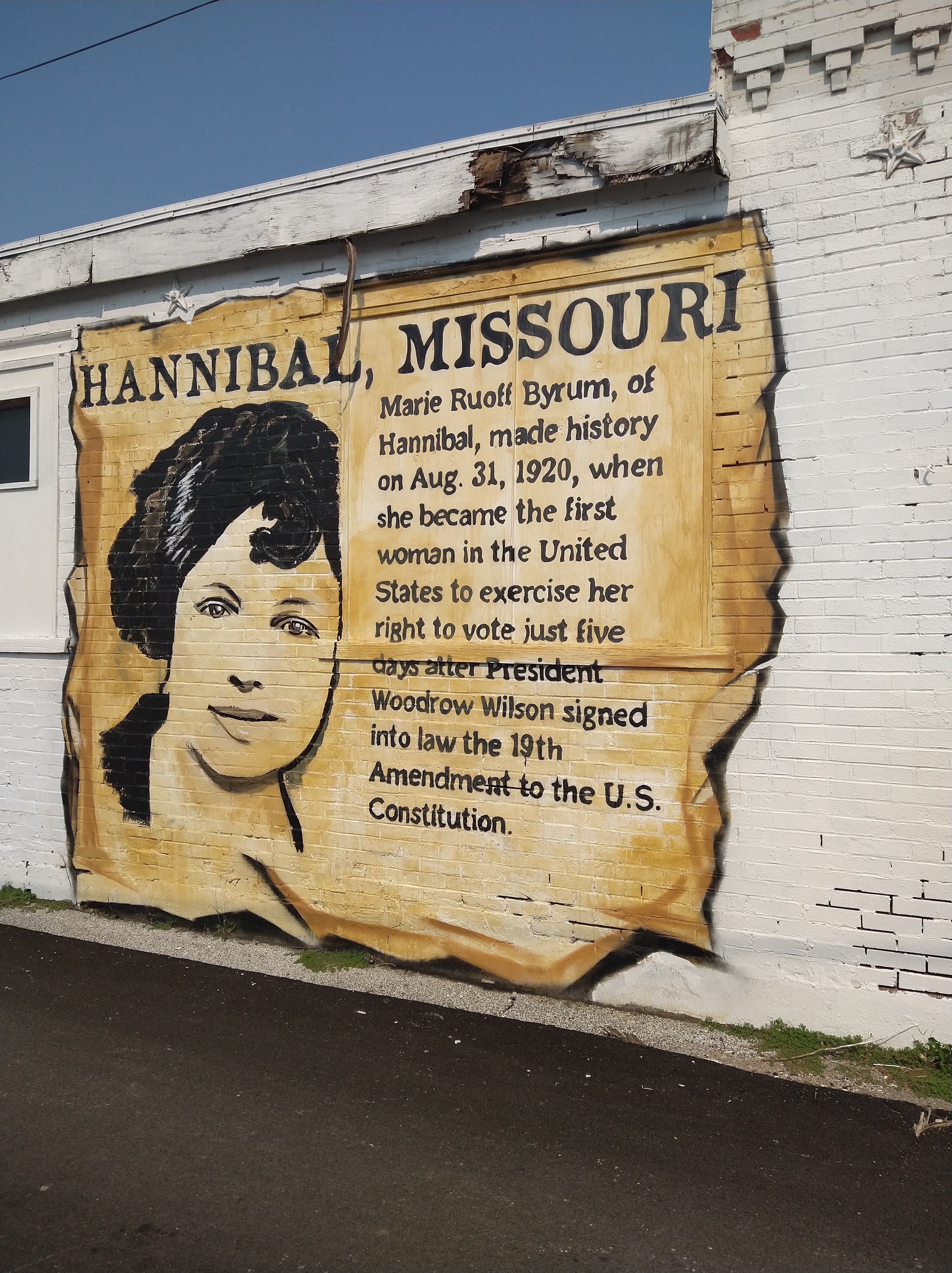
It seems to me that our current fascination with national political figures and international celebrities helps obscure the importance of rural areas and small towns in writing the American story.
Speaking of creating stories, Mark Twain was one of my favorite story tellers . The Adventures of Tom Sawyer and the Adventures of Huckleberry Finn captured my imagination as a youth, and later in life I appreciated some of his other novels and stories including The Innocents Abroad, Life on the Mississippi, A Connecticut Yankee in King Arthurs Court, Letters from the Earth, Celebrated Jumping Frog of Calaveras County, and many of his essays on political and social issues. I can’t credit Clemens with my innate cynicism, but I attribute to him the burnishing of the edges.
At some time when I was older father gave me a copy of his short story The War Prayer. His family thought the story to be so inflammatory that it was only published after his death. I think it should be required reading and is available here.
Hannibal has done a very good job capitalizing on the legacy of its more notable favorite sons and daughters. Our time in Hannibal was somewhat limited, so we confined ourselves to touring the exhibits regarding Mark Twain and his legacy namesakes, the Mark Twain Lighthouse, Mark Twain Brewing Company and the Mark Twain Museum Properties.
The exhibit “Mark Twain’s Boyhood Home” contains what purports to be the one of the Clemens’ family homes; the home of Laurie Hawkins, who showed up in Tom Sawyer as Becky Thatcher; a replica of Tom Blankenship’s (Huckleberry Finn)home; the apothecary above which the Clemens family lived at one time; and a wooden fence with a bucket of whitewash. The exhibit contained lots of curiosities and memorabilia from the time and a detailed time line of Mark Twains early life, later career, and “whatever happened to” stories about his supporting cast.
There museum curators have put a lot of work into making the exhibit relevant to children and teenagers. In his later life Samuel Clemens was an vocal opponent of slavery and, to some degree, economic stratification but his earlier years were part of the era and a family in which slavery was accepted as a natural economic arrangement. The exhibits do not shy away from discussions of slavery and class distinction and do not attempt to justify it.
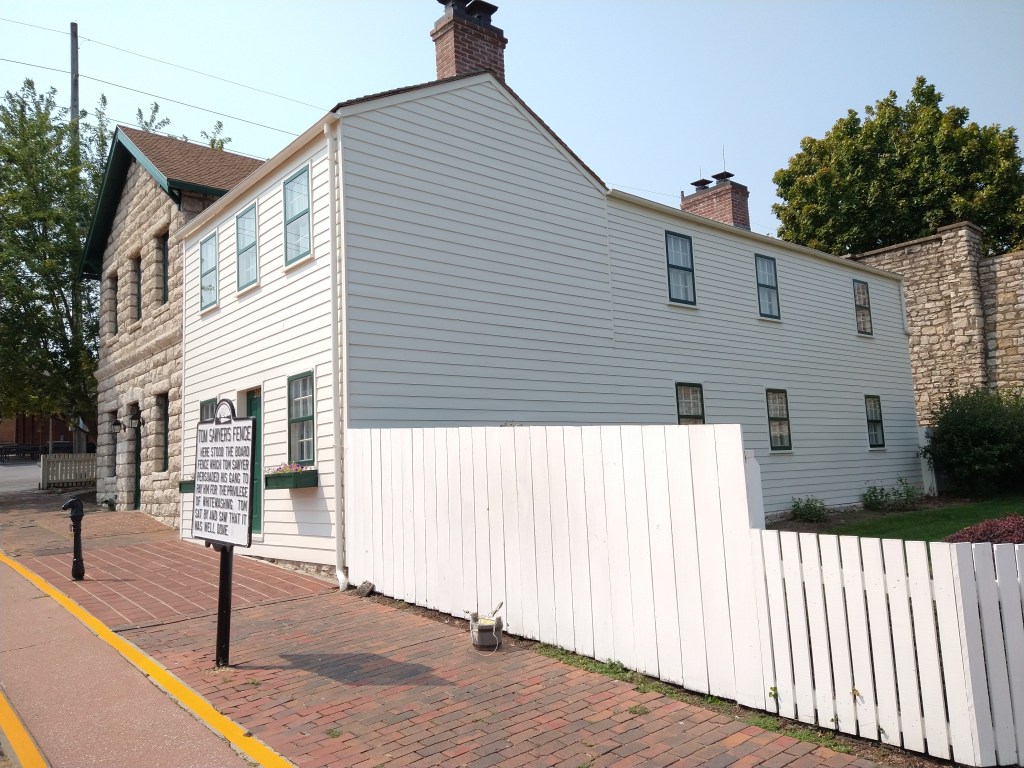

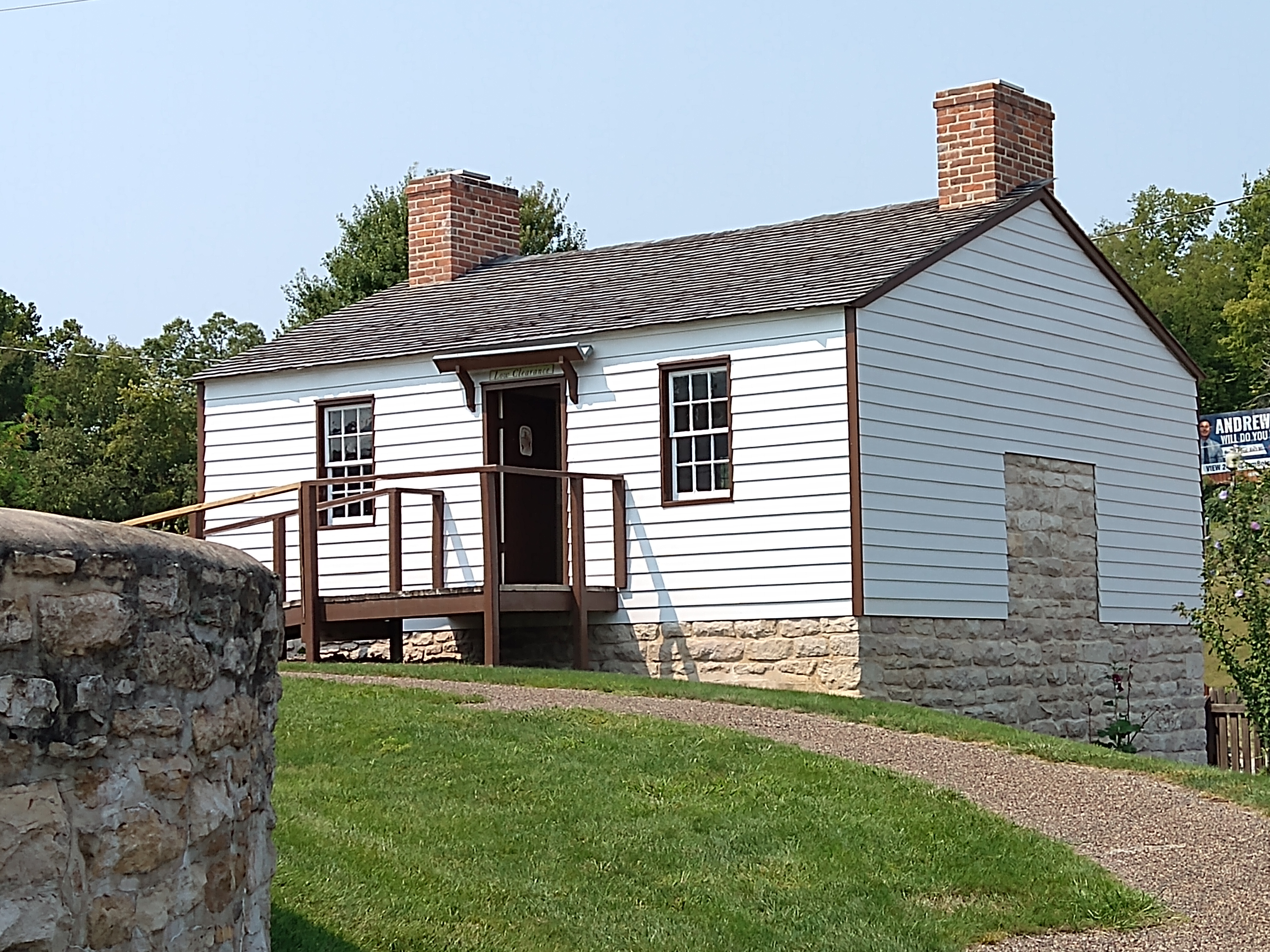
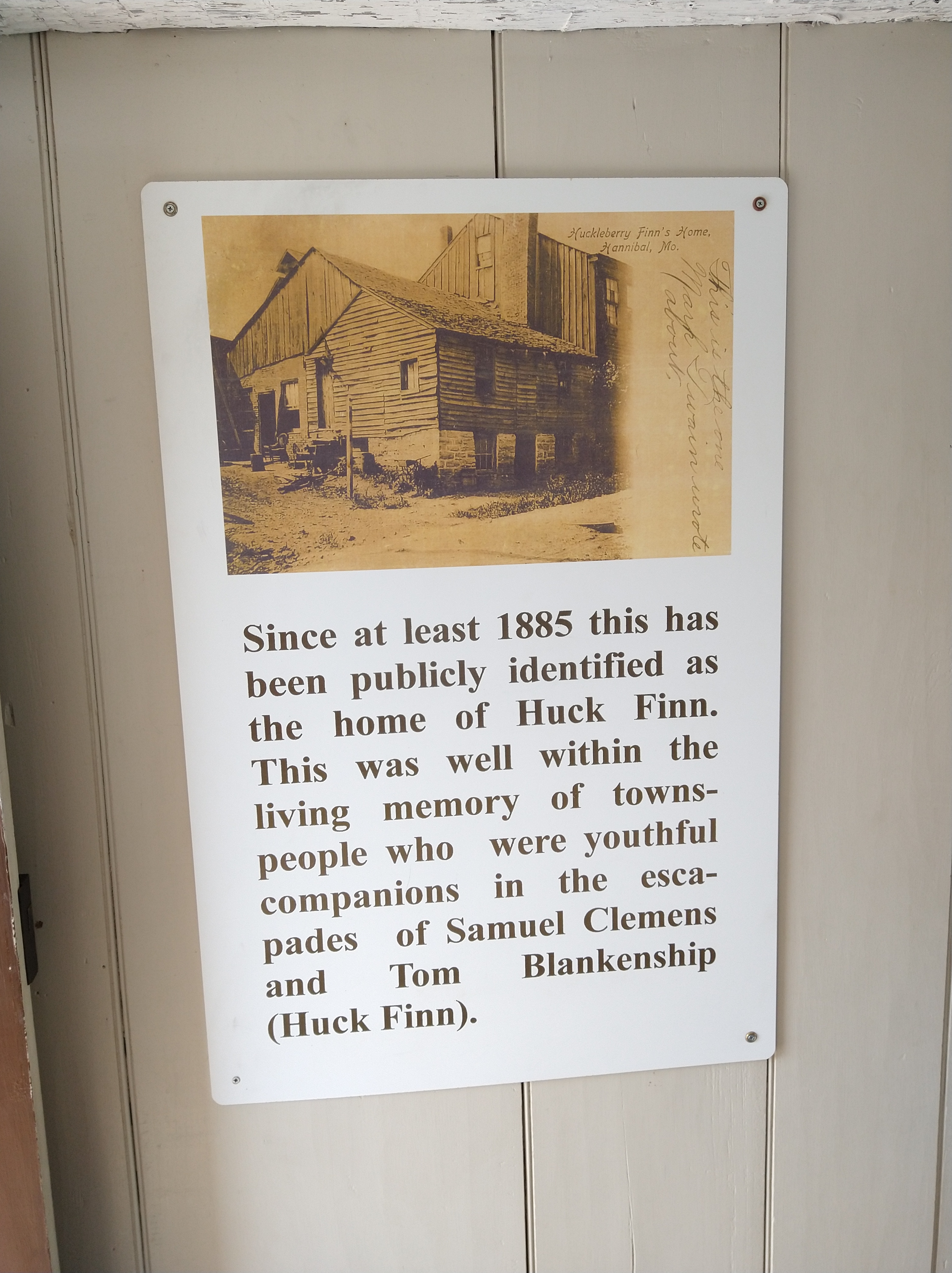
The Mark Twain Museum Gallery and interpretive center, located a few blocks from the Boyhood Home contains original illustrations for a number of his works, including a very nice collection of works by Norman Rockwell.
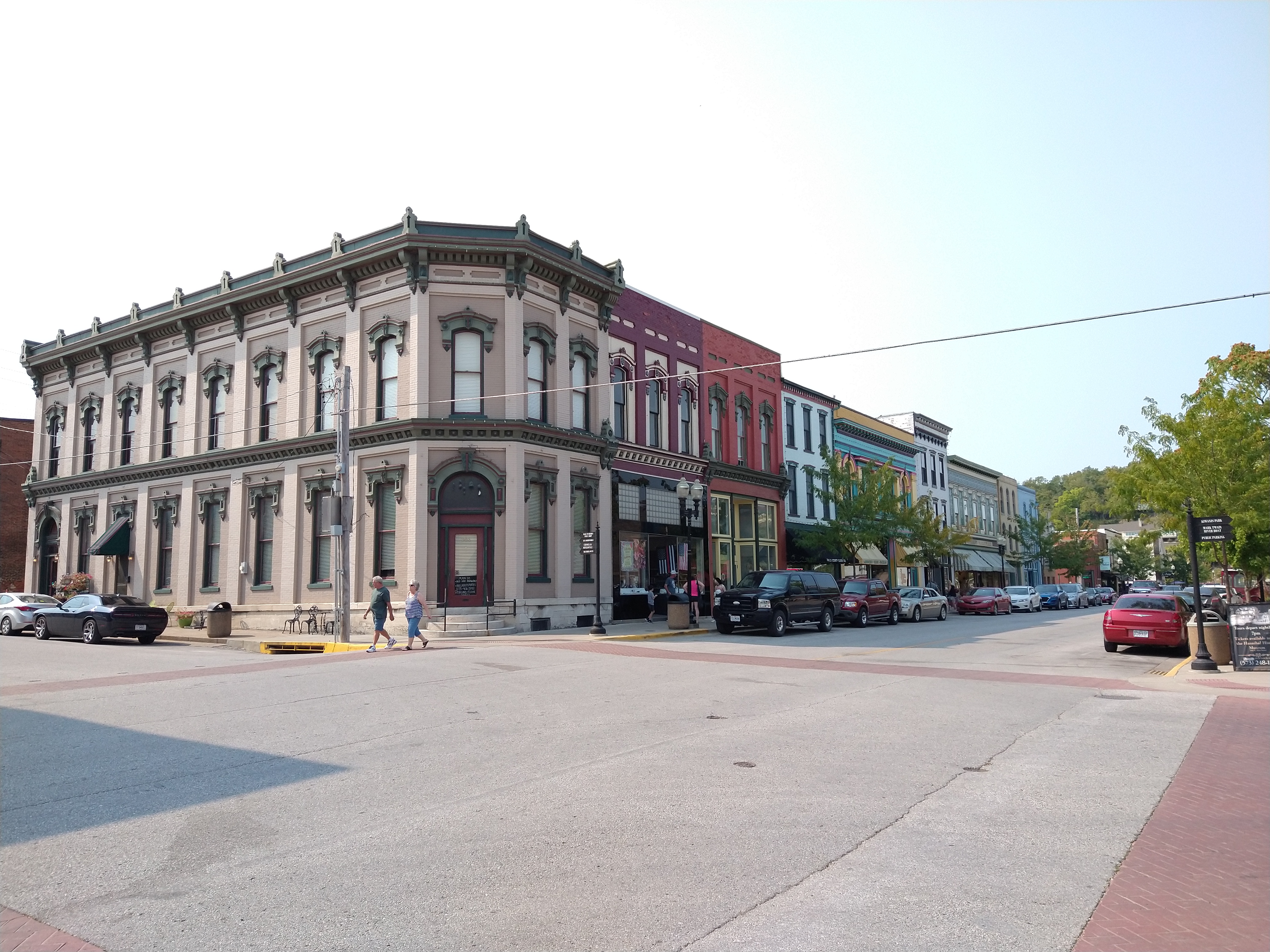
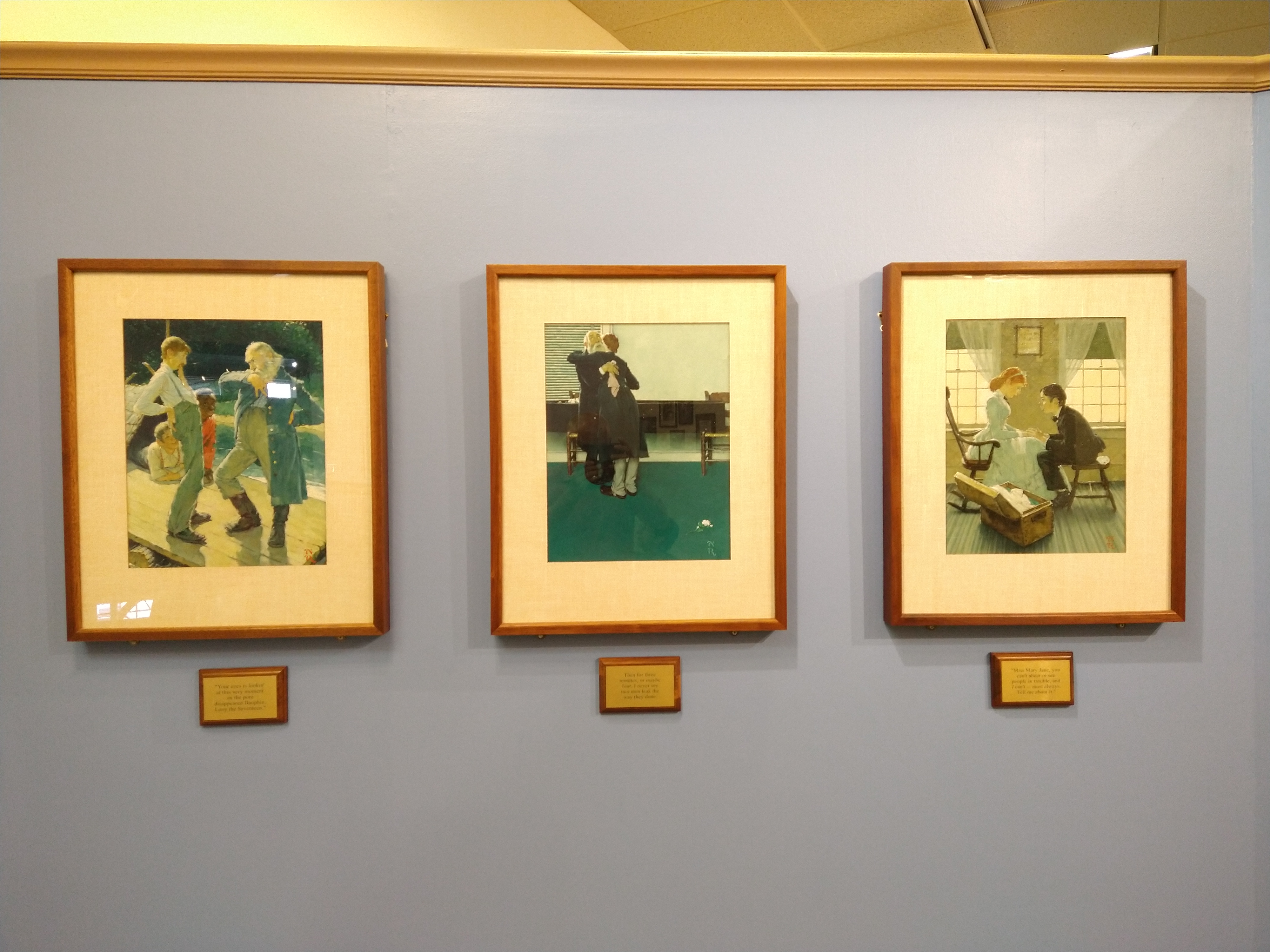
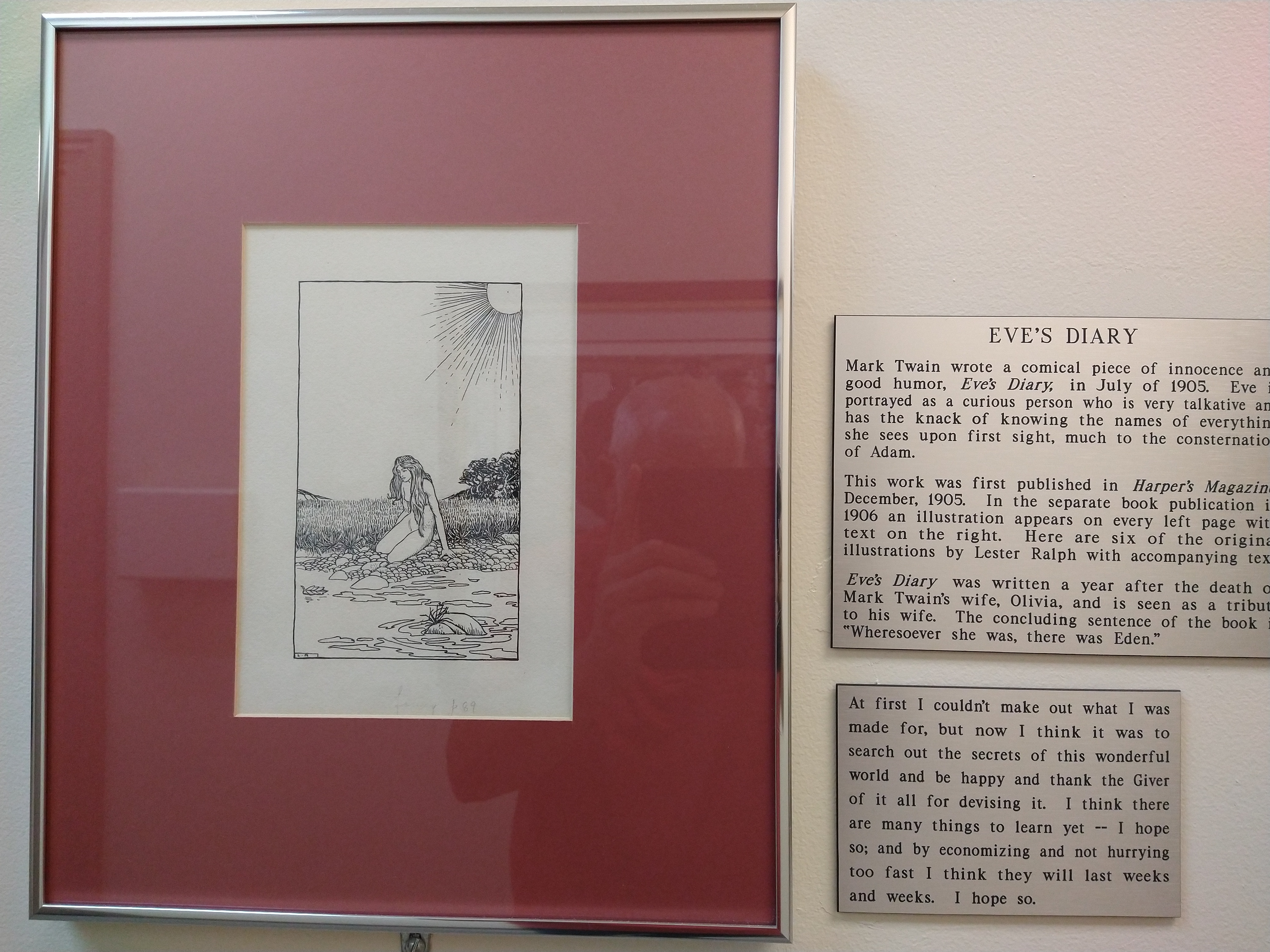

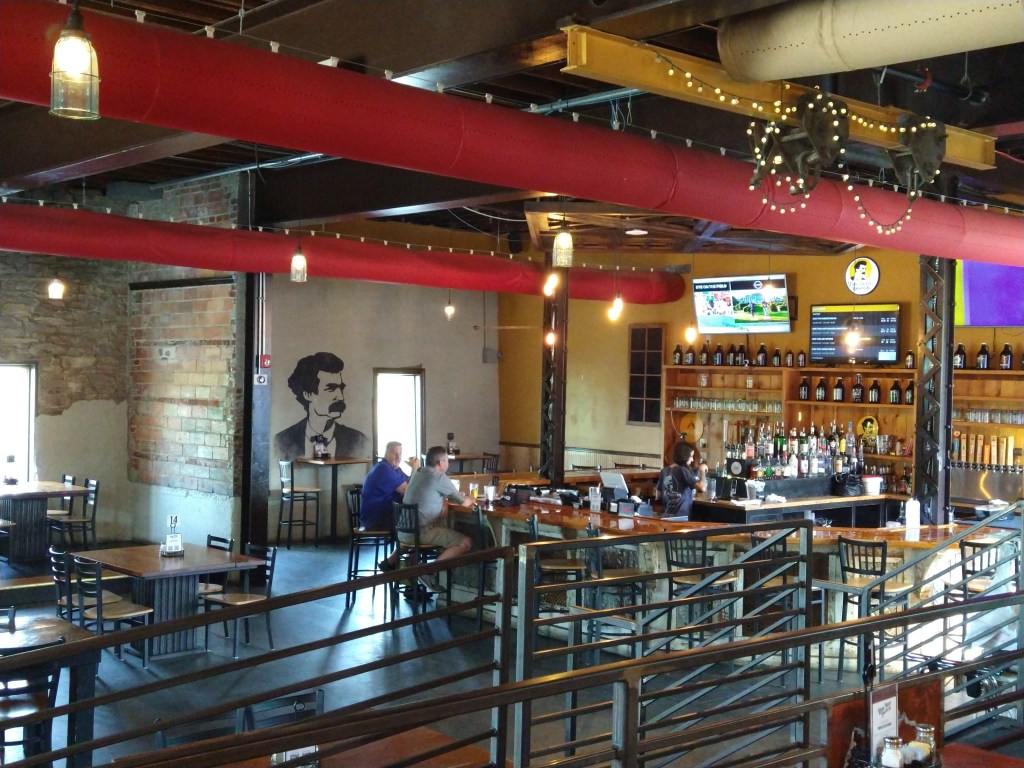
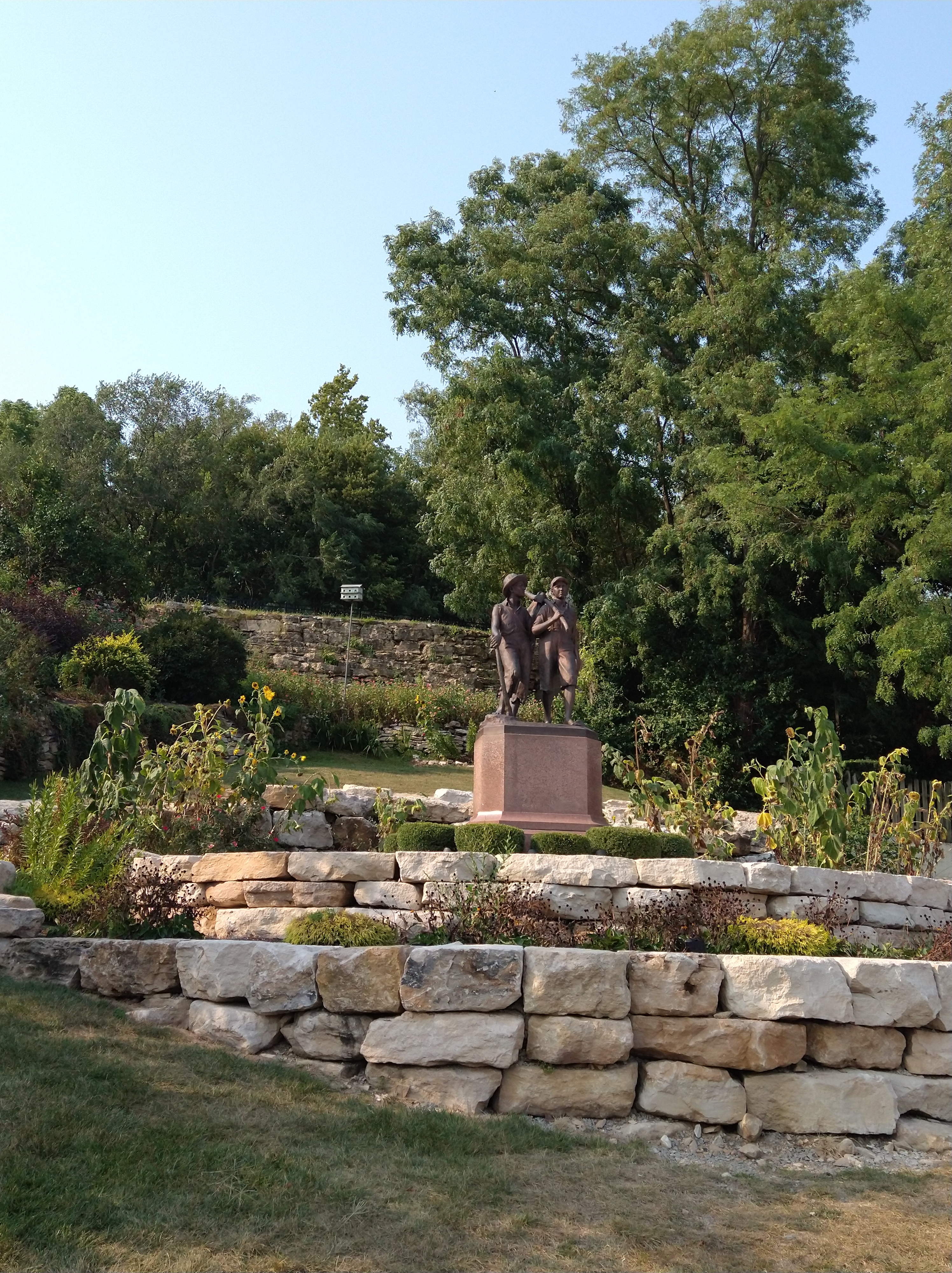
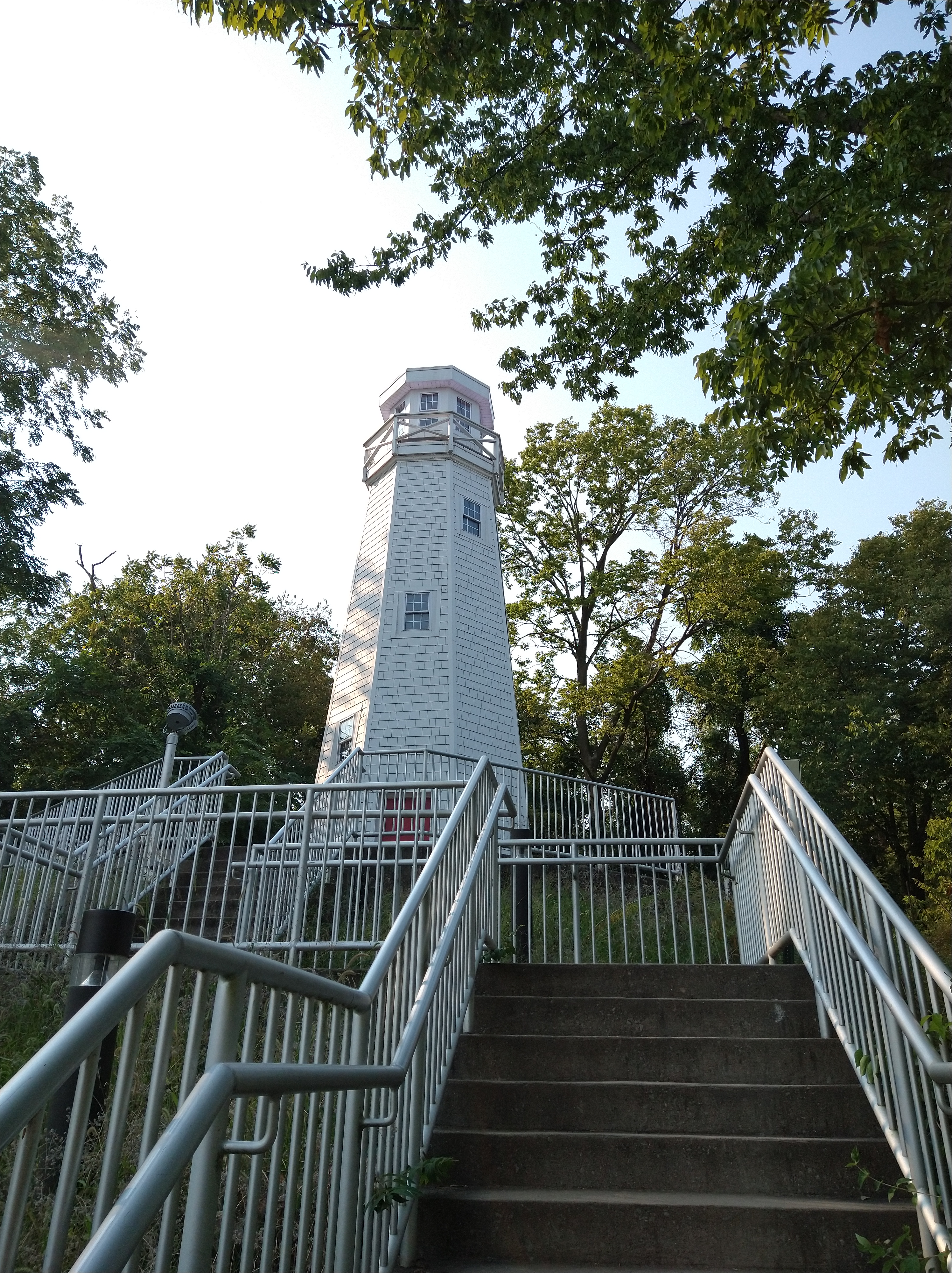
We did not tarry long in Hannibal since we had hotel reservations in Springfield, Illinois. This portion of our trip was not to be on “blue highways” but on Interstate highway, through fields of corn and construction projects, ultimately to Clarion, Pennsylvania. The first stop was Springfield, Illinois, to get a taste of the Abraham Lincoln legacy.
Springfield was the city where the Young Abraham Lincoln settled to practice law and politics. It was in Springfield that he met, courted, and married Mary Todd. It is where he was elected to Congress and subsequently where he was living when elected President. He is also buried there, though we did not visit his tomb.
We decided to visit the sites in the morning and limited our touring to the Lincoln home and the state Capitol building. We tried to make it to the originals state capitol building but it was closed for construction.
The tour of Lincoln’s home was lead by a National Park Service ranger who pointed out what parts of the home and furnishings were original, what were replicas, and what were simply typical for the time. It was an interesting tour, and the ranger insisted we come away with two critical facts. First: Abraham Lincoln loved cats and took in countless strays, and Second: Abraham Lincoln was a formidable wrestler and is included in the Wrestling Hall of Fame. I encourage you to read Paula’s post on Springfield for more information on the Lincoln home.
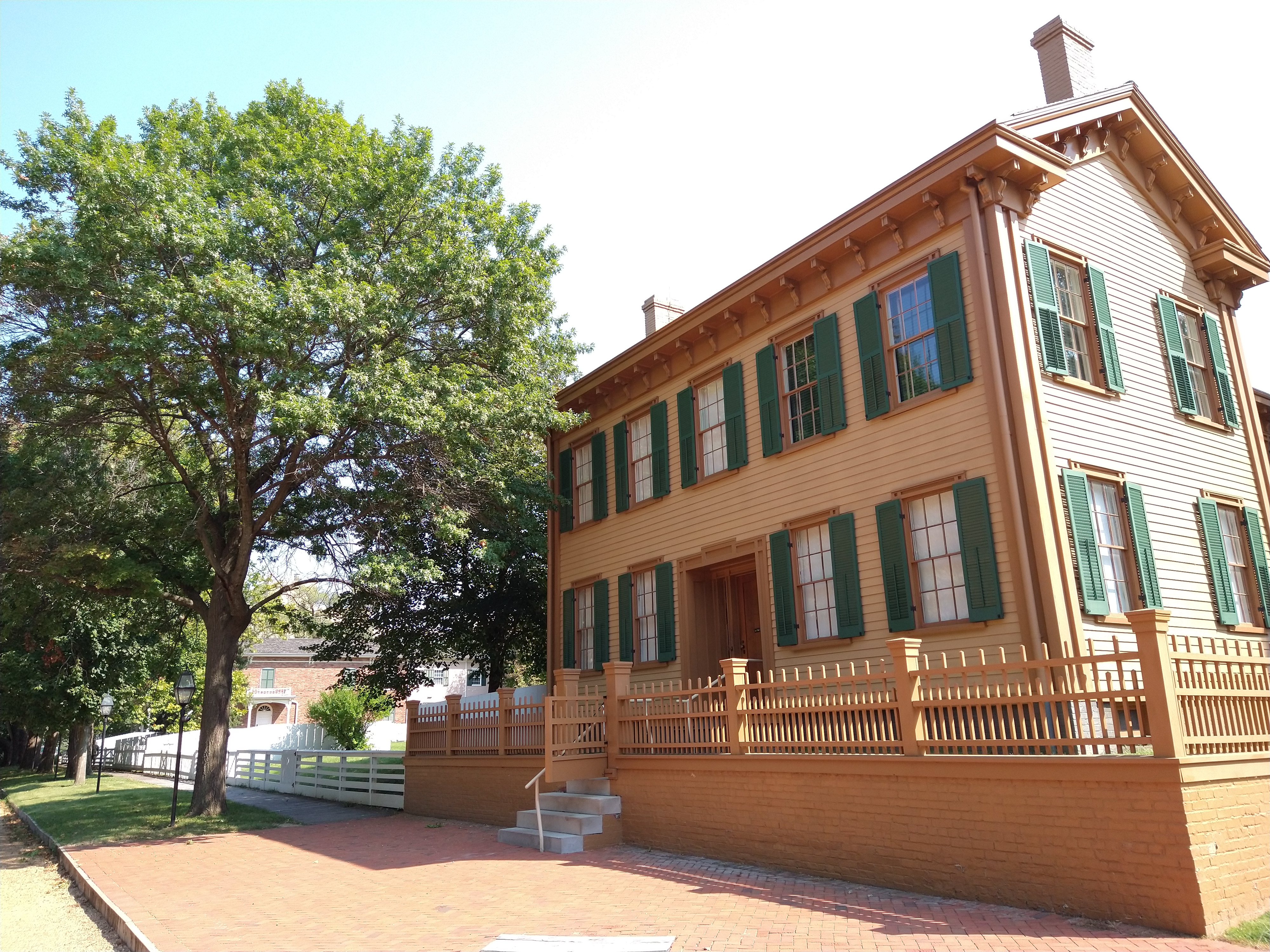
Later in this trip we plan to visit Lincoln’s birthplace, which happens to be in the same Kentucky county where Jefferson Davis was born. Some thirty-odd years ago I stopped by the Jefferson Davis Shrine while driving through Kentucky. That monument is now known as the Jefferson Davis Historical Site. I guess we can no longer worship our heroes with religious fervor.

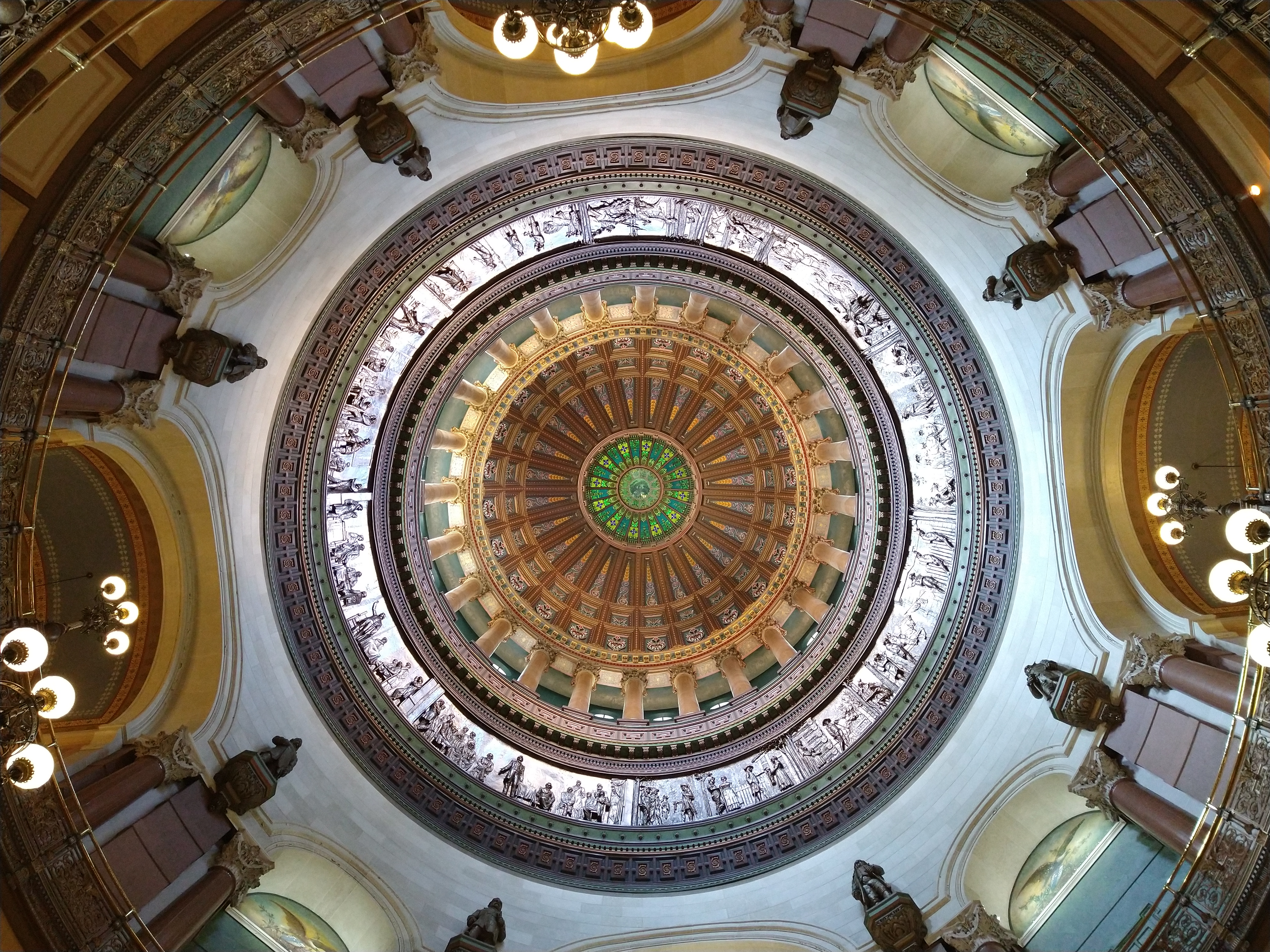
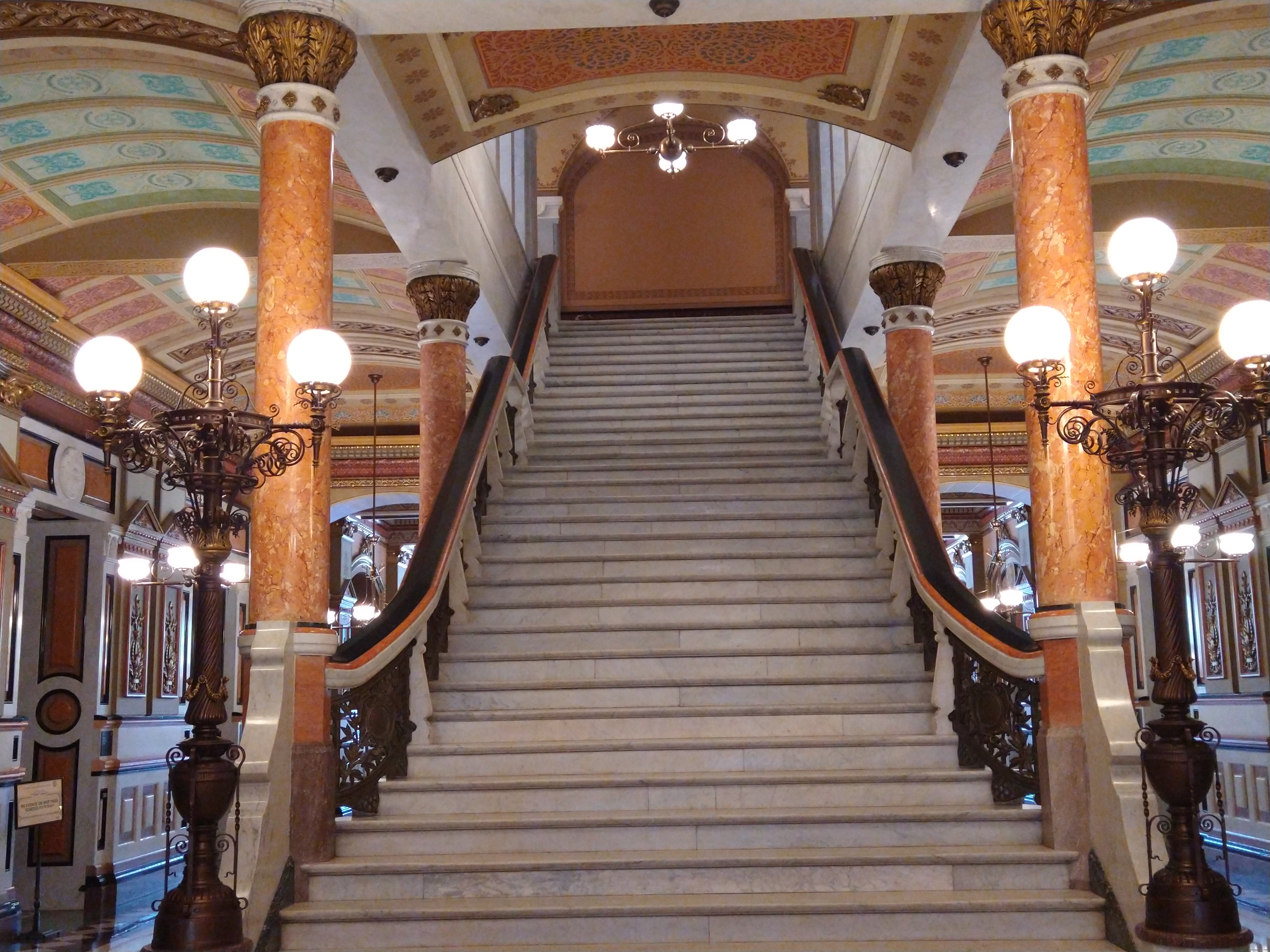
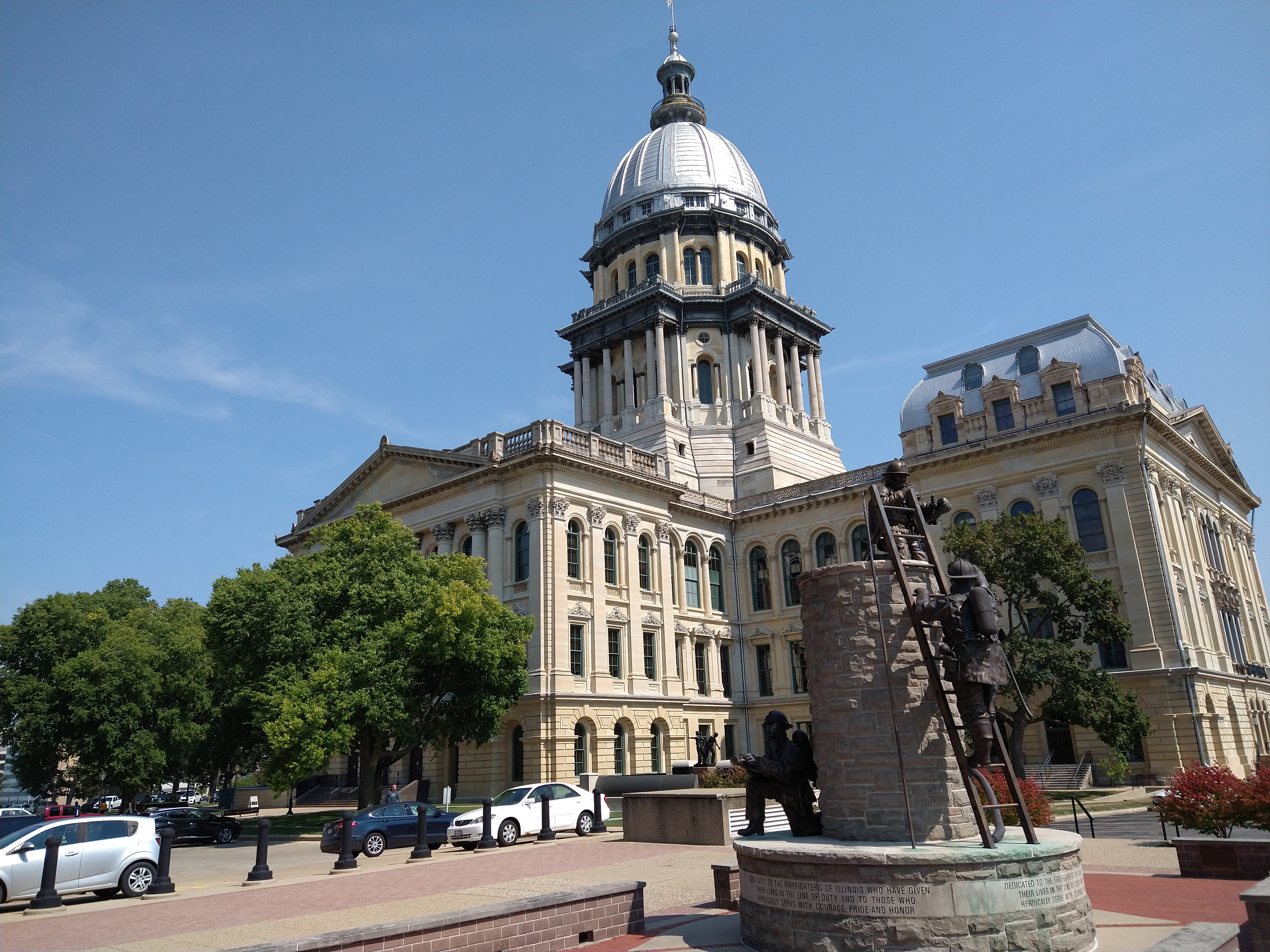
The rest of the day consisted of highway driving, through corn fields and construction projects, viewing Indianapolis from the interstate, and stopping for the night in Springfield, Ohio. We chose Springfield for two reasons: We were able to get gas at Costco, saving about twenty cents per gallon, and we would be able to brag that we were in three different Springfields on three consecutive days (we stopped for lunch in Springfield, MO, on the way to Glasgow). That is something people brag about, isn’t it?
We had made he decision that this part of the Midwest is basically worth getting through for the outbound trip. We may make a foray or two into southern Illinois and Indiana on the return trip since we will be going through the northern edge of Kentucky on the way home. At 9:00 PM on a Monday night our dinner options amounted to vending machines or peanut butter and crackers. We settled for wine.
I will skip over the next day’s journey to Clarion, PA. It was more freeway driving, more construction, and more delays. But Clarion was a good stopping point before heading into New York through the Allegheny Mountains.
I have now sufficiently postponed publishing this post and can wait no longer. I envy those who write quickly and easily. As for me, I must write, then edit to the standard of a basic business memorandum, then edit again. It has taken nine days since I started this post, and we begin our return trip in two days. Much to cover in those days.
Later.
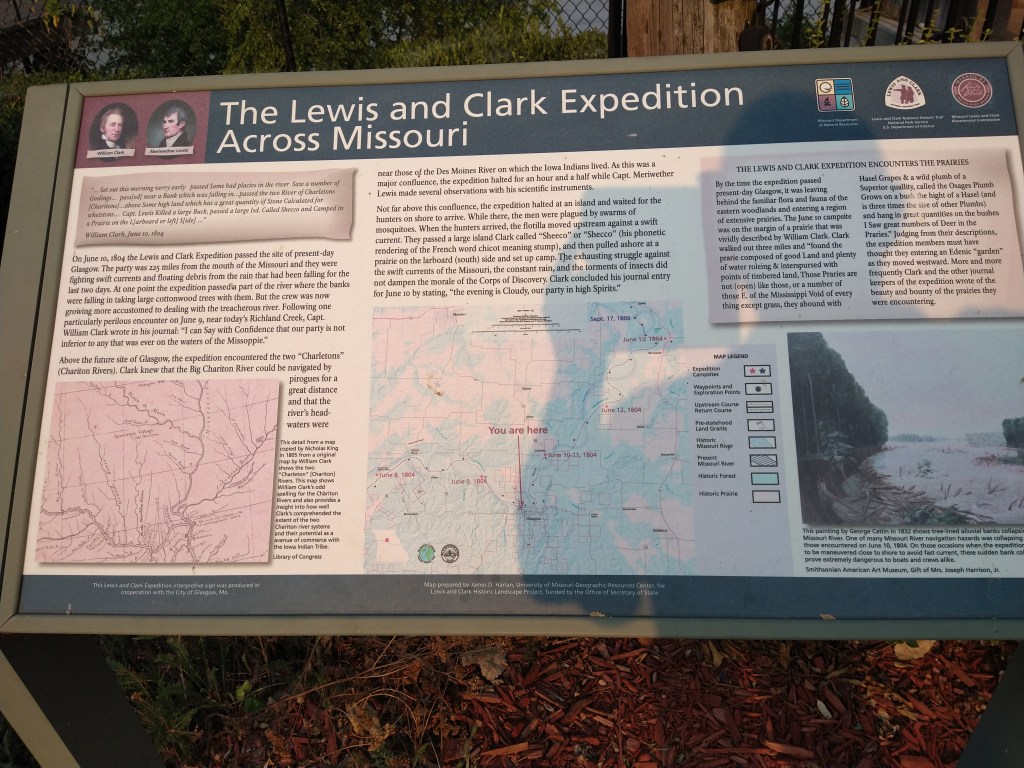
The next phase of our journey took us from Eureka Springs, Arkansas to Glasgow, Missouri, a town of 1000 residents, more or less, situated on the shore of the Missouri River. Glasgow is about an hour northwest of the Columbia, and was on the route taken by Lewis and Clark. This is not a great photo, but the text is informative. Including it may make one would if we visited Glasgow due to an arcane interest in trailing the exploits of Lewis and Clark. I can assure you the find was completely incidental.
We were in Glasgow to visit Steve, a friend from high school, and his wife Ruth. We had planned to meet at our 50 year reunion a few years ago but nature conspired to keep me home, focusing on the repairs to our hail damaged house. It made sense to travel through Glasgow on this trip since we needed to head north at some point and Glasgow would be on the way to Hannibal, home of the master writer whose cynicism I have long admired.
Steve told us that Glasgow had three claims to fame, though he did not state the Lewis and Clark expedition as one of them. I will tell you of those in a bit, using those nuggets in a feeble effort to inject a bit of dramatic suspense. At this time, however, I must return to the beginning of the day’s journey.
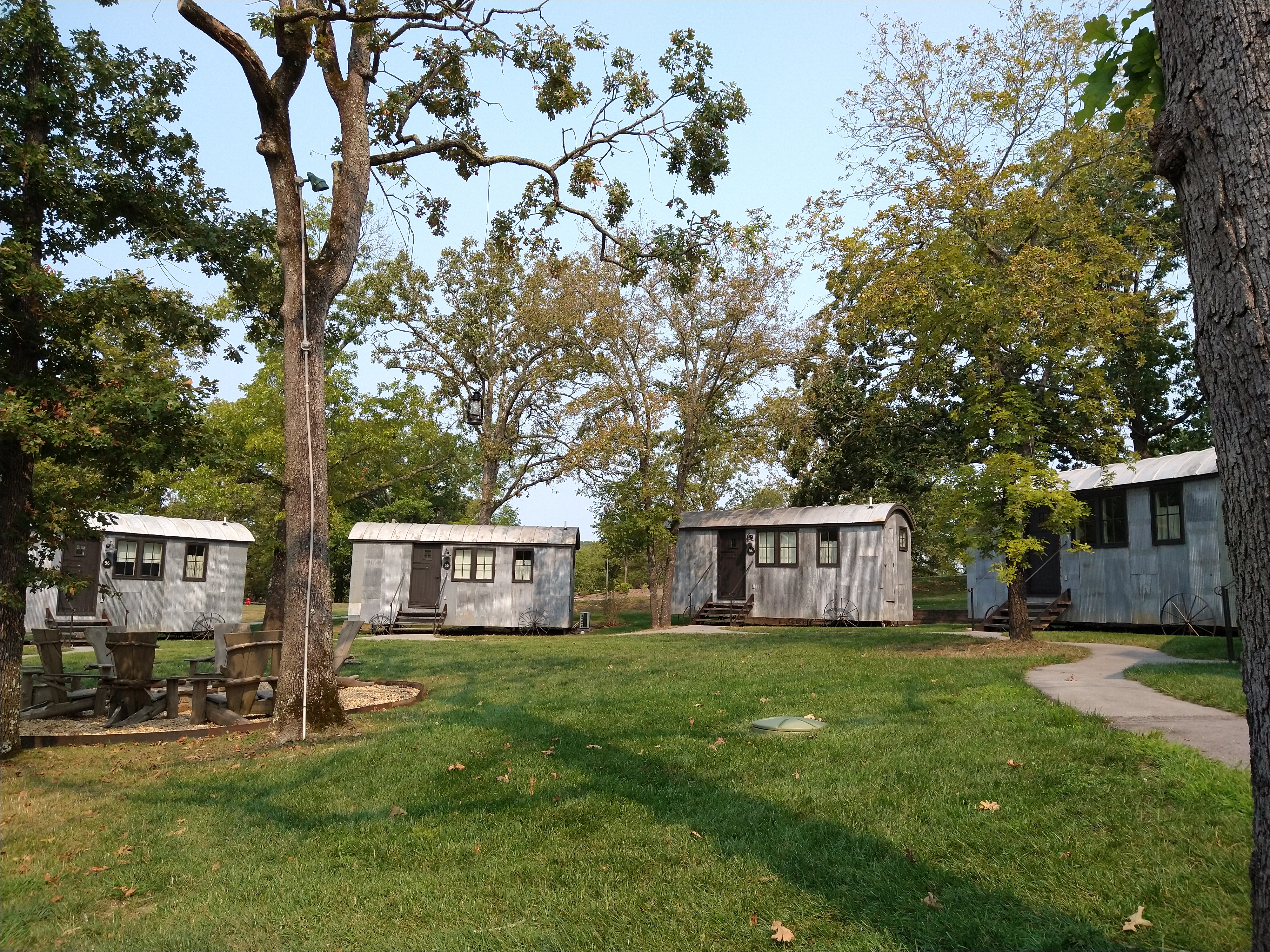
We left Eureka Springs on a warm, sunlit morning, heading east through the Ozark Plateau and then north into Missouri, leaving the mountains behind and entering the flatland of Missouri. Well it wasn’t completely flat. We were still in hills when we crossed into Missouri, and our search for a cup of coffee and a view of a lake led us to Camp Long Creek. I was really taken with these tiny cabins.
There were also many hills around Branson, the entertainment center of the western world, which was our intended first stop for the day. We were planning to check out the world’s largest roll of toilet paper, a photo of which would likely be the most priceless souvenir we could gather on this entire trip. Unfortunately we were unable to get that far since there were too many distractions long the way.
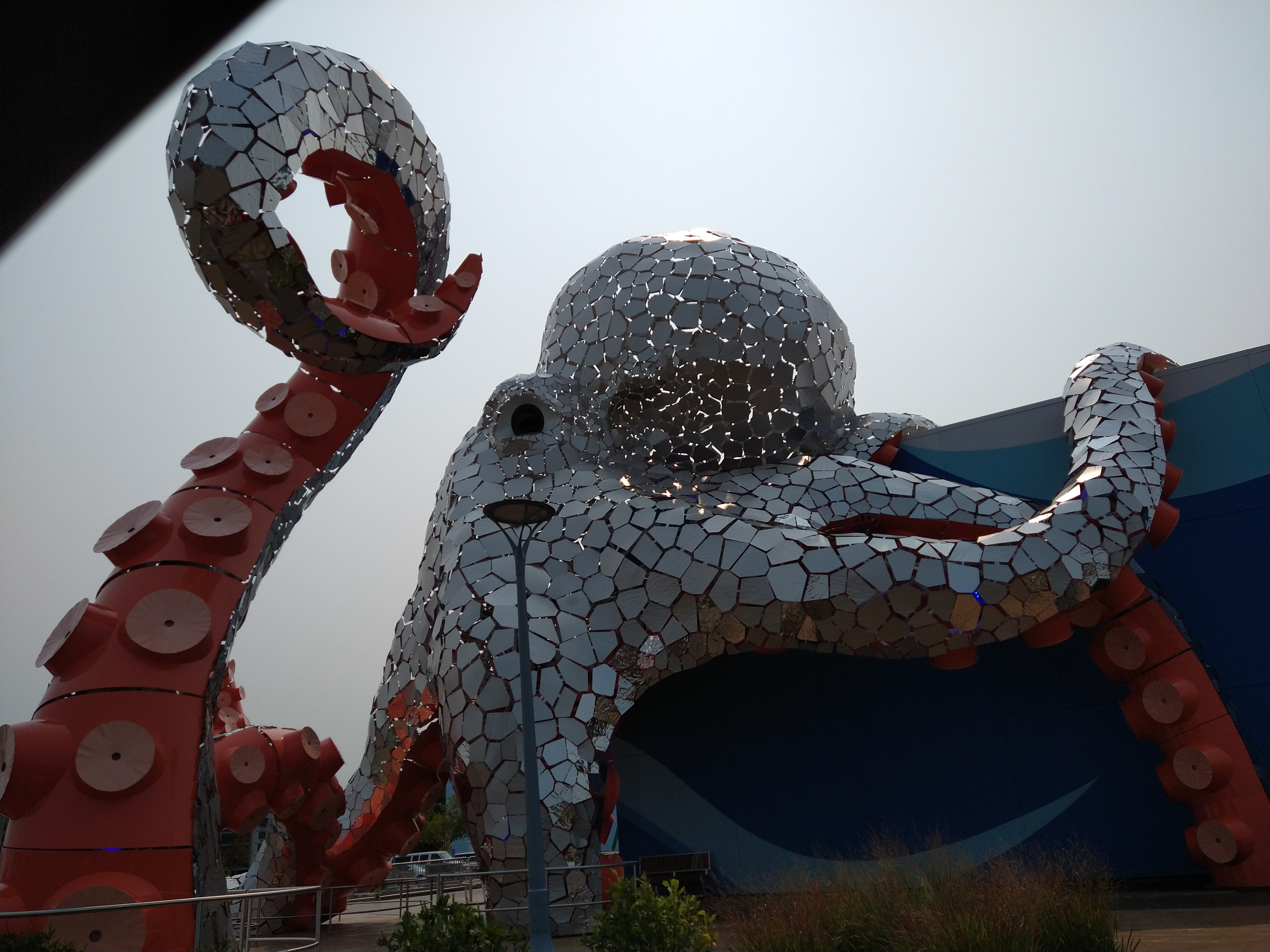
There was the world’s largest octopus devouring a building.
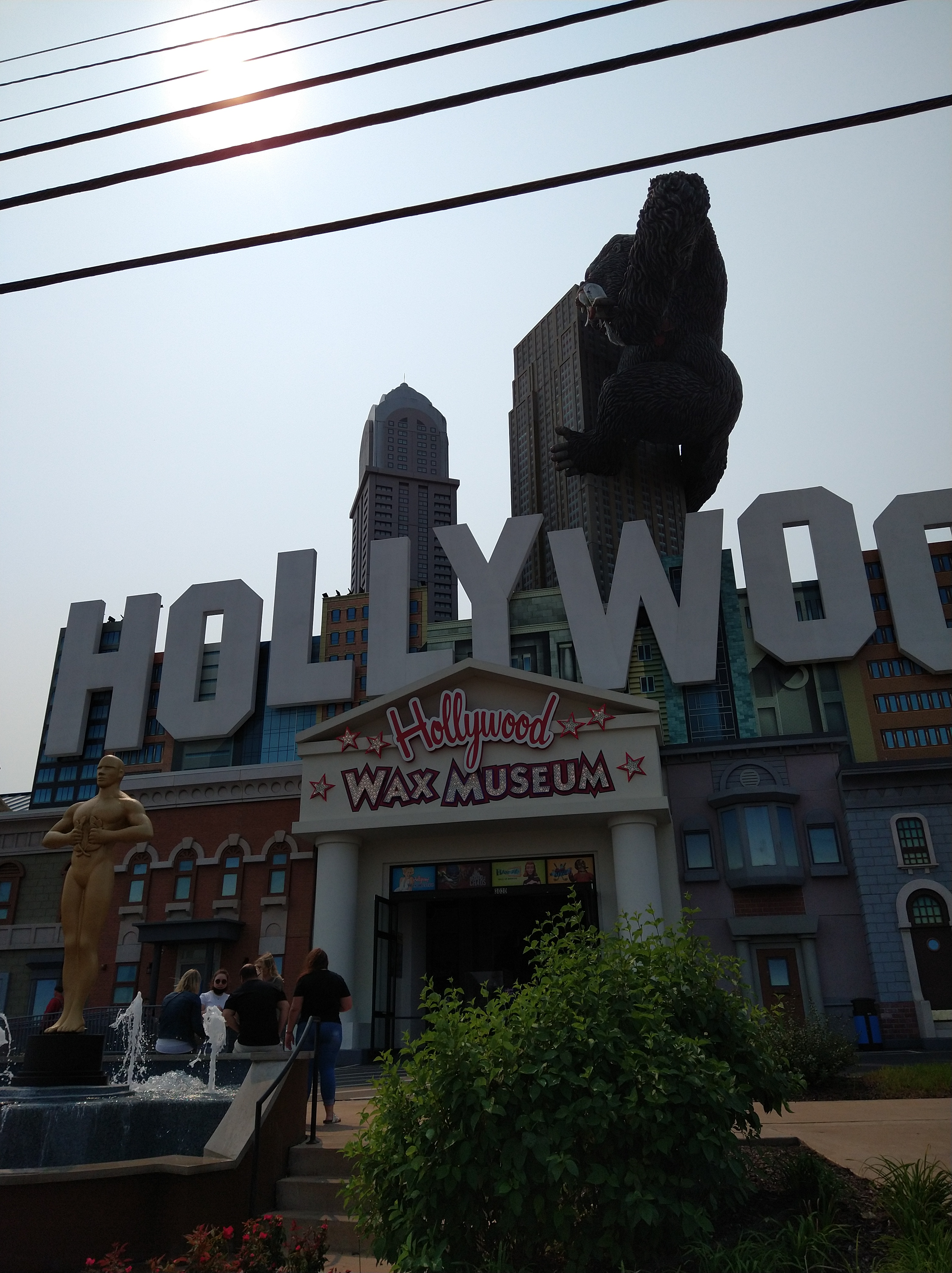
There was the world’s largest Oscar statuette ignoring the world’s largest statue of King Hong destroying a building.
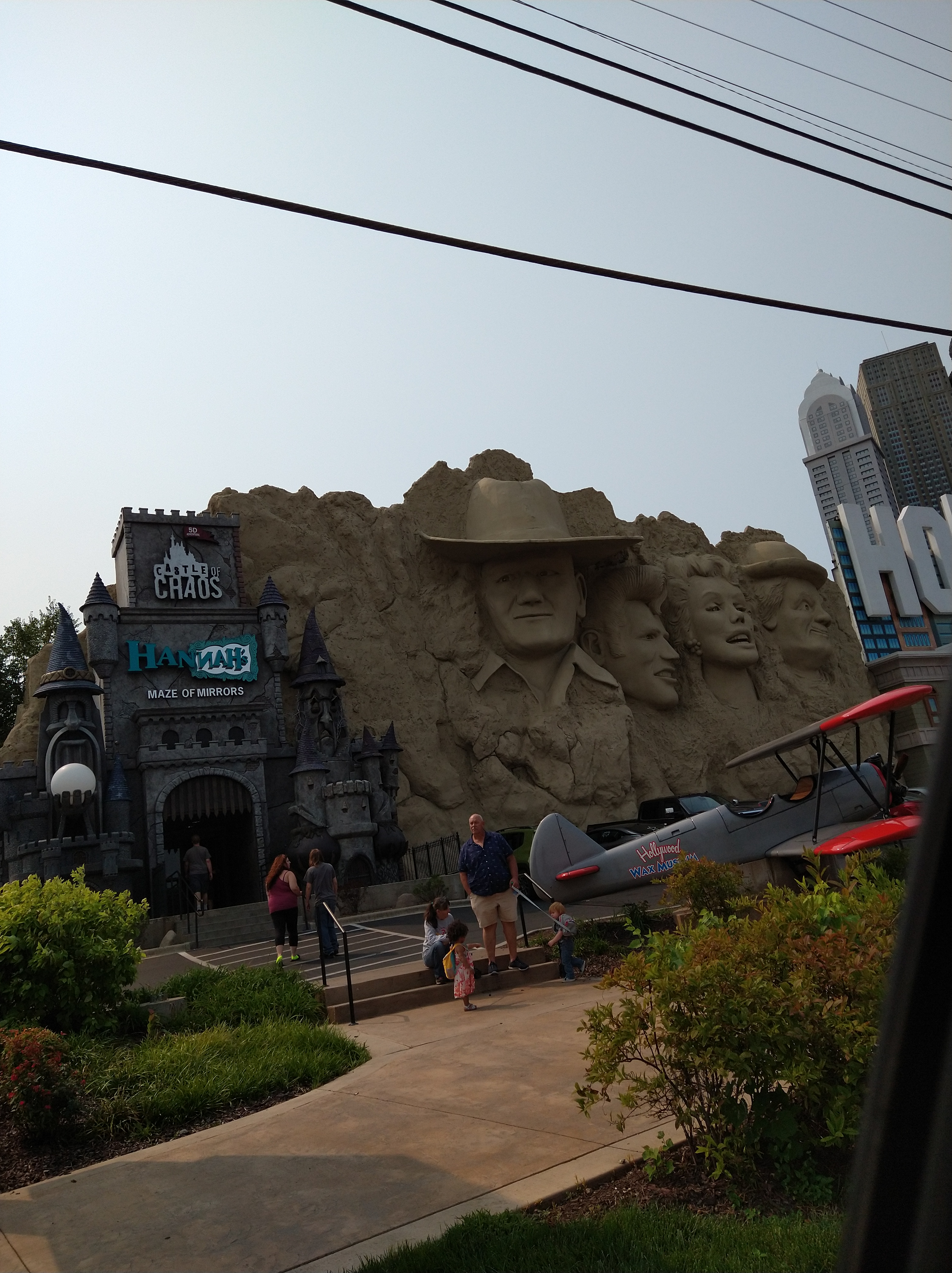
And there was the country western Mount Rushmore
But mostly there were the top three of the world’s longest red traffic lights and the longest line of cars waiting for them to change. So we said, in our most gentile manner of expression, “F*** this S***, we’re outta here” We didn’t leave our car in Branson, even for a photograph. We agree that Branson is probably a great place for a family vacation. There are lots of water parks, theme parks, miniature golf, museums, and all sorts of entertainment venues. It’s like Las Vegas without the gambling, and possibly the class.
We bypassed our second planned stop as well. A friend had told us of the monument to Old Drum in Warrensburg, Missouri. Old Drum was a dog whose death by shooting was the subject of litigation. During the closing argument the attorney pursuing the case coined the phrase Man’s Best Friend . Unfortunately I found that I had actually plotted a route that took us far from Warrensburg. I blame the fact that our map had a crease in the wrong place, but Paula insists I was not paying attention. I’m sure I’m right.
The road eventually flattened out and we coasted along at a rather good clip on US 65, passing farmlands of corn and soy all the way to Glasgow. After checking in at the Orchard House Inn, where we were the only guests, we met Steve and Ruth for wine and dinner at Beckett’s, which was a surprisingly good restaurant for a town as small as Glasgow.

With a population of about 1000 people, Glasgow is able to support at least five churches, including Catholic, Baptist, and Methodist, African Methodist, and Presbyterian congregations. They also support a public school (elementary and high school) and a Catholic school (elementary).
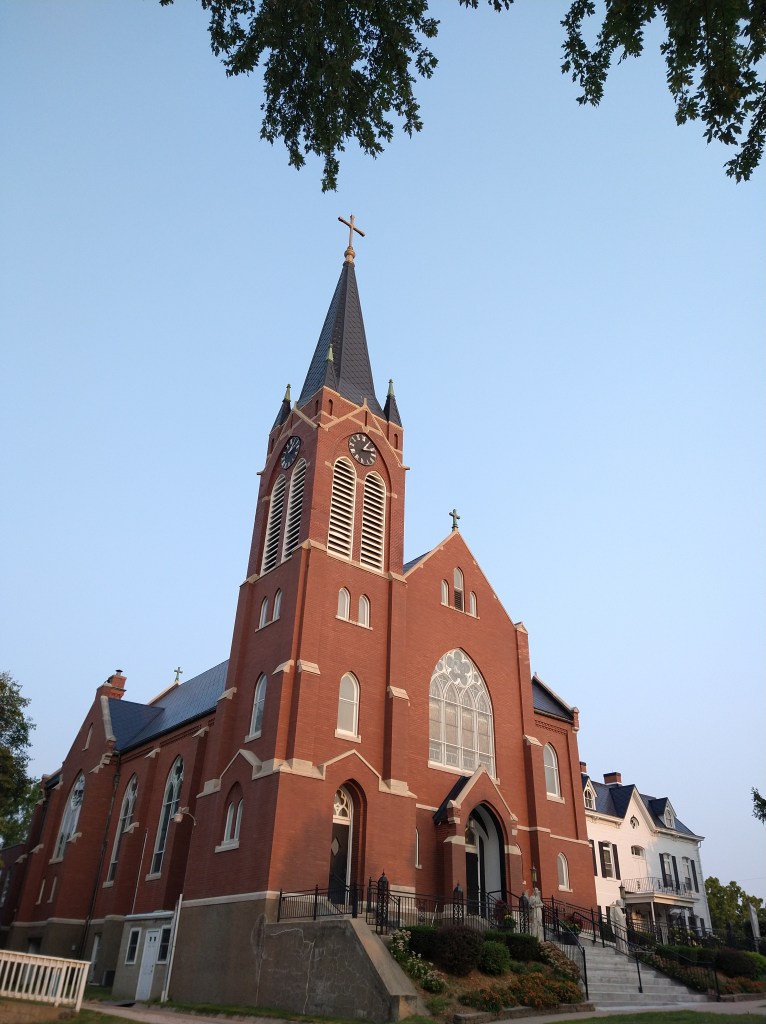
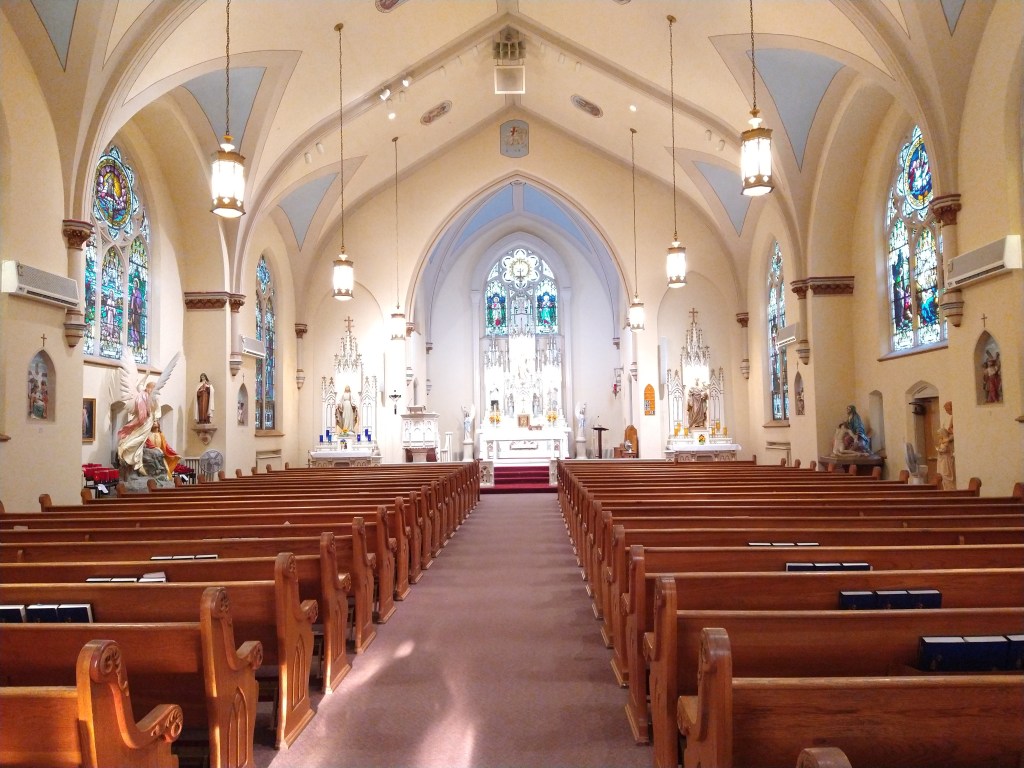
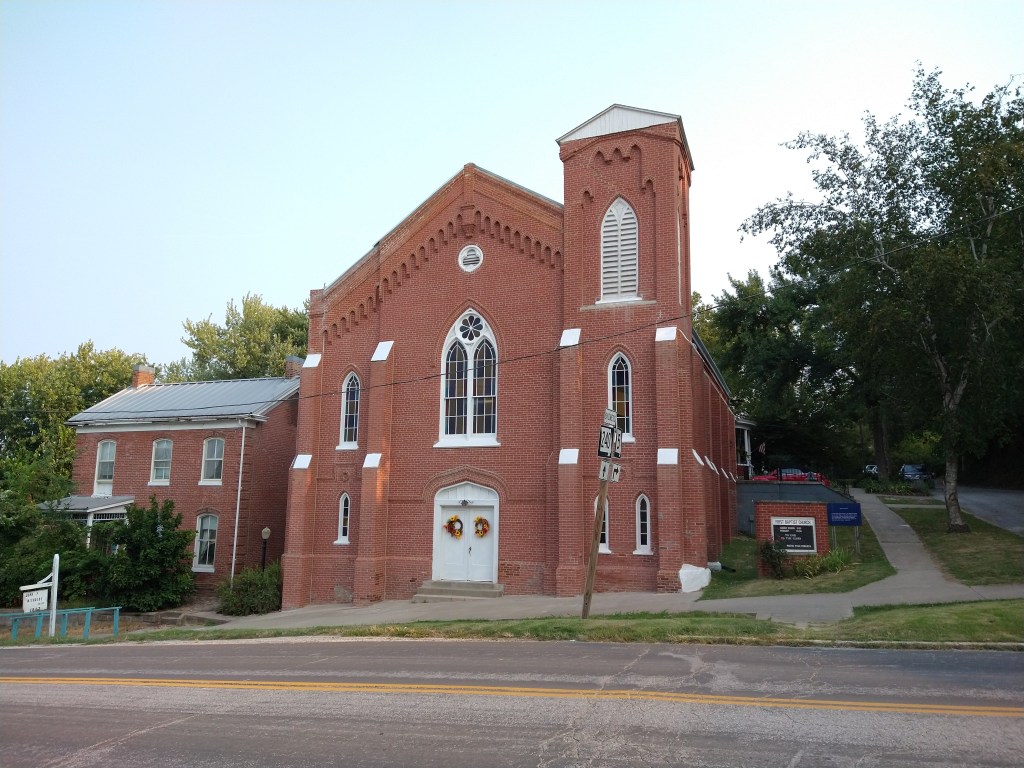
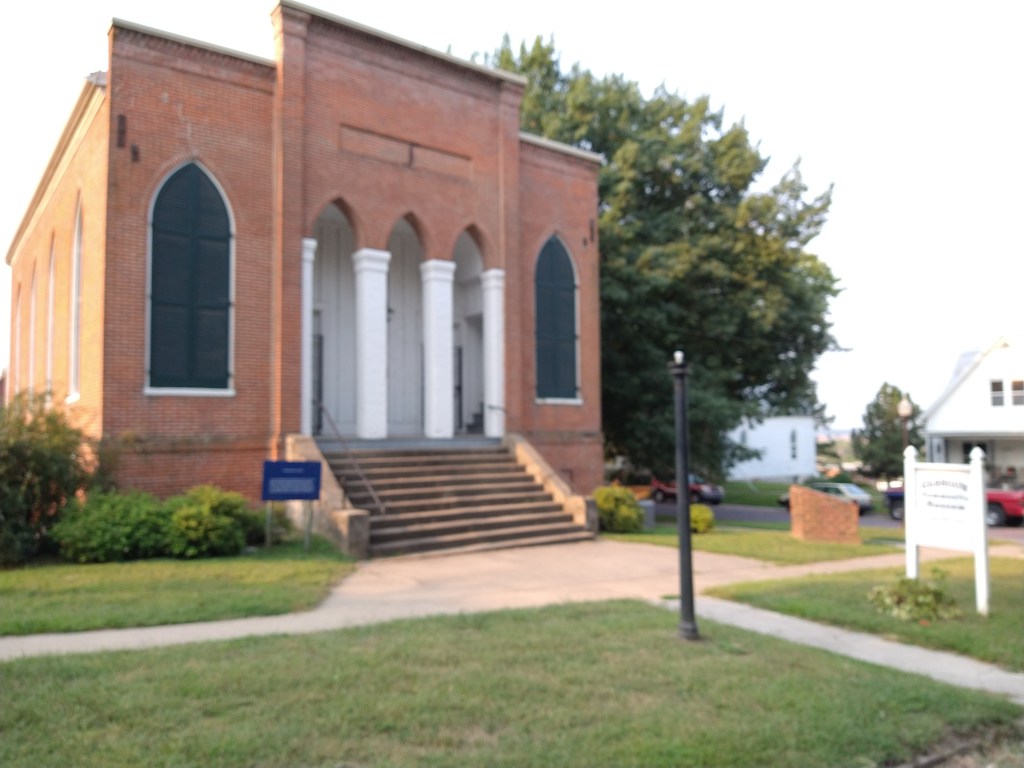
It seems that the tax base is fairly small given the size of the population, and I understand that the industrial base, mostly agricultural is a significant funder of public infrastructure. There is also a high degree of volunteerism in the community. The night we were in Glasgow, a concert and fundraiser for St. Mary’s school was held downtown and a fairly large crown, including a surprising number of young folks, attended.
This brings us to the exciting moment when I can reveal Glasgow’s three claims to fame.
First: Lewis Library of Glasgow is the oldest public library building west of the Mississippi and has been serving patrons since before the Civil War.
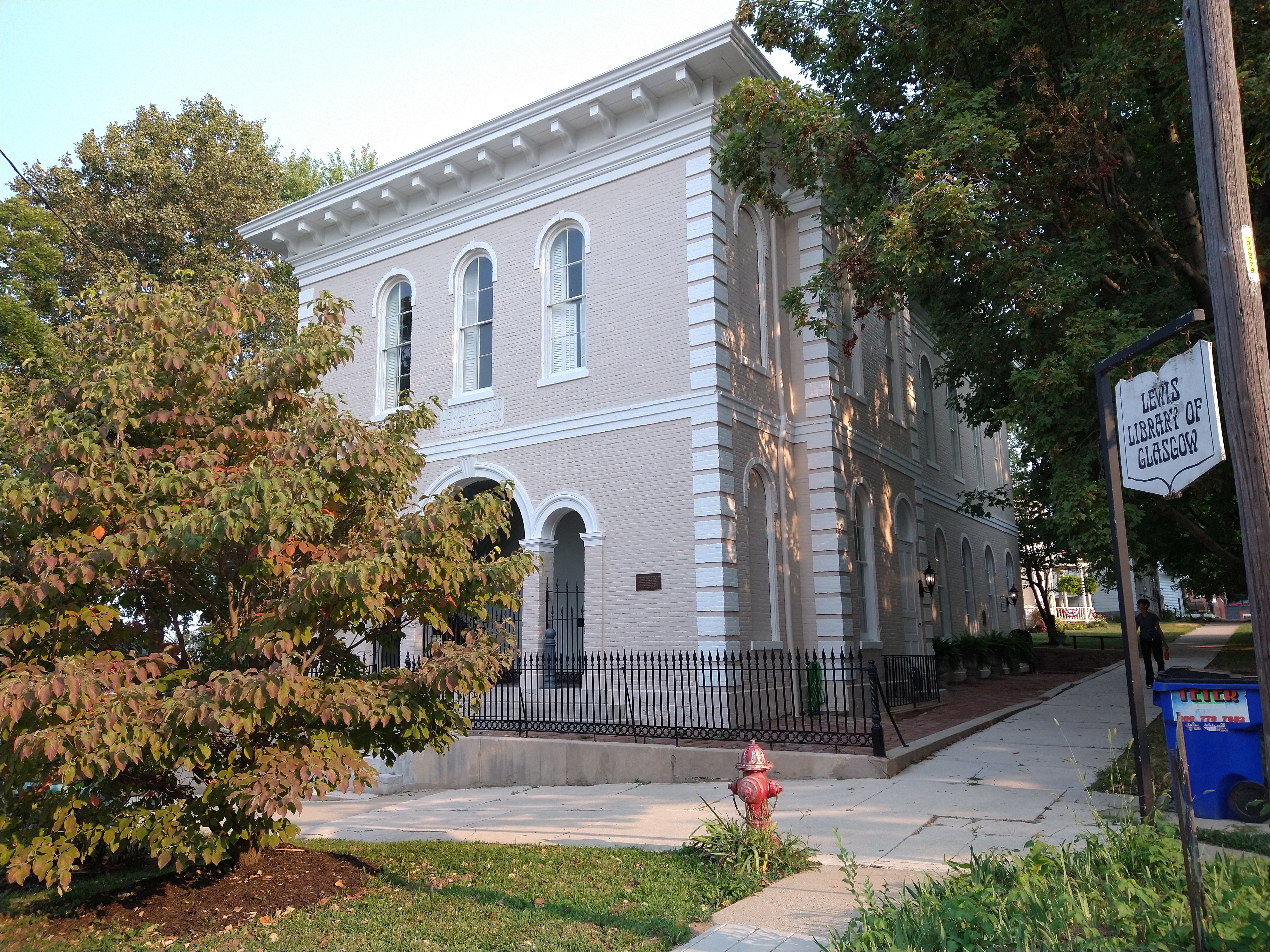
Second: The railroad bridge across the Missouri River was the first all-iron bridge constructed in the world.
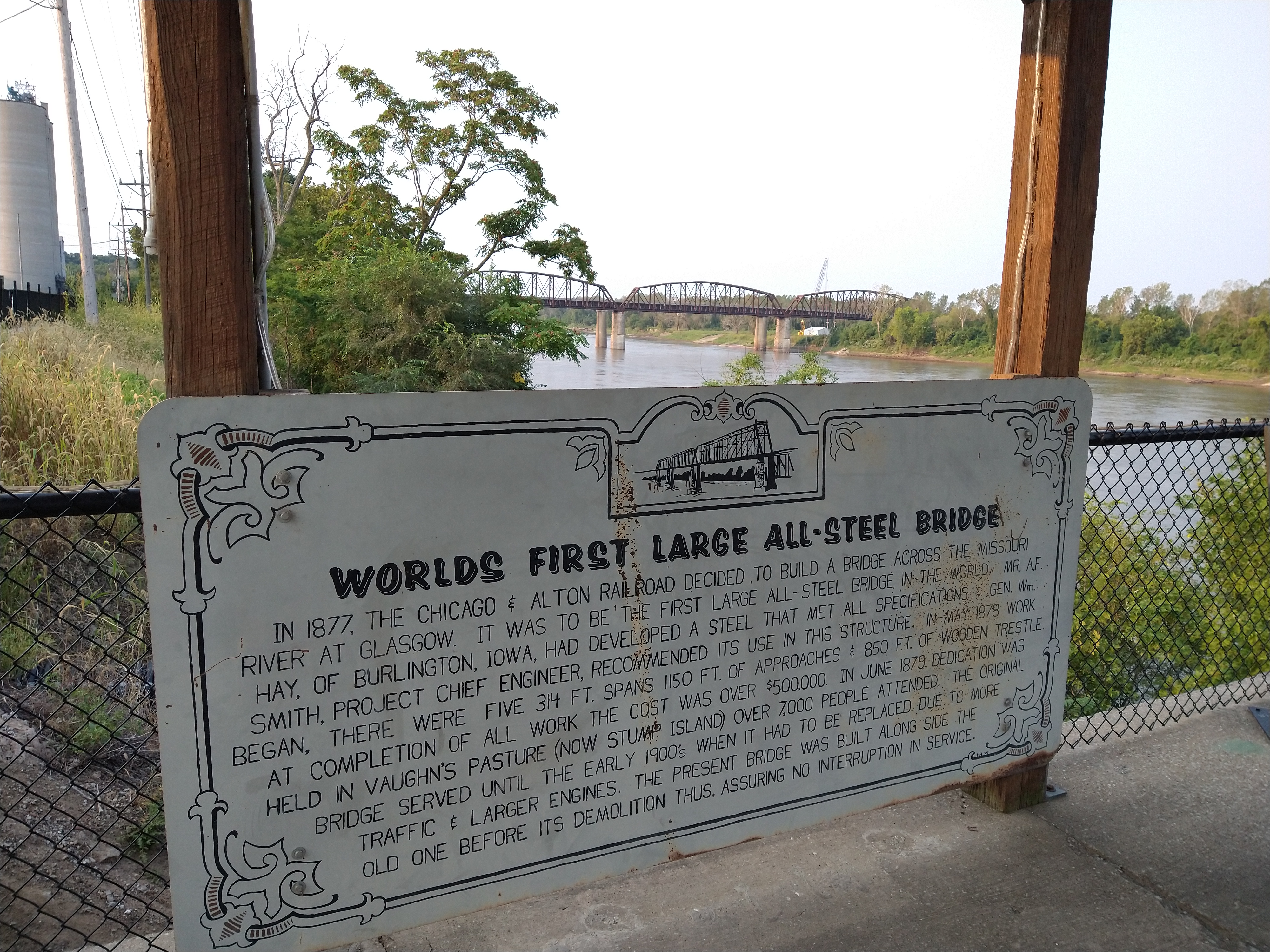
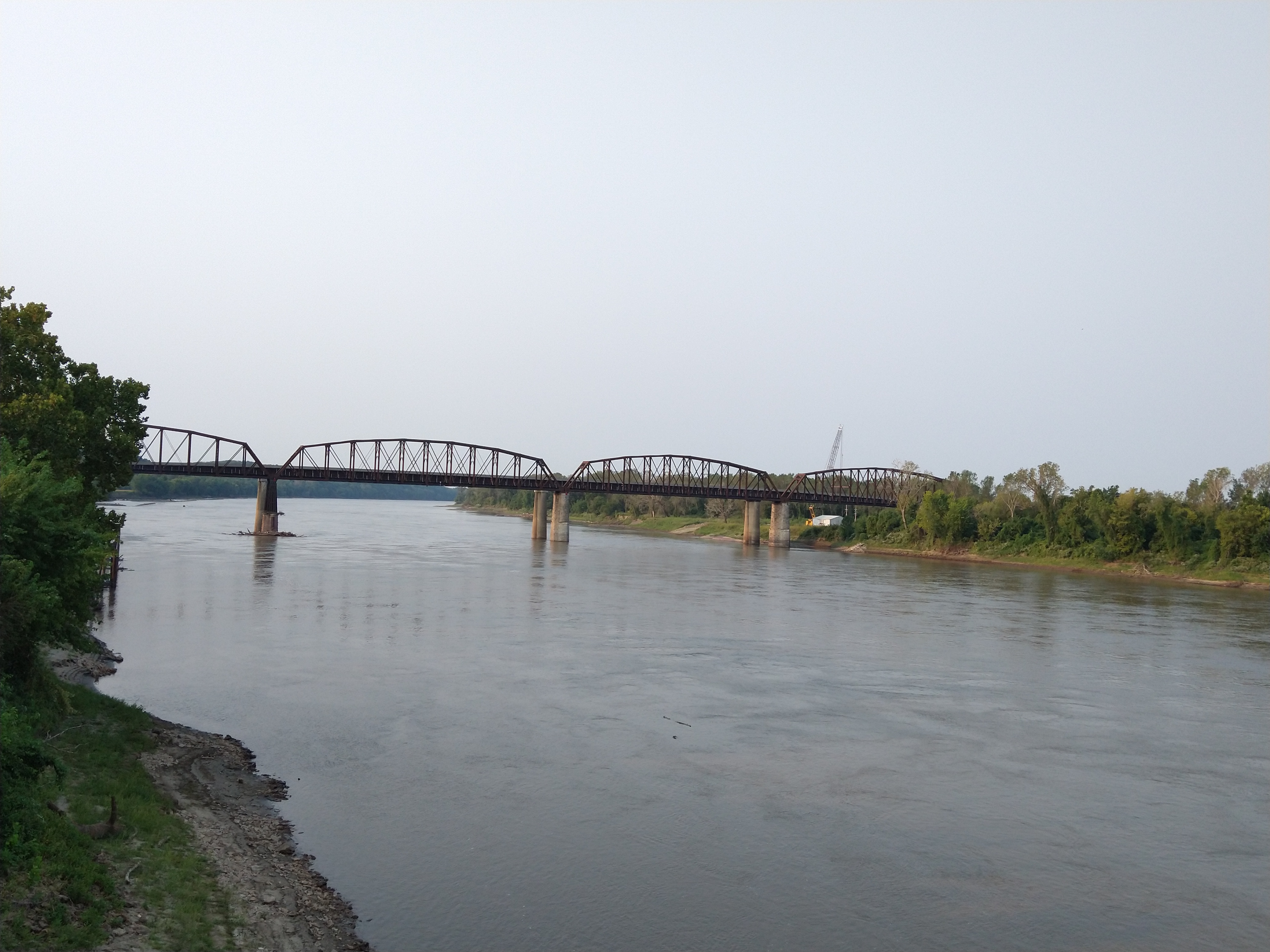
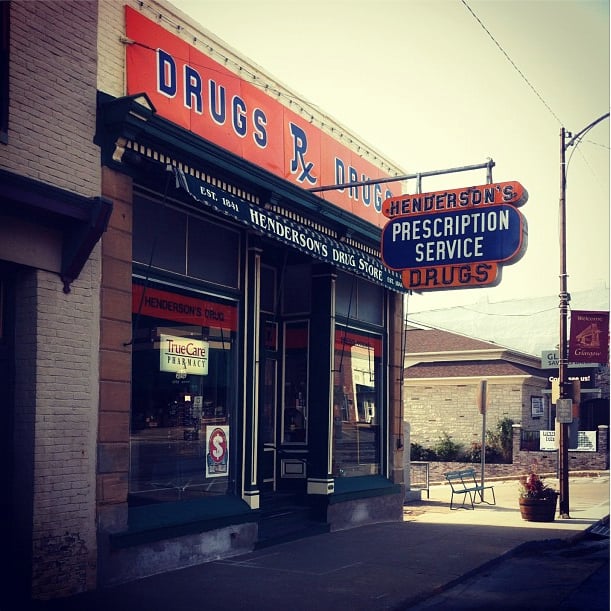
Third, Henderson Drug Store is the oldest pharmacy west of the Mississippi, serving customers since 1841.
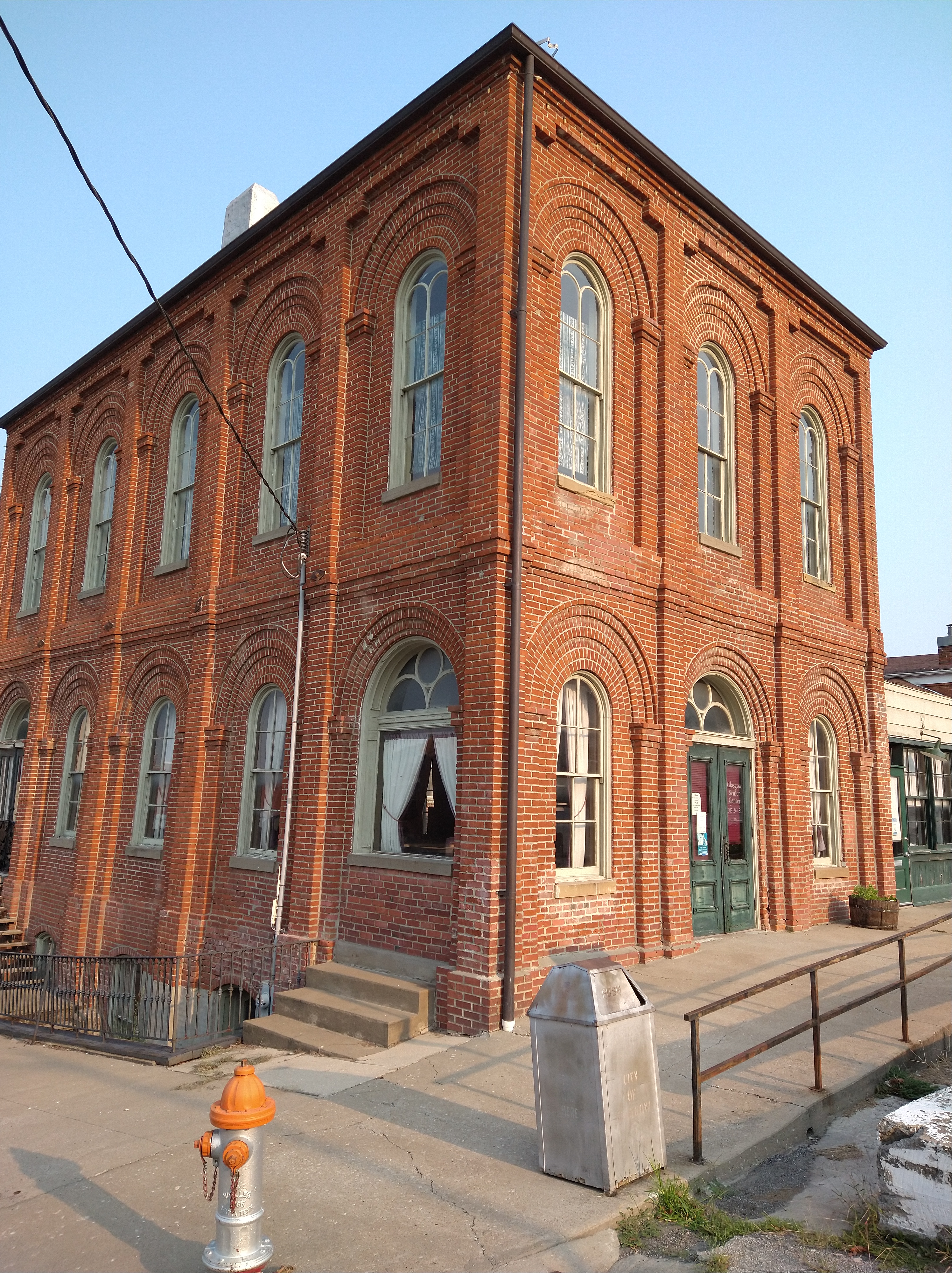
There is also a senior center located near downtown.
As I start to wrap up this post, I hear the voice of Chief Inspector Gamache: “What are you not telling us?”
The main reason we came to Glasgow, was not to revel in its history, but to catch up with an old friend. We spent and evening and part of a morning together and enjoyed reminiscing about the past, and recounting how each of us has come to be in the present. It was a good visit, though too short, and I came to realize how much is lost when we fail to maintain relationships with those who matter to us. It is possible that one arrives at a time of life when it is too late to have lifelong friends. I regret that I have waited as long as I have.
The drive through the western end of the Ozarks to Eureka Springs took winding mountain roads with enough hairpin curves to make a bald man nervous. I’m not sure what that means, but I couldn’t pass up referring to hairpins and baldness in the same sentence. I’m always tempted to drive fast enough to scare myself on that type of road, but avoided doing so since Paula was driving and we ended up behind a tractor-trailer rig most of the way, two factors that enforced a reasonable pace. We had plenty of time to enjoy the views.
We drove right to the massage center for Paula’s scheduled ninety-minute massage. I took the time to walk around the area, upsetting myself by taking the most heavily travelled road and completely missing the turnoff to the historic center. I had a good view of motels and storefronts, and had no difficulty convincing myself that it has been a colossal mistake to schedule two nights in this place. By the time Paula was done with her massage I’d worked up a good case of ‘hanger’ which was fairly well dispatched by a good dinner and craft draft at an outdoor patio downtown.
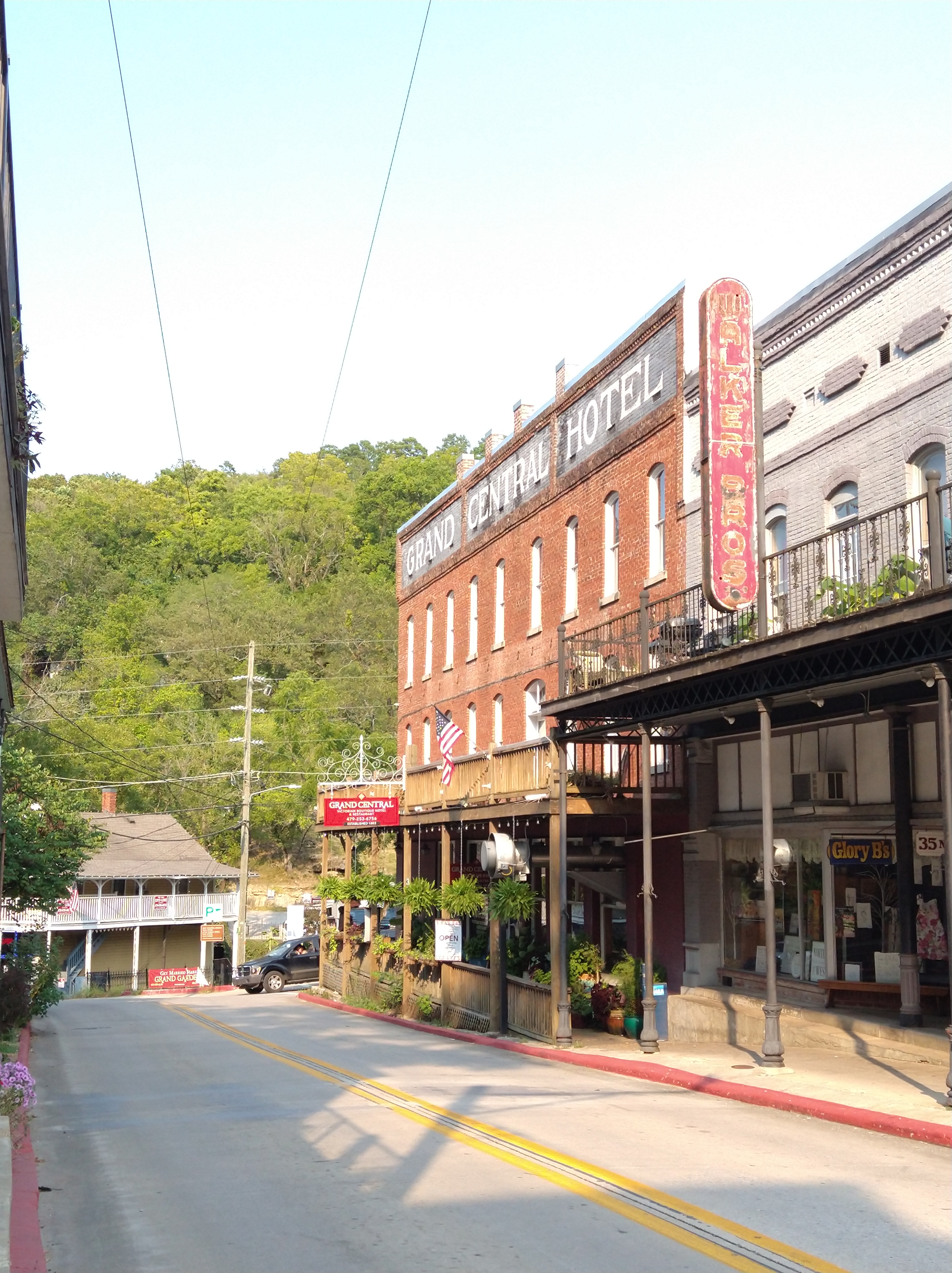
Downtown is definitely down, except where it is up. No, I’m not stoned, I’m just meaniging to to say there is not a level five-foot length of street anywhere in the area. I find it amazing that so many stone buildings could be built on such steep hills. I was told there is a seven-story building in the city where each floor has an entrance from the street. We did not see it and can’t recall seeing any seven story buildings. I would not be surprised if it were true, since we definitely were either headed uphill or downhill for the entire visit.
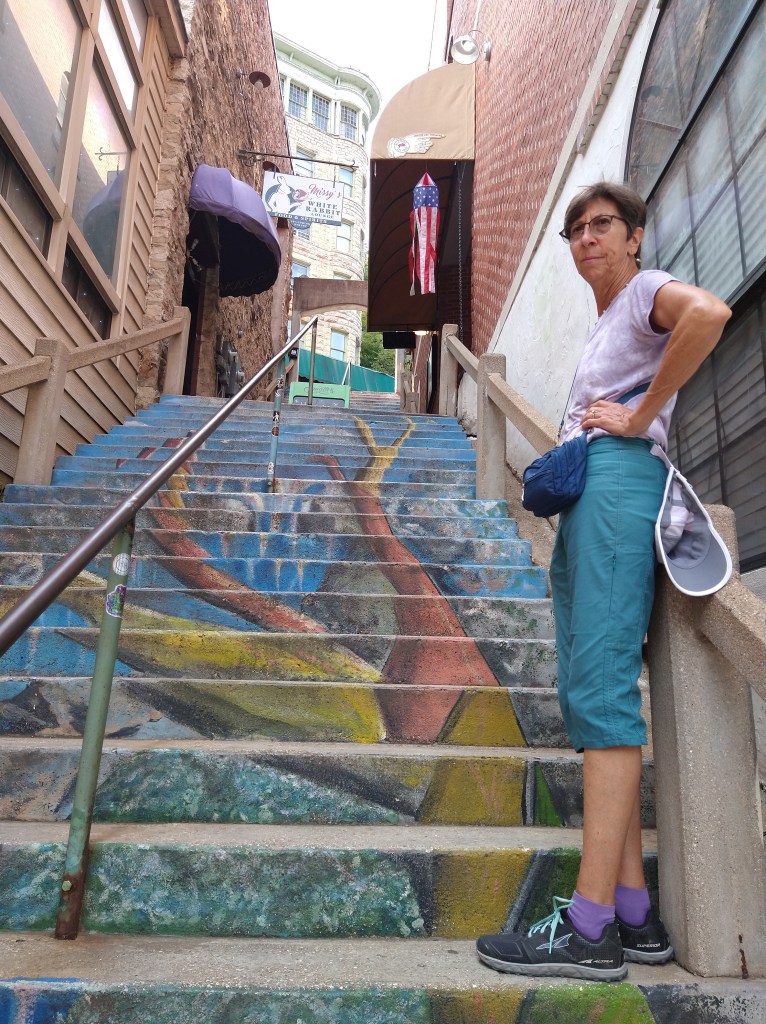
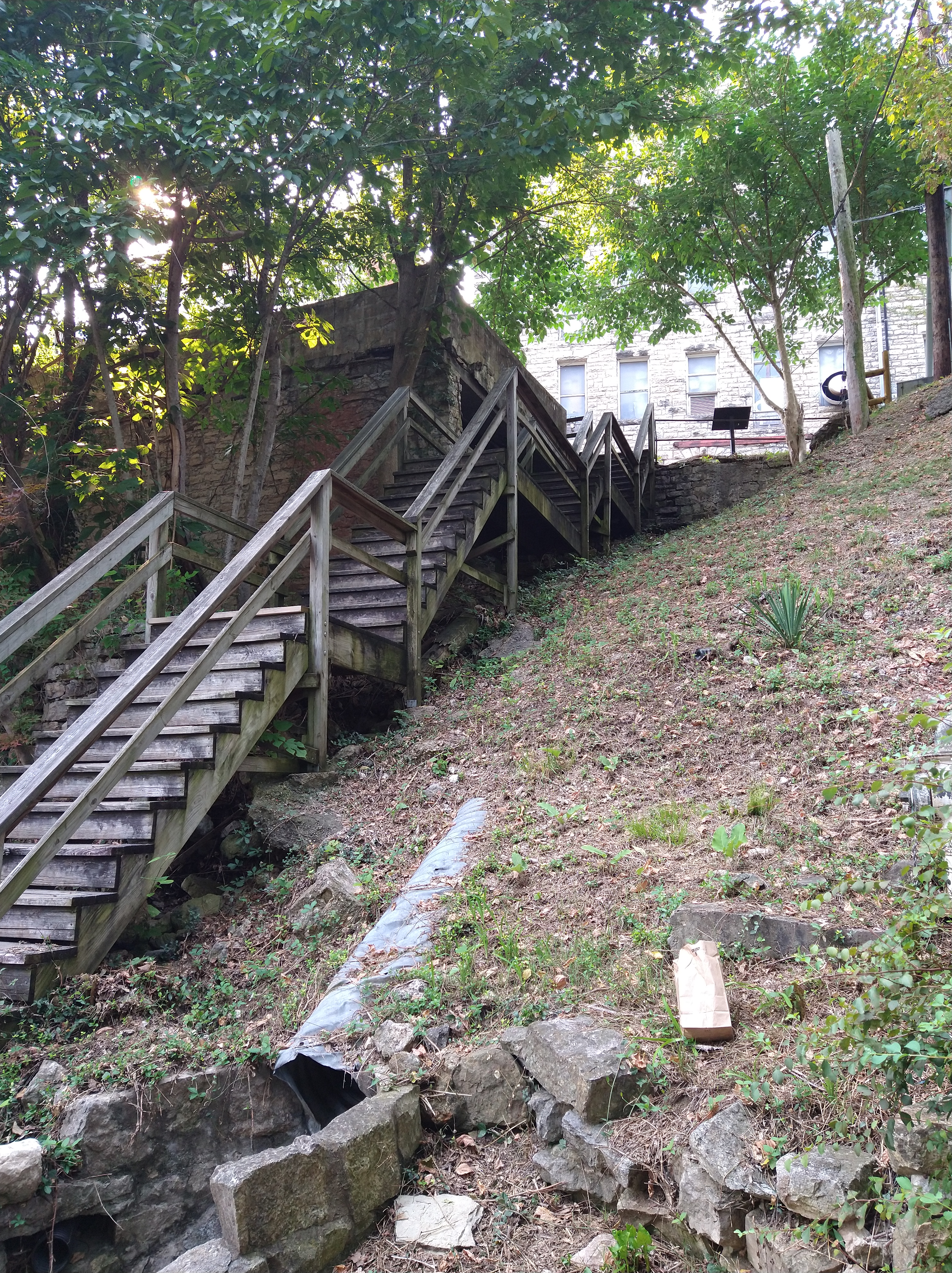

We were actually able to find parking spaces in our two ventures to the historic district. Traffic, particularly in the daytime, is dense if not congested. Eureka Springs appears to be a popular spot for motorcyclists. Designated motorcycle parking is everywhere. It is important, though, to recognize that only Harley’s are really motorcycles, the rest are motorbikes, rice burners or crotch rockets. Drivers of BMW’s, Motoguzzis, and Indians are not necessarily forgiven their sins, but at least receive a dispensation.
Eureka springs has been known for the healing properties of the spring water since before the Civil War. Of course all sorts of patent medicines were popular in the 19th and earlier 20th centuries so we take the health testimonials with a grain of salt. The health benefits of salt have also been overstated, we hear. Now, however, public access to springs is difficult, if not impossible. We thought we’d check out the hot springs for relaxation. There are no hot springs. Are there cold springs? Yes. Where can we find them? You can’t since they are closed to the public. What about the reputation as a health resort? There are plenty of spas and massage parlors. Any more questions?
We actually found a cold spring and were warned away by signs saying the water is unsafe to drink or to contact. Paula found a copy of a sign from a century ago pointing out that fainting, chills, diarrhea, and other effects from the water should be seen as a sign the cure is working. Sort of like what we hear from the CDC about adverse effects from the COVID vaccine.
In reality it seems that the purpose of historic downtown area in exclusively to sell stuff to tourists and to offer accommodations in once luxurious hotels. i don’t think I’ve ever found something I need at a tourist shop. The historic center does have its charms, though, mostly in the quaintness of the buildings and in the friendliness of the residents.
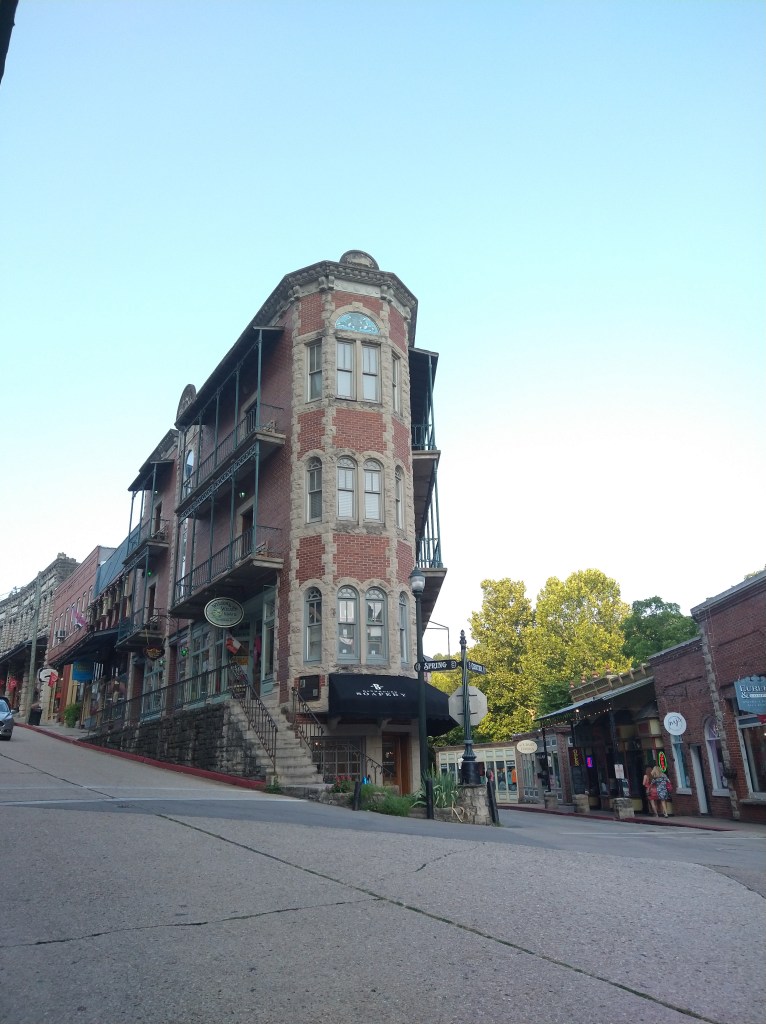
The Flatiron building is actually a recent incarnation of two previous buildings that had been destroyed by fire. This is the second on this site and was elected on the late twentieth century.

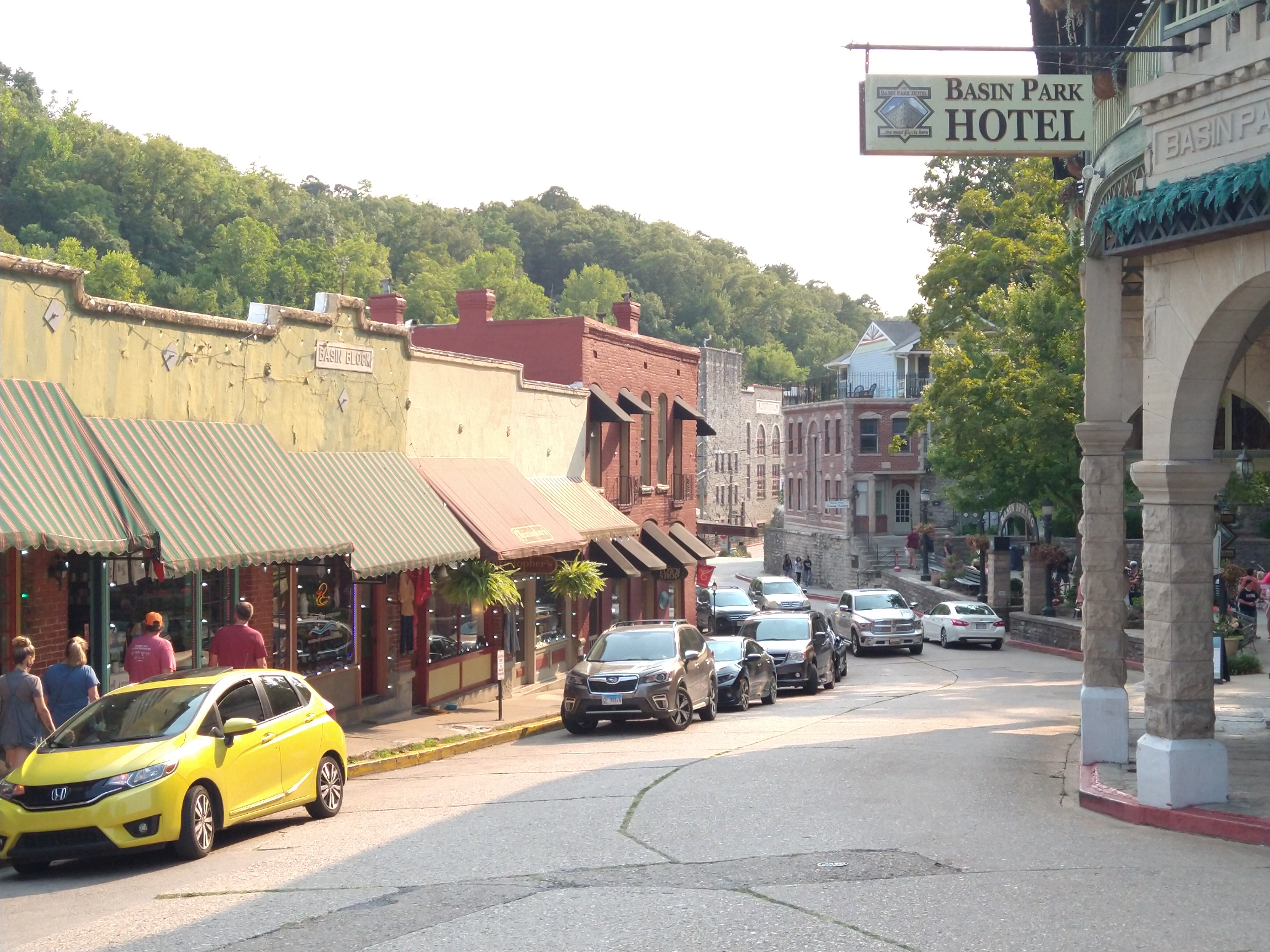
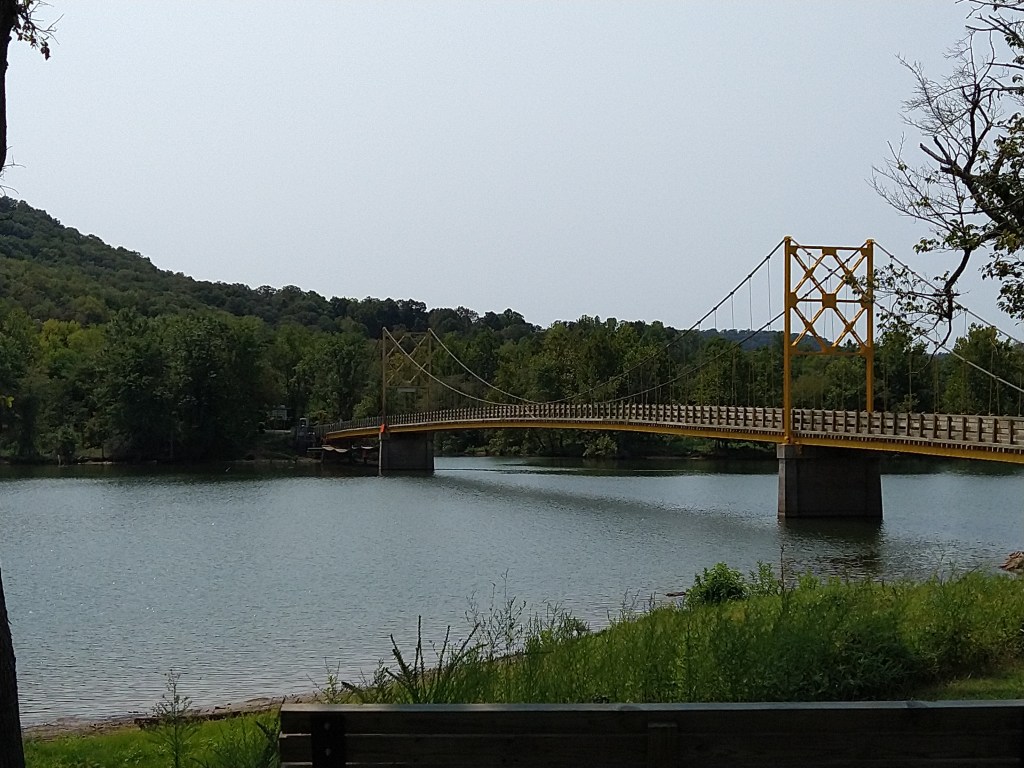
The locals we spoke with universally directed us to the surrounding countryside rather than anywhere in the city for enjoyment. Except for food. If barbeque is your thing, there are many establishments that can fill sate your appetite. Paula and I shared a Cubano sandwich at the Rockin Pig for lunch and weren’t hungry again until the following morning. A young man we encountered at the visitor information center suggested we drive to a wooden bridge at Beaver Lake. It was a really beautiful mountain road with many vistas and overlooks. We stopped several times to appreciate the quietness and watch hawks circling above the river. The bridge is a steel bridge with a deck made of wood planks that rattled like hell when we drove over. I was struck by a memory from childhood of crossing a bridge like that and being terrified, thinking the bridge must certainly collapse from the weight of the car. I was not surprised to later find that RoadsideAmerica.com identified that bridge as the “Terrifying Beaver Bridge.” The attendant at the park told me the bridge will be closed starting in two days for maintenance. Seems that our timing was spot on.
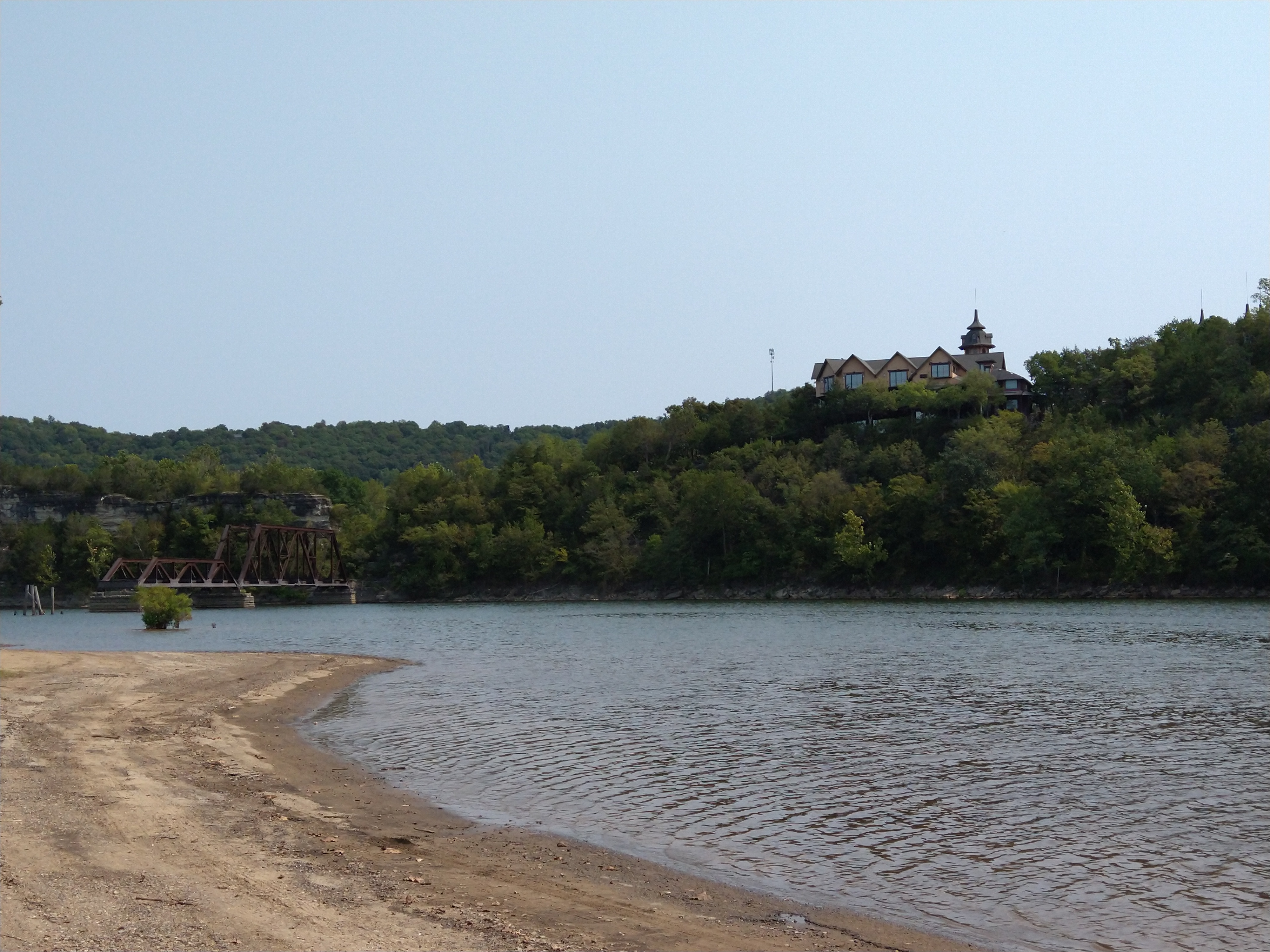
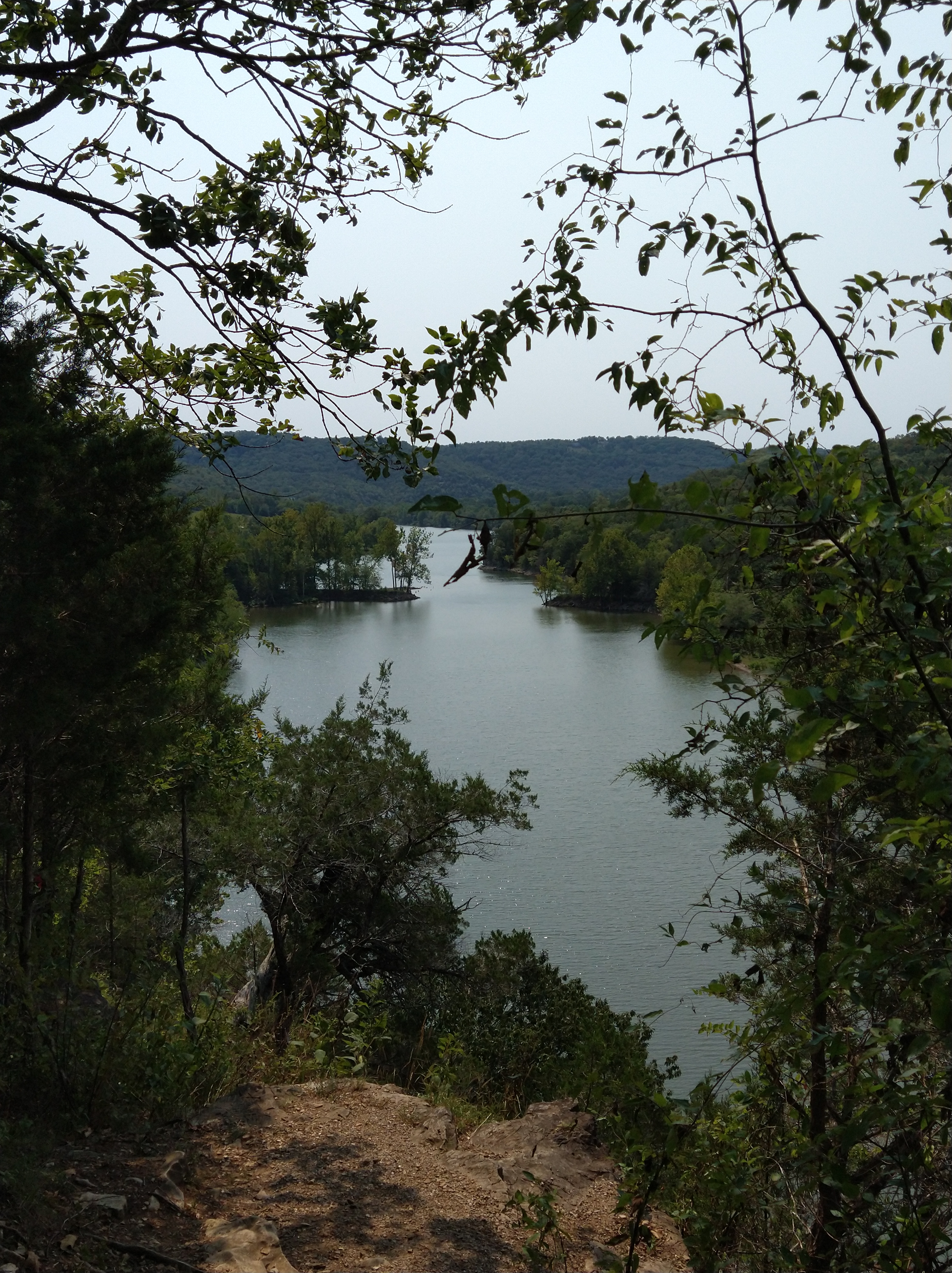
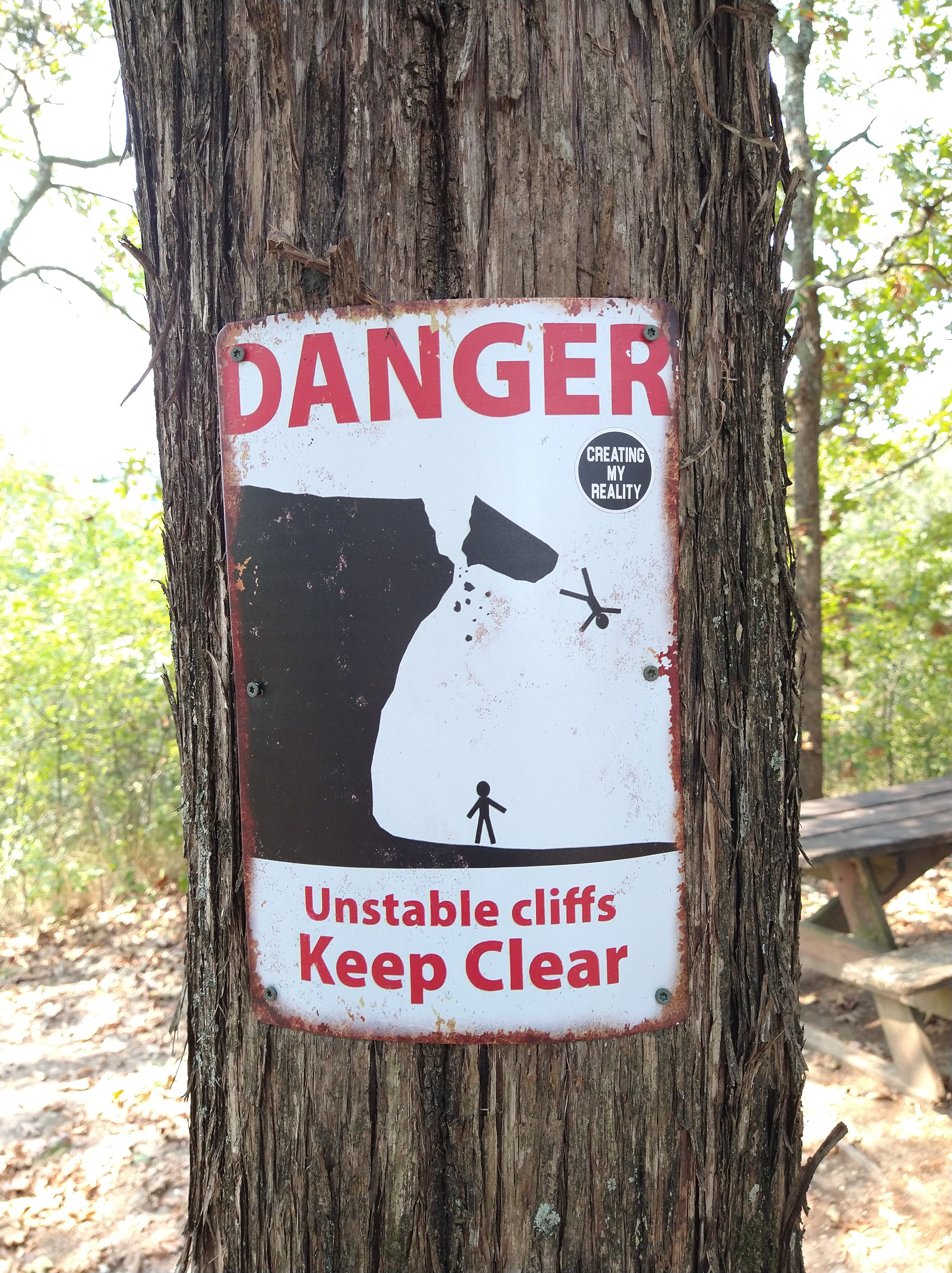
We also walked around Black Bass Lake that afternoon, a hike of not more than a mile. It was very quiet. We had been told it was a place few tourists would find. We only saw one person though there were two cars in the parking lot.


Altogether, I think the visit to Eureka Springs was worthwhile and I’d recommend it to anyone with an interest in history or architecture.
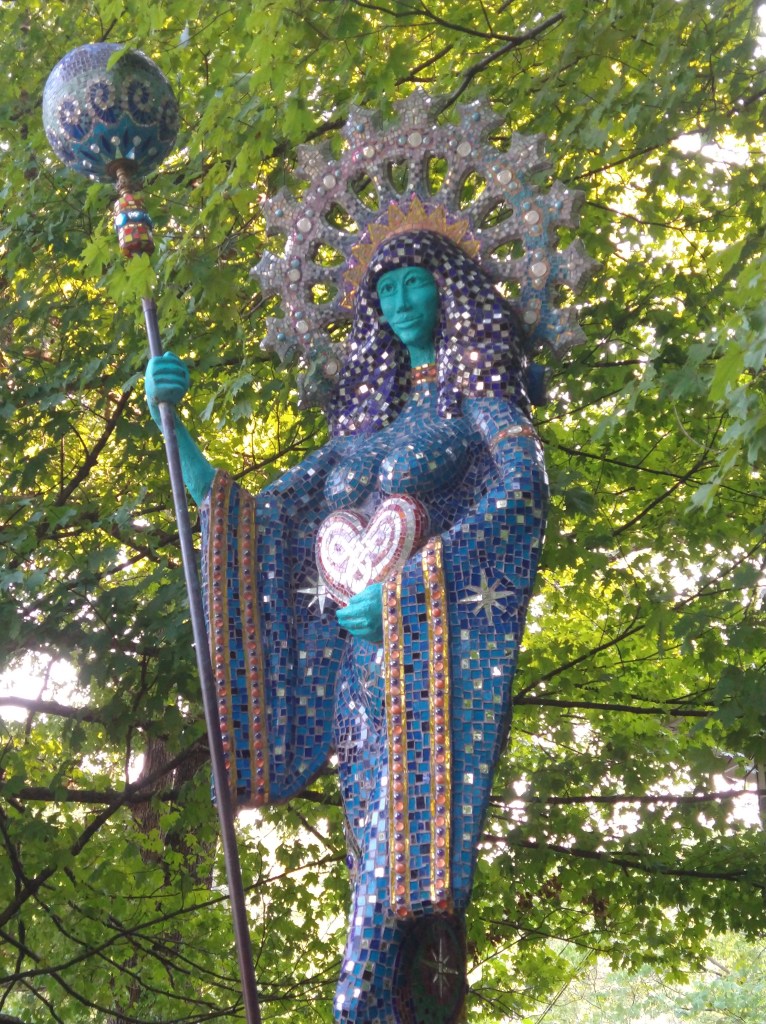
It is essential, while in Eureka Springs to pay homage to the goddess of feminine cosmic energy found overlooking the Basin Springs Park.
 Shared Illusions