Why me?! Why not me?

Wah. Why does Charlie get easy internet access and not me? I lost a post. I won’t try to recreate it.

It’s a ghost town here at La Vidala. The Fiesta Nacional de Queso is over. The crowds have gone or are on their way out of town. Town being Tafí del Valle. We arrived on Saturday morning after an overnight bus trip from Cordoba, through San Miguel de Tucuman. It was sad leaving Colanchanga. But as I recite every morning: “I give thanks for the journey. I give thanks for the arriving and leaving.”

I really like the location of Tafí. Nestled in a valley, its surrounded by soft green hills, very different from the hills of Colanchanga. The day we arrived it was hot and humid, even here, one place people come to escape the heat of the city. Most likely the city of San Miguel de Tucuman, about 2 hours away. A city we are thankful not to be in, not that it was a consideration. Maybe a short consideration when we checked in on Air b and b and Booking.com to find that places to stay were in short supply and expensive in Tafí.

20190223_141217

But we found La Vidala and are happy to be here. We also found out why accommodations are in short supply. The Fiesta referenced above. It started Wednesday and ended this morning around 7 am. What an odd time to end a fiesta, you think, on a Monday morning. They do things differently here.

While the fiesta title focuses on cheese, it’s really a fiesta of Argentine culture. Yes, there is cheese and lots of it being sold in town and on the fairgrounds where the main fiesta is held nightly. The large grounds encompass a rodeo ring, a children’s midway – think rides for the very young ones, lots of cheese stalls, artisans selling homemade goods of woven and crocheted variety, leather items for the vaquero, grilled meat, and did I mention grilled meat? Also fried potatoes, hotdogs, which are called panchos here, beer, wine, and Fernet and Coke.

20190223_22484720190223_230626

A word about Fernet and Coke. Fernet branca is ubiquitous. Given the branca, (Portuguese for white and since Brazil is close by…) I thought it would be white/clear. It’s a dark medicinal brown, with that same medicinal flavor. Bitter. We had to try it. Stopped at a stand and asked for one, but said we wanted to try Fernet solo. Surprised looks from the young man and woman. But okay, and they warned us. Then they had a good laugh at my face after trying a sip of Fernet. The way to drink it is with Coke, we were assured, so that’s what we got. Although we were also told that a capful of Fernet straight, after a night of hard drinking and/or too much eating had a healthful effect. At the fair, people carried 2 litre sized bottles of coke, a bottle of Fernet, and plastic cups filled with ice. I wondered if Coke started the Fernet and Coke craze. Or does Coke manufacture Fernet? People are as addicted to it here as folks are married to mate in Uruguay. Fernet, by the way, is a bitter and was originally produced in Milan, Italy as a remedy for cholera. Fernet crossed the ocean with the many Italian immigrants to Argentina. And it is still distilled by Fratelli, not a Coke product.

Back to the fair. We also experienced an Argentine rodeo. Lots of fast riding, roping, and riding a bucking bronc.20190223_175158.jpg20190223_180333img_20190223_172540932_hdr~25479336336982394487..jpgimg_20190223_171601250~22766095378427604946..jpg

I have neve seen so many horses out and about, being ridden and grazing just about anywhere. And leaving massive horse poops just about anywhere, too.

Okay. Why did the fiesta end sometime between 7 and 7:30 am this morning – a Monday morning? I don’t know why. Only that it did. Music starts on the grand escenario at 9 and it don’t stop until the wee, wee, wee hours. As our digs are about 1/8 mile from the event, we were really surprised to awake to music at 6 on Saturday morning and it went until after 7 on this Monday morning. It had been going all night! We stayed until midnight-1 am both Saturday and Sunday.

20190223_223110

We enjoyed Saturday night’s music more as it was traditional but updated. Check out Canto 4 if you get the chance. However, it seemed that the Argentine population enjoyed the Sunday night line-up better as they were more traditional. Sergio Galleguillo is especially loved. We enjoyed seeing young and old alike breaking into traditional dance moves on both nights. How I wish I could upload a video. (Another, Why me?!) I tried to send one to Charlie to upload, but that failed as well.

The fiesta also included a parade of carrozas, (floats) each one a celebration of some aspect of Argentine history and/or food. As floats passed the Grand Marshal, participants distributed bits of food related to their float – beef, cheese, bread, or a treat typical of a wedding. Being nosy, er curious, I talked with one woman closely guarding her tray of treats. They were the wedding treats she would hand out when that float passed by. There were 2 sorts: one, a pastry type and the other a bittersweet mix of peach and meat – kind of like mincemeat, but better.

One other noteworthy aspect – the cans of spray soap foam. Kids and adults go crazy with this. Think Silly-String, but in a foamy soap spray that disappears. Although it would take some time for it to disappear on some kids who were absolutely covered in it. Oh, the shrieks and the running wild. It was delightful to behold.

We didn’t realize that this event would be occuring while we were here. In fact, I’d read about it and looked it up on-line, but the dates listed were not the dates of our stay. What a wonderful surprise!


Colanchanga

I love this place. When Charlie and I talk about the possibility of moving there are a few things we want: a rural location, close to a city, and water. Colanchanga has all 3. Especially the proximity to a city, as it is close to the small city of Rio Ceballos, about a 20 minute drive and accessible by taxi, bus, or your own car. Rio Ceballos is big enough that it has grocery stores, panaderias, banks, shops of every sort – everything you might need. For bigger city requirements, Cordoba is an hour away by bus.

The Rio Ceballos runs through Colanchanga and into town. A short walk from the casita in which we are staying there is a dam, perfect for swimming in, which I have done and will again. Up the way from the casita there is a waterfall, which we will get to soon. And I think I mentioned the man-made pool, sheltered by trees and fed by the ever moving Rio Ceballos.

20190217_18412520190217_195310

Now, Else and Vlad, duenos of the casita in which we are staying, are selling a casita just across the road. It’s very tempting. It doesn’t have the view of their rental on the hill, but how fun to live near new friends and have them become friends of long standing.

View from our patio:20190217_142329

Our place:

20190218_154811

Else and Vlad’s place:

20190218_15491520190218_155011

It’s a wonderful open interior. There’s a patio between the two main sections. Mounds of lavender climb the hill providing nector for the 2 hives they keep on the property.

And as it’s time to evict ourselves from this cafe and get some groceries, I end this post. Who knows what wifi will be like in Tafí del Valle, our next destination. I may post again on Thursday as I’ll be in town once again for yoga with Else.

Just a quick word on a guided yoga practice just when I needed it this mornning. Last night we received word that a dear long time friend died from a brain aneurysm. I have been teary since hearing. Yoga provided me the space to sink into the feeling, but more, to feel as though I connected with Mary Lynn on her passage to another realm. The floodgates opened as I lay in shavasana, “corpse” pose, appropriately enough. It felt good to bathe my wounded heart with tears of remembering and appreciating the beautiful soul of a dear friend. I do wish I could have seen her, spent time together, one more time – at least.  And of course, I am holding her spouse of 60 years, Lew, close and hurting for him as well.

Much love to you all. Paula

Small Things

On a long bus ride you will receive boxed food. I mentioned already the hot meal on the overnight trip from Buenos Aires to Mendoza. In the morning, we received a breakfast box. On both legs of our ida y veuleta Santiago-Mendoza  trip, and on the overnight trip Mendoza to Cordoba we also received breakfast boxes. Here is what they consist of: an alfajor (that sandwich cookie I wrote about before); a package of what are called biscocho de grasa, which are tasty and savory, not sweet; 2 packages of sugar, a napkin, and either instant coffee or a coffee bag (you know, like a tea bag, but with coffee – it’s terrible); a tea bag; a plastic stirrer.

Our bus at Argentina aduana.

20190214_121637

Lunch on a long leg consists of either a ham and cheese sandwich or a chicken paste sandwich, also accompanied by an alfajor. Hey, it’s the national cookie. The box also contains everything else that’s in the breakfast box, minus the biscocho de grasa.

Movies are provided during the day or leaving earlier in the evening. I’ve noticed that they fall into 2 camps: a comedy chic flic and an action packed, shoot-em-up flic. One for the gals and one for the guys, I guess. I’ve watched two of them, both silly, but as they are in Spanish, I appreciate the practice.

Waiting for a bus can be a little harrowing. You purchase your ticket and are then told a range of platforms in which the bus might park. So you watch for your bus company, keeping an eye on platforms 10-20, say and reading the bus signs for destination and departure time. Actually, it was only a little nervous making the first few times. I have no qualms about asking the bus driver for clarification.

Santiago is about 1/3 the size of Buenos Aires and it feels it. Really. 10 million people make a big difference.

I got attacked by the bogus “bird poo” scam again in the Mendoza bus station. I felt a spray on the back of my head. A woman sidled up and with a sympathetic smile said, “Birds.” I looked her in the eye and said, “No son los pájaraos, es una persona,” with derision in my tone, eyeing her suspiciously. She took off at quite a clip.

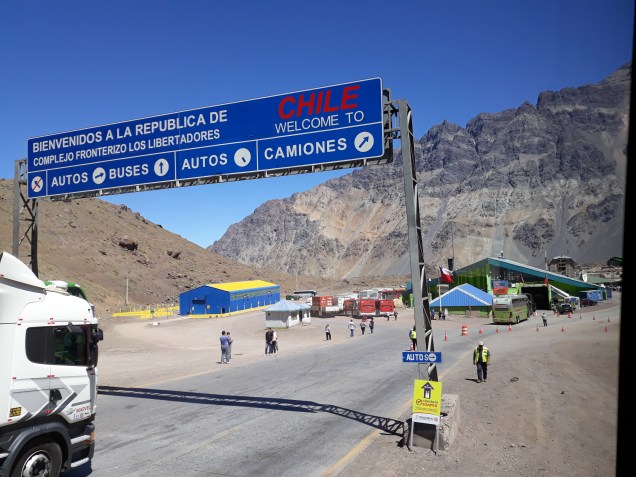
Leaving Argentina for Chile and leaving Chile for Argentina, we did not go through passport control – no exit stamps.

In Argentina, they will add the “servicio” to the bill, but you can’t include it on the credit card. You must leave cash. In Chile and Uruguay, the “propina” is added and you can pay it via credit card. In both countries, they ask if you’d like to add it. It’s a standard 10%.

I am so behind that I won’t attempt to write about our last day or two in Chile. Charlie has that covered. And as these last days in Colanchanga I have not had adequate or prolonged access to internet, I’m off on that count. But I will write a bit about Colanchanga in the next post. We are in Rio Ceballos, having brunch at a cafe with good wifi, so here I come.

Paula

Cacheuta Waters

What you don’t know doesn’t really matter. Or it could, but as you don’t know until later, it doesn’t matter. Or it does matter, but in a way you didn’t expect.

I’d read about Cacheuta Thermal springs in the Lonely Planet guide. As the guide was published in 2018, but the material sourced years earlier, it wasn’t all that relevant. I tried to find more info on-line. The website is terrible. Trip Advisor wasn’t much help either. So much conflicting and unspecific information.

Still, I wanted to go and so we went. From Mendoza it’s about an hour and a half bus ride. When the bus stopped, we followed everyone. I had read that there were two sections – an upper for kiddies and a lower for kids and everyone else. The entrance fee includes both. Which is great if you have kids, as both parts of the park are kid friendly.

This photo – rode along several narrow roads like this to get there.

20190215_111907.jpg

I’ll say this: upon arrival, we were underwhelmed, as is often the case when expectations and reality converge. There were a lot of people. It seemed confined. Yet, as we entered further into the park, it expanded. Still, for the number of people there, it was crowded. And still, for that, it was very enjoyable.

A recorrido, or flowing river of water runs around the park. In the center is a large pool with a central fountain. Two water slides provide slippery means of entrance, should you select that mode. Or, you can just walk into the main cool pool. Around that, are numerous shallow soaking pools, with varying temperatures of naturally heated water to relax in.

20190215_151407

As I was soaking in one of the shallow areas, a young woman joined the rest of us. Settling in, she sighed, “Es un paradis.” I could only agree, as the water was warmly welcoming, the sky overhead was deeply blue, and the surrounding foothills of the Andes provided a dramatic backdrop.

20190215_15152520190215_15161720190215_151654

Another slide just to the left of the tube.

This seems to be the quintessential Mendoza day trip. Families come with chairs, food, mounds of equipment. They claim a picnic table in one of the many possible locations, either under a covered structure, or along the recorrido, under trees. In some areas, grills (parrillas) are available; wood to burn and cook on can be bought. Bring your own meat and accompanying side dishes and make a day of it.

20190215_15125320190215_151339

It was an experience that told me, “This is Argentina.” Families are extended and expansive and really seem to enjoy one another. On arrival, we saw at least 10 family members enter the recorrido together, laughing and chatting and being in the moment. There is an ease among families here that seems accepting and voluminous. Voluminous in speech and laughter, and in the joy of living.

Now, as to what you don’t know. Rather, kind of know, but can’t pin down. Just up the road apiece from the public and populated thermal pools, there is a hotel with private thermal soaks. At the equivalent of ~$50 USD per person, you can imagine it is much more refined. There you will find showers, lockers, towels, room to spare in the thermal pools. What the website doesn’t tell you is that you must reserve in advance to access this delight of desultory relaxation. A variety of massages, facials, etc. are also available.

While that option may have been the more overall relaxing of the two, I have to say that I appreciated being amidst the gente and the full throated, full throttle exuberance of the more local experience. I mean, would the hotel have water slides and the recorrido and full on, true to life family outing? No. So, I’m glad I didn’t know in advance. Cuz, truthfully, I probably would have gone for the more expensive, more isolated, less true-to-everyday upscale selection.

Travel – it plunks you into the local, if you let it.

Time Out

Well, folks, we are 5 weeks into this 9 week trek. It feels quite different from the 2 months we spent in Europe. We have talked quite a bit about why this might be so. For me there are a few differences.

One – There is a big difference between hiking every day for a month and then touring, as we did last spring, and just touring, as we are doing now. We were both ready to head home after a month of visiting various locales in Spain and Portugal, after completing the Caminho Portugues. Yet, neither of us were ready to leave after the completion of the Caminho.

Two – We have been in big cities so far: Buenos Aires, Mendoza, Santiago, and to a lesser extent Montevideo. And while we have not been walking city streets from morning until late into the evening, we still have been surrounded by tall buildings, bus, car and truck traffic, and highly peopled streets when we are out. That is, excepting our few days in Punta del Diablo.

Three – After our days of hiking and staying in smaller Portuguese towns and cities, and with the exception of a few days in Barcelona and Madrid, we were in smaller, lower density places: Evora, Obidos, Viana del Castelo.

It catches me by surprise, this feeling that maybe 2 months is too long. I wonder, “Is this enough – to travel, see, and experience other places? Or, is there a way to travel that includes something more? Something more fulfilling; a way to contribute to the places and people we are visiting.”

Or maybe it’s just that 2 months in Argentina is too long. Last night, I was almost paniced with the realization that “we have to be here for another 4 weeks.” Maybe it was due to the long day we had spent traveling to and from Cacheuta for the thermal water and natural cold spring park. Maybe it was sitting at the bus station on a sweltering evening at 10 pm waiting for the 11 pm bus that would take us to Cordoba. Maybe it was the fact that I hadn’t been able to shower after spending a day in said waters.

Travel can be wearing, taxing, disorienting as evidenced by the above ruminations. I hadn’t had the energy to post the past few days. Curious, as that wasn’t my experience on the Caminho.

Travel can be  a wonder of sights, learning and renewal; a recognition that a feeling of the moment does not define the entire experience. That is what kept the panic at bay. So that even after a night on a bus, I awoke with a new attitude in a new locale.

I am now sitting on the patio of our brick cabin overlooking verdant hills, birds calling in their variety of languages, a cool breeze wafting by. We are in the small community of Colanchanga, outside of Rio Ceballos, which is an hour by bus from Cordoba. It is just what I need at this point in the journey. Quietude, abundant plant life, and a hammock for afternoon naps under the roof of the quincho.

Our host for this leg has been generous with her time. She picked us up at the Rio Ceballos bus terminal; took us for provisions to a market, a green grocery, and a panaderia. She gave us a short tour of their extensive lands, pointing out trails and destinations: to a spring fed pond for bathing, a waterfall, and places with benches just for sitting and gazing.

I started writing this last night, the 16th of febrero. Today, our first full day in this rural paradise, I conclude this post. Next, I plan to write about a quintessential Argentinian day out in Cacheuta.

As internet is about non-existant here, all my posts may become available on the same day.

Abrazos fuertes, Paula

Valparaíso & Viña del Mar

Valparaíso

That’s where we were yesterday and that’s what I’ll address today, though I didn’t write about the day before. Maybe I’ll write about today later.

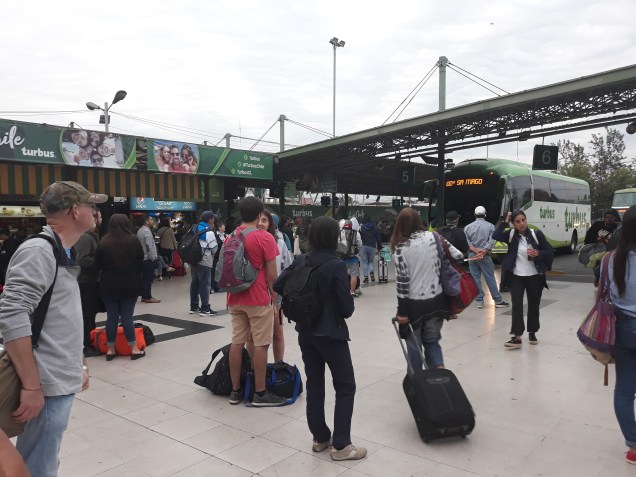
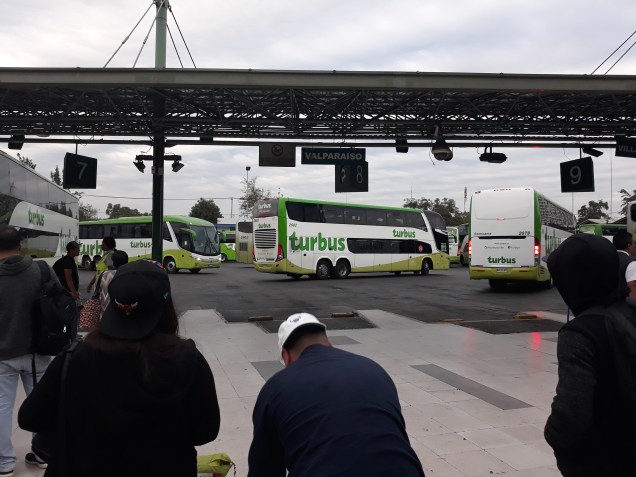
Valparaíso is a port city. Which means that it’s a big city. But within that big city is a small Unesco World Heritage site up on a hill part of the city that has charm and old and new world sensibilities. That is where we spent part of the day. But before we get to that we had to get there. Here is the Santiago Bus station at 8 am. Lots of people on the move. Lots of buses moving them. All of them full. And this part of the bus station is just the turbos bus company. There are several others: Pullman, Andesmar, El Rapido, Flecha…

20190211_07521620190211_075834

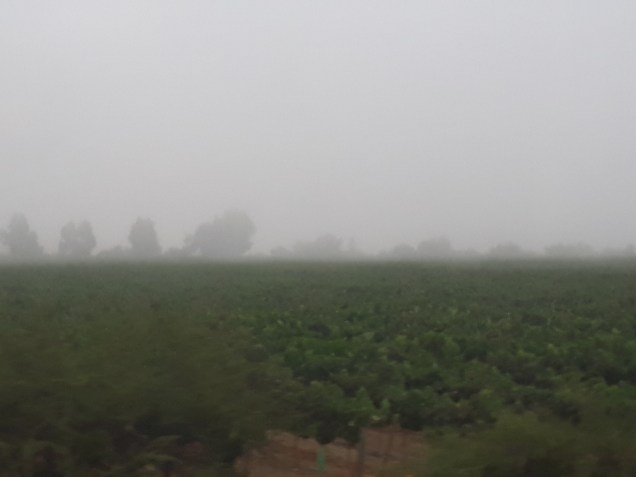
The ride was a pretty quick 1.5 hours spying vineyards along the highway, as well as some urban sprawl in terms of what looked like bedroom communities. For a while, we went through some dense fog.

20190211_092217

Arrival in Valparaíso was strange. It was cold, for one thing. It was rather ugly.

20190211_102841Nothing charming about that area of town. Except for the open air market. There is no shortage of food, I’ll tell you that. I was wishing I could go shopping and go home and cook. It’s one of the better fruit and vegetable markets we’ve seen here and the prices were less than we’d seen other places.
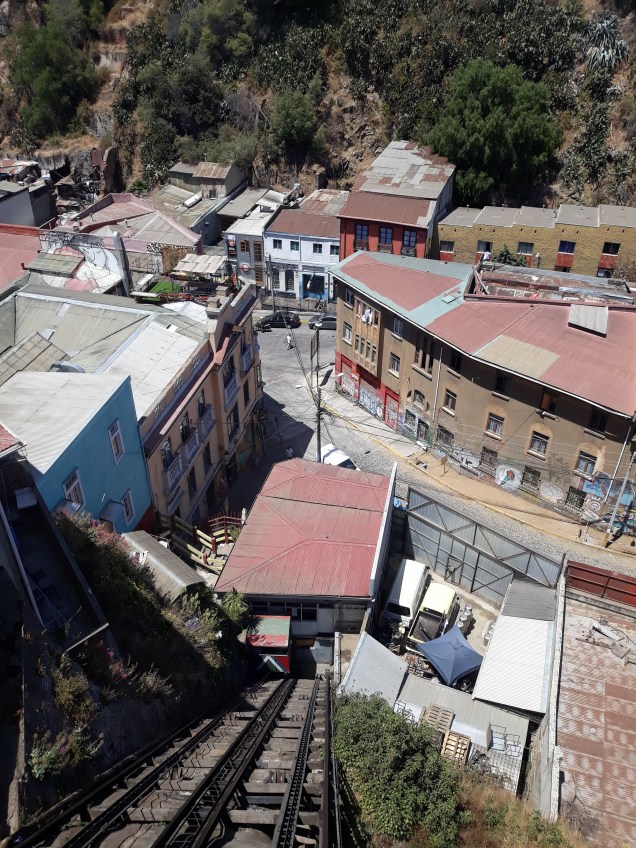
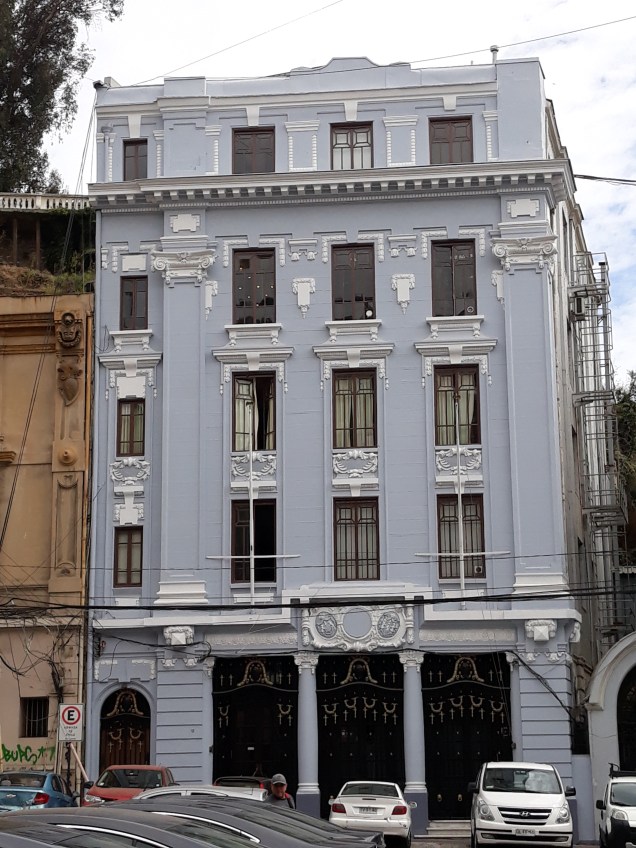
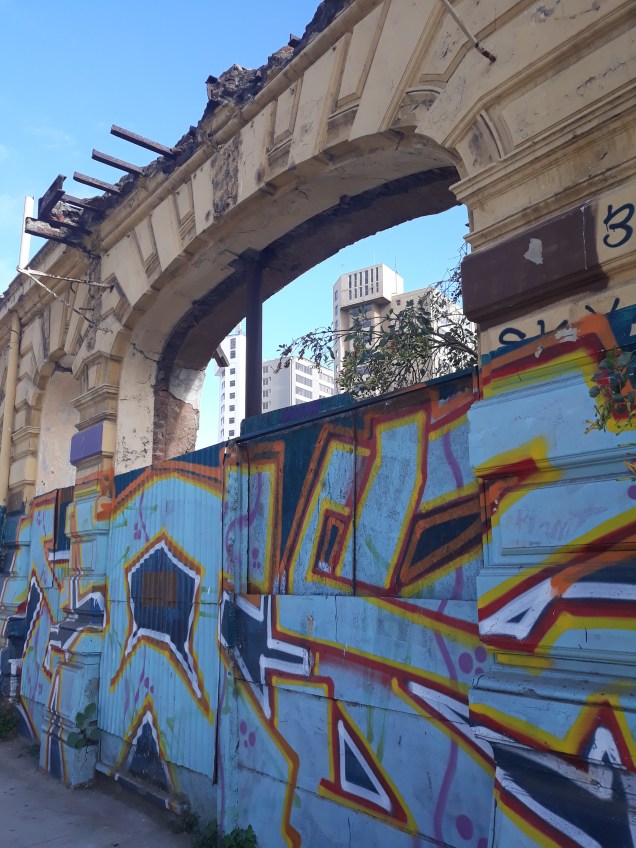
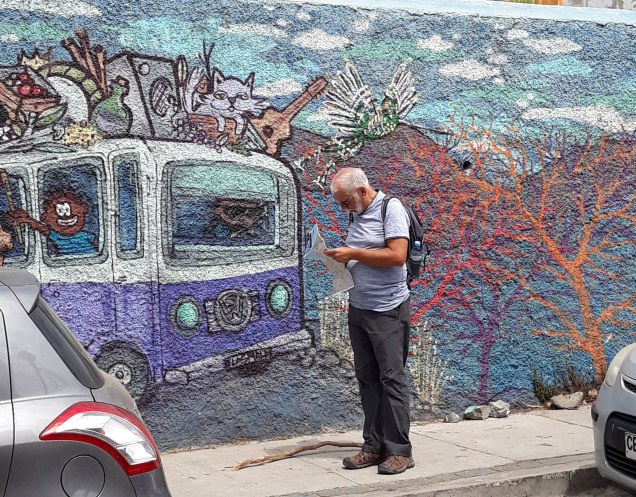
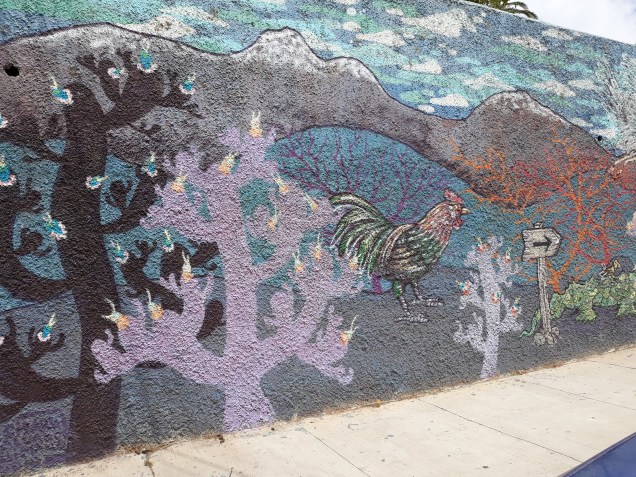
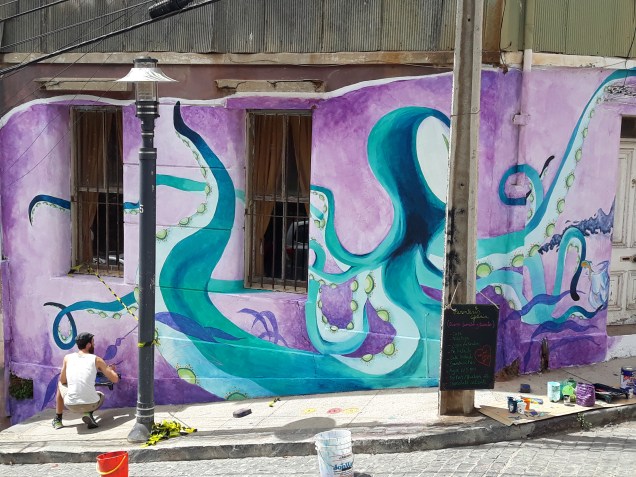
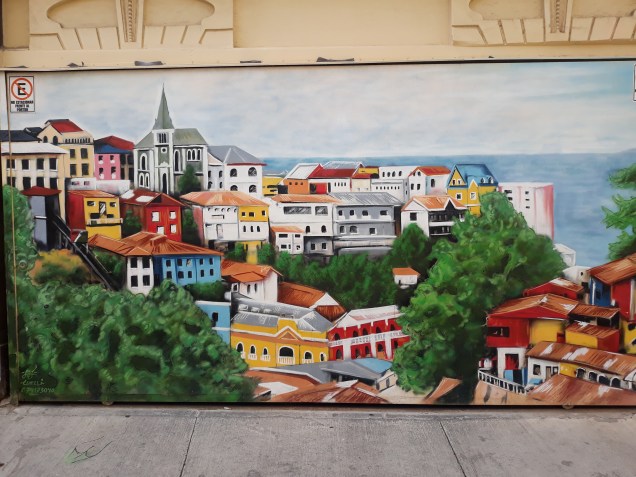
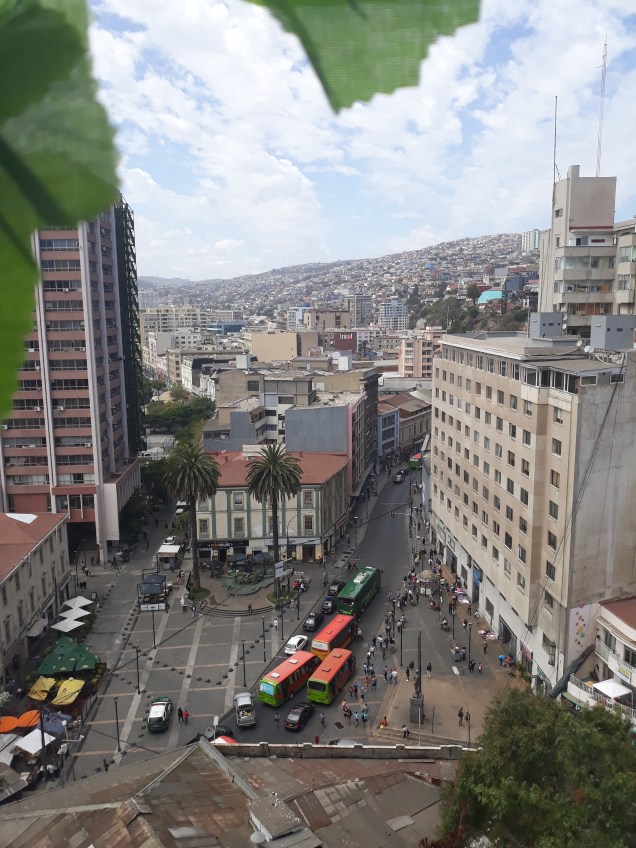
We made the mistake of not stopping into the Info center at the bus station, instead walking toward Plaza Sotomayor. It was a fer piece, but easy to get to. Again, not lovely to walk to and with a derth of the cosy cafes we are used to seeing. Plaza Sotomayer had a few utilitarian cafes and we pooped out in one of them. This gave us the pep we needed to begin afresh. A tourist info center was close by; availing ourselves of the friendly help within, we were soon on our way up, via funicular to artsy old Valparaíso, which is known for its street art as well as its architecture. Following are some pics, starting with a view from the funicular, which got us up a very steep hill.

20190211_141849

20190211_11470120190211_115538

This is the Museo de Bellas Artes. Unfortunately, as this was a Monday, it was closed.
20190211_12010120190211_120348

Street Art

20190211_121155

Charlie has such a good sense of direction and so loves to read maps that I find myself being rather lazy in that regard. It’s relaxing to allow him to do the work. But sometimes, these old cities are confusing in their layout and it takes both of our eyes and minds to decipher our whereabouts on the map and then to determine where we’re going. When I travel on my own or when my mom and I traveled together, I am quite capable of getting around and about.

20190211_122148.jpg20190211_12245820190211_12265020190211_124649

More architecture – and loving these colors!

20190211_121308

As we walked up the street, I noticed ant stencils placed at fairly regular intervals. How clever the the proprietors of this establishment are!

From the next few photos, you can see just how densely populated it is and get a sense of the verticality of the place.
20190211_131315.jpg

20190211_130820

I just don’t know how the world can sustain this population. It’s just explosive. When I’m in a big city like this, my mind reels with the sheer numbers of apartment buildings, the number of apartments within those buildings, the fact that they all have running water and plumbing. How does it get there and where does it all go?! Multiply this one city of Santiago, population of 5.6 million in 2017, by the tens of thousands of other big cities, and it could drive me to drink. Which reminds me – time to take a break and go out to try a Pisco Sour, info following in case you’re interested.

Ingredients: 1 oz Lemon Juice, 1 Egg white, 1 1/2 oz Pisco, 3/4 oz Simple syrup
Preparation: Vigorously shake and strain contents in a cocktail shaker with ice cubes, then pour into glass and garnish with bitters.
Served: Straight up; without ice
Standard garnish: Angostura bitters
Drinkware: Old Fashioned glass (I’ve also seen them served in flute glasses.)

I’m back. Slightly the better for the wear to take an old saying and update it. Much like life for those of us of a certain age. We’re slightly better for the wear – in some circumstances, anyway.

Viña del Mar

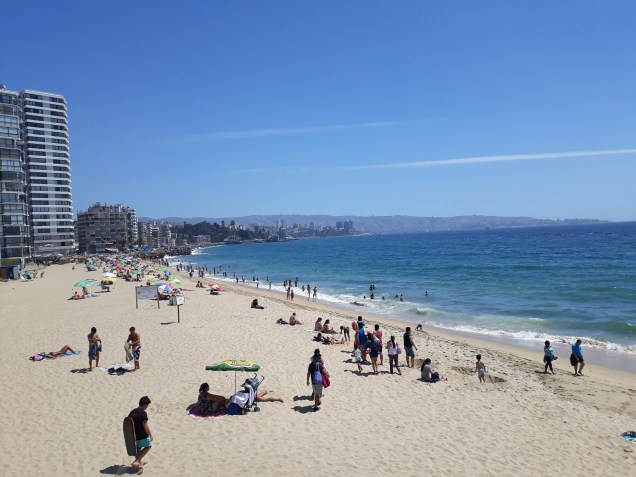
Since we got an early start (unusual for us!), we decided we had time to take in Viña Del Mar, just 20 minutes away by local bus. Of course we had several bus number possibilities that we should take to get us there. At a bus stop I asked a driver of a bus, with a different number than any of the 5 given to us, if we could get a bus to Viña Del Mar from that stop. He said, “I’m going to Viña.” A passenger piped up, “Shopping?” I said, “to the beach.” We were motioned on. Now we had to figure out where to get off. Ask one person and several are happy to help you. I love that! In fact, we got off at a better place than tourist office guy said. Bigger beach, fewer people.

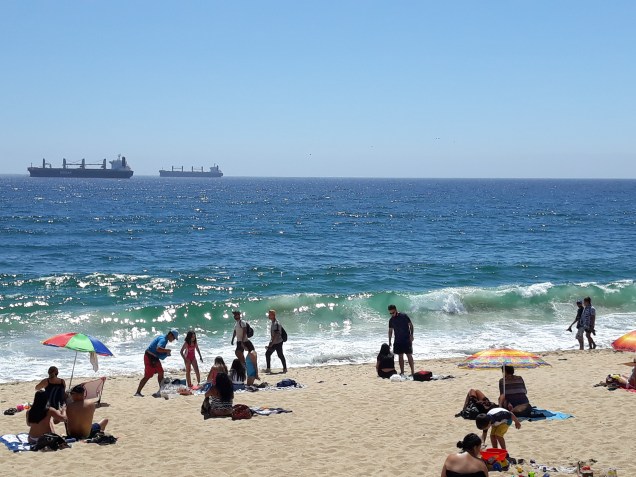
The waves don’t look like much in the photo, but they had a very strong undertow and came crashing down close to shore. In fact, the red flags were flying and the signs said not to swim. Yeah, right. The water was grand; cold, but not too.

20190211_15183420190211_153213

Other than the beach and the water, I don’t have much to say about V del M and don’t know that I would recommend it for more than a few days. But, we might have missed a critical area. We met a couple from Canada who went on a 3 hour  and said it was the best ever. They were effusive. We’ll never know.

Sometimes in travel, things work out – like getting to a better beach. Sometimes they don’t – like it being a Monday and the museum’s closed or timing is off. Still, here you are in another country and it’s beautiful.

To end today’s post, I’m going to put a plug in for Charlie. On Sunday we went to the Museo de Memoria y Derechos Humanos. It was not a lighthearted romp. I won’t be writing about it. Charlie has done so – and beautifully; I recommend you read his post.

Santiago de Chile

I think it’s interesting that this city is titled as it is: Santiago de Chile. It struck me today that in less than one year we have been in Santiago de Compostela and Santiago de Chile.  And they couldn’t be more different. Well, I guess they could be more different, but the point is that they are different. In fact, I was ruminating on the differences among cities. I can’t necessarily pinpoint the exact differences, but they are there. I wouldn’t mistake Barcelona for Montevideo or Buenos Aires for either of the Santiagos or Santiago for Mendoza or Oaxaca. Each has it’s own particular feel, rhythm, layout, qualities. The sidewalks are pretty much shit in any of them. Actually, there’s less dog shit on the sidewalks of Santiago de Chile than other cities. That’s something.

We did’t get out of the apartment today until around noon. I had a late night, up posting until 1:30 in the morning. And as it was a Friday night, there were lots of festive gatherings in the apartments in our building. And as it was a Friday night, and this is Latin America, we expected parties until the wee hours. Plus, it was pretty hot and the apartment is without air conditioning, so sleep was a little challenging. But, that’s the beauty of travel and being out of the habitual. We didn’t have anywhere specific to be and where we wanted to go was there at cualquier hora.

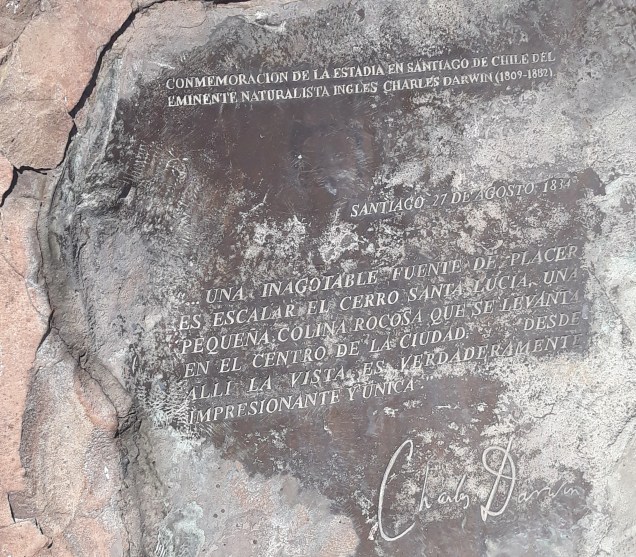
So, where did we want to go? Cerro de Santa Lucia for one, which is right down the block form our place. It’s a rocky promontory in the middle of the city. Charles Darwin has a memorial with his words inscribed on a rock face.

20190209_130442.jpg

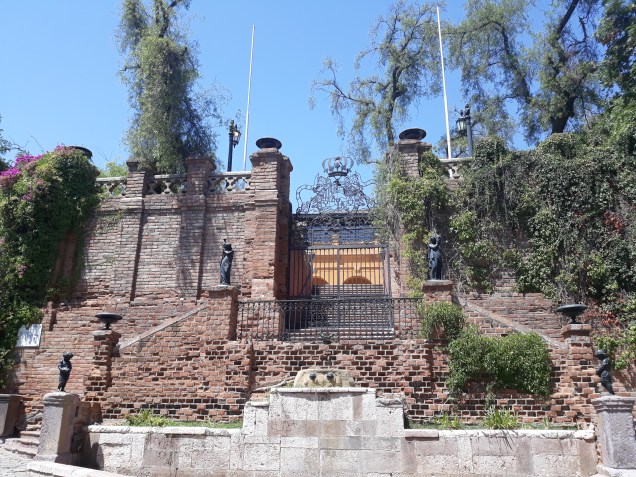
Of course, being on a high point of land, a fort is located here. The gates were closed and we couldn’t tour it. So different from forts in Portugal. Then, it’s a history unique to the region.

20190209_124627

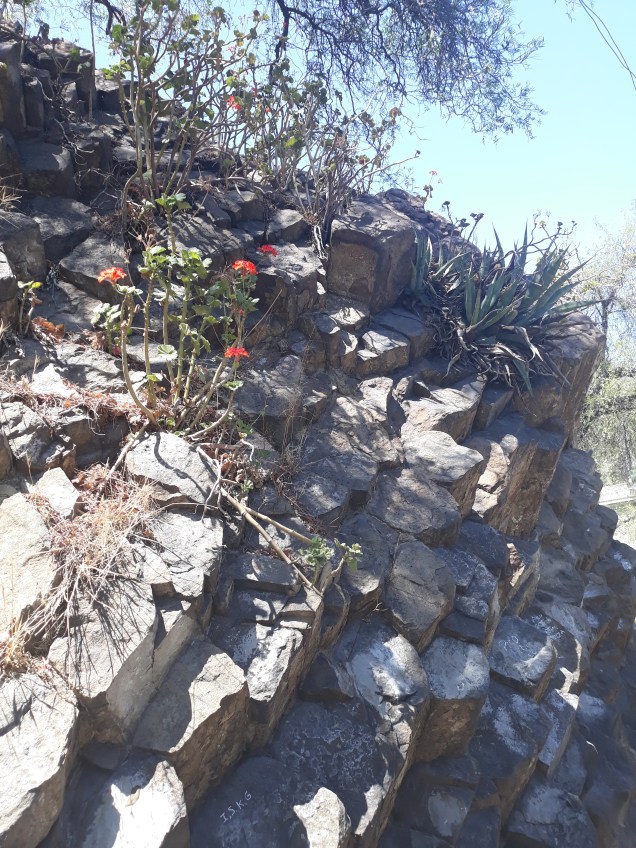
This photo gives an idea of the rocky promontory upon which the fort was built. The rock formations are like columnar cubes. You can see that they were formed horizontally, then some cataclysmic earth movement pulled them up and out and sideways. Then Mother Nature added her own beauty to the scene.

20190209_131141

As Chile sits on the Ring of Fire, this type of geophysical activity is to be expected. The last big erthquake was in January of this year at 6.5. Prior to that, the last major quake to hit wa in 1960 and it was recorded at 9.7 – the strongest ever.

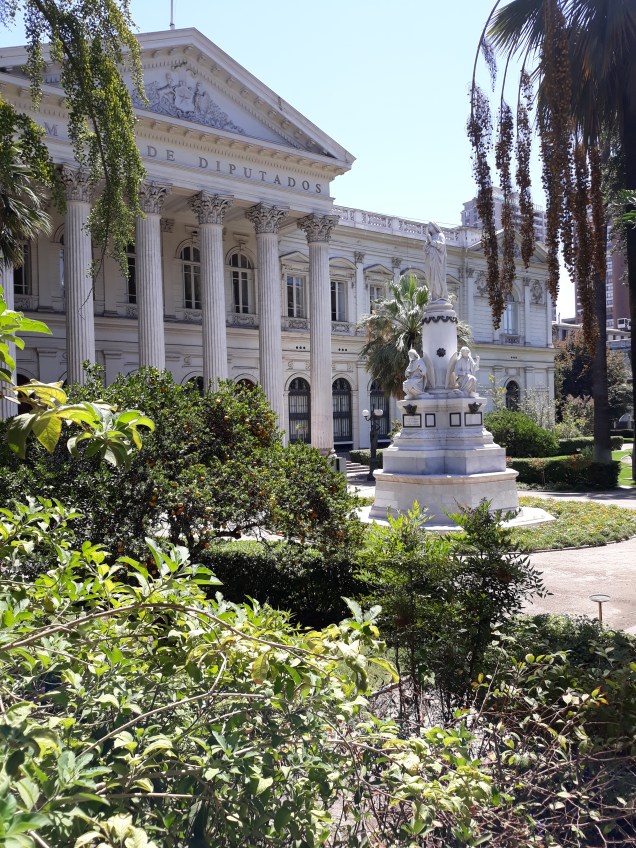
I love the juxtaposition of old and new buildings that can be found in cities. So, what I wonder is, how did the old buildings withstand the earthquakes and how are new glass buildings being constucted to be able to withstand the earth’s upheavals? I know there’s an answer to that; and I know that it’s probably far more technological and complicated than I can handle.20190209_13392020190209_13531720190209_144729

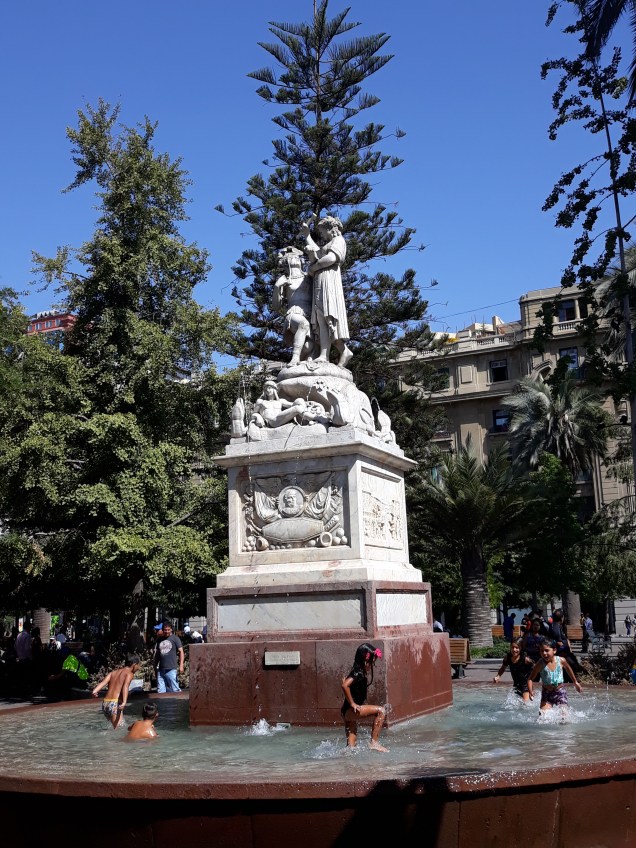
Here is something that I just love about this city. Children are allowed to play and swim in the fountains! The carabinieri were right there. I was surprised that there weren’t more children in the water. It was a hot day. And this is a big city.

20190209_163609

Hey. We went shopping in Paris today. That’s a big department store. I decided I needed a new t-shirt to replace the dingy white one. Ed/Charlie needed new swim trunks.

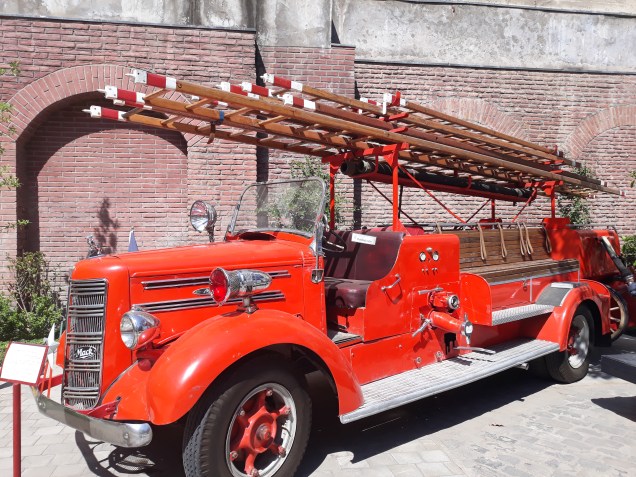
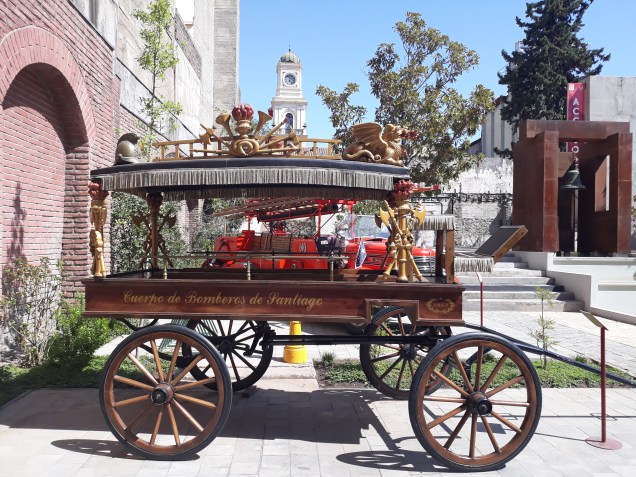
On a more sober note, here are a few pics from the Museo de Bomberos. I’ve noted that in each major city we’ve been in here in South America there is a museum to firemen. Generally the old trucks are restored by volunteers. That both impresses and humbles me.

20190209_16264220190209_162719

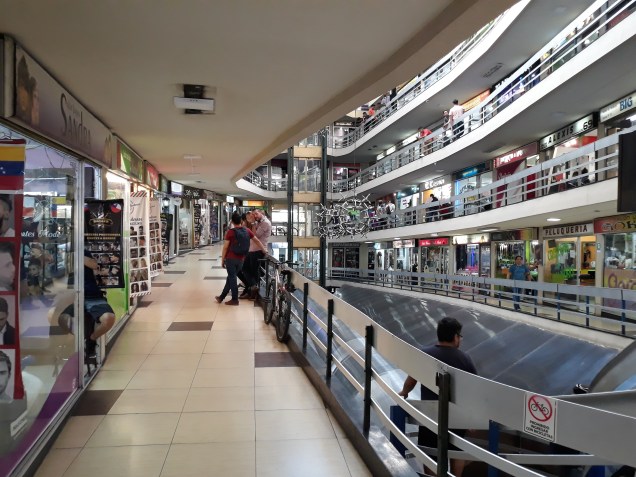
Check this out. This mall type structure consisted of salons – hair, nail, depilatory, barbers, all on three floors. The lower floor is an arcade. Wild.

20190209_164514

And this shop sells dolls and figurines. Who is buying this stuff? Find Piglet for extra points. And is that Bud Lightyear?!

20190209_164836

One thing I do love about latin countries is the predominance of small shops catering to specific needs: paint, underwear (ropa interior – how I love that phrase), cell phone needs, household items, chicken take-out… There are all of these small businesses that somehow make a go of it. I assume they make a go of it – there they are, after all.

Today at lunch Charlie thwarted a would-be thief. This guy came and sat at a table next to us. My back pack was on the ground at my feet. Boom! Next thing you know, Charlie grabs the pack, the guy non-chalantly gets up and leaves. Charlie saw him bending over and finagling his own bag, saw my pack moving and grabbed it. So, now the pack goes between my feet. Of course, I don’t keep anything of value in my pack. I carry it for water, hats, and in case we buy something. Argentina and Chile are both countries that charge for providing a bag, whether at a department store or a grocery store. Uruguay still provides plastic bags at no cost. Curious.

Once again, the hour grows late. And I am off to bed. I wish you all sweet dreams and pleasant days – wherever you are in the cycle of time in the world.

Love, Paula


Biking and Busing

Biking

Yesterday, as promised to ourselves, we made the bike and wine self guided tour, arriving at the shop by 10 am. Nico welcomed us warmly in perfect English and perfect Spanish. He grew up in Maryland, son of a US dad and Argentine mom. Because he sees so few tourists from the US, he gave us a discount on the bike rental.

The bikes were comfortable, for me anyway. Charlie has tender nalgas. No comment about mine. It’s always when I’m writing that I think, I should have gotten a photo! In this case, of the bikes lined up; of Nico; of Charlie on the bicycle. This is something I must improve.

It was interesting to ride bikes on the same street we walked the day before. This is the street with the opulent homes – photos I posted earlier. Kind of a deja vu moment, only without the mystery.

The roads we traveled for the wine tour were pretty well trafficked. Not in line with my vision of bucolic, quiet and breezy country roads. Didn’t matter. It felt good to be rolling along instead of walking for a change.

Our first stop was to an olive oil producing facility, Pasrai. Argentina is the largest producer of olive oil in the Americas and the eighth largest in the world. Most of it is virgin or extra virgin. Our guide informed us that the virgen, EVOO, or just plain olive oil versions have to do with acidity and therefore taste. The lower the acidity, the better the olive oil. Look for between .01 and .08. If that is even listed on the label.

Did you know that you can become certified as an Olive Oil Sommerlier? The International Culinary Center has a course this May 13-18 in New York. The January 20-25 course in London sold out. How much might this cost, I wondered. Level 1: May 13-15 from 9 am to 4 pm: $1400. Level 2: May 16-18 from 9 am to 4 pm: $1400. Wow. ~ $466.00 per day. I believe it would be interesting. Probably worthwhile for professionals in high end restaurants and retail. And life changing if you care about food. So they say.

It was an in depth tasting. In addition to olive oil on bread cubes, we were treated to tastes of their own hummus, black bean, and green olive dips, as well as some of their green and black olives. Yes, we bought some and are looking forward to enjoying it before we get home.

Murals from Pasrai:

20190207_105127.jpg20190207_105217.jpg

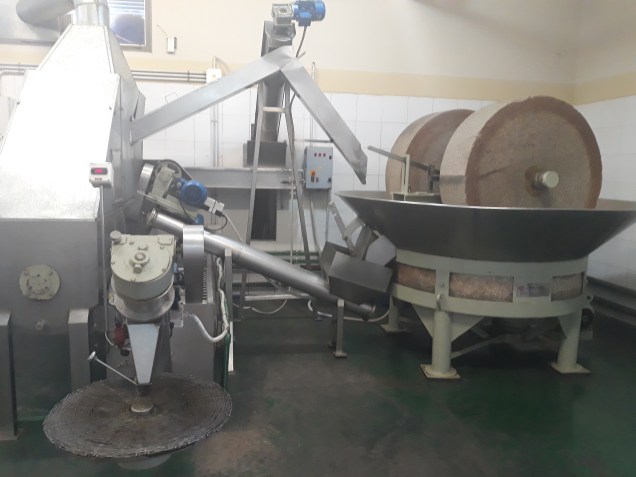
The granite stones used to grind the olives on the right. On the left, I don’t remember. But up front, that round tray is called an esportine and will hold ~ 4k of olive mash which will then be pressed. The esportine was orginally made of horse hair.

20190207_110538

The golden olive oil you see below is from the ripe, black olive.

20190207_110808

Onward to Cecchin Winery! This is a smallish, family owned organic vineyard. 20190207_114113

The bike ride in to this vineyard lived up to my expectations.

20190207_114355

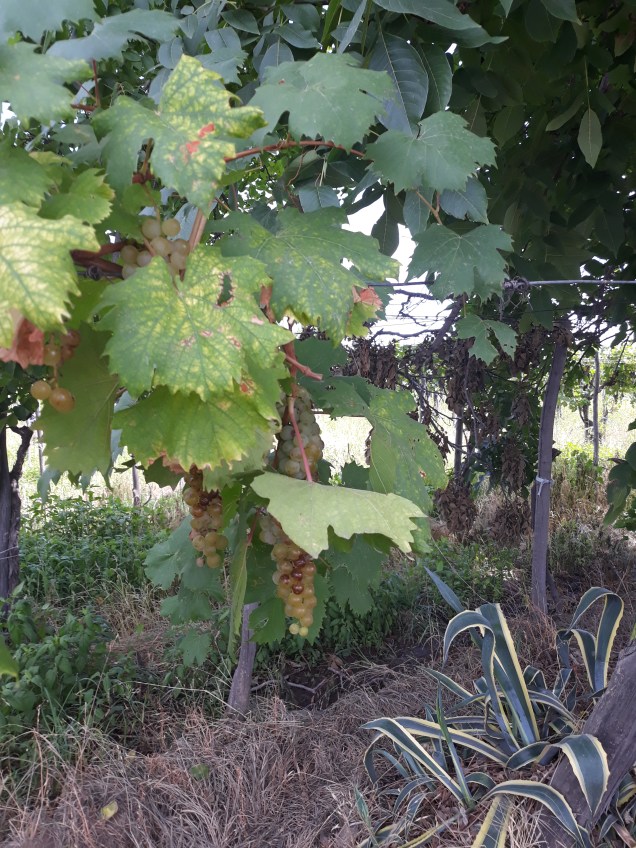
The aroma of ripening grapes under this arbor was sweet!

20190207_114930.jpg

Our guide, Cecile is from the Bordeaux region of France. She is passionate and knowledgable, taking the time to really teach us and talk with us about the wines: how to first hold it to the light or against a white paper or your palm. That the first sniff of wine is just to ensure that it has not turned. Then you swirl and sniff again. I was amazed at how the aroma changed with the introduction of oxygen. When you take a sip for a tasting, do so with an intake of air. It’s a little noisy; a little slurpy. But that’s how you get the full mouth feel and flavor. We bought a bottle.

At Trevento, the next winery, the experience was completely different. Well, for one thing, we didn’t take the tour, opting for the tasting only. It is a modern complex. Where at Cecchin we walked into a building from 1878, stone and adobe and latillas, Trevento was glass and steel and leather. We sat. Three bottles were brought to us; a short introduction to each was given. We were left alone with our tasting. At least they were generous pours. We didn’t buy.

Our serious consideration of the wines was brought up short when we were joined by Gerhardt from Vienna, Austria who sought companionship and conversation. We obliged and had a thoughtful conversation ranging from travel to politics to language and history.

We had planned on visiting a third winery after lunch at a local spot recommended by Nico. We didn’t find it. By this point, we were wine high, hungry, and hot, so headed back to turn in the bikes and return to Mendoza for dinner. I was so wiped out when we returned to the hotel, the most I could manage was a cool shower and a crash into bed.

Busing

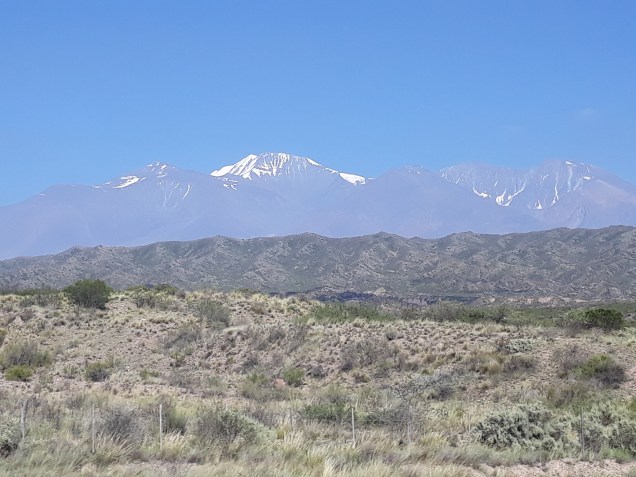
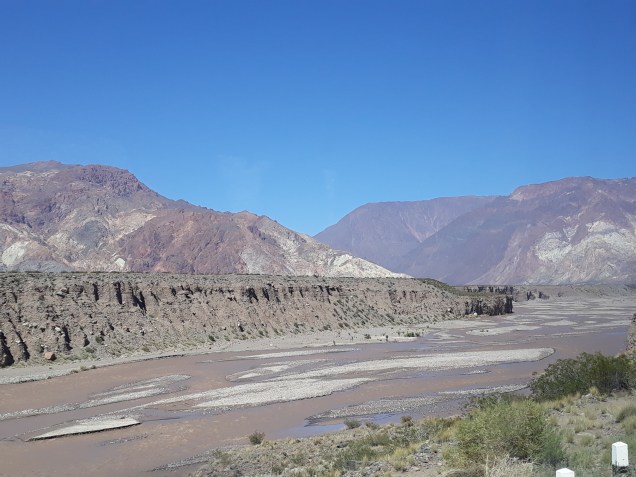
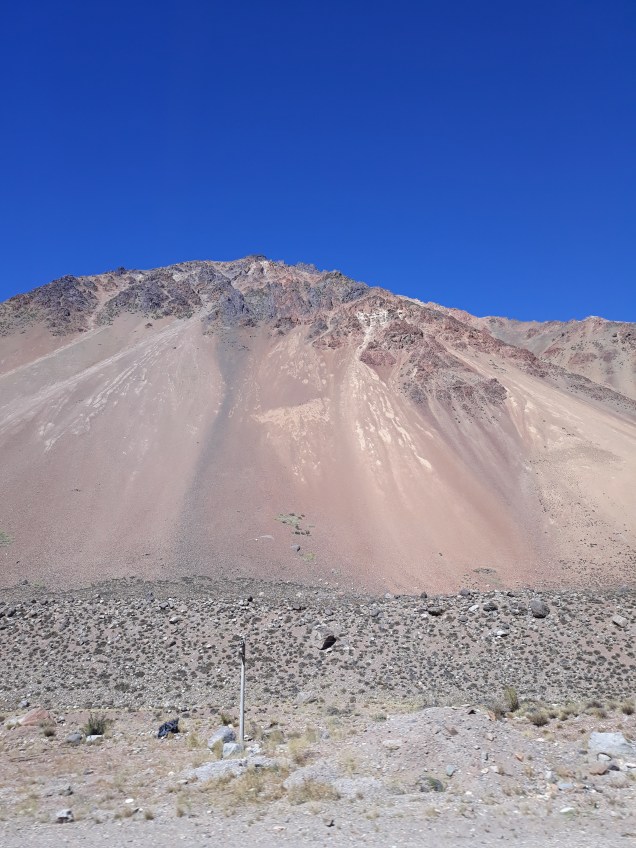
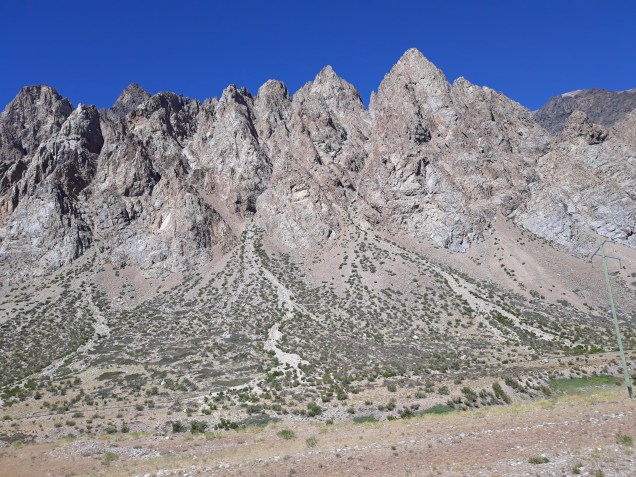
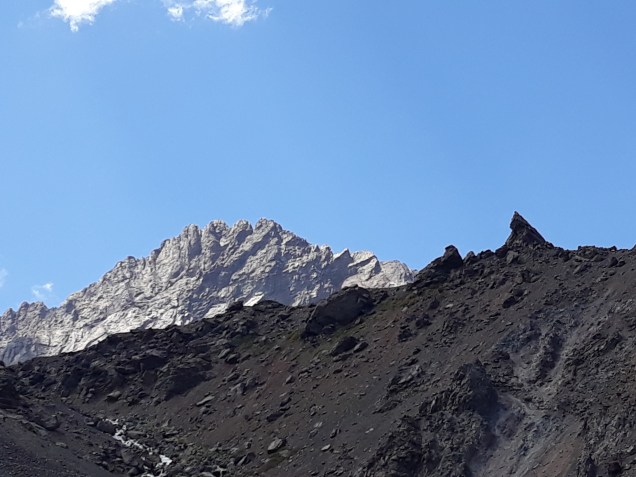
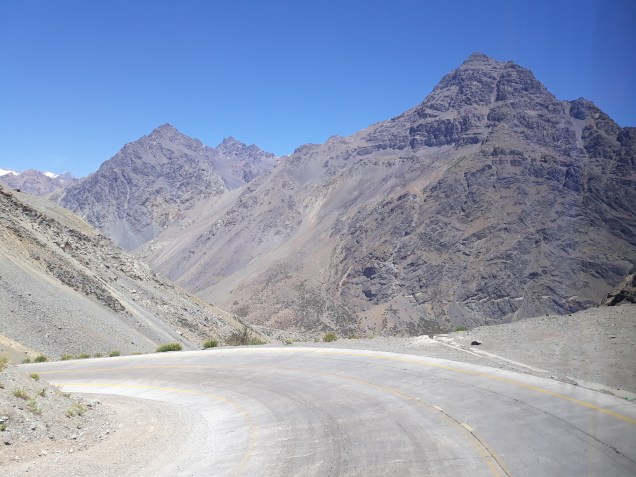
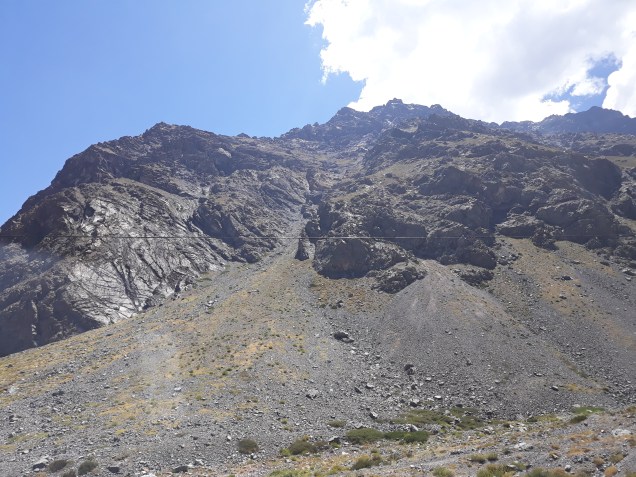
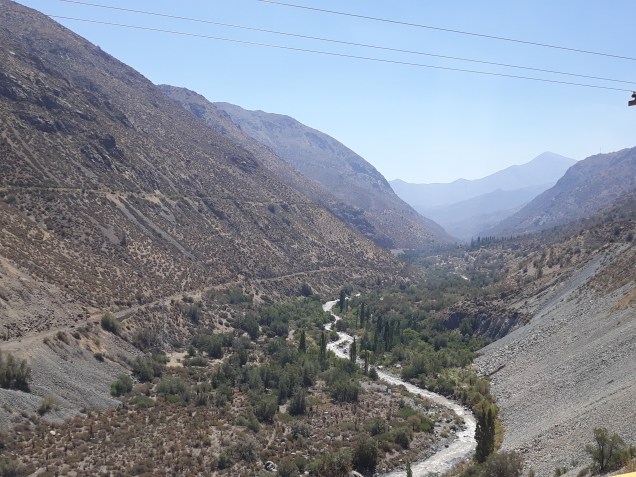
A bus ride through the Andes took the better part of the day (Thursday, 8 feb.). We left Mendoza at 9 am and arrived in Santiago, Chile around 4:30. What a ride! The Andes, from a distance don’t seem like much. But, oh, in the midst of them! I’m just going to post a bunch of photos and hope you get the idea.20190208_09385220190208_095144

20190208_09584920190208_11082120190208_11461520190208_11513420190208_12283920190208_14302620190208_14325220190208_14400620190208_150723

I look at the photos and I don’t think they really do get at the height and grandeur. They do give a glimpse into the varying geographic land forms, though, at times reminiscent of New Mexico.

Time to call it a day. Big hugs, Paula

Dial M for Mendoza y Madness

Sometimes I wonder if I’m losing my mind; going mad. I wonder if it’s due to all of the changes that are inherent to travel. So many numbers to keep track of – dates, times, Uruguay pesos, Argentine pesos, where were we when, and where and when we are going. Buying tickets in advance and keeping track of where they live in my bag or backpack and which backpack. Here is an instance of when I truly felt like a dolt: this morning I ran the cold water faucet in the shower waiting and waiting for hot water. I lost track of whether it’s the left or the right spigot!

We arrived in Mendoza yesterday morning around 10 am after an overnight bus ride from Buenos Aires which we arrived in from Montevideo around 2, I think. Our bus left BA for Mendoza at 8:40 pm so we had some time to fritter away. We knew that the first thing we wanted to do was to return to Cafe Negro for an extra special filtrado coffee. We had stopped in there on the 28th January on our way to the ferry to Montevideo. We sat at the counter. I watched the barista prepare a coffee with such care and attention. She ground a bit of coffee; swirled it; inspected it; tossed it. Then she ground a bit more and performed the same ritual. The third grind proved to be just what she wanted. Next steps: slowly pour water over the filter; add ground coffee; diligently pour water over the coffee, wafting steam to nose to assure proper aroma is being created.

I mentioned to her that I was impressed with the care she took. She proudly proclaimed that she was a proper barista, studied coffee, and as this was her job, she was going to do it right.

So, into Cafe Negro for a properly prepared filtrado. And yes, it was the smoothest, richest cup of black coffee I’ve ever had.

The bus ride passed uneventfully and pretty quickly for a 13 hour trip. Overnight helped. 180 degree reclining seats with pillow and blanket helped. Wine with dinner helped. It felt like being on an international flight, right down to the pork and potato hot dinner in a tinfoil try, only more comfortable.

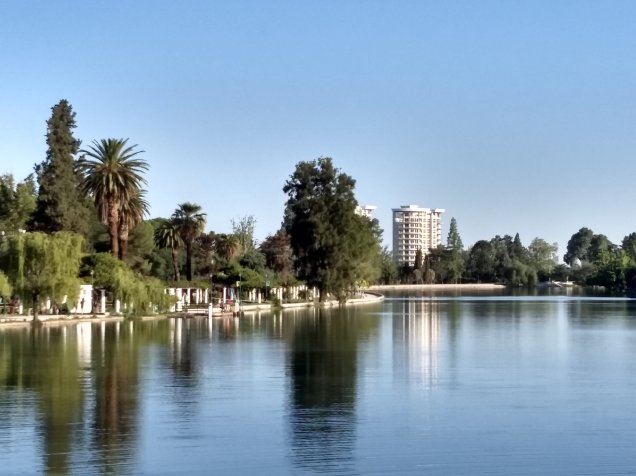
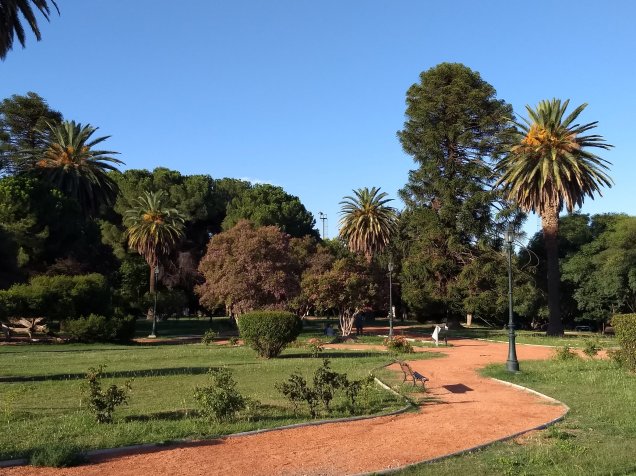
We’ve had a couple of days of wandering without accomplishing much, being thwarted in our intentions. Yesterday, our walk to Cerro de la Glorieta in General San Martin park to watch sunset from that high point was a bust. We thought we had plenty of time to meander through that beautiful park and make it to the top, but no. And we were hoofing it. It’s a lot further than google let on – trickster google. The park is enormous with trails and roads and water and grassy areas. Hordes were out en masse running. Families sat in the grass. Bicyclists zoomed up and down the road to the Cerro, as did buses and cars. I had thought the hike would be on a trail. Maybe we took a wrong turn.  Here’s a few pics of the park.img_20190205_190804122_hdr6644063857233617881.jpgimg_20190205_1905460238762615258049558361.jpg20190205_200142The above tree is a sauce (sa-u-say), weeping willow, the national tree of Argentina.

We walked so much yesterday that I developed heat rash on my legs. This is a new and unwelcome part of being in my sixties I think. I got it a few times hiking the camino, too. Madenning – Madning – Maddening … How do you spell that word?

Today. Oof. A lost afternoon in Maipu. Lessons learned on travel and not trusting blog post data. Go to this road. Hop on this bus number. Get off and rent bikes. It sounded so straight forward. That bus number never came. A bus saying Maipu did come so on we jumped. It took forever. We got off in this desolate mad town of Maipu. Stores closed up. No cafes around. Any small shops that were open would only talk to you through a small opening. After finally getting some info as to where the tourist office was located we headed there. More info on where to go, what bus to take to the Gutierrez train station to rent bikes. Listening intently to rapid Spanish; getting clarification – trying to. Make it to the bus stop and all the buses going by do not have the numbers we were given. Nor do they match any of the numbers listed at the bus stop. Finally, a bus comes round with a Gutierrez sign, but not the number. In we go. By now it’s way to late to think about renting bikes. It’s 3 and the wineries close at 6 and they are about 5 miles away. So, back to Mendoza where we immediately headed to a gelato shop to soothe our cranky selves.

We did see some stately old buildings on our mad Maipu jaunt, former homes of wine barons.

20190206_12561220190206_13005720190206_130153

I have to say that Charlie and I maneuvered through this rather difficult stretch with aplomb. I mean, the outing was a bust. And that’s why people sign up for tours. Yet, there’s something about finding – and losing – and finding your own way. There’s something about stopping and talking to people to get help in finding your way. There’s something about being in partnership and finding patience and understanding in a messed up marathon of trying to get somewhere. It was like a bad dream, when you need to run, but your legs are leaden.

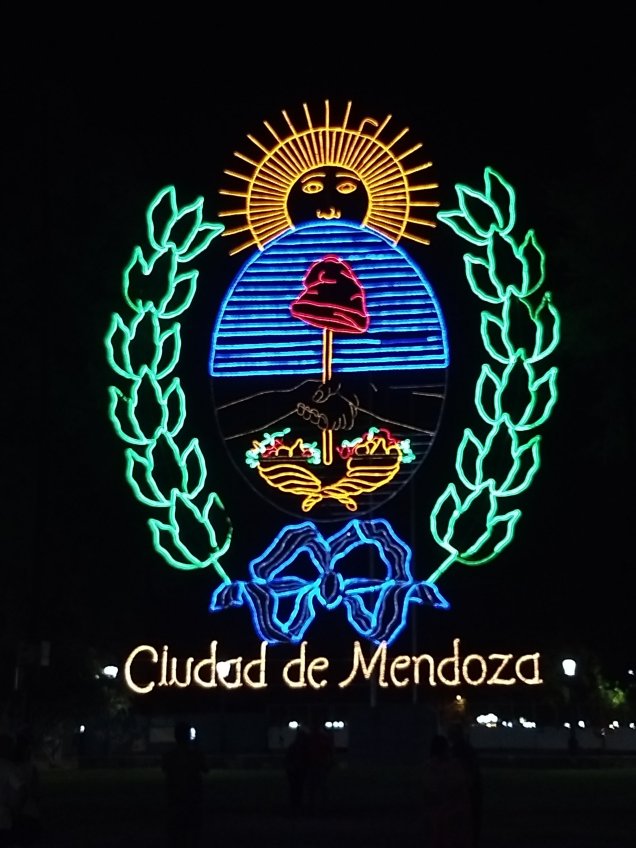
And now we know exactly what to do, where to go, and the best time. Tomorrow we try again! We are akin to the Argentine symbol: hands clasped in unity; sun rising over a new day; the Phrygian cap of the liberated upon our heads. Okay, we don’t have Phrygian caps.

img_20190205_2334358638954818973118294142.jpg

Mendoza is an oasis of green and water in an arid climate. Acequias run throughout the city providing water to the parks, the trees, the fountains. I read that it’s glacial run off from the Andes.

20190205_130850

The next two photos were taken from the 14th floor of a hotel terrace. Way better than the Cerro de la Glorieta. Easier to get to and cocktails!20190206_19310120190206_193142.jpg

Since when does “playa” mean parking garage? And how did avocados become “paltos”? Squid rings are “rabas.” There’s a whole new vocabulary to enrich my store.

20190206_155314

As the sun sets behind the Andes, the clouds light up.

20190206_204113

Are you wondering about Phrygian caps? Here’s the wikipedia entry:

Head of Attis wearing a Phrygian cap (Parian marble, 2nd century AD).

The Phrygian cap or liberty cap is a soft conical cap with the apex bent over, associated in antiquity with several peoples in Eastern Europe and Anatolia, including Phrygia, Dacia, and the Balkans. In early modern Europe it came to signify freedom and the pursuit of liberty through a confusion with the pileus, the felt cap of manumitted (emancipated) slaves of ancient Rome. In artistic representations it signifies freedom and the pursuit of liberty.

It is used in the coat of arms of certain republics or of republican state institutions in the place where otherwise a crown would be used (in the heraldry of monarchies). It thus came to be identified as a symbol of the republican form of government. A number of national personifications, in particular France’s Marianne, are commonly depicted wearing the Phrygian cap.

~~~~~~~~~~~~~~~~~~~~~~~~~

It reminds me of the beanies that are so popular with young people nowadays.Image result for beanie skull cap

And by the way – the Smurfs are wearing Phrygian caps! Image result for smurf phrygian cap


Montevideo, Uruguay

Three nights and two days passed quickly here. Weekends are quiet. Except for the two kids next door who have been at it all afternoon and into the evening. It got so bad I had to put in my earbuds and watch Frankie and Grace on my computer. Ed had his head phones on and slept through it. So, this is what apartment living is like. Pour me some more wine.

Ah. Sorry. Nothing like starting off a post with my own whining.

We went out for breakfast yesterday for the first time since being on this trip. By the time we made it to the grocery store Friday night, it was closed. Anyway, I had a plan for going to Cafe Brasiliero, which I’d read about. It is the city’s oldest cafe, founded in 1877. In the past, you might have found the literati sitting at a table discussing the political front or drafting a new novel. Now, you’ll find tourists. Actually, there were a couple of locals. I could tell because it was about 11 in the morning and they were drinking Fernet.

Fernet – it’s another of those cultural drinks, like mate that I’ve yet to try. I think it’s a bit like Aperol or Campari, from what I’ve read. Slightly bitter and medicinal tasting. I just read that the making of Fernet uses an enormous amount of saffron! So, it must be expensive.

Cafe Brasilero:

20190202_115143

We wandered Ciudad Vieja yesterday. A lot of stores were closed. This one wasn’t and now I’m sorry I didn’t take advantage of their sale.

20190202_141015.jpg

Antiques are big business down here in Buenos Aires and Montevideo. Well, I don’t know  if they are big business, but there are a lot of them, sold in stores and street markets.

20190202_124048

One of these days I’m going to re-outfit my dinnerware with mis-matched, but coordinating dinnerware. I’ll pick up a few lamps too.

The day turned quite chilly, cloudy, and windy yesterday. The Rio de la Plata was whipped into a frenzy. It was exhilarating.

20190202_135833

We popped into a cafe for a warming glass of wine. After sitting there for quite a while, we began chatting with another couple who were enjoying a warming hot chocolate and churros. They live in Santiago, Chile – our next destination. We got on quite well and exchanged names and contact information. Tom is from York, England; Cristina is Chilean. They met while she was studying for her master’s in piano in York. They’re here for a few more days, but since we extended our trip in Santiago, we should be able to connect.

As mentioned in another post regarding cathedrals and churches and churches and their lack of prevalence in Argentina, the same seems to be true in Uruguay. But we did pop into the Metropolitan Cathedral. I apologize for the lack of crispness in the following photo, but I just loved this dancing angel.

20190202_125032

While Buenos Aires is known as having more bookstores per capita than any other country, Montevideo must be a close second. We did read that Uruguay has the highest literacy rate of any South American country. And we have seen many bookstores in our wanderings. They all have their own charm, inside and out.

20190202_142037

Another thing we appreciate about Montevideo are the leafy, tree-lined streets. The sidewalks, however, are another matter.  They are often crumbling, broken trip hazards. Sometimes they have creative coverings. It certainly keeps you aware.

20190203_13224320190203_133933And they don’t usually have the tape to warn you. Part of the problem is that those shade providing trees break up the tiles, small pieces are left strewn about, and the sidewalks are all wonky with trees roots undermining man’s attempt to level the surface. Go, tree roots!

Today we experienced the crush of the open air market. Goods for sale aside from fresh fruits and vegetables: costume jewelry, underwear, kitchen ware, cell phone accoutrements, clothing, beer on tap, batteries, fresh squeezed oj, (I had some yesterday – oh, so sweet! Oranges here are a wonder of taste and juiciness.) tools… And I don’t know what this man was selling, but I think it’s foraged. He had a customer, so I reckon it’s legit.

20190203_131030.jpg

Sunday. Today. A stroll to the barrio Pocitos. Great for the playa and that’s about it. On a Sunday, anyway. I read in another blog that it’s THE place to stay, to be. We prefer our barrio of Parque Rodó. I did love swimming in the Rio de la Plata today and sunning myself in the sand. Charlie has that photo on his post. He called me a crusty old lady. Pig.

Here are the beach and the Rambla along the river in barrio Pocitos.

20190203_141418

And I leave you wtih this bit of advice:

20190203_140207

Con mucho amor, Paula